Unilever will focus more on its Beauty & Wellbeing and Personal Care sectors following the release of its Q4 and full-year financial results. Unilever’s 2025 financial release demonstrated the company’s focus on portfolio reshaping with premium personal care brand acquisitions and a demerger in the Foods segment.
The report shows that underlying sales growth (USG) was modest but consistent at 3.5%, with a 1.5% volume increase. Meanwhile, Q4 posted a stronger result, with USG at 4.2% and a 2.1% volume increase. The Personal Care, Beauty, and Wellbeing segments led growth with 4.7% and 4.3% USG, respectively.
“Our underlying sales growth improved throughout the year as we landed a strong innovation plan, drove improvements in key emerging markets, and successfully completed the Ice Cream demerger,” says CEO Fernando Fernendez.

Unilever completed the demerger of its Ice Cream business in December last year and established the Magnum Ice Cream Company as a standalone business. The move was said to enable Unilever to achieve a clearer strategic and financial focus.
“We have set clear priorities for growth — building a brand portfolio for the future, with more Beauty, Wellbeing and Personal Care, prioritizing premium segments and digital commerce, and anchoring our growth in the US and India,” he says.
Unilever’s underlying operating profit was €10.1 billion (US$11.98 billion), down 1.1% year-on-year. The decrease was attributed to unfavorable exchange rates, which offset operational performance. The underlying operating margin was up 60 basis points (bps), from 19.4% in 2024 to 20%. Gross margin increased by 20bps to 46.9% driven by productivity initiatives, volume leverage, and increased premium products in the Unilever portfolio.
Brand and Marketing Investment (BMI) increased by 10bps to 16.1% of turnover. The company has increased its BMI by 300bps over the last four years, with a focus on Beauty and Wellbeing and Personal Care. Its simplification strategy regarding a focused portfolio also paid off as cost management helped offset currency headwinds and costs related to the Ice Cream demerger.
Portfolios and profits
Unilever contributed to its portfolio reshaping goals by acquiring brands such as Wild in the UK, Dr. Squatch in North America, and Minimalist in India. Overall, the company has closed or announced 11 transactions, including the Ice Cream demerger, since the start of 2025.
USG for Beauty and Wellbeing sat at 4.3% driven by double-digit growth in Wellbeing and through subsidiaries, Dove and Vaseline. Looking at Dove and Vaseline’s performances, the company underlines the value of science-led premium innovations in the industry. The segment’s 4.7% USG in Q4 was attributed to stronger performance in Asia Pacific and Africa, offsetting slower growth in the well-being market.
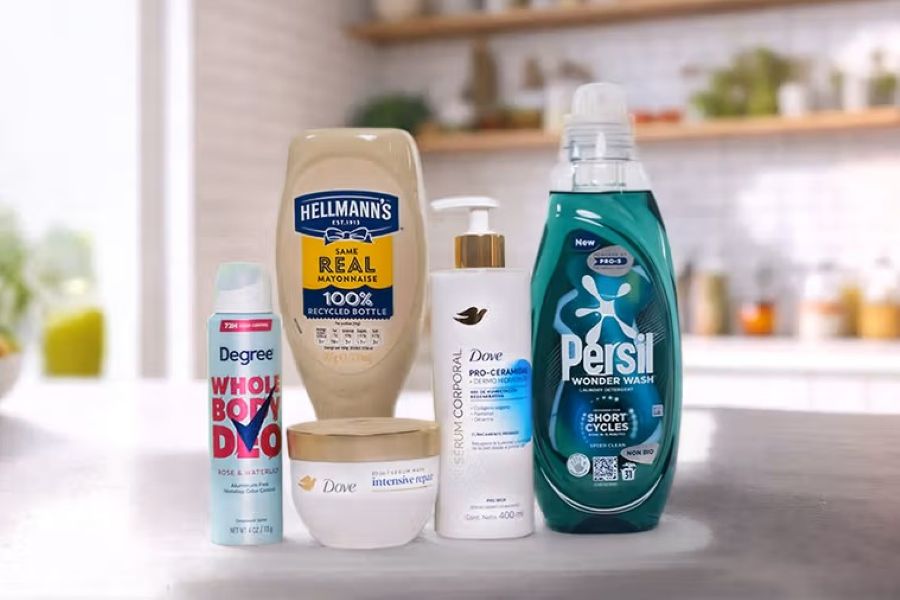
Personal Care’s 4.7% USG was bolstered by market share gains, innovations, and commodity-driven price increases. Fourth quarter USG for the segment was reported sturdy at 5.1%. Dove was also a valuable player in the Personal Care segment, driving double-digit growth in deodorants with the sustained success of Whole Body Deodorants.
The Home Care segment did not perform as well as the former two, but it still maintained growth. Its USG was led by volume, reporting 2.6% in Q3 and 4.7% in Q4, with 4% of that growth driven by volume. Key emerging markets continued to improve, driving Q4 growth.
Subsidiaries Cif and Domestos displayed strong performances in the Home and Hygiene departments, underscoring the demonstrated value of premiumization to the company.
Unilever portfolio reset
Last year, Unilever rolled out a new SASSY marketing framework as part of a broader strategy to “premiumize” everyday brands and build what it calls “Desire at Scale.”
The framework stands for Science, Aesthetics, Sensorials, Said by others, and Young-spirited. It was made to guide the company into turning mass-market staples like Vaseline and Dove into emotionally compelling, aspirational products.
“We’re on a journey to premiumize our brands — luxury brands have long mastered the art of creating that ‘I just have to have it’ feeling, and there’s a lot to learn from how they spark desire,” Esi Eggleston Bracey, chief growth and marketing officer at Unilever, previously told Personal Care Insights.
An example of the SASSY framework was Unilever’s redesign of its legacy germ-protection soap brand, Lifebuoy, as a skin barrier-protecting, science-backed line.
The move aimed to prime the brand for future growth by appealing to the younger generation of consumers.