 Weiguo Cui, PhD, professor of Pathology in the Division of Experimental Pathology, was senior author of the study published in the Proceedings of the National Academy of Sciences.
Northwestern Medicine scientists have identified the cellular mechanisms that cause immune cells to differentiate and ultimately lose function during viral infection, findings that could improve treatments to control chronic infections, according to a recent study published in the Proceedings of the National Academy of Sciences.
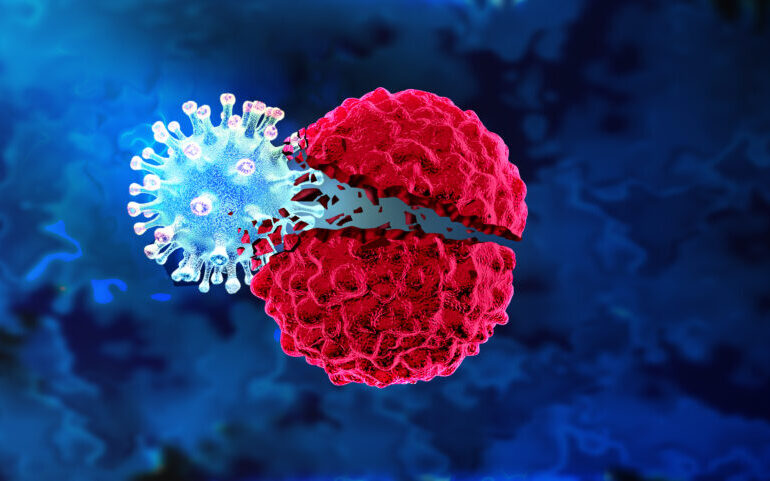
During viral infection and in the case of cancer, CD4+ helper T-cells release cytokines, or small signaling proteins, that activate and “give permission” to other immune cells to control and clear viral pathogens.
In certain viral infections, such as lymphocytic choriomeningitis virus (LCMV), which is spread by infected rodents, CD4+ T-cells differentiate into different subpopulations, including one subset of progenitor CD4+ T-cells that replenish type 1 helper (Th1) and follicular helper (Tfh) T-cells.
During infection, however, the differentiation of CD4+ T-cells into Th1 cells also becomes restricted, causing a decrease in CD4+ Th1 cell responses which prevents the immune system from efficiently controlling viral replication, ultimately resulting in T-cell exhaustion.
Identifying the mechanisms that drive Th1 differentiation, therefore, may reveal new targets to prevent the decline of CD4+ Th1 cell function and enhance therapeutic strategies for chronic infection, said Weiguo Cui, PhD, professor of Pathology in the Division of Experimental Pathology and senior author of the study.
“How the helper T-cells actually respond to this kind of infection is not really well known and how they advance in their differentiation or developmental progression toward functional helpers is also not well documented. We aimed to understand the regulator differentiation process and how the cells actually acquire function and what mechanisms regulate the downregulation of their differentiation process,” said Cui, who is also a member of the Robert H. Lurie Comprehensive Cancer Center of Northwestern University and the Center for Human Immunobiology.
Using flow cytometry and single-cell RNA sequencing analysis, Cui’s team studied CD4+ T-cells from mouse models of LCMV infection to define cellular mechanisms affecting the cells’ trajectory of differentiating into Th1 cells.
“We used flow cytometry to define which state they are at and then after that we tried to isolate what factors could affect their linear progression toward becoming these functional Th1 cells,” Cui said.
Using these techniques, the scientists discovered a previously unknown subset of intermediate CD4+ T-cells that serve as a precursor to Th1 cells.
Furthermore, they discovered that Th1 differentiation is controlled by two regulatory mechanisms: PD-1/PD-L1 signaling — which normally helps regulate autoimmune responses and inflammation — restricts the early transition from progenitor cells to intermediate cells, and the PBAF chromatin remodeling complex, which prevents the final stages of differentiation from the intermediate CD4+ T-cells to Th1 cells.
Lastly, the scientists found that inhibiting PD-1/PD-L1 signaling by administering a PD-L1 blockade immunotherapy in mice with PBAF-deficient CD4+ T-cells enhanced Th1 differentiation and antiviral immunity.
“What we showed was that PD-L1 blockade is good, but not good enough; you need to remove another break to kick it to a full function,” Cui said. “These are possible druggable targets. In the future, one may be able to combine PD-L1 blockade with PBAF inhibitors and then you get them to this full functional state.”
Therapeutically targeting these mechanisms driving CD4 Th1 cell differentiation may improve other immune checkpoint therapies for chronic infection. Cui said his team is currently investigating the underlying mechanisms of the PBAF chromatin remodeling complex and how they contribute to CD4+ T-cell differentiation.
“PBAF is an epigenetic chromatin modifier; it unwinds chromatin so that certain genes will be more assessable or available for transcription. We want to get to the bottom of what targets are involved in this complex and how they’re involved in the second step of the T-cell differentiation process,” Cui said.
Hongshen Niu, PhD, a postdoctoral fellow in the Cui laboratory, was lead author of the study.
This work is supported by National Institute of Health grants AI176611 andAI148403.