Peterson, one of the industry’s most well-known celebrity and athlete trainers, breaks down how he’s thinking about strength, recovery and longevity in 2026, including the importance of red-light therapy and the most common training mistakes he sees
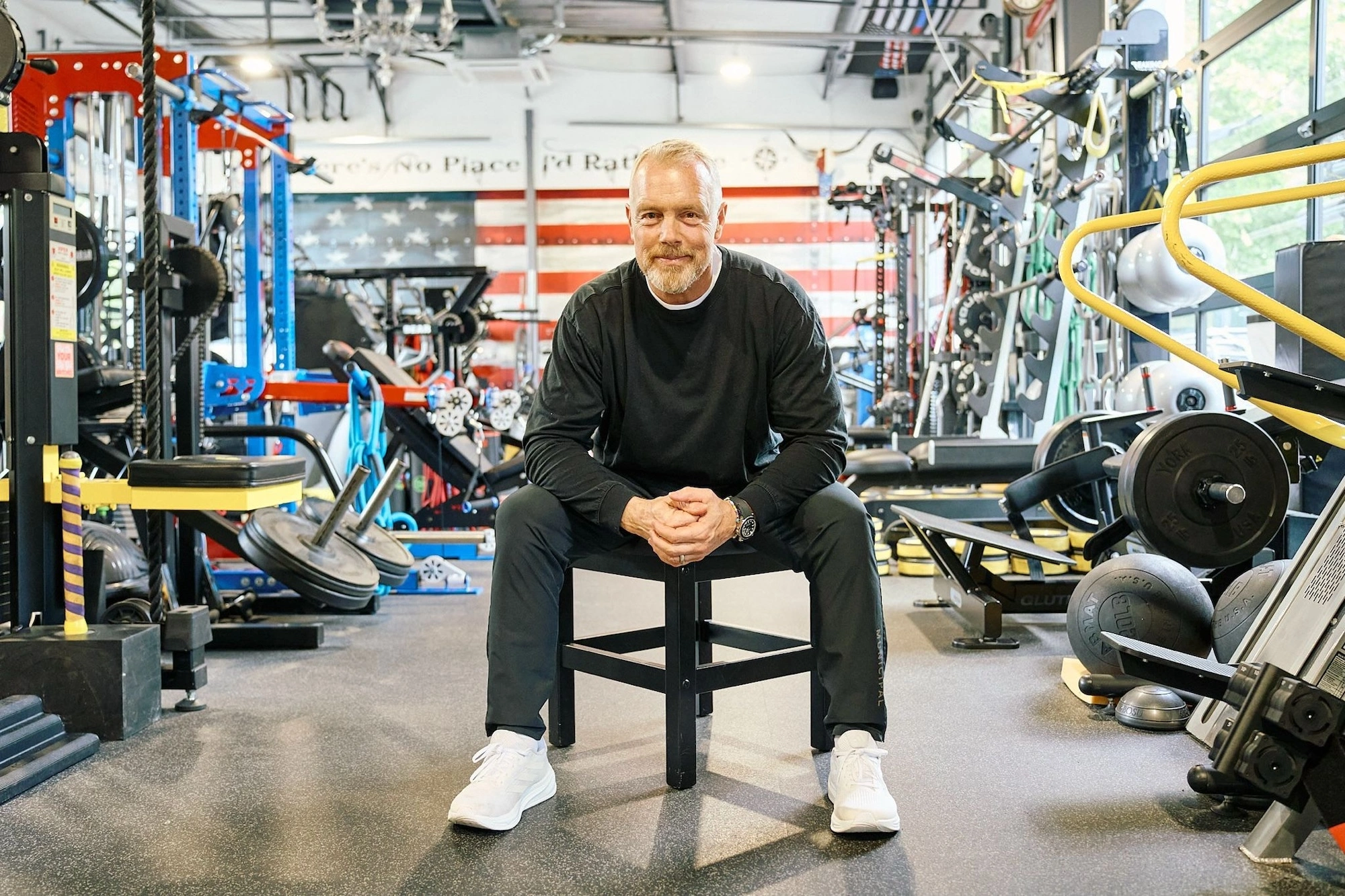
As the year begins, few voices carry as much practical authority as Gunnar Peterson, one of the most well-known celebrity and athlete trainers. Peterson has spent decades navigating the pendulum swings of the industry, from grind-it-out workouts to today’s recovery-forward, longevity-minded moment.
Peterson sat down with Athletech News to discuss why recovery still has limits, the technology he thinks has the most potential for training and his wellness non-negotiables.
Recovery Is Important … But You Need To Do the Work, Too
Peterson is unequivocal that recovery is now a core pillar of training. But he’s equally quick to caution against using it as an excuse to avoid hard work.
“Recovery is a huge pillar,” he told ATN. “You can’t overstate the importance, although when people use it as a passive approach, sometimes I throw a flag on the play. That’s cool if you’re recovering, but if you’re not training and just recovering, at some point it’s time to put on your big-boy, big-girl pants and do the actual work. You can’t recover from nothing.”
For Peterson, recovery only works when it’s paired with intention. That means understanding whether someone is truly training hard enough to need recovery.
“Are they using it as an off day and just plowing through their normal routine, or are they using recovery protocols: Epsom salt baths, cryo, red light, sauna, percussive devices, active recovery, walks?” he said. “There are so many ways to do it, but you have to approach it the right way.”
When asked which science-backed modality is influencing him most right now, Peterson immediately spoke to red-light therapy. The trainer announced a partnership with Solbasium, a red light and recovery tech company, late last year. Peterson described using red light not only for pain management, but as an everyday recovery and wellness tool.
“The wavelengths, the way they’re dialed from a scientific standpoint; it’s not slapshot stuff,” Peterson said. “They’re building equipment that holds up in real training environments. They’re pushing the envelope, and they’re staying ahead of it.”
How To Train With Effort & Intelligence
In terms of finding the right workouts to drive improvements, Peterson draws a clear distinction between duration and effort.
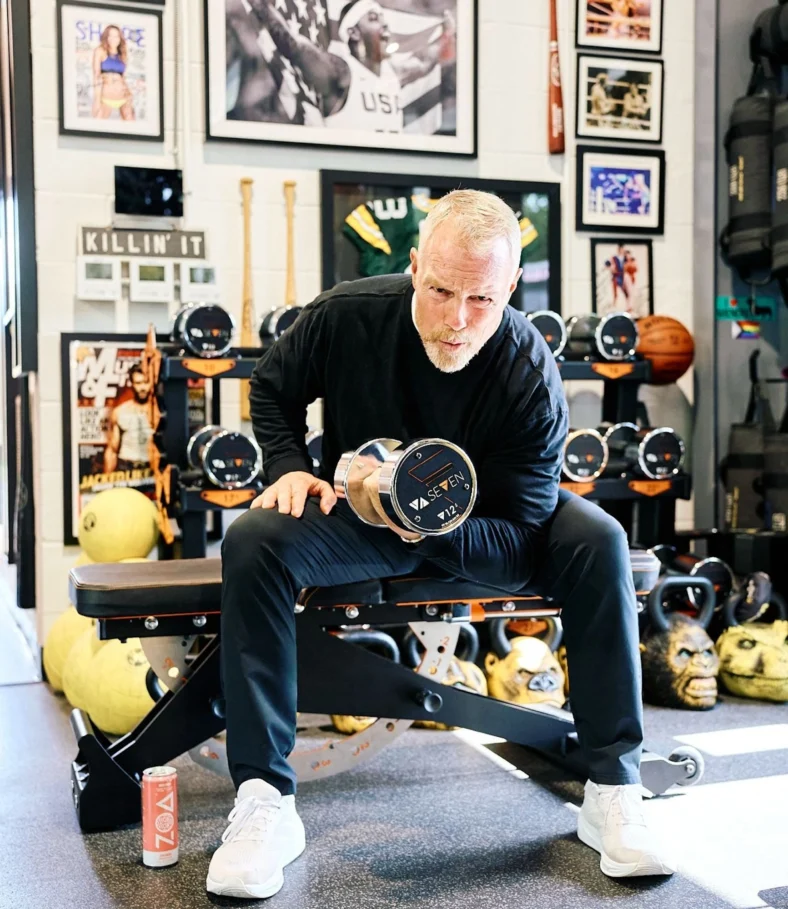
“Duration is very different from intensity,” he said. “You can tell me it’s a 20-minute workout. If you’re going flat-out, there are benefits. But if it’s five minutes of warm-up, then you’re kind of messing around with no plan, and suddenly it’s over, that’s hard to get much out of.”
 credit: Gunnar Peterson
The issue, he added, usually isn’t time constraints, but lack of structure.
“If they don’t have a plan and they just rush into the gym already short on time, it’s really hard for them to get much out of that,” Peterson said.
Peterson’s programming starts with client goals, but then shifts to ensuring the workouts are balanced.
“If someone is obsessed with one body part, like glutes, glutes, glutes, I’ll say, ‘How about the fact that your posture is kyphotic and you have very little musculature in your upper back?’” he explained. “We’ll still focus on glutes, but we have to strike a balance between upper and lower extremity instead of just hammering one thing.”
Consistency Is Key
As the New Year’s resolution Quitter’s Day has come and gone, Peterson sees more damage done by subtle disengagement than dramatic failure.
“I think people stay in their comfort zone,” he said. “Not every workout has to be fire and brimstone, but just try. I think people die a million little deaths in their workouts. You quit a little … here, a little there. That’s the bummer.”
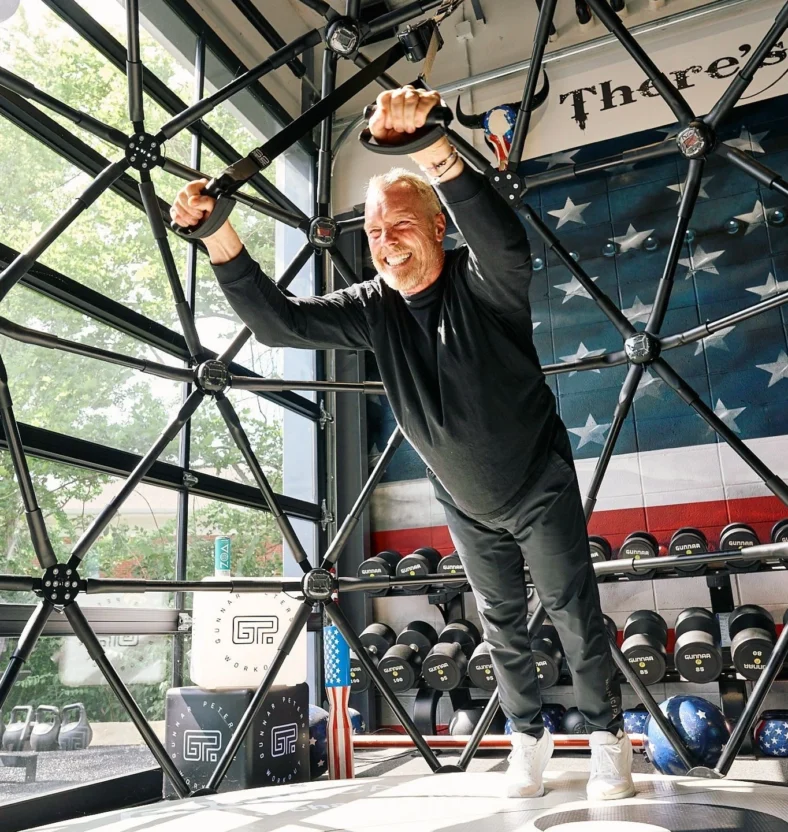 credit: Gunnar Peterson
When asked what advice he’d give someone overwhelmed by the current fitness landscape, Peterson noted his non-negotiables.
“No particular order,” he said. “Strength training, including unilateral work and hitting the posterior chain. Red light therapy. Adequate protein. Adequate hydration. Adequate sleep.”
“And get your steps,” he added. “Seven to 10,000. People say, ‘I can’t do that.’ Shut up. You can.”