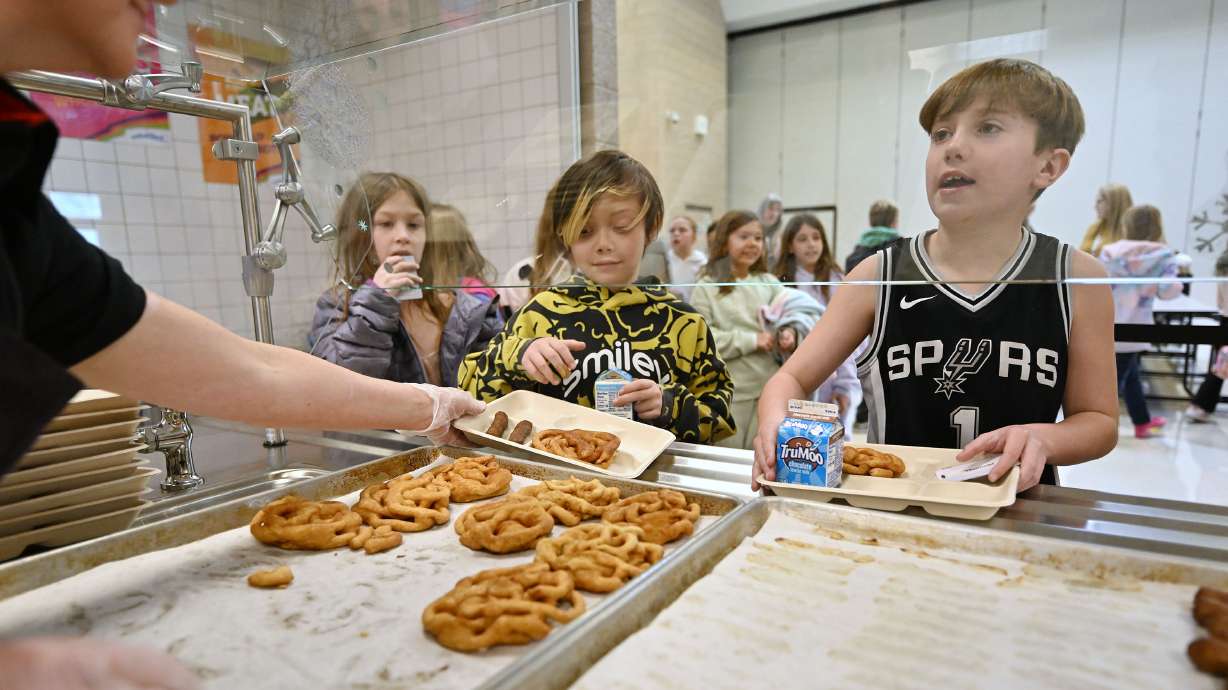
SALT LAKE CITY — A year ago, the Utah Legislature passed a law to prohibit certain ingredients in school lunches across the state. This year, one lawmaker is looking to add to that list.
The bill, HB350, from Rep. Kristen Chevrier, R-Highland, ties in with the Trump administration’s recent Make America Healthy Again movement, led by Secretary of Health and Human Services Robert F. Kennedy Jr.
Along with adding another ingredient that can’t be served in Utah schools, the bill would also expand the number of schools that have to comply with the list.
Chevrier said the original idea was brought to her last year by a couple of women “whose kids were in school, and they just wanted to see healthier food, but this is something that’s been interesting to me for a long time.”
The representative said her own daughters have multiple food sensitivities and allergies, so she’s always been aware of what ingredients are in different foods.
HB350 is only one of the three bills Chevrier is running this session that deal with ingredients, chemicals and what people are consuming.
Removing titanium dioxide from Utah’s school lunches
The law that passed last year did not include rural schools or charter schools, but HB350 does include rural schools. Chevrier says she hasn’t been able to get charter schools on board yet.
Titanium dioxide is being added to the list of prohibited ingredients in HB350 this year.
Chevrier said it was added “because we’ve seen more science since the last session that indicates that it might be a problem.”
She also added that titanium dioxide isn’t in very many foods; it is typically used for making things look white, such as skim milk, toothpaste and gum.
Another change being made this year is excluding schools’ food pantries from having to follow the list of prohibited ingredients.
“Obviously, we want as much food for those as we can get. I would prefer that it were healthier food, but sometimes it’s not, and probably having something in your stomach is better than having nothing,” the representative said.
The list of ingredients that cannot be in food served or sold on school grounds is:
Potassium bromatePropylparabenTitanium dioxideBlue No. 1Blue No. 2Green No. 3Red No. 3Red No. 40Yellow No. 5Yellow No. 6
The bill would not prevent parents from giving their children food with these ingredients, just the schools themselves.
Chevrier added that the MAHA movement has helped her in running similar bills because the culture has shifted and these ideas have become more common.
Labeling the chemicals in feminine hygiene products
Chevrier also has another bill, HB442, that would require manufacturers to clearly label the chemicals in feminine hygiene products.
The representative said that these chemicals are often found in the more natural types of products.
She shared that some of it comes from the soil or what is being sprayed on crops, so the packaging would have to show whether these chemicals were intentionally added.
“I think it just gives people things to think about and makes people aware, helps them make choices,” Chevrier said.
Changing how raw milk can be sold in Utah
Another bill that Chevrier has introduced this session deals with how raw milk would be sold in Utah.
She said that HB179 would “make it a little easier for the producers to get the product to the consumers who want it.”
“Obviously, nobody needs to drink raw milk if they don’t want to drink it; it’s not an issue,” she added.
Right now in Utah, it is difficult for raw milk producers to get their products sold in stores. Not only would this bill provide an easier way for that to be done, but it would also ensure that the raw milk is clearly labeled.
“We’re making sure that if it’s in a mainstream grocery store, you’re not going to be confused when you get it,” Chevrier said. “First of all, it’s separated from the other milk, and then it has a label that says ‘raw milk’ in big letters, and how to handle it safely.”
The representative said there are some concerns about the safety of drinking raw milk, but added that as long as all the rules are followed and everything is done with cleanliness, then there shouldn’t be any issues.
However, a newborn baby in New Mexico recently died due to a listeria infection likely linked to the child’s mother drinking raw milk during pregnancy, health officials said, as reported by USA Today.
The Key Takeaways for this article were generated with the assistance of large language models and reviewed by our editorial team. The article, itself, is solely human-written.