The Broward school district will no longer cover popular weight-loss medications on its insurance plans, leading to complaints that the district is putting its financial health ahead of employees’ health.
The School Board recently decided to stop covering GLP-1 medications, such as Wegovy and Zepbound, for employees using them for weight loss. The drugs will still be covered for diabetes use, district officials say.
The change takes effect April 1 and affects 2,216 people on district health insurance plans, Dildra Martin-Ogburn, director of benefits and employment services, told the Superintendent’s Insurance and Wellness Advisory Committee on Wednesday.
District officials say the decision will save $12 million and will put Broward in line with other school districts, many of which have never covered GLP-1 medications for weight loss. Miami-Dade and Palm Beach County school districts confirmed to the South Florida Sun Sentinel that they do not offer this coverage.
“Our health care costs have increased by more than $80 million, while we are also facing a $90 million shortfall due to declining enrollment,” School Board Chairwoman Sarah Leonardi told the Sun Sentinel. “We have a responsibility to ensure we can continue to offer stable and sustainable health care coverage for all employees. … We remain committed to providing the best possible health care options for our employees within our current fiscal reality.”
But some employees and their labor unions say this is the wrong place for the district to try to cut costs. They also argue the decision was made without any input from district employee groups or the district insurance committee.
Anna Fusco, president of the Broward Teachers Union, described the board action as “backdoor garbage” during Wednesday’s committee meeting. The union filed a grievance on Tuesday, alleging violations to a collective bargaining agreement.
“We have people that say, ‘I go to my medical doctor, and it’s saving my life,’” Fusco said at the insurance committee meeting. “I want the medicines back. And I want the Broward County Public Schools to figure out a … way to save money other than on the backs of their employees.”
Insurance provider Aetna sets a formulary, or list of covered drugs, and GLP-1 medications for weight loss have been dropped during the past year, Martin-Ogburn told the committee. But while Aetna administers the district’s program, the Broward School District is self-insured, so it pays health care costs and makes final decisions on what is covered, district officials say.
Affected employees were first informed of the change earlier this month after they received letters in the mail from Aetna.
“Before April 1, 2026, talk to your doctor about next steps or an alternative treatment plan. If you wish to continue taking GLP-1 medication for weight loss, it will not be covered by your plan, and you will have to pay the full cost,” the letter states. “There may be alternative medications that are available under your prescription plan. Talk to your doctor about whether one of these options might work for you.”
The GLP-1 drugs cost more than $900 per month through traditional pharmacies, but the drug manufacturers now sell directly to consumers, and prices have dropped to as low as $149 per month for starting dosages.
The federal government’s new TrumpRX platform lists a starting price of $149 per month for the recently released Wegovy pill and $199 per month for the injectable pen. The starting price for Zepbound is $299 per month for the lowest dose and $449 for the highest dose, but the cost balloons to $1,049 for refills of the highest dosage.
But district employees have only been paying $25 per month.
Martin-Ogburn said at the insurance meeting that the School Board reached consensus on the change after reviewing health insurance costs at a closed-door meeting.
Tracy Merlin, who teaches at a Davie elementary school, said she takes Zepbound. The district already stopped covering the drug for weight loss last year, but she said she was able to stay on it due to having a second condition, sleep apnea. She said she doesn’t know whether her prior authorization from a physician will protect her from losing coverage.
Merlin said she doesn’t know her next step if the district quits paying for it.
“I would have to figure out a way to make some more money, and I don’t know how I would hold down an additional job while I’m raising my daughter, having a family, and teaching full-time,” she said. “I don’t have pockets of time when I can start another job. I don’t really have a solution, which I think is part of the frustration for educators right now. But going off the medication and jeopardizing my health is not an option.”
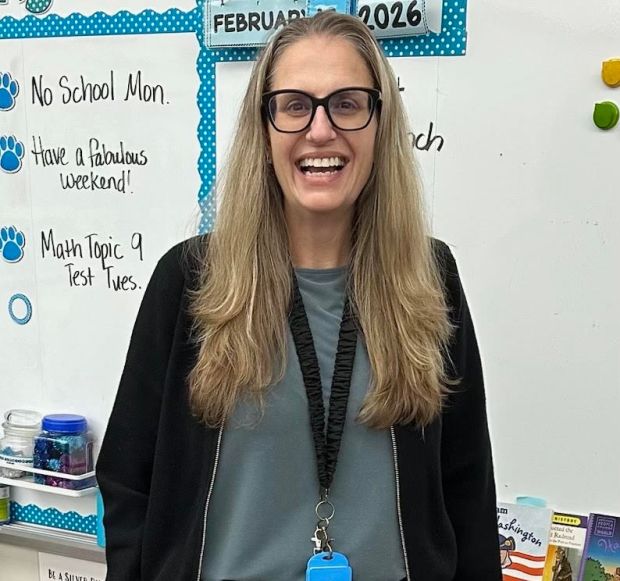 Tracy Merlin, a teacher in Davie, has been paying $25 a month for a GLP-1 weight loss medication. The Broward School District has announced it will stop covering these drugs due to high costs. (Tracy Merlin / Courtesy)
Merlin said she’s been overweight for most of her life and has tried everything, including diet and exercise, lap band surgery and a number of different weight loss medications. She said Zepbound was the first treatment that has worked for her.
“It has been life-changing for me. I’m down almost 140 pounds,” she said. “I exercise pretty much daily. I have a sort of stamina and my health back in a way that I haven’t seen because I am someone who has been through the weight-loss journey my entire life.”
The drop in coverage comes at the same time that the district is at an impasse with employee groups over other insurance-related issues. The district now fully covers monthly premiums for its employees but has proposed charging employees a monthly rate, with a sliding scale based on their salaries. Copays and deductibles would also go up. The unions have rejected that.
While those insurance changes must be bargained, the coverage of specific medications do not require negotiations with unions, Martin-Ogburn said at the meeting.
Fusco disagrees and said the union will hold a public awareness campaign to voice concerns about how the district is handling insurance matters.
“We’ve got a campaign plan of how this school board, this district is OK with their employees getting sick and dying because that’s exactly how people are relating it to me,” Fusco said at the insurance committee meeting. “They say, ‘This medicine has literally saved my life.’ I am not going to ignore that. I’m saying you need to go back and get this turned around like yesterday.”
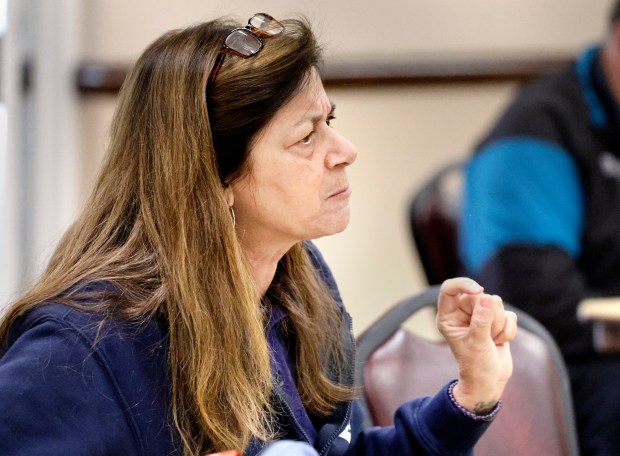 Lisa Yurkin, a liaison with the Federation of Public Employees, speaks during a Broward schools wellness committee meeting at Nob Hill Soccer Club Park in Sunrise, Wednesday, Feb. 11, 2026. (Carline Jean/South Florida Sun Sentinel)
Lisa Yurkin, an employee relations liaison for another union, the Federation of Public Employees, told the insurance committee she’s a cancer survivor and questions what may happen if a medication she takes is deemed too expensive.
“What I’m hearing is sacrificing lives and health, based upon monetary formulations rather than prescription formulations,” she said. “And that’s a faulty, dangerous, dehumanizing concept that we’re going with.”
Martin-Ogburn said major drugs for cancer are on the approved list, and even if they got removed, patients would have the right to appeal.
However, she said, “to be clear, there is no appeals process for the GLP-1 weight loss only drug being removed from the formulary. There are other non-GLP-1 weight loss drugs that are on the formulary that employees can speak with their doctor and move to.”
Merlin said the decision feels like a betrayal.
“As frustrating as teacher pay is, I always felt like my insurance was going to take care of me from a health perspective. And now it feels like that’s being stripped away on the backs of educators’ shoulders” because of the district’s financial problems, she said.