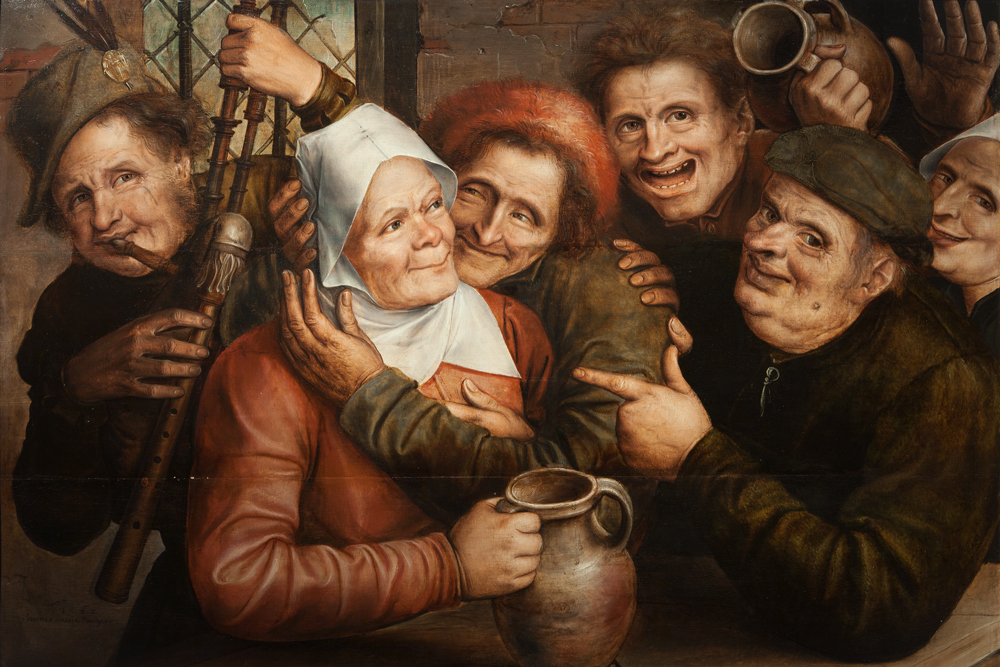
La Joyeuse Compagnie (1562; detail), Jan Massys. Musée Thomas Henry, Cherbourg-en-Cotentin
In his treatise Four Books on Human Proportion, Dürer wrote, ‘What beauty is, I know not, though it adheres to many things.’ If Dürer didn’t know, it wasn’t for lack of trying: he looked to mathematics, geometry and the natural world to try to pin down beauty and repeatedly travelled to Italy, where artists were on a similar quest. Leonardo, for example, was fascinated by the beautiful – but he was also interested in its opposite and in the late 15th century he drew several ‘grotesque’ heads based largely on real people. This exhibition at Bozar explores the work of many Renaissance artists who attempted to capture the range of human physiognomy, often in one painting, and considers how notions of beauty and ugliness evolved between the late 15th and the late 16th century (20 February–14 June). It includes work by Leonardo, Michelangelo, Cranach the Elder and Quentin Matsys, who exchanged drawings with Leonardo.
Find out more from Bozar’s website.
Preview below | View Apollo’s Art Diary
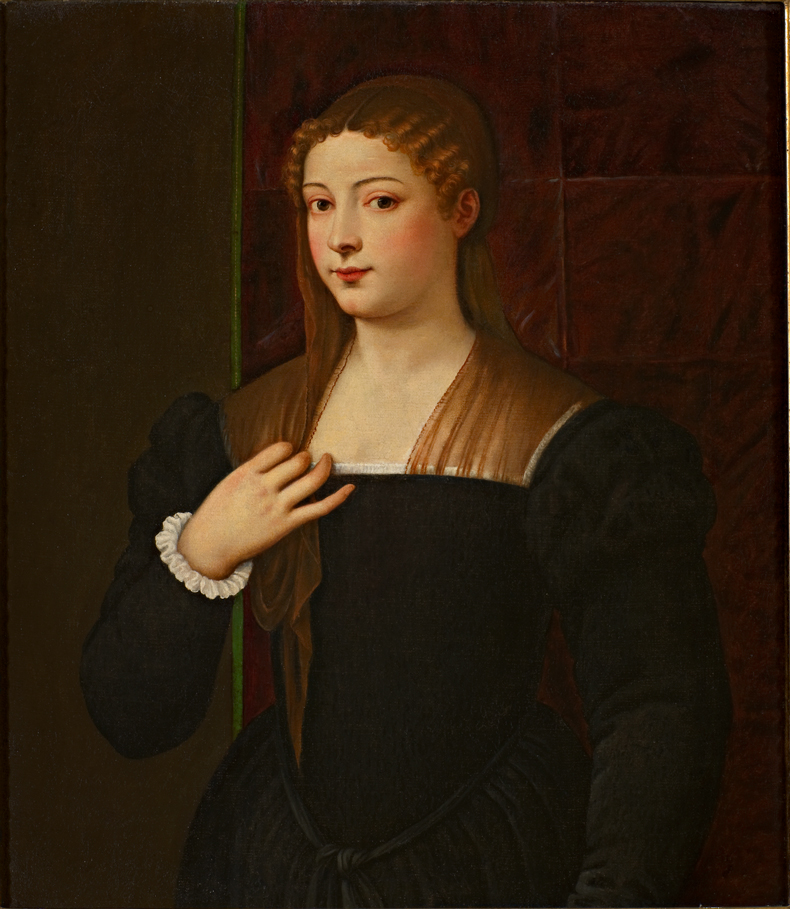 Portrait of Giulia Gonzaga (c. 1534), Titian and collaborator. Private collection
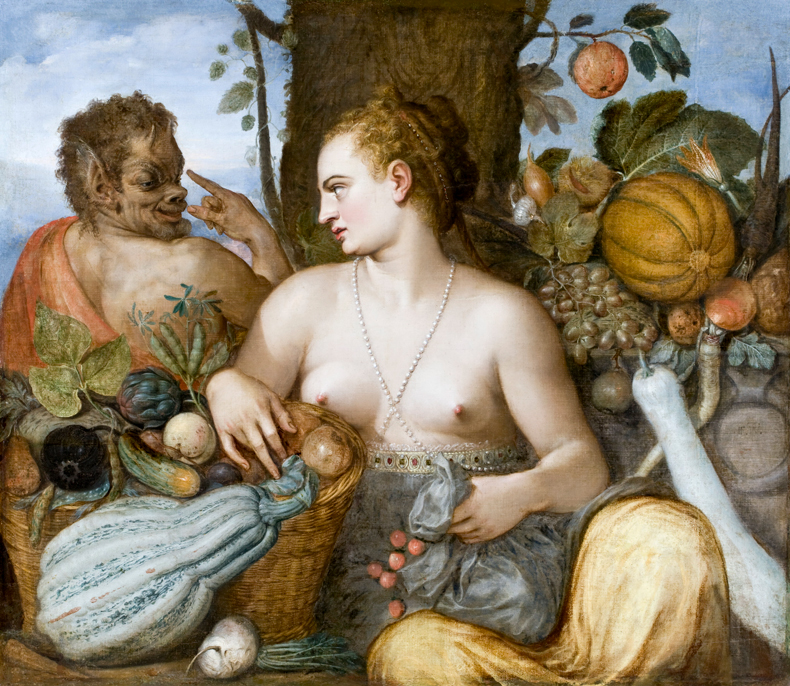 Pomona (1565), Frans Floris. Hallwylska museet/SHM, Stockholm
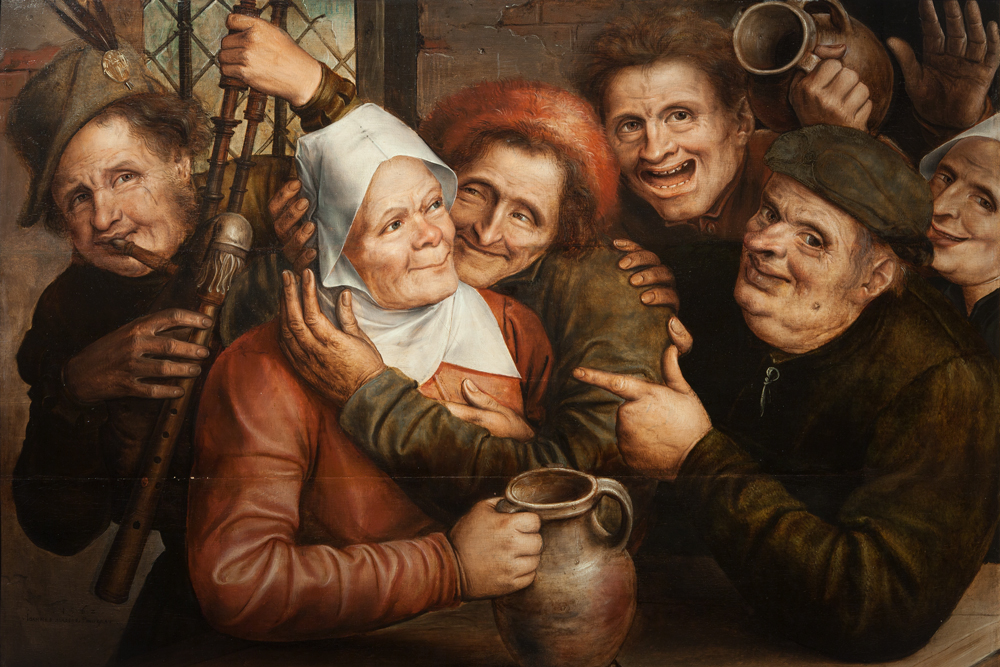
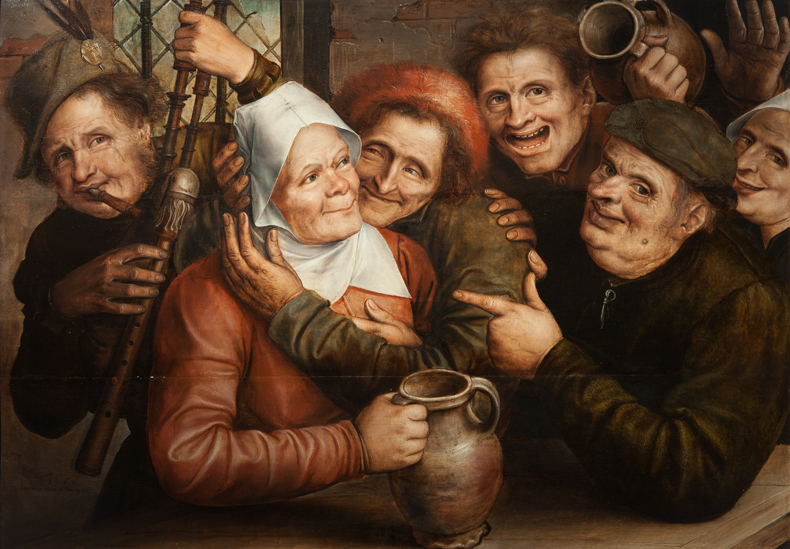 La Joyeuse Compagnie (1562), Jan Massys. Musée Thomas Henry, Cherbourg-en-Cotentin