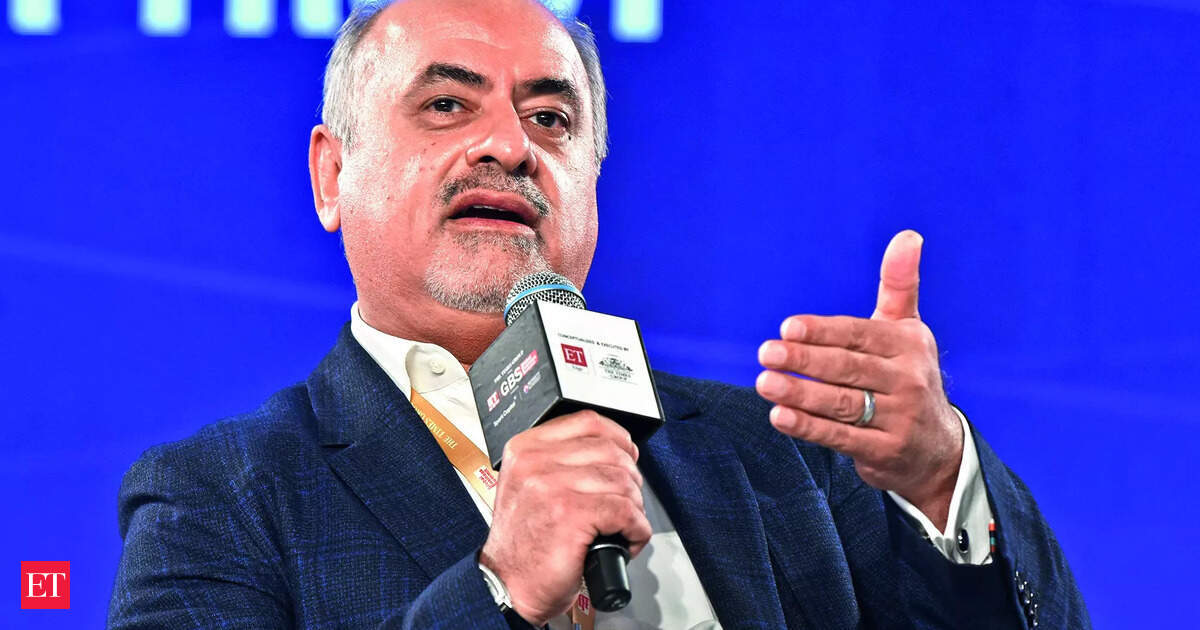
NEW DELHI: In an era where incumbent brands are being disrupted by digital-native insurgents and hyper-local challengers, turning around a legacy label demands more than nostalgia, it requires restoring cultural relevance, said The Body Shop chief executive officer Mike Jatania, outlining a revival blueprint nearly two years after rescuing the 50-year-old beauty company.
He defined The Body Shop’s core messaging. “I would say the Body Shop is a purpose-led brand and has been a purpose-led brand for the last 50 years,” he said at the summit, pointing to the ethos first shaped by founder Anita Roddick, encompassing ethical sourcing, diversity and fair trade.
Though the beauty giant’s pillars of purpose were intact, performance still lacked. When Jatania acquired the company, it was making losses and had been pushed into administration after changing hands multiple times-from L’Oreal to Brazil’s Natura & Co.
“What happened was, over these ownerships, the soul of the brand was lost, and cost crept in,” he said.
In today’s beauty landscape, which is growing at double digits in many regions and faces stiff competition, rapid trend cycles and algorithm-driven discovery, legacy alone offers little protection. Brands that once dominated mall shelves now compete with influencer-led labels born on social media and scaled through marketplaces.
 Live Events
“This is a challenge many legacy brands face, and in one word, you can describe that challenge as ‘relevance’,” said Jatania.
Globally, The Body Shop has a significant presence-a billion-dollar brand operating in a70 countries with around 2,000 stores and 80% awareness. However, this awareness had not translated into growth.For Jatania, the focus was on updating the brand without changing its core values and aligning it with consumers who expect transparency, performance and speed.
“Today’s consumer, the Gen Zs and Gen alphas, are unforgiving if the product quality or the product promise is not kept,” he explained.
Distribution was another critical part of his revival strategy. While The Body Shop continues to operate a large global store network, Jatania acknowledged that shopping behaviour has shifted. “You’ve got bricks and mortar stores, but today, every consumer does not want to be forced to come to your store to buy their product,” he said. “They want to buy through quick commerce.”
This meant strengthening digital channels, expanding marketplace presence and adapting to faster delivery models.
Over the past 16 months, the company has implemented a structured transformation plan that included cost reduction, rightsizing the business, improving internal processes and accelerating innovation. The result, Jatania said, is a return to profitability and cash generation, creating a base for future expansion.
Clarity of positioning remains central to Jatania’s playbook. “You must have real clarity of purpose, a very sharp amplification of what the brand stands for, and then execution of that, and ensuring that you are now playing a game where the rules have changed,” he said.