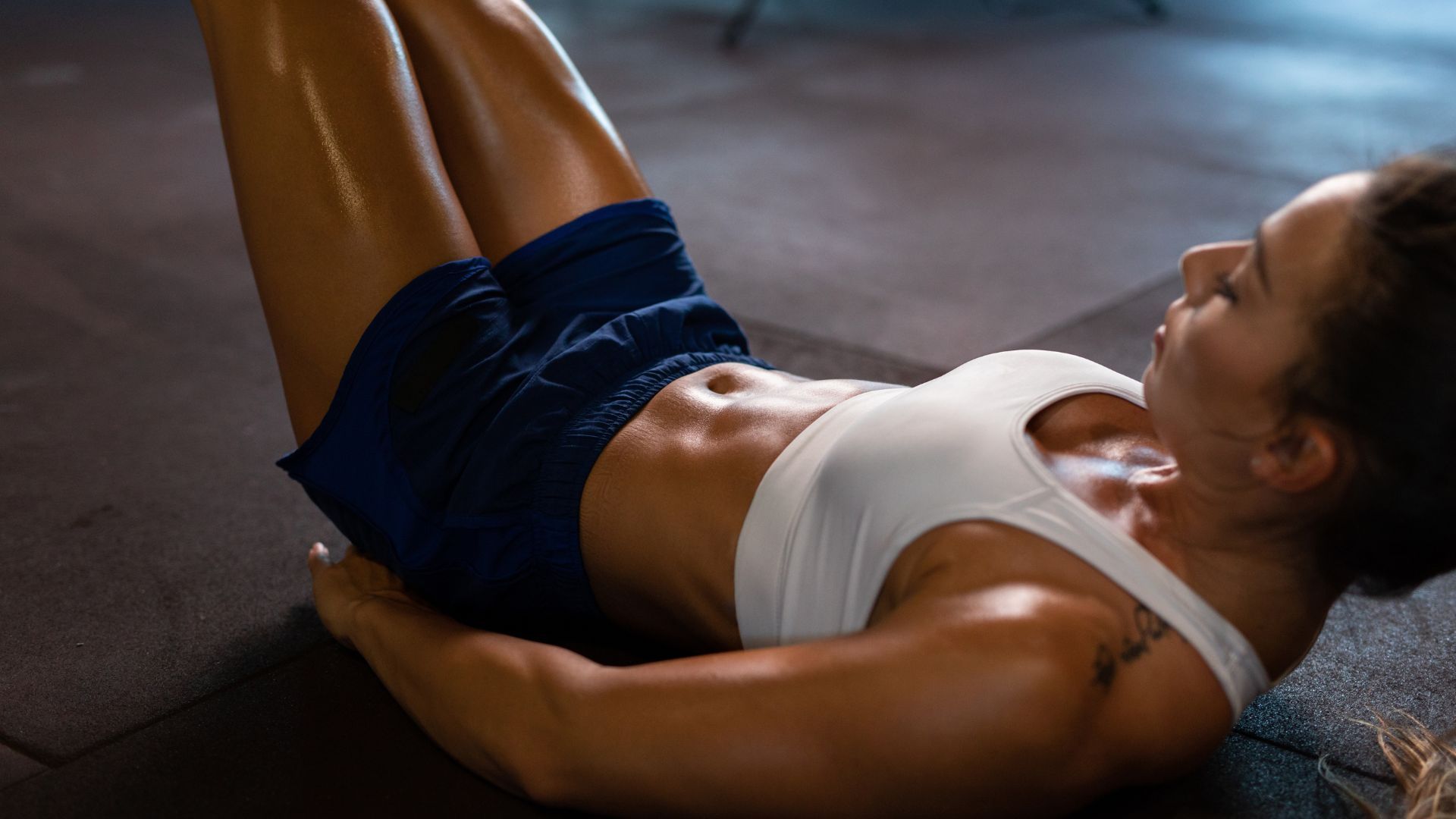
While everyone likes the look of a sculpted midriff, strong abs are also about supporting your spine, improving posture, and protecting your lower back. The key isn’t endless crunches, but strengthening the deep stabilising muscles that support movement.
Research published in BMC Sports Science, Medicine and Rehabilitation shows that targeted core training can improve stability, reduce lower back pain and enhance overall function. So when Sophie Deakin, Pilates teacher and co-founder of Radiant Waves Retreats, showed me a deceptively simple core exercise I hadn’t tried before, I was all in.
What is the Pilates Criss-Cross?
“The Pilates criss cross is a classic mat exercise that targets the deep core, with an emphasis on the obliques through controlled spinal rotation,” says Sophie. “The twisting action challenges coordination while training your body to move from the centre rather than momentum.”
You may like
Pilates Obliques Criss Cross – YouTube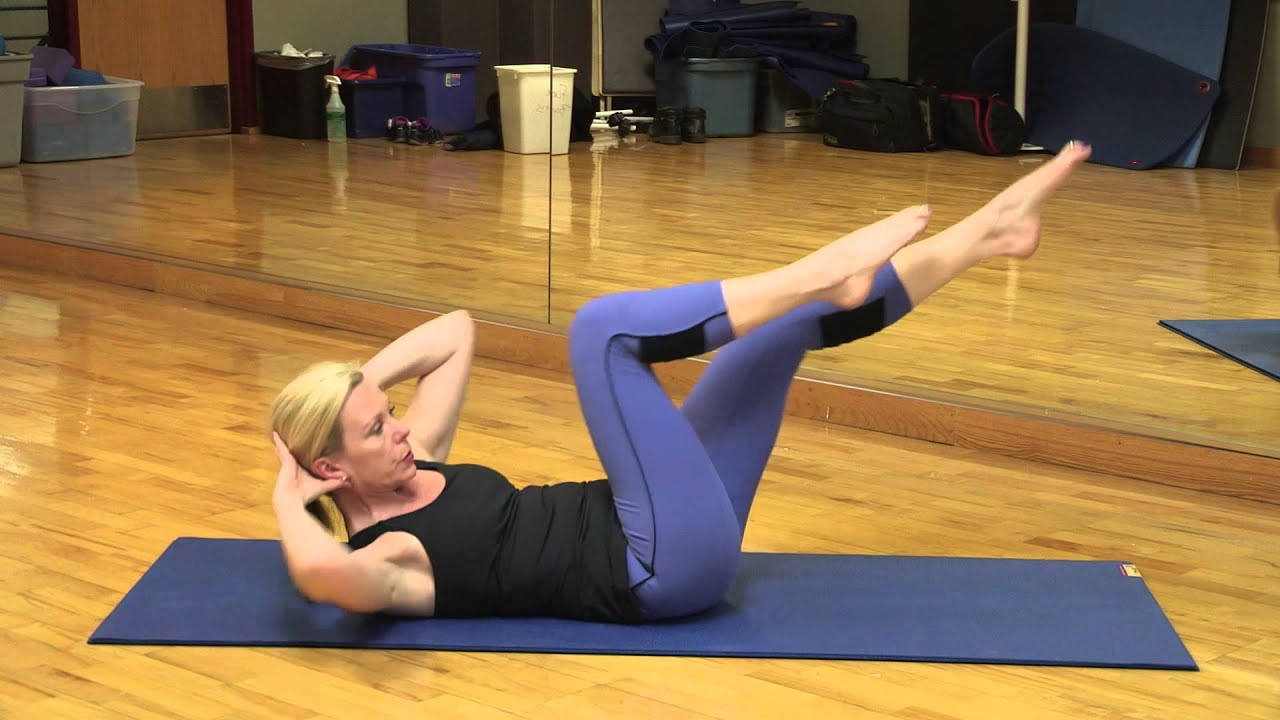
It looks similar to a bicycle crunch, where you simultaneously cycle your legs and twist your upper body, but in true Pilates style, the criss-cross is slower and more controlled, focusing on maintaining pelvic stability and a supported spine while the upper body rotates side to side.
“This makes the move a more mindful and effective core exercise that builds strength, control, and balance through the waist, rather than just working superficial abs,” explains Sophie.
Benefits of criss-crosses
It’s natural to feel an abdominal burn with this core move, but the key is to slow it down and move with intention. “Pilates criss-crosses aren’t just about moving the torso side to side – they’re about control, stability, and engaging the deep core,” says Sophie.
“Rather than simply flexing the spine, the exercise teaches you to rotate with precision while keeping the pelvis steady, and the centre braced. This recruits the obliques and transverse abdominis to support posture and protect the spine.”
She adds that the benefits go beyond strength. “The movement improves spinal mobility, enhances body awareness, and strengthens the lower back, while also teaching you how to use your breath.”
“Think deep, intentional breathing through the lateral ribs to engage the transverse abdominis from the inside out, then exhale through each twist. This inner engagement increases control and ensures the exercise is driven by the core rather than momentum.”
How to do the Pilates criss cross
You won’t need any equipment for this exercise. The criss-cross can be performed almost anywhere – at home, in the gym, or even outside – all you need is a yoga mat to cushion your back against the ground.
You may like
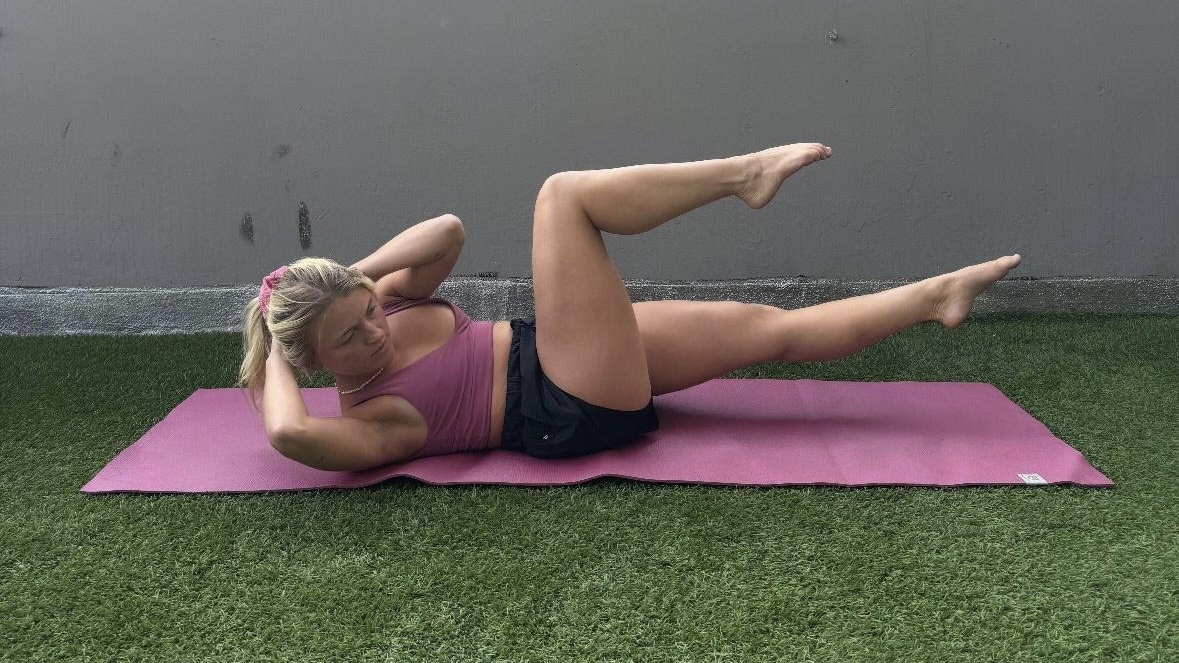
Sophie Deakin demonstrates the Pilates criss-cross exercise
(Image credit: Sophie Deakin)
Begin by lying on your back with your legs bent and feet planted on the floor, before placing your hands behind your head.Take an inhale to prepare, and on the exhale, bring your legs to the table top and lift your head, neck and shoulders to look towards your knees.Take an inhale here, then exhale and bring your right elbow towards your left knee as the opposite leg extends away, rotating your torso in the process.Switch sides with control, moving fluidly from side to side, while keeping the pelvis stable.How Pilates criss crosses can improve your sport
Whether you’re perfecting your padel game, playing tennis, or looking to run longer and faster without back pain, Pilates criss-crosses build strength, stability, spinal mobility, and rotational control.
“Being able to move through a full range of motion allows you to generate more strength while improving spinal mobility and controlled torso rotation,” says Sophie. “The exercise also supports posture, body awareness, lower-back health, pelvic stability, and breath control.”
Here are five top tips to help you get the most out of the move:“Think length, not speed,” says Sophie. “Slow and controlled is far more effective than quick, momentum-fuelled movements. It’s the time under tension that does the work.”“Keep the elbows wide and avoid pulling on the neck,” advises Sophie. “Instead, focus on lifting from the core.”“Initiate the twist from the ribcage, not the shoulders,” she adds.“Keep the pelvis steady and the lower back supported,” says Sophie. You do this by pulling your belly button toward your spine.“Breathe fully and exhale as you twist to deepen core engagement,” she says. “Make sure every time you exhale, you are working to pull your abdominals in flatter to the floor each time.”
(Image credit: Getty Images)
Add criss-crosses to your next core day, and you’ll quickly see why they’re a powerhouse for core strength, posture, and rotational control. They work well as a warm-up to activate the core and hip flexors before your main session, or as a finisher to really challenge your abs at the end of a workout.
Sophie recommends starting with 3 sets of 40 seconds, and gradually building up to 60 seconds as you become stronger and more confident with the movement.
“Try to include this exercise three to four times a week to start seeing and feeling a difference,” says Sophie. Just remember: quality over quantity. You should feel a deep burn, but never pain.