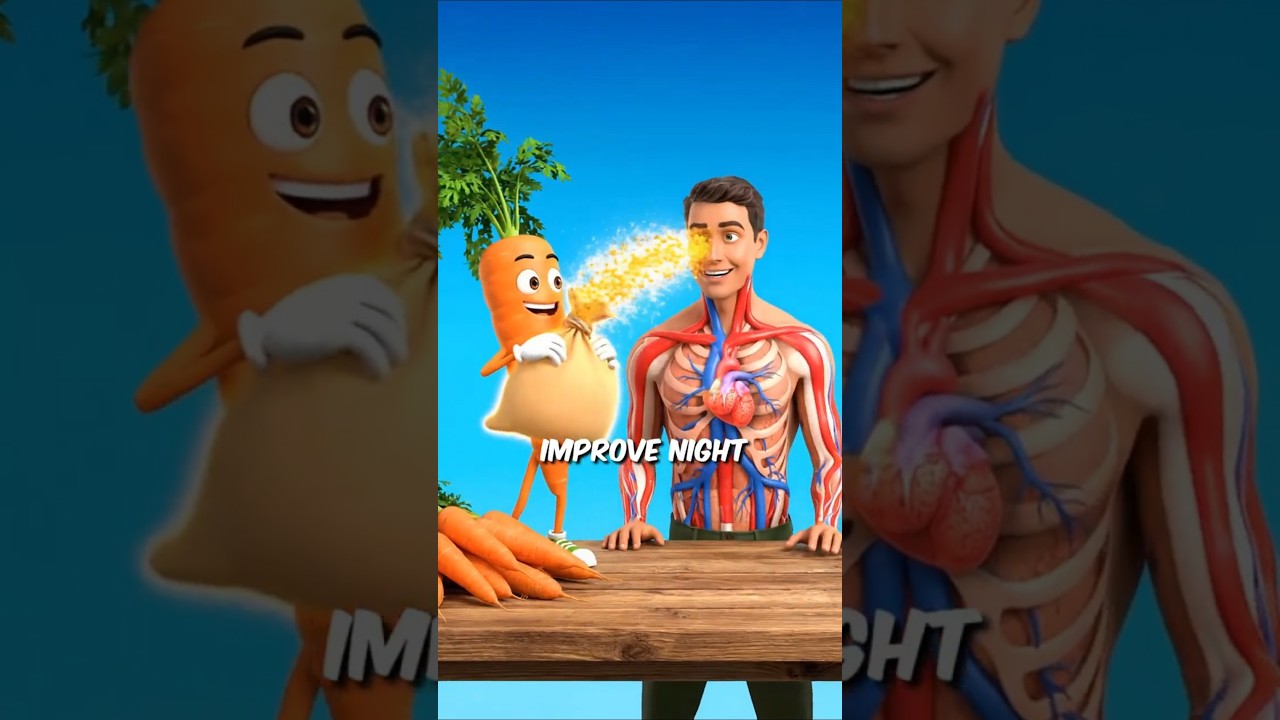
Do carrots really improve night vision? The answer might surprise you! 🥕👁️
In this video, we break down the science behind carrots and vision to reveal the truth about this popular health claim. Discover what Vitamin A actually does for your eyes, why carrots can help in specific situations, and why eating more won’t give you superhuman night vision.
🔬 WHAT YOU’LL LEARN:
✅ How Vitamin A from carrots affects your eyes
✅ The role of rhodopsin in night vision
✅ Why carrots help when you’re deficient (but not otherwise)
✅ The “phone battery” concept that explains everything
✅ Which foods provide Vitamin A besides carrots
✅ The truth about vision improvement claims
🥕 THE SCIENCE EXPLAINED:
Carrots contain Vitamin A, an essential nutrient your eyes need to see in low light. When Vitamin A enters your body, it travels to your retinas where it helps form rhodopsin—a light-sensitive protein in your rod cells that enables night vision. But here’s the key: you only need a certain amount.
Think of it like charging your phone. If your battery is at 20%, charging helps tremendously. But if it’s already at 100%, more charging does nothing. The same applies to Vitamin A and vision. If you’re deficient, carrots will restore your night vision. But if you’re already getting enough from your normal diet (eggs, dairy, meat), extra carrots won’t make your vision better than normal.
Most people in developed countries already consume adequate Vitamin A through their regular diet, which means their “vision battery” is already full. Adding more carrots won’t create superhuman eyesight—it just maintains the healthy vision you already have.
🍳 VITAMIN A FOOD SOURCES:
While carrots are famous for Vitamin A, many everyday foods provide this essential nutrient:
– Eggs (especially yolks)
– Dairy products (milk, cheese, yogurt)
– Meat and fish
– Leafy greens
– Sweet potatoes
– Bell peppers
📊 THE BOTTOM LINE:
Carrots absolutely help your vision—but only if you’re lacking Vitamin A. For most people eating a balanced diet, extra carrots maintain healthy eyes but won’t give you night-vision superpowers. The “carrot myth” isn’t completely false, but it’s not the whole truth either.
This video uses cutting-edge 3D medical animation to show exactly how Vitamin A works inside your eyes, making complex science easy to understand. Whether you’re curious about nutrition, eye health, or just want to know if this popular claim is true, this video has the answers backed by science.
🎓 PERFECT FOR:
– Anyone curious about nutrition myths
– People interested in eye health
– Those seeking science-based health information
– Students learning about human biology
– Health-conscious individuals
💡 KEY TAKEAWAY:
Carrots contain vital nutrients for eye health, but they’re not magic. Vitamin A deficiency causes vision problems that carrots can fix—but if you’re already getting enough, extra carrots simply maintain (not enhance) your normal vision.
👁️ Want to learn more about eye health and nutrition? Subscribe for more science-based health explanations with stunning visual demonstrations!
⚠️ DISCLAIMER:
This video is for educational purposes only and is not medical advice. The information presented is based on scientific research about Vitamin A and vision. Consult with healthcare professionals for personalized medical guidance.
🔔 SUBSCRIBE for more myth-busting health science videos!
#Carrots #NightVision #VitaminA #EyeHealth #ScienceExplained #NutritionMyths #HealthFacts #VisionHealth #FoodScience #HealthEducation