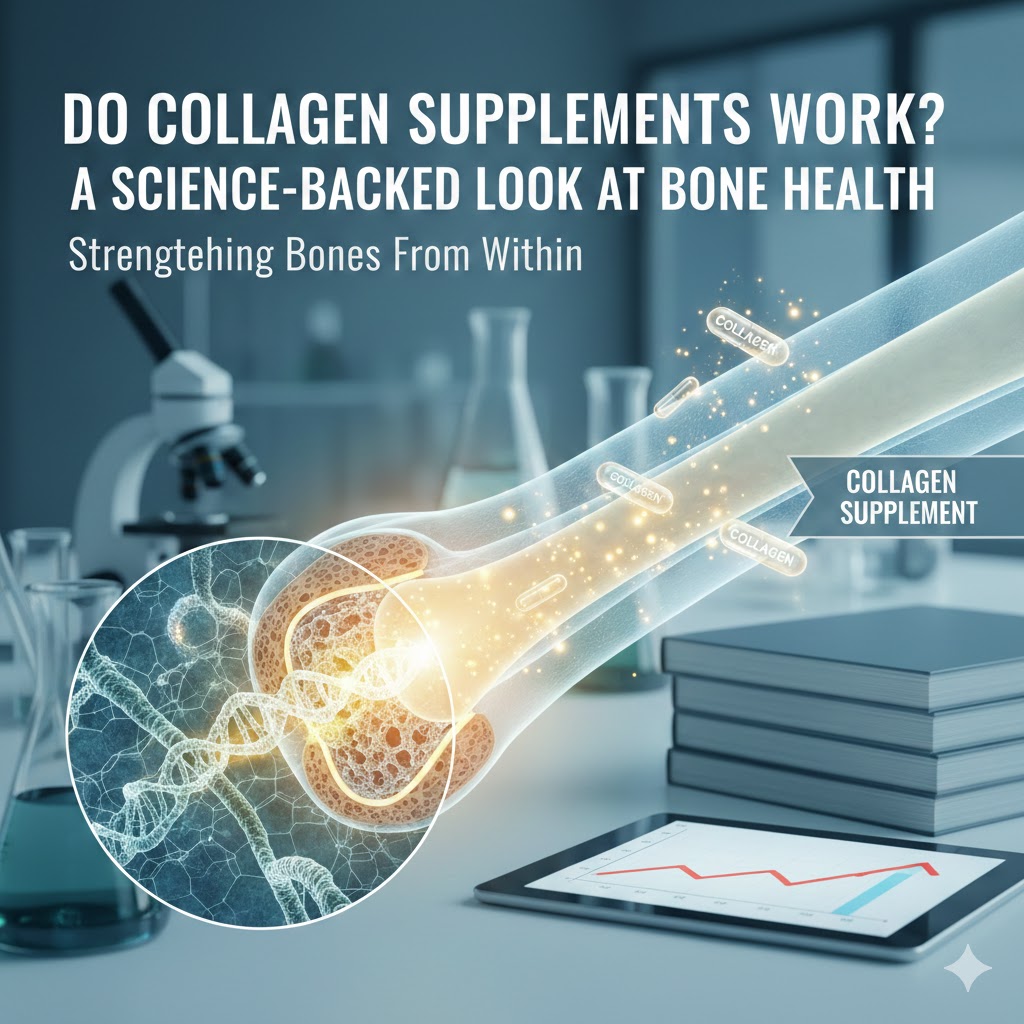
Collagen is the most abundant protein in the human body and plays a key role in providing structure to bones, joints, and connective tissues. As natural collagen production declines with age, interest in supplementation has grown—especially among people concerned about bone strength and osteoporosis risk.
But the important question remains: do collagen supplements actually work?
What Collagen Does for Your Bones?
Bones are not just made of minerals like calcium; they also contain a protein matrix, primarily collagen, which gives them flexibility and resilience. Collagen helps bind minerals and supports bone regeneration, contributing to overall bone density and strength.
Because of this structural role, researchers have explored whether taking collagen peptides could support bone health or slow bone loss over time.
What Research Says About Collagen and Bone Health?
Evidence Showing Potential Benefits
Recent research suggests collagen supplementation may offer measurable benefits, particularly for people at risk of bone loss:
Studies have found that collagen peptides can increase bone mineral density (BMD) in areas like the spine and hip.
Some trials reported improvements in bone formation markers after long-term daily supplementation.
Combining collagen with calcium and vitamin D appears to produce stronger improvements than using those nutrients alone.
These findings suggest collagen may help strengthen the organic framework of bones and support fracture prevention, especially in older adults.
Where the Evidence Is Still Limited?
Despite encouraging results, the science is not fully settled:
Some reviews note that overall evidence remains inconsistent and often comes from small studies.
Experts also point out that while supplements provide amino acids, the body can produce collagen naturally from dietary protein.
Major medical sources emphasize that benefits appear modest and more research is needed to confirm long-term effects.
In short, collagen supplements show promise, but they are not a replacement for proven bone-health strategies.
Who May Benefit the Most?
Research indicates collagen supplementation may be more helpful for:
Postmenopausal individuals at higher risk of bone density loss
Older adults with reduced collagen production
People combining supplementation with exercise and adequate nutrient intake
Collagen may also support joint comfort and connective tissue health, which can indirectly improve mobility and overall skeletal function.
How to Support Bone Health Beyond Supplements?
Even if you choose to take collagen, it works best as part of a broader approach that includes:
Adequate calcium and vitamin D intake
Regular weight-bearing exercise
Balanced protein consumption
Healthy lifestyle habits
Experts consistently highlight these factors as the foundation of strong bones.
The Bottom Line
So, do collagen supplements work for bone health?
Current research suggests they can provide modest benefits, such as improving bone density and supporting bone turnover markers—especially in older adults or those at risk of osteoporosis. However, results vary, and supplements should be viewed as a supportive tool rather than a standalone solution.
When paired with proper nutrition and lifestyle habits, collagen may play a helpful role in maintaining strong, resilient bones over time.
Do You Want to Know More?