The Jessica Silverman Gallery in San Francisco presents Rebecca Manson’s first solo exhibition, on view from January 8 to February 28, 2026. The New York-based artist displays a sculptural virtuosity that delves into the microcosms of nature, magnifying minute details into monumental and intensely tactile forms. Her practice redefines the ceramic tradition as a realm of visceral fantasies, where sight yields to touch and form asserts itself decisively over any notion of function.
The exhibition’s title, Time, You Must Be Laughing , borrows a line from Joni Mitchell’s song Sweet Bird (1975) and alludes, with a touch of somber irony, to the inevitable transience of all living things. That laughter of time—both complicit and cruel—permeates the entire exhibition.
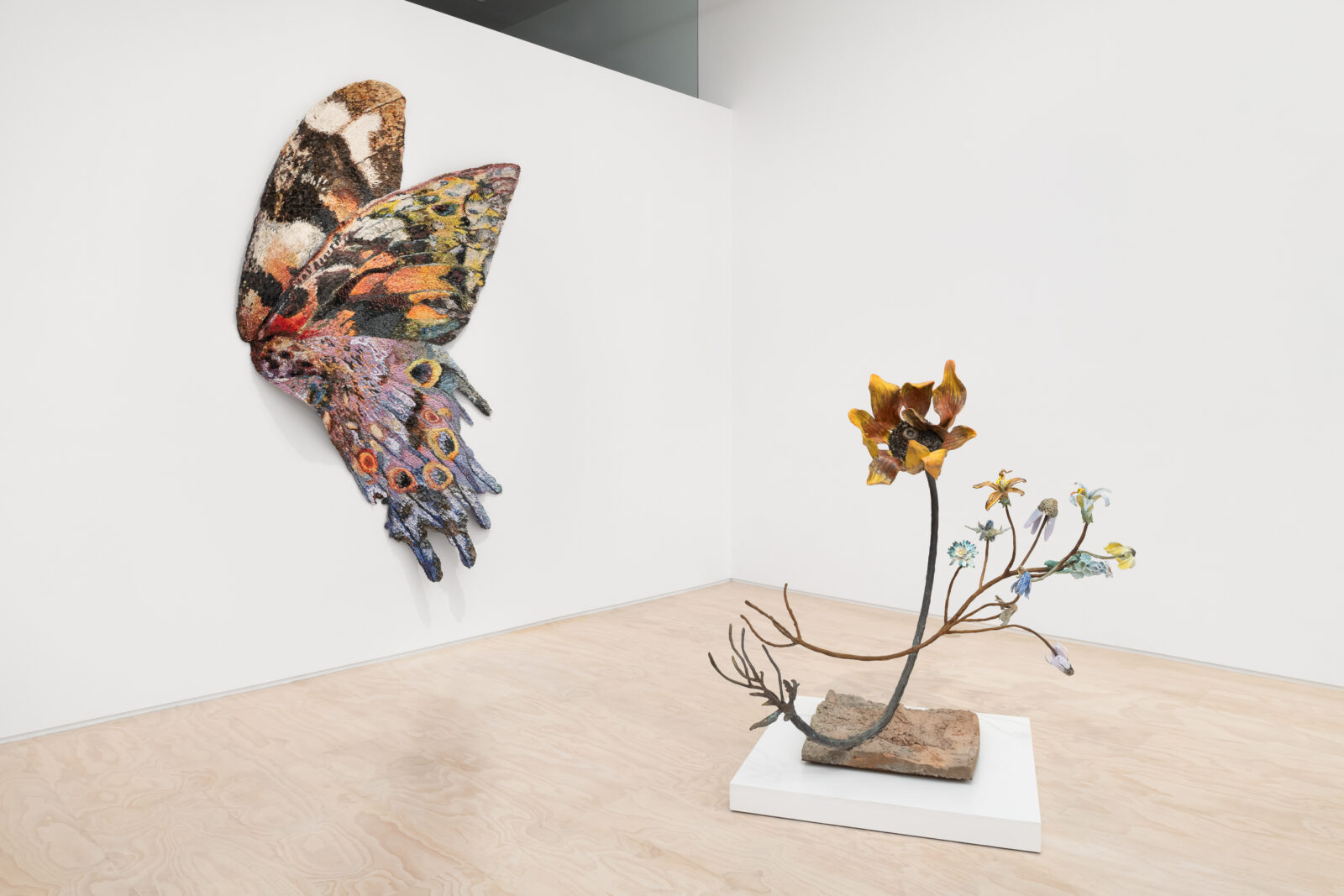
The exhibition brings together 13 sculptures, primarily made of porcelain, where monumental butterfly and moth wings, flowers, and a swing create a landscape suspended between the organic and the evocative. Collectively, the pieces explore the intimate relationship between bodies and the natural world, as well as time understood not only as a measure, but as an active force that erodes, transforms, and redefines all forms of existence.
Rebecca Manson is a New York sculptor who has revitalized the language of contemporary ceramics through technical virtuosity that combines porcelain, glass, and meticulous assemblages. Her style is characterized by the monumental enlargement of microscopic details—butterfly wings, lichens, flowers—transformed into tactile surfaces of intense physical presence.
His method is based on patient repetition: he hand-models thousands of tiny porcelain fragments which he then assembles to build complex structures, achieving trompe-l’œil effects that oscillate between the hyperrealistic and the fantastical. This laborious accumulation endows his pieces with an organic tension, where fragility and resistance coexist.
Thematically, Manson explores the relationship between the body and the natural world, as well as the passage of time understood as a transformative force. His works evoke the beauty of decay and the memory of childhood, placing the viewer before scenes where the sublime and the ephemeral intertwine with poetic intensity.
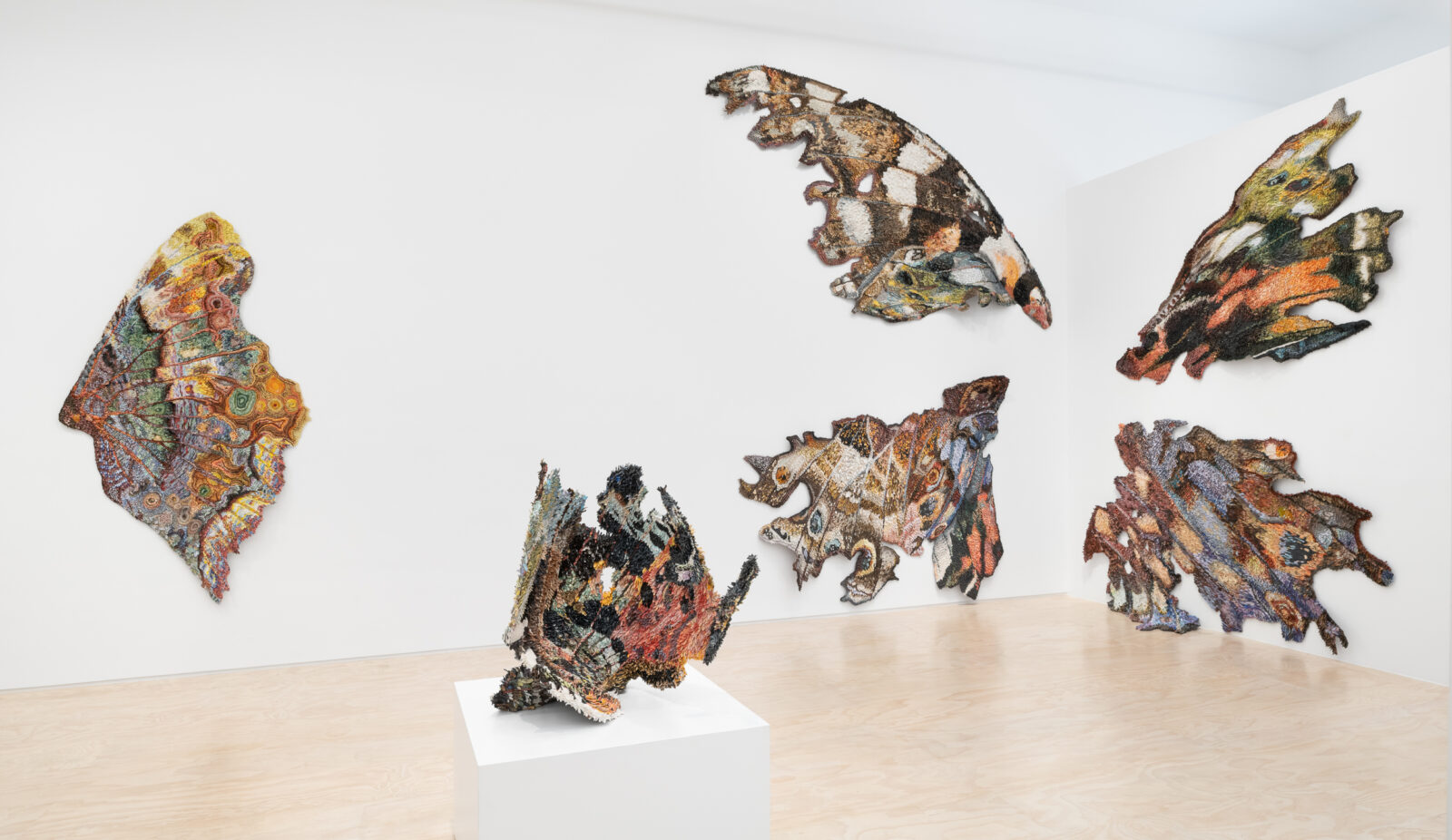
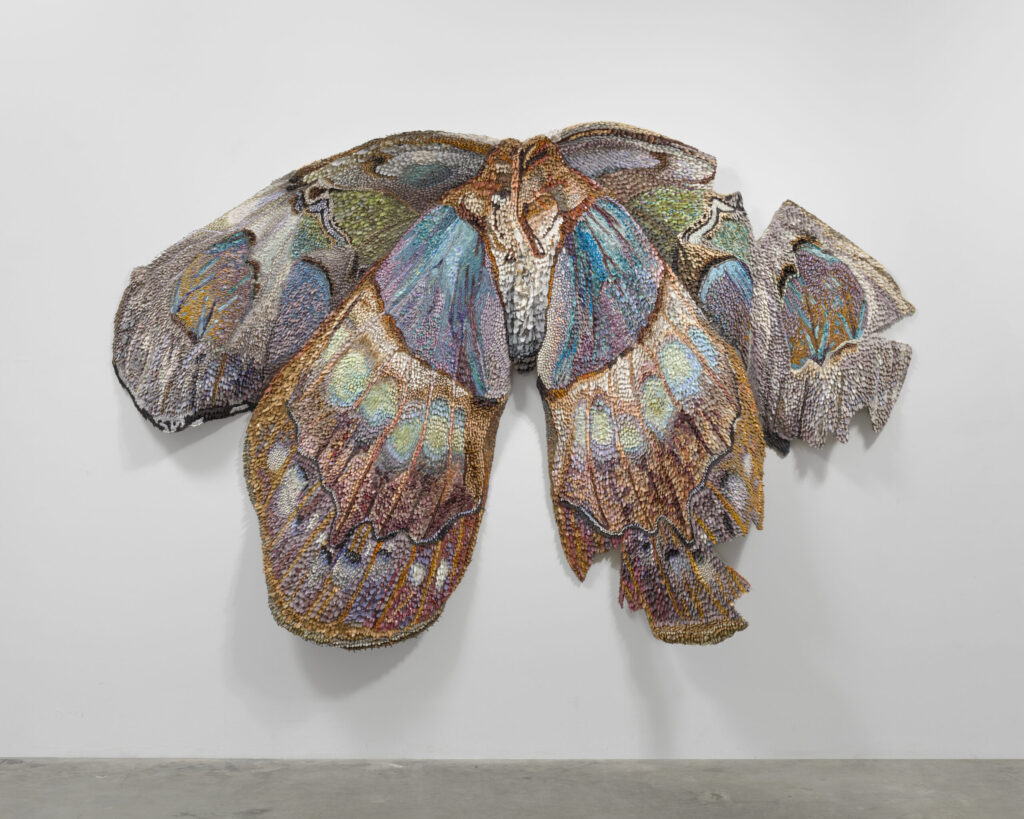
Among the most striking pieces is Exploding Butterfly (2025), a mural installation composed of four elements that captures a moment suspended in time. Its monumental butterfly wings appear to open or tear before the viewer, amplifying a minimal fracture into a material drama. The almost cinematic scene transforms delicacy into tension: beauty slowly fragments, generating a simultaneous sense of wonder and unease. The work embodies Manson’s interest in the aesthetics of decay, in that precise point where the sublime begins to crumble.
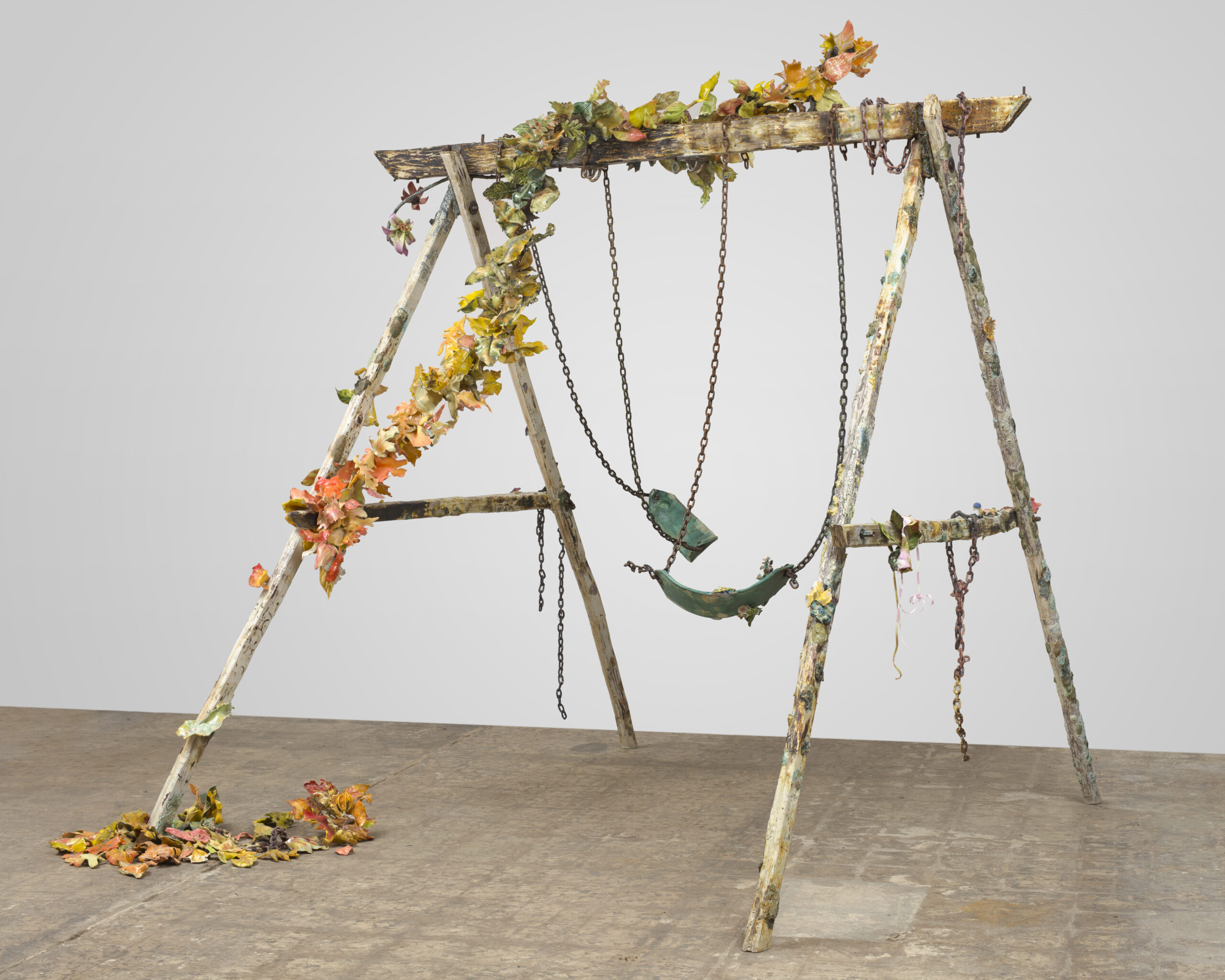
At the heart of the exhibition is The Swing (2022–2025), an eight-by-eight-foot construction made of ceramic and glass that plays with trompe-l’œil. Inspired by the artist’s childhood swing, the piece reproduces porcelain posts that mimic aged wood, covered in lichen with meticulous precision. The scene oscillates between the playful and the elegiac: the promises of youth and freedom appear almost palpable, yet elusive, as if about to vanish.