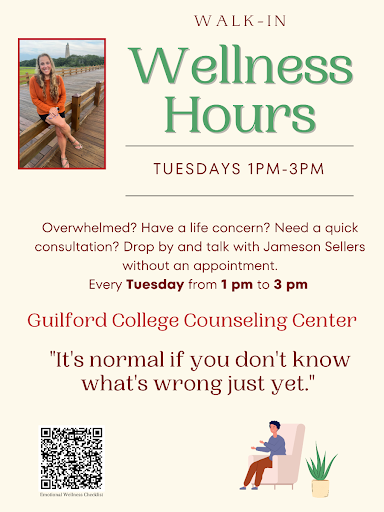
Wellness Walk-ins at Guilford are brief, same-day support sessions where individuals can stop by without an appointment to talk through immediate concerns, receive coping strategies or be connected to additional resources. Located in Hege Hall 217 every Tuesday from 1 to 3 p.m., they are designed for timely support rather than ongoing therapy.
“There’s so much transition in college,” said Jameson Sellers, who administers the walk-ins. “You have different responsibilities for the first time, or you’re living with someone new.”
Sellers believes it is important to focus on mental health during this transitional period. While working in crisis counseling and wellness, a broader resource at Guilford, she noticed a gap in available services.
“There weren’t any prescribed walk-in hours,” Sellers said. “So I decided to create a time period that students could walk in.”
The Counseling Center previously served students primarily through scheduled appointments or crisis intervention. Students could only drop in without an appointment if they were experiencing an emergency. Sellers created wellness walk-in hours to offer a middle ground.
“There was no pressure to have something specific or deep,” she said. “I thought students might appreciate the chance to walk in and say, ‘I don’t really know what’s going on, but I want to check in.’”
Wellness Walk-ins connect students with a range of resources, from internship guidance to support for acute mental health concerns. Except for situations involving a threat to oneself or others, the sessions are private and confidential.
“I always tell people when they come in for the first time that I have no expectations,” Sellers said. “You don’t have to show up with sadness or joy or anger. You can just show up.”
Some students, however, arrive with misconceptions about the program.
“There’s an occasional person who expects this to function like ongoing therapy,” Sellers said. “Ongoing therapy is about healing over time, whereas a walk-in session is focused on what’s happening right now.”
The combined pressures of academics, employment and personal responsibilities create ongoing stress for many students.
“If you’re training for a marathon, you don’t run 26 miles every day,” Sellers said. “Your body needs recovery. In the same way, your mind needs recovery, too.”
Sellers said she values the opportunity to support students through the program. While traditional therapy remains a valuable resource, she noted that many students prefer the accessibility of walk-in sessions.
“I’m thankful to have these moments with students,” she said. “Otherwise, they might not get support at all, and that gives me a lot of hope for them.”