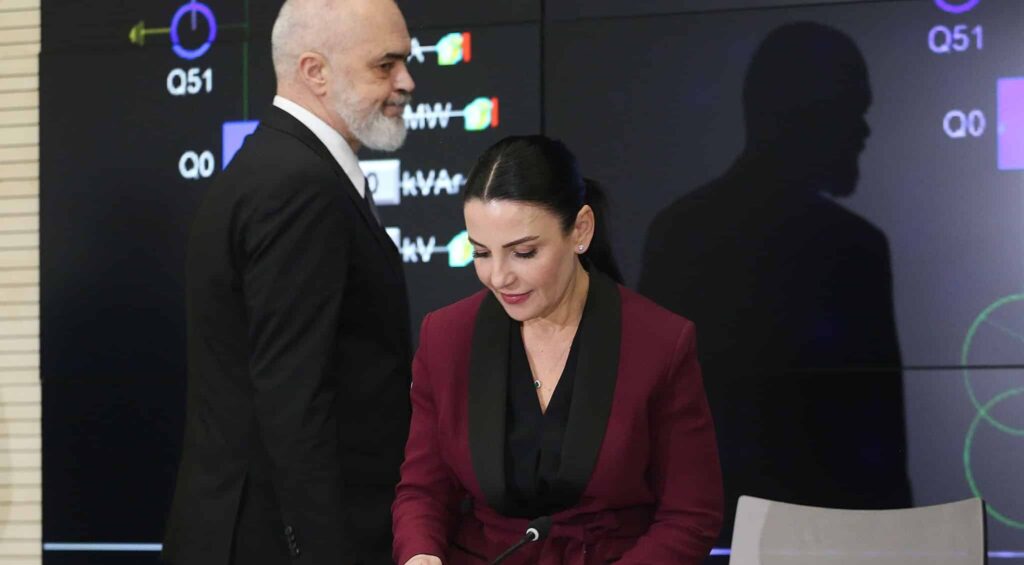
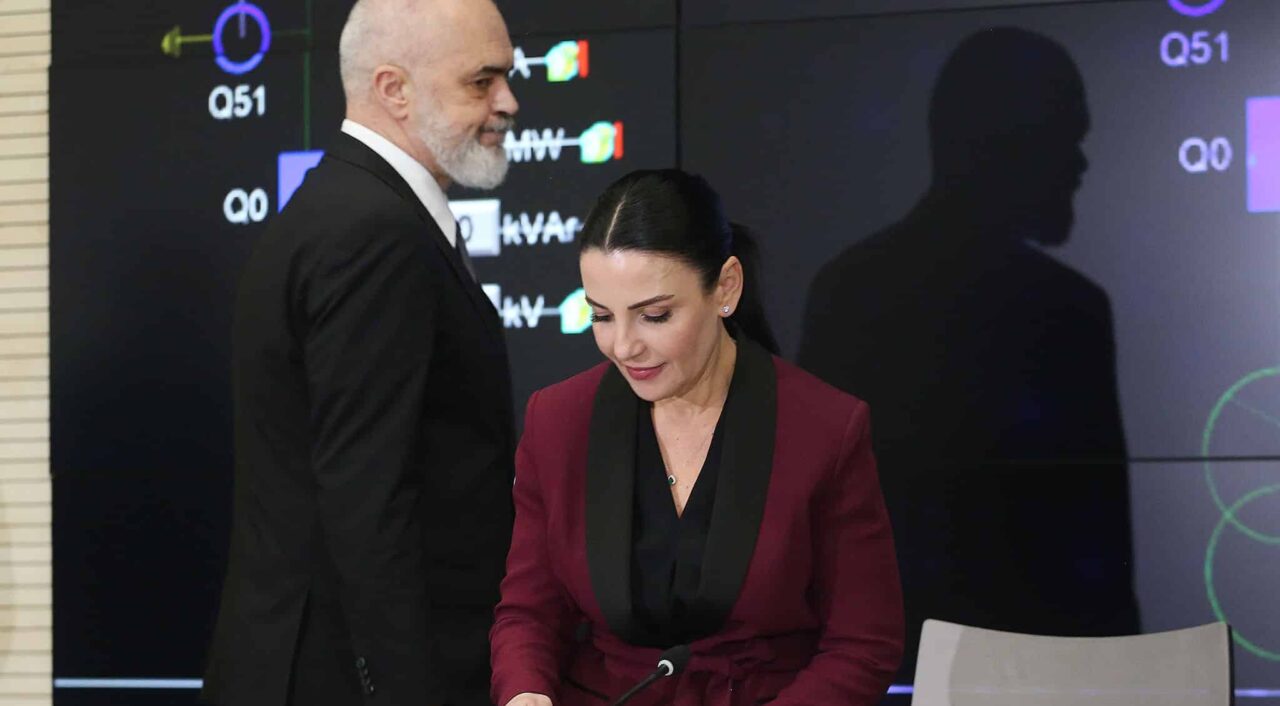
Albanian Prime Minister Edi Rama and his deputy Belinda Balluku. Photo: LSA.
Ten days after the Constitutional Court decided to suspend Deputy Prime Minister and Minister of Infrastructure and Energy Belinda Balluku, the ruling Socialist Party has proposed law changes that would exempt high officials from such measures.
If approved, the legal changes would prohibit the court from suspending from duty the President, the Prime Minister, Deputy Prime Ministers, ministers, the Ombudsman, the head of the High State Audit office and members of the Constitutional Court itself. Currently, this kind of immunity is enjoyed only by elected officials, such as MPs, mayors and members of municipal councils.
Prime Minister Edi Rama launched the proposed changes after the Constitutional Court suspended Balluku on February 6, after the Special Court Against Corruption and Organised Crime, SPAK, asked for her suspension. The Special Prosecution has charged her with interfering with public procurement procedures in seven road constructions cases.
Balluku is also an MP, and SPAK has also called on parliament to remove her immunity to allow for her arrest.
Rama has resisted this. On Monday, he recalled that “Balluku has submitted her resignation to me three times. I have them in my file…. And all three times I am the one who has refused the resignation.”
He added that having to “resign under pressure from a power [SPAK] that has left its own territory and entered the territory of the independence of the executive branch is not possible”.
Critics have condemned the new law changes as attempts to block further investigations by SPAK, which has become well known for prosecuting high officials for wrongdoing.
Opposition Democratic Party leader Sali Berisha said the law proposal would be an obstacle to Albania’s European Union accession. “Rama has closed the doors to Albania’s integration into the European Union,” Berisha told journalists.
“In the eyes of the world, Edi Rama is telling Albanians that he personally and his criminal organisation and ministers are above the law, above everything else in this country, and cannot be investigated,” Berisha added.
The next parliamentary meeting on Balluku’s immunity is expected on February 23. A vote is expected to take place on March 5.