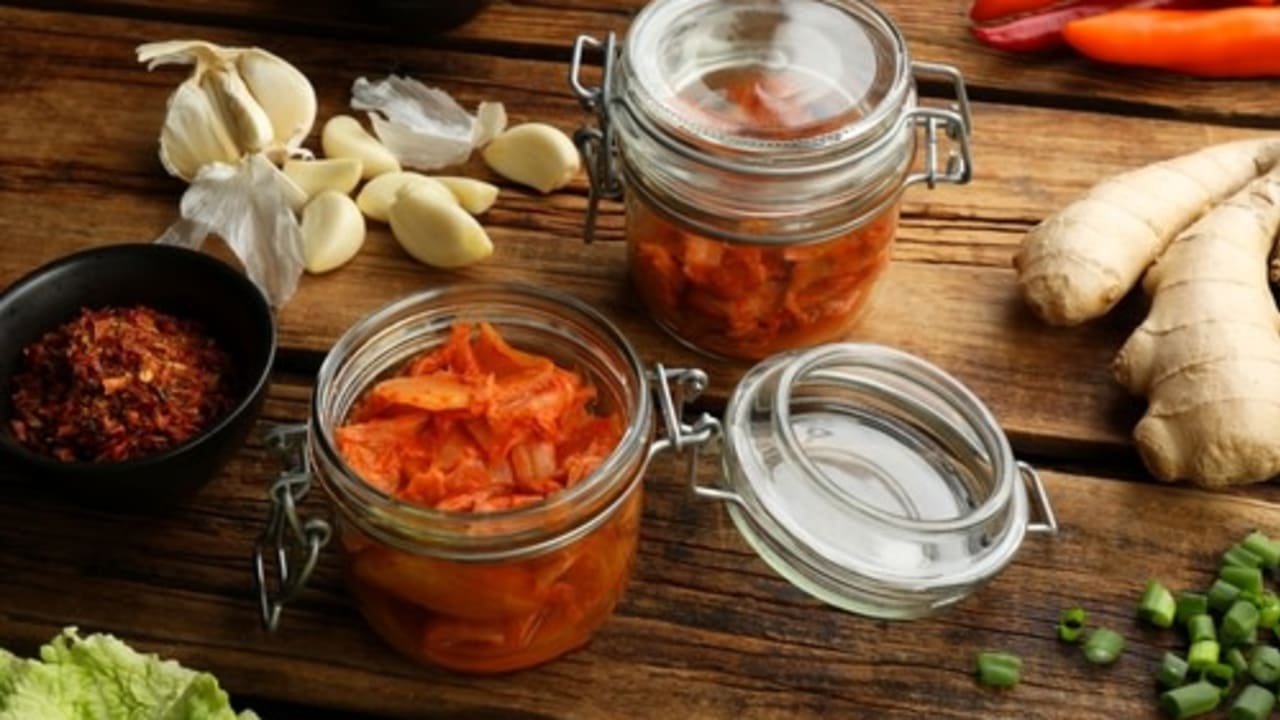
Kimchi, the fermented Korean dish based on cabbage and other vegetables, has in recent years been known mainly for its contribution to gut health and metabolism. But a new study published in the scientific journal Nature suggests a deeper picture: Kimchi may directly affect the immune system, and with a particularly high level of precision.
The researchers examined what happens to immune system cells in people who consumed kimchi for 12 weeks. And the results? A focused and precise change in the activity of key immune system cells, without triggering an excessive immune response.
The study was based on a controlled trial that included 90 adults with mild overweight. From this group, 13 participants were selected for an in-depth examination of immune system cells before and after 12 weeks.
The participants were divided into three groups:
• A group that received a placebo.
• A group that received kimchi powder that underwent natural fermentation.
• A group that received kimchi powder that underwent controlled fermentation using a designated culture.
The researchers examined tens of thousands of immune cells from each participant, to see whether kimchi consumption changes the way they function.

The central finding was a strengthening of cells called “antigen-presenting cells.” These are cells whose role is to identify a foreign agent, such as a virus or bacterium, and present it to the rest of the immune system in order to initiate an appropriate response.
After 12 weeks of kimchi consumption it was found that:
• Antigen-presenting cells became more active and more efficient.
• Their ability to capture and process foreign substances improved.
• Communication between them and other immune cells was strengthened.
In simple words: It seems that the immune system became more organized and more precise in identifying threats.
Fine-Tuning of the System
The researchers also examined T cells – particularly important cells in managing immune responses. It was found that kimchi mainly affected a specific type of T cell whose role is to coordinate and balance the immune response. These cells tended to mature and differentiate in a more advanced manner after the intervention period.
In contrast, other immune cells, such as cytotoxic cells that directly attack infected cells, remained stable.
In other words, this is not a general “boost” of the immune system, but rather a subtle fine-tuning of it.
Why Is This Important?
One of the problems in the supplement world is the promise of “immune system strengthening.” In practice, an immune system that is too strong may cause excessive inflammation or autoimmune activity.
The findings in this study suggest something different: Kimchi does not cause an overall activation of the system, but rather affects early stages of the immune response, mainly in the identification and presentation of foreign agents.
This may support:
• A more precise immune response – meaning, the immune system better identifies when it truly needs to act, and responds in a focused and not excessive manner.
• A balance between inflammatory response and calm – the body knows how to activate inflammation when it needs to fight infection, but also knows how to shut it down in time so it does not cause unnecessary damage.
• Maintenance of immune system stability – a state in which the system functions in a balanced way, not too weak and not too active, but adapted to the body’s needs.
However, it is important to emphasize: The study examined cellular and molecular changes, and did not examine infection rates, diseases, or vaccine responses in practice.

The two types of kimchi examined showed similar effects, although under laboratory conditions it appears that kimchi that underwent controlled fermentation produced a slightly stronger effect. However, in the human body the differences were relatively small. The researchers note that the effect of food also depends on the personal microbiome and the biological response of each individual.
Study Limitations
• The number of participants examined in depth was small: Only 13
• Long-term clinical indicators were not examined
• The participants were people with mild overweight, and not a broad population
Therefore, sweeping conclusions cannot be drawn regarding disease prevention or actual immune strengthening.
So What Does This Mean in Practice?
Kimchi is not a miracle cure, and it does not replace medical treatment. But this study strengthens the understanding that traditional fermented food may affect the immune system in subtle and precise ways. Not through “boosting” the system, but through fine-tuning it.
For those seeking to improve dietary quality, incorporating fermented foods as part of a balanced and varied diet may be a supportive step for overall health, including immune system health.
However, it should be remembered that the effect depends on the individual, the overall composition of the diet, the health condition, and lifestyle.
Dr. Dalit Draiman-Medina is a specialist in family medicine and integrative and functional medicine