(COLUMBUS, Ohio)—Ohio Governor Mike DeWine and Ohio Department of Children and Youth (DCY) Director Kara Wente recently announced funding support for six child wellness campuses across Ohio. The campuses will provide short-term, therapeutic care for children and youth with complex needs, helping keep them closer to their families, schools, and communities.
“These campuses will address a critical gap in care,” said Governor DeWine. “Too often, children with complex needs are placed far from home simply because the right services aren’t available nearby. The new and expanded child wellness campuses will provide a local, community-based option focused on safety, assessment, healing, and stability.”
In partnership with the Ohio General Assembly, Governor DeWine directed $20 million from Ohio’s operating budget to support the creation of four new child wellness campuses and the expansion of two existing campuses. Together, the funded campuses will expand Ohio’s capacity to serve children and youth with complex needs in settings designed specifically for stabilization and healing.
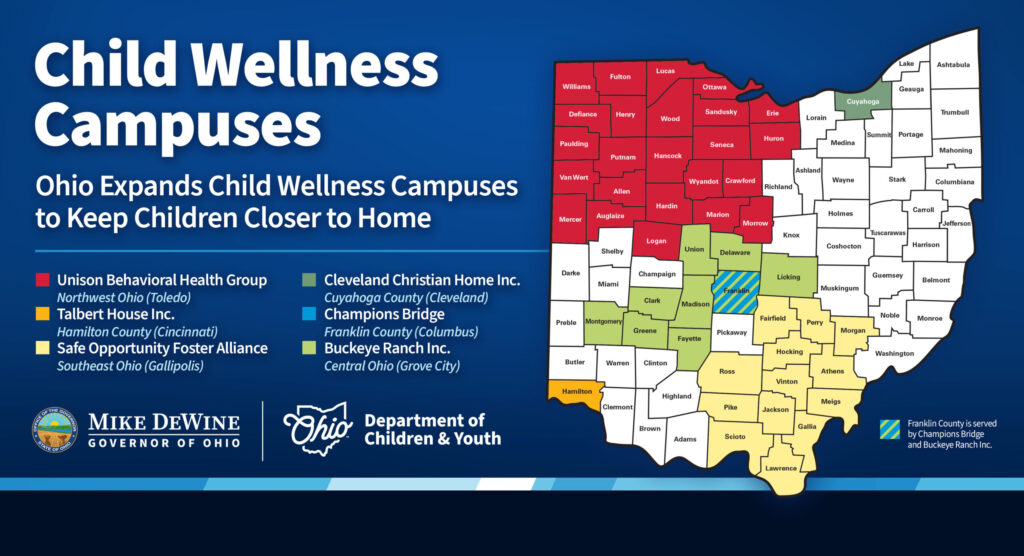
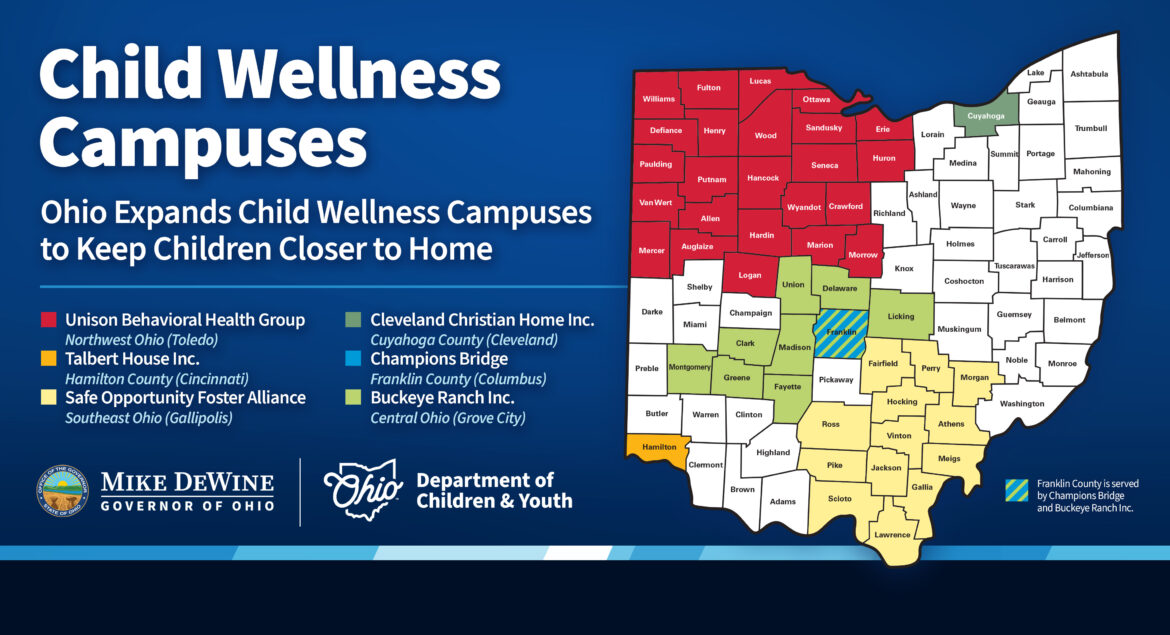
The following communities/organizations were selected to receive funding:
Talbert House Inc., Hamilton County
Unison Behavioral Health Group, Northwest Ohio
Safe Opportunity Foster Alliance, Southeast Ohio (Expansion)
Buckeye Ranch Inc., Central Ohio
Cleveland Christian Home Inc., Cuyahoga County (Expansion)
Champions Bridge, Franklin County
“Child wellness campuses are rooted in local communities,” said DCY Director Wente. “This funding helps communities build or expand short-term, therapeutic spaces that support children close to home, strengthen family connections, and ensure the right care at the right time.”
Child wellness campuses provide immediate, short-term stabilization and assessment for children and youth who do not have a safe or appropriate place to stay and are not already in licensed residential care. These campuses offer an alternative to unlicensed settings such as hotels, shelters, or agency buildings, reducing trauma and improving continuity of care.
The model prioritizes safety, youth voice, and timely assessment. Wraparound team meetings begin within hours of admission, with rapid assessments to guide next steps and longer-term services. Campuses will offer on-site individual and family therapy, partner with local stakeholders through regional Child Wellness Advisory Committees, and develop sustainability plans once start-up funding ends. The number of children that can be served at each campus will be based on community need.