The following is a transcript of my interview with registered dietician Jill Chodak on the importance of vitamin B12. It was lightly edited for clarity. Click on the LISTEN link above to hear it.
BA: There is a dizzying amount of information circulating on the internet, social media, in advertisements about Nutrition and Dietary Supplements, it can be confusing to understand what’s true, what’s hype, and what’s actually good for our health. That’s why I wanted to talk to an an expert, registered dietitian Jill Chodak, about a specific nutrient that some people may be lacking, especially older adults and people who don’t eat meat: Vitamin B12.
Jill, I wanted to talk to you about this because you shared with me that you did your master’s thesis on B12.
JC: Yes.
BA: What’s the short version of what B 12 does for our bodies?
JC: Well, it helps to convert homocysteine into an essential amino acid we cannot make without eating. We have to consume it from food. So it helps to do that. It helps in the process of metabolizing fatty acids. Helps with energy. It helps with protecting the myelin sheath on our nerves. It helps with a lot of different DNA formation and transcription. It’s a very powerful coenzyme doing a lot of different assists throughout the body.
BA: And as I understand it, you can only get it dietarily through animal products, through meat.
JC: That’s not typically true. That is the predominant source of it, but it also, our gut bacteria produces it. You can get it sometimes from, like, algae and things of that nature. Also in kombucha, like fermented foods, often have B12 that naturally occurs from the bacteria, so they also add it to fortified foods. Cereals typically get a bad rap for families, but I actually love them, because if a person’s diet is lacking or limited, if you’re eating the cereal, now you have this source of B12 that is easily absorbed.
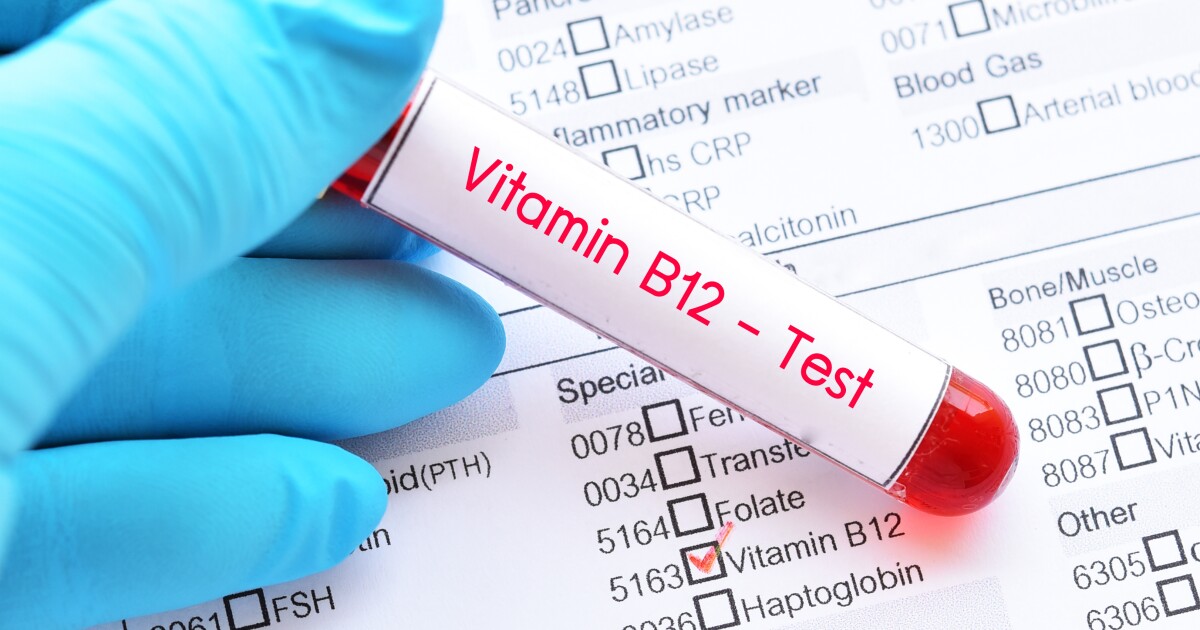
BA: I wanted to ask you about deficiency versus insufficiency. Is it possible to have a lab test that says your B12 levels, they’re right within the normal range, but you still feel symptoms?
JC: Yes. I actually, personally had this happen. And I know that some folks will probably disagree with me on this, but I hold firm on this. After seeing patients at the U of R for six and a half years, I saw quite a bit of this in the blood. We’re looking for the range to be like 230 to 1200. That’s a huge range. And so, you know, if we wait and say, “All right, you’re deficient when you technically go below 230,” you could have presented with symptoms, though, because your body’s going to want to flag it and say, “Hey, we’re running out of steam here. We need more of this.” I actually experienced symptoms at 400.
BA: What are those symptoms?
JC: So it’s that brain fog that a lot of people talk about. What that really means is you don’t feel like you’re firing on all your cylinders. You’re kind of just walking around in a haze, and your thoughts aren’t coming to you as acutely as they once were. Kind of like your head’s in the clouds. For me, it was tingling in my feet and hands. Sometimes there’s loss of balance. The best way to describe my main symptom that I had when I knew something was wrong is soul-crushing fatigue. So it’s not like the “Oh, I didn’t get a good night’s rest last night.” But it’s more like an unshakable bone feeling of “I’m so tired, and I feel almost like I’ve been hit by a bus, and I, and I can’t shake it.” It presents differently for different people. I don’t like to guess, and so that’s kind of where the lab work helps.
BA: Well, you told me that even doctors and other health care providers might not be up to date on the best nutrition information. So where is a good place for someone to start if they say, “I might have some of these symptoms, or I just want to find out if I’m good on my B12?”
JC: Part of what I always suggest to folks is, if you go to your primary care and you have some concerns about this that are nutrition related, just ask for a referral to a local dietitian. There are so many great ones around. Often, some of the practices around town will have one in house or refer to one who can work directly with your either OBGYN or your primary care physician or your diabetes educator. It’s not just straight supplement B12. We want to figure out what the heck is causing that deficiency or insufficiency and try and resolve the root cause as well as not screw up any of the care plan that the physicians are trying to lay out.