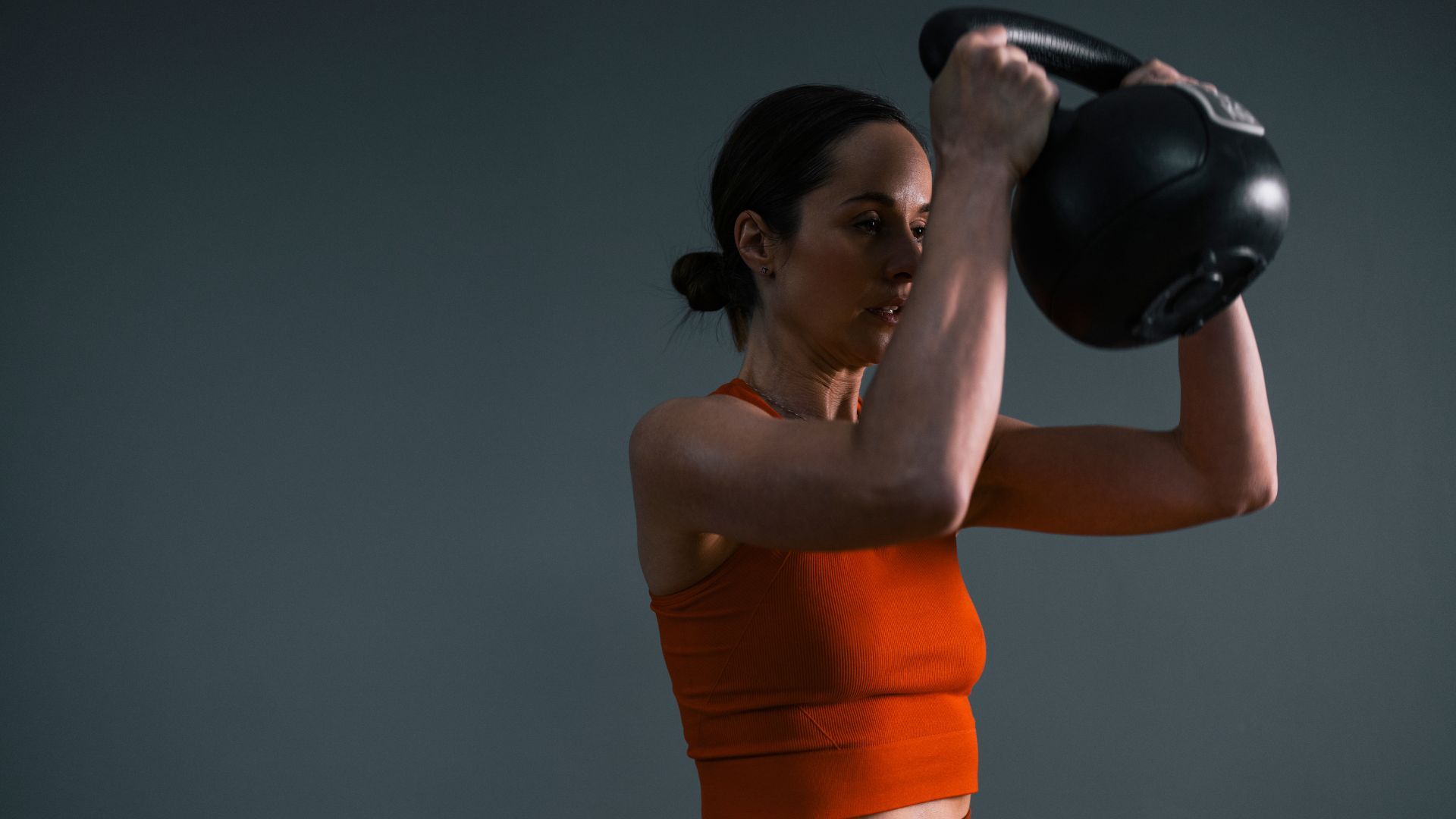
Unlike dumbbells or resistance bands, the off-balance design of a kettlebell means you build better full-body balance and stability, as well as strength.
“The core has to activate to provide stability, and because the movements are fast, your heart rate increases almost immediately. Your glutes, hamstrings and back will all need to work hard, so your lower back is protected, too,” says Kunal Makwana, PT and founder of KMAK Fitness in the UK and USA.
You may like
Beginner kettlebell workout1. Kettlebell swing
Russian Kettlebell Swing Demo – YouTube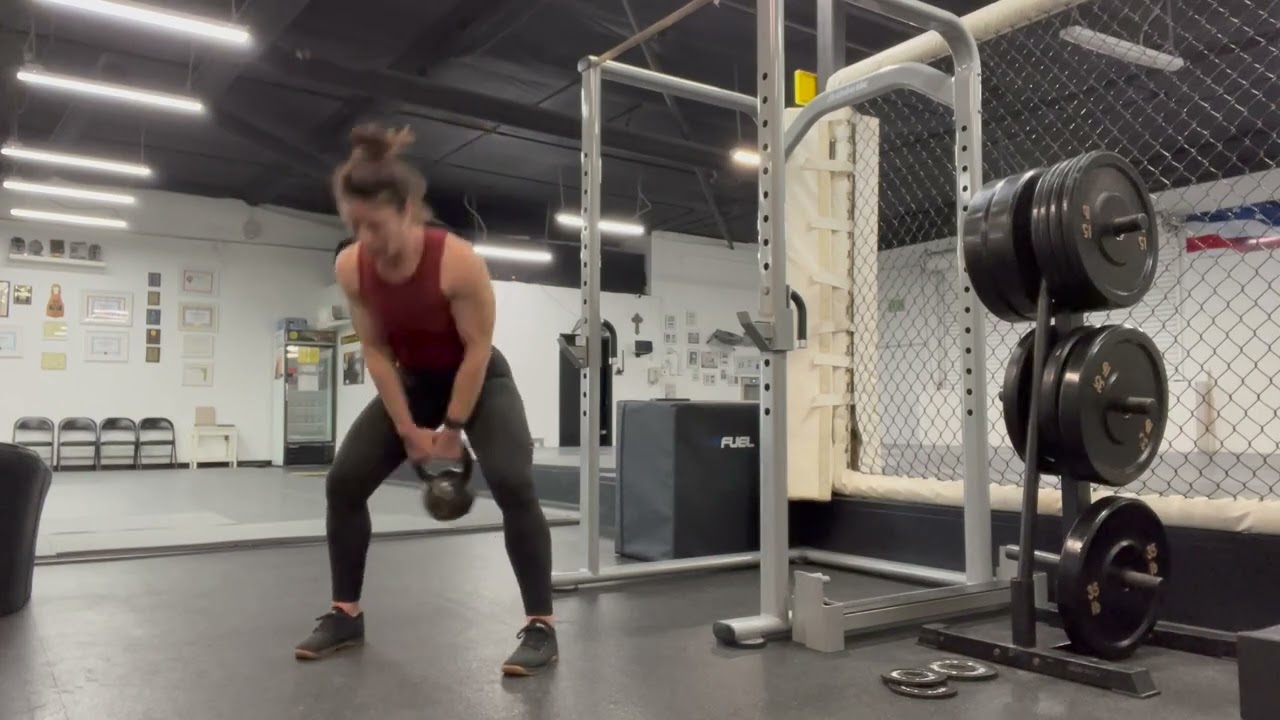
“This is the cardio aspect of a full body routine, targeting the glutes and hamstrings and offering a massive calorie burn,” says Kunal.
How to do a kettlebell swing:
Stand with your feet slightly wider than your shoulders, and place the bell about a foot in front of you.Hinge at the hips with the knees slightly bent and grab the handle.Swing the bell back between your legs, then bring your hips forward to stand straight, letting the bell swing to chest height. Repeat 15 times.
Expert tip: Try it without weights first, says Kunal. “If this is the first time you’ve used kettlebells in a workout, I’d advise that you perfect the hinge motion without any kettlebells at first.”
That means keeping your knees slightly bent with a straight back, pushing your bum out until you feel the tightness in the back of your legs.
2. Goblet squat
How To Do A Goblet squat – YouTube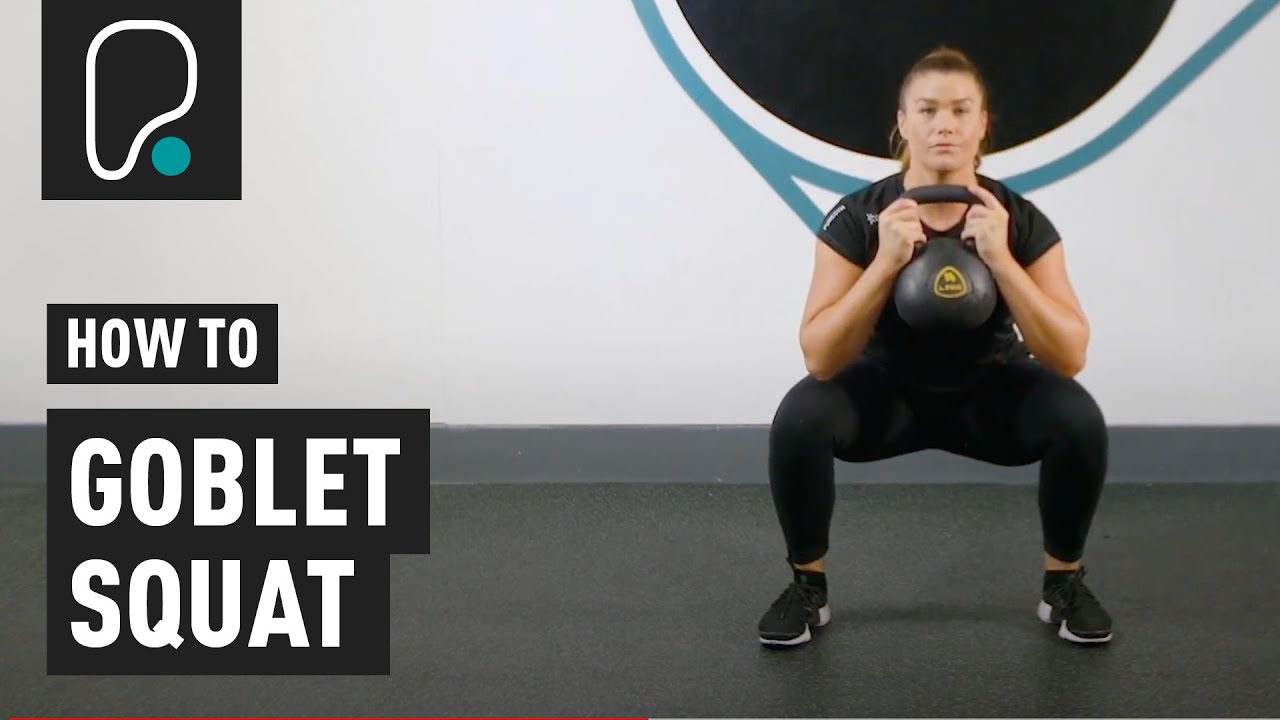
The goblet squat is a variation on the classic squat – one that also improves ankle mobility, along with strength and flexibility.
“This movement provides a fantastic core and leg workout whilst keeping you balanced,” says Kunal.
You may like
How to do a goblet squat with a kettlebell:
Hold the bell by the handles against your chest with your feet apart, slightly wider than your hips.Move as if you were about to sit down, keeping your elbows inside your knees, then push through your heels and return to a standing position. Do this 10 times.
Expert tip: Keep your weight in your heels and mid-foot whenever you’re doing any kind of squat. “Don’t let your heels come off the ground,” says the PT.
“For this reason, kettlebell exercises are best performed in flat shoes or socks,” he adds. “Make sure your knees don’t cave inward or move past your toes.”
3. One-arm kettlebell row
“To work on your posture through the upper back and biceps, the one-arm row is ideal,” says Kunal. This is one of the best back exercises, targeting all the muscles in this area of the body.
How to do a one-arm row with a kettlebell:
Place the bell on the floor and lean forward, keeping your back flat and resting one hand on your knee for support.With the other hand, pull the bell up towards your hip, keeping your elbow tucked into your side. Do this 8 times, then change arms.
Expert tip: Relax. “Allow your grip on the handle to be relaxed rather than tense, which inevitably leads to forearm fatigue and blisters,” says the PT.
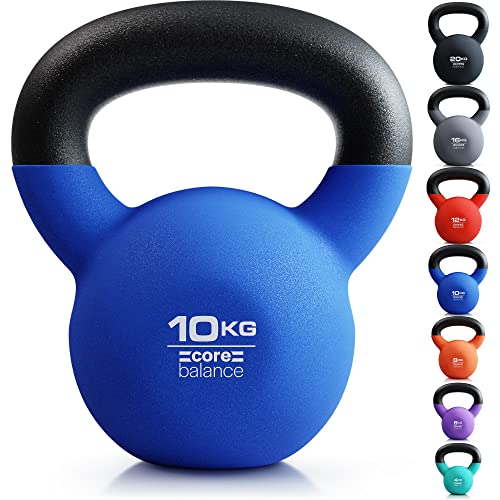
Core Balance
10kg Kettlebell Weight in Cast Iron and Neoprene
A cast iron kettlebell is durable – one that’s also covered in neoprene will be harder wearing and protect your floors from damage. These from Core Balance are among my favourites – simple but hugely effective, and available in a range of weights.
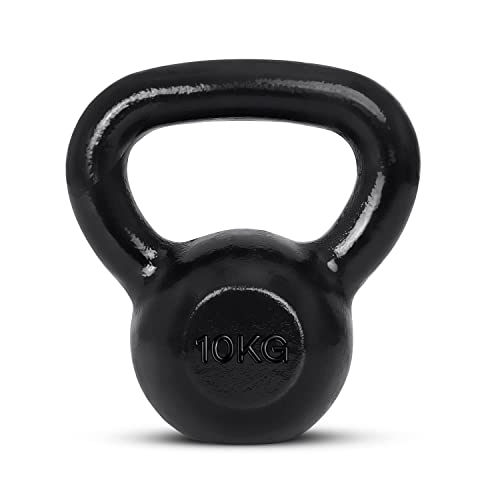
Amazon Basics
Cast-Iron Kettlebell, 10 Kg
Rather spend less? Kettlebells are certainly not as cheap as resistance bands when it comes to working out from home, but you can’t go wrong with Amazon Basics’ offering. Available in weights from 6kg to 20kg.
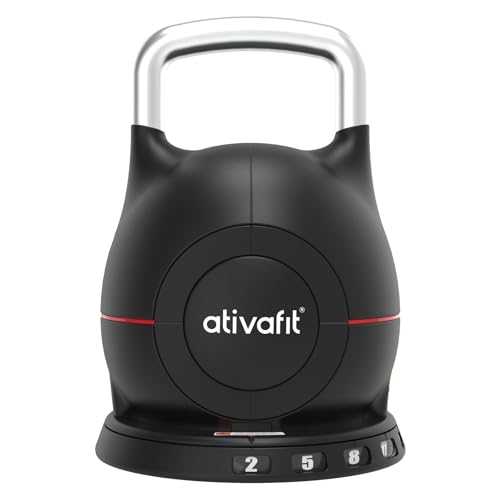
ATIVAFIT
20kg Adjustable Kettlebell 7 in 1
For those short on space, an adjustable kettlebell is a great idea. This one picks up weight when it’s locked into the base, and goes up to 20kg, so it’s suitable for a full-body kettlebell workout from home.
4. Overhead press
One-Arm Kettlebell Overhead Press – YouTube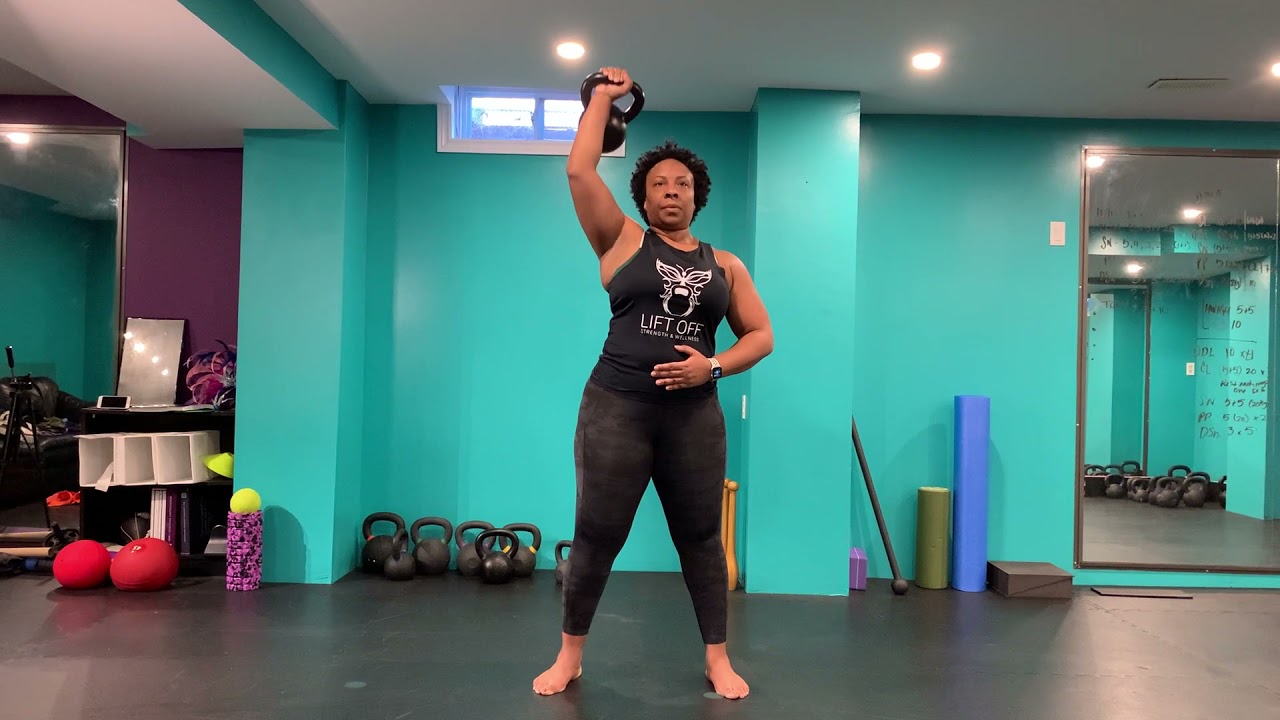
The overhead press might seem like an upper-body workout, Kunal says, one that helps define the shoulders and triceps, but it’s also brilliant for working the core and stabilising the spine.
Here’s how to do it:
Hold the bell at shoulder height, below your chin, with your elbow bent and your thumb tucked toward your collarbone.Raise your arm straight up to full extension, then lower it slowly. Your entire core will naturally engage, with the stabilising muscles in the spine locking into place. Do 5 repetitions, then change arms.
Expert tip: “Never let the weight pull your arm out of its socket,” says Kunal. “Before you lift, pull your shoulder blades down and back. This protects your neck and rotator cuff during presses and swings.”
5. Lunges
“In a full body session, lunges will improve balance and target the glutes and hamstrings,” explains Kunal, making this one of the better glute exercises you can do.
Here’s how to do lunges with a kettlebell:
With the reverse lunge, hold the bell at your chest by the handles.Step one foot back and lower the back knee towards the floor until both legs form 90-degree angles. Push off the back foot to return to the centre. Repeat 10 times, then change legs.
Expert tip: Remember to brace your core when you do a reverse lunge and take it slowly, at least for the first few repetitions, as you will be a little more unstable only using one leg.
What weight should a beginner use?
You’ll likely need two kettlebells for these exercises: a lighter one (between 2 and 8kg, depending on your current strength) and a heavier one (from 12kg).
These exercises need to be challenging in the final three repetitions at least – otherwise, you’ll struggle to see progress. Equally, if you pick up a kettlebell and it’s too heavy, go down a weight. Using a kettlebell that’s too heavy could result in injury.
The lighter kettlebell may suit upper-body exercises like the overhead press, while the heavier one will be better for targeting the lower body, which is naturally stronger for many women.