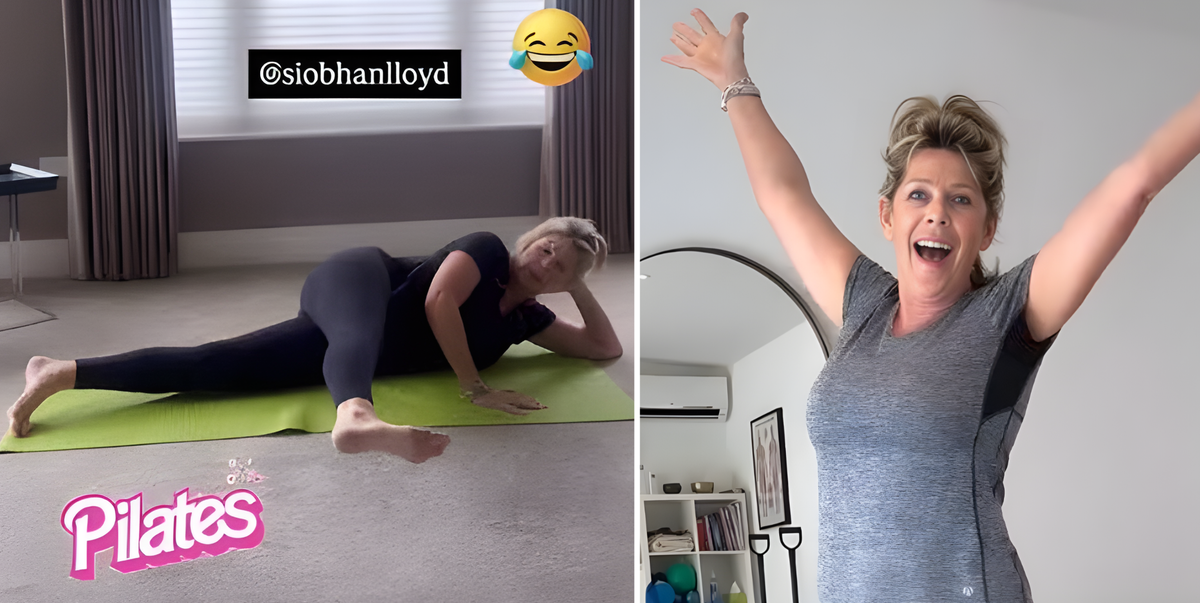
A long-time Pilates devotee, Ruth Langsford has practised the discipline for years to build strength and stability, working closely with Pilates coach Siobhan Lloyd.
They now train together regularly. ‘I see her once or twice a week, depending on how busy she is, usually in the morning. Each session lasts around 60 minutes,’ Lloyd tells Women’s Health. ‘But even if she’s only got 15 or 20 minutes, she’s committed to her workout.’
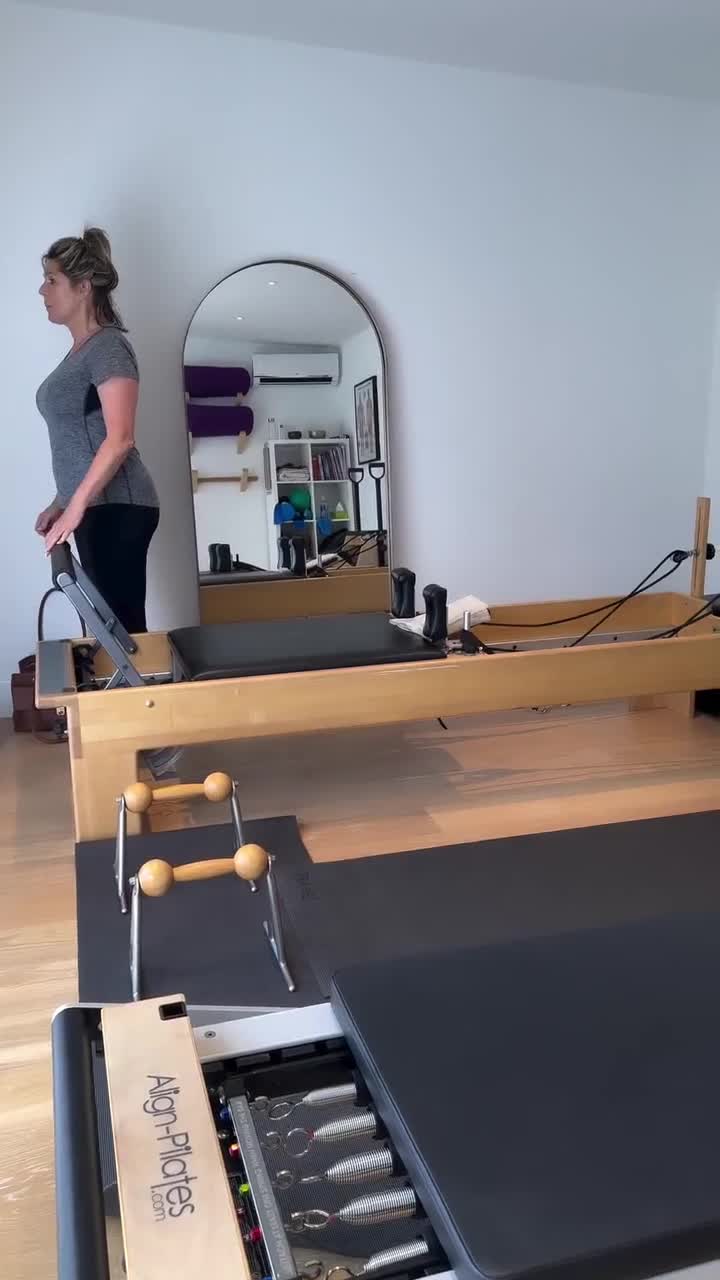
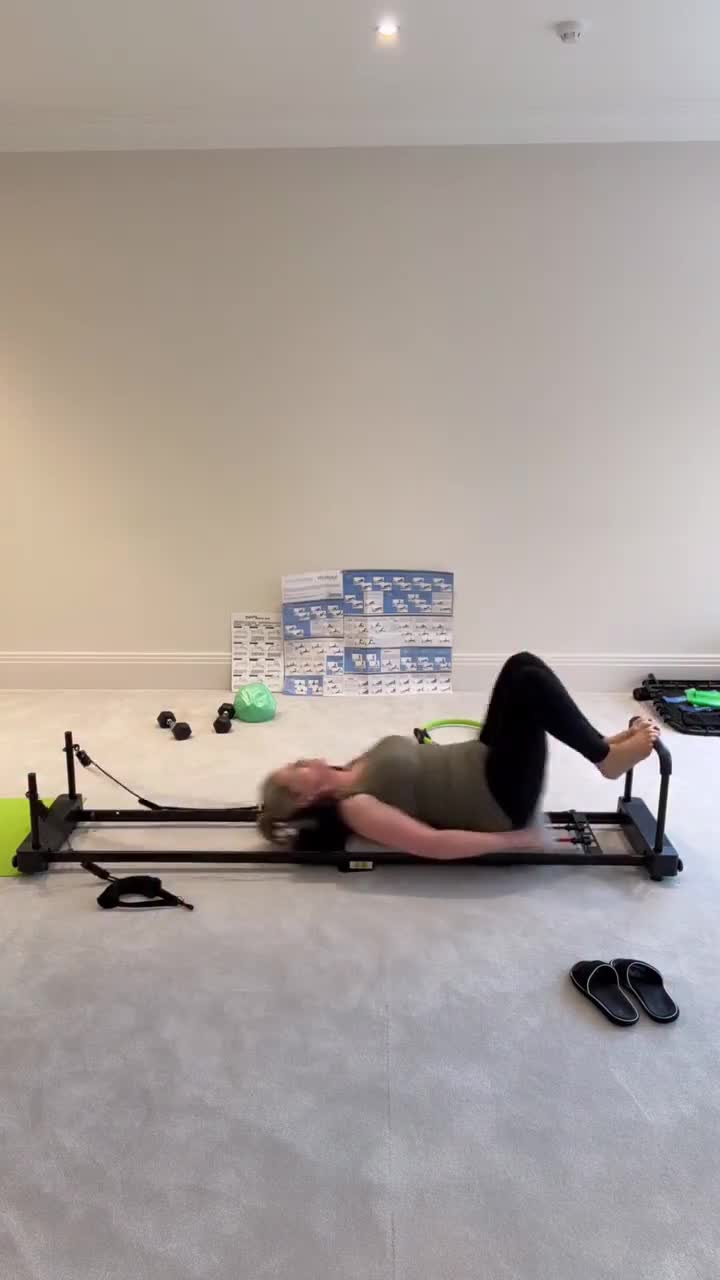
A range of equipment features in the 65-year-old presenter’s routine. ‘We mix things up between Pilates apparatus like the reformer, the chair and the ladder barrel,’ Lloyd explains. ‘Sometimes, because she has her own small reformer, she’ll use that at home. She’ll either come into the studio or I’ll go to her house and we’ll do mat Pilates.’
Ruth Langsford’s 60-minute Pilates routine
‘We’re building Ruth’s repertoire on the reformer,’ says Lloyd, ‘so if she can’t see me but she’s at home, she can run through the routine by herself. She’s also got hand weights, a ball and a ring that her son Jack gave her for Christmas.’
Lloyd outlines their typical sequence. ‘We always start the same way, with the sit-stand. You cross your legs while standing, do a kind of curtsey and try to lower your body weight to the floor,’ she says. ‘One way I get Ruth to practise at home is by using the stairs. She’ll try to sit on the bottom step and stand back up again. That way she’s only a few inches off the floor and doesn’t risk falling backwards – we’re nearly there.’
Instagram | Ruth Langsford
‘Then we go straight through the first 10 mat work exercises in the classical Pilates order,’ Lloyd explains:
The HundredThe roll-upThe roll-over (Ruth replaces this with short spine stretch on the reformer)Leg circlesRolling like a ballThe stomach series of five, including:
– Single-leg pull
– Double-leg pull
– Single straight leg
– Double straight leg
– Crisscross (which works the obliques)
‘When we stop to break, instruct and adjust, it fills the hour,’ Lloyd says.
Post-menopausal training
At the moment, Ruth’s goals reflect those of many post-menopausal women.
‘We’re focusing on muscle strengthening, which is great for metabolism; building neck strength to counteract tightness from writing, sitting and meetings; and improving flexibility,’ Lloyd explains. ‘She has a busy schedule, so we prioritise anything that keeps her energy up.’
In some ways, however, Ruth’s routine is more demanding than many might expect. ‘She’s an impressive powerhouse – very active, focused and well aligned. She has great posture and stands tall, probably because she’s been on TV for so long,’ Lloyd says. ‘She has an incredible memory, so she’s easy to teach. My work with Ruth isn’t typical of what a normal 65-year-old might want to do.’
Instagram | Ruth Langsford
Ruth Langsford’s go-to Pilates moves
‘Ruth loves being on the reformer,’ Lloyd says, ‘because you get great feedback from the resistance.’
One of the first exercises they worked on together was the short spine stretch. ‘You put your feet in the straps while lying on your back and invert your body. We’re working towards bringing that fully onto the mat, but it requires a lot of hamstring length,’ she explains.
Ruth also focuses on releasing tension in her neck. ‘We use a small, soft Pilates ball for that.’
As a classical Pilates teacher, Lloyd always finishes sessions with the long stretch on the reformer – similar to a moving plank. ‘Ruth can press through her arms and push the reformer backwards and forwards underneath her,’ she says. They’re now building towards a floor press-up. ‘It’s a fully integrated move using your arms, shoulders and back.’
From postnatal to post-menopausal
Their current sessions look very different from when Ruth first started training with Lloyd.
‘She originally came to me for postnatal Pilates,’ Lloyd recalls. ‘At that stage, you have more oestrogen in your body, so your muscle fibres respond differently compared to post-menopause.’
Back then, core and hip stability were the priority. ‘After having a baby, you’re rebuilding abdominal strength, realigning the pelvis and avoiding too much load on the stomach muscles, particularly through flexion or lying on your front,’ she explains.
Related Stories