One of the very first things I learned as a beauty editor is that you can’t shrink your pores. It was a devastating day, TBH. I spend a lot of my day scrolling through images of stunning celebrities with poreless skin (hi, Hailey Bieber) and testing skincare products that claim to smooth skin. Mine pores, on the other hand? Very visible, no matter what blurring face primers I try. And you’re gonna tell me that some people have just hit the genetic lottery and there’s nothing I can do? Turns out, though, there are ways to make pores smaller. Well, sorta!
The truth is, you can’t actually change your pore size (boo), but there are ways to make your pores appear smaller (yay). To be frank, though, visible pores are a simple fact of being a human being with a face and nothing to be embarrassed or insecure about. But I get it: We all want our makeup to go on smoother and our skin to look clearer. So what exactly can be done? Dermatologists Shari Marchbein, MD, Arash Akhavan, MD, and Lindsey Yeh, MD, all shared their insights with Cosmo on exactly how to do this, plus gave us an explainer on why your pores even look large in the first place.
Pore-minimising tip #1: Double cleanse at night
As a rule, you’ll want to wash your face twice a day since “not cleansing your skin properly or consistently can lead to buildup on and worsen the appearance of large pores,” says Dr. Yeh. In the morning, you can simply wash with a gentle cleanser and lukewarm water, but before bed, a double cleanse is key. During a double cleanse, you’ll remove makeup first, usually with an oil-based cleansing balm or oil, followed by your regular gel or cream face wash. It made sound counterintuitive, but “oil-based cleansers effectively remove makeup and also help break down clogged pores and blackheads,” says Dr. Yeh. For my acne-prone skin, I usually opt for a quick cleanse with micellar water, then suds up with a gel cleanser.
Pore-minimising tip #2: Make exfoliating a regular thing
Exfoliating is a must if you want your pores to be clear and tight. Most dermatologists recommend skipping scrubs (they tend to be too harsh) and going the chemical exfoliation route, so using acids like AHAs, BHAs, and/or PHAs. These acids help dissolve the glue that holds together pore-clogging dead cells on the surface of the skin. BHAs like salicylic acid are especially great for minimising pores because they help dissolve the oil and build-up that gets stuck inside them.
Now there are a million different products you can use to chemically exfoliate your skin, including acid serums, masks, and at-home peels, but I personally love using an exfoliating toner. Adding one to my skincare routine has been one of the biggest game changers when it comes to minimising my pores. I love toner pads for ease and efficiency; Cosmo readers consistently rank Paula’s Choice 2% BHA Liquid Exfoliant as one of their faves.
There’s a catch, though—because your pores will eventually fill back up with dead skin cells, you’ve got to use your exfoliating toner of choice on a regular basis for the best pore-minimising results. People with oily or combination skin can typically exfoliate with a gentle product on a regular basis, whereas those with sensitive skin should aim for once or twice a week, says Dr. Marchbein.
Pore-minimising tip #3: Use non-comedogenic products
You can do all the things on this list, but if the products in your skincare routine are filled with potentially pore-clogging ingredients, or are considered to be “comedogenic”, chances are your pores will always look stretched out and more visible than you’d like. My two favourite ways to check if a skincare product has the potential to clog my pores are from aestheticians Biba de Sousa and Sofie Pavitt. Both experts have pore-clogger checker features on their sites where you simply copy/paste a product’s ingredient list into a little box, and within seconds, you’re able to see what ingredients, if any, can be problematic for your pores. Before I test a new product, I always run it through one of these checkers first, and you should do the same.
This goes for makeup, too. Even primers, foundations, tinted moisturisers, and skin tints labelled as “pore minimising” or “blurring” can be filled with sneaky pores cloggers, so you’ll want to run those through a pore clogger checker too.
Pore-minimising tip #4: Add a retinol to your routine
When collagen weakens, so does the lining of your pores, which ends up making them look annoyingly large. To stimulate collagen production and strengthen the walls of the pores, Dr. Marchbein suggests using retinol in your skincare routine. You can either get an Rx retinoid from your derm or try an over-the-counter retinol. But be warned: Retinoids and retinols are pretty potent, so use them sparingly at first, increasing your frequency as your skin builds up tolerance.
Pore-minimising tip #5: Book yourself a professional facial
Regular facials that focus on cleaning out your pores and eliminating congestion can go a long way in reducing the appearance of pores, says Dr. Yeh. Three great options that I swear by are HydraFacial, DiamondGlow, and Glo2Facial. These effective (yet totally non-invasive) facials are done in med spas and dermatologist offices and can temporarily improve the appearance of pores by exfoliating the top layers of the skin and extracting debris from pores.
“HydraFacials allow for deeper delivery of active ingredients, like glycolic and salicylic acid, post-treatment, which can further contribute to glowing skin, a reduction in hyperpigmentation, and the appearance of smaller pores,” Dr. Marchbein says. While DiamondGlow (a gentle microdermabrasion device) uses a special exfoliating tip to resurface skin, pull debris from pores, and infuse skin with special serums to make your skin look super glowy. Glo2Facials use oxygen bubbles to exfoliate the skin, and depending on the exact treatment your provider chooses, it can even help minimise oil production too.
Pore-minimising tip #6: Consider an in-office chemical peel
In-office chemical peels with exfoliating acids (like TCA, glycolic acid, salicylic acid, and lactic acid) and/or retinoids are clutch when it comes to minimising the appearance of pores and uneven skin texture. These peels aren’t exactly cheap (expect to spend anywhere from £200 to £600 depending on where you live), but the skin-smoothing results are impressive.
Chemical peels are customizable too—the intensity of your treatment can be adjusted based on your skin type, skin goals, and how much downtime you’re willing to have (more intensity = more recovery time post-peel). I’m a big fan of the VI Peel for reducing the look of large pores, but you can always talk to your doctor to find out what kind of pro peel is best for you.
Pore-minimising tip #7: Mask weekly
Good news! Your self-care masking sessions can actually be beneficial for minimising your pores. Dr. Marchbein says that clay and charcoal masks help to draw out buildup, bacteria, and oil—basically all the stuff that clogs pores and expands their size. Just like exfoliation, the effects of masking are only temporary, though, so these treatments need to be repeated at least weekly to maintain results.
Pore-minimising treatment #8: Go for a laser treatment
Dr. Marchbein’s favourite laser to improve the appearance of pores is the Clear and Brilliant fractionated laser, which stimulates collagen, improves skin texture and discolouration, and, you guessed it, minimises pore size. In my personal experience, the downtime is minimal (usually a day or two of mild redness), and you’ll need to do four to six treatments spaced six weeks apart for the best results. If you want more dramatic results with fewer treatments, you can try Halo or Fraxel—but be warned, the downtime is a solid week of looking like you got a serious sunburn.
Dr. Akhavan likes the PicoWay and ResurFx lasers for treating patients with larger pores. “These lasers injure the skin just enough to activate a wound healing response, which promotes natural collagen production to form new healthy tissue and minimise the appearance of pores over time,” says Dr. Akhavan.
Another v convenient and less expensive laser option for minimising pores is Skin Laundry. Their signature laser facial can help with breakouts and collagen stimulation and is quick (10 minutes from start to finish), painless, downtime-free, and relatively affordable at $275 for a single session.
Pore-minimising tip #9: Wear sunscreen, always
Dr. Marchbein says exposure to UV light can break down and damage collagen in the skin, including the collagen that surrounds the walls of pores. In other words, UV exposure can lead to larger pores—another reason daily use of sunscreen with a broad-spectrum SPF 30 or above is a necessary step in your skincare routine every single day. If you don’t already have an SPF you love, try one of the options below—each one is oil-free, safe for acne-prone and oily skin, and won’t feel heavy or thick on your face.
FAQs
Why do my pores look so big?
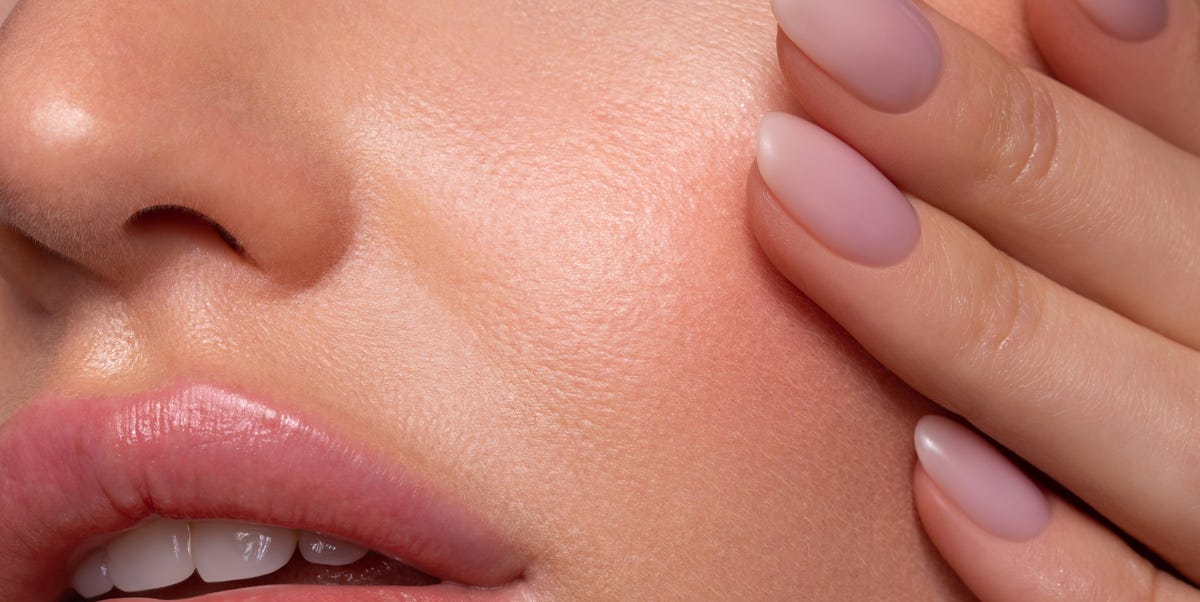
First, let’s talk about what pores are. “Pores are the visible openings of the hair follicles to their connected oil glands,” says Dr. Marchbein. The average adult has around 20,000 of them on their face and, unfortunately, “their size is genetically determined.” So if your biological parents have large pores, changes are so do you.
And while you can’t do much about your pores’ predetermined size, it is possible for them to look larger if the collagen around them weakens (from, say, age, sun exposure, or picking at your skin) or if they become clogged (hi, blackheads) with dirt, oil, and bacteria. “Those with oily skin tend to have larger pores than those with dry skin,” says Dr. Akhavan, adding that “large pores are mainly caused by excessive sebum production.”
Can you reduce pore size?
So you can’t actually get rid of your pores (remember, you need them for optimal skin function) or permanently change their size (you’d need a new set of DNA for that), but can minimize their appearance to a degree with certain at-home products and in-office procedures, like the ones mentioned above.
Meet the experts:Shari Marchbein, MD, is a board-certified dermatologist and founder of Niche Dermatology in New York, NY, who specialises in cosmetic and medical dermatology. Dr. Marchbein is also a clinical assistant professor at NYU Langone in New York City.Arash Akhavan, MD, is a board-certified dermatologist at the Dermatology and Laser Group in New York, NY, and a faculty member at the Mount Sinai Medical Center. Dr. Akhavan specialises in non-invasive and minimally invasive cosmetic procedures as well as skin cancer prevention and treatment.Lindsey Yeh, MD, is a board-certified dermatologist who specialises in cosmetic dermatology. Dr. Yeh is the cofounder and medical director at B.TOX.BAR, an aesthetic dermatology boutique in Los Gatos, CA.Why trust Cosmopolitan?
Lauren Balsamo is the deputy beauty director at Cosmopolitan with a decade of experience researching, writing, and editing skincare stories that range from the best sunscreens for sensitive skin to the best lasers for acne scars. She regularly works with the industry’s top dermatologists and aestheticians to assess new skincare treatments, products, and trends.
Beth Gillette is the beauty editor at Cosmopolitan with more than seven years of experience researching, writing, and editing skincare stories.
Related Stories
Beth Gillette is the beauty editor at Cosmopolitan, where she covers skincare, makeup, hair, nails, and more across digital and print. She can generally be found in bright eyeshadow furiously typing her latest feature or hemming and hawing about a new product you “have to try.” Prior to Cosmopolitan, she wrote and edited beauty content as an Editor at The Everygirl for four years. Follow her on Instagram for makeup selfies and a new hair ‘do every few months.

Lauren Balsamo is the beauty director at Cosmopolitan where she writes, edits, and produces all types of beauty content—from product reviews to personal essays and trend reports. She has covered beauty for more than a decade at Cosmopolitan. Follow her on Instagram.