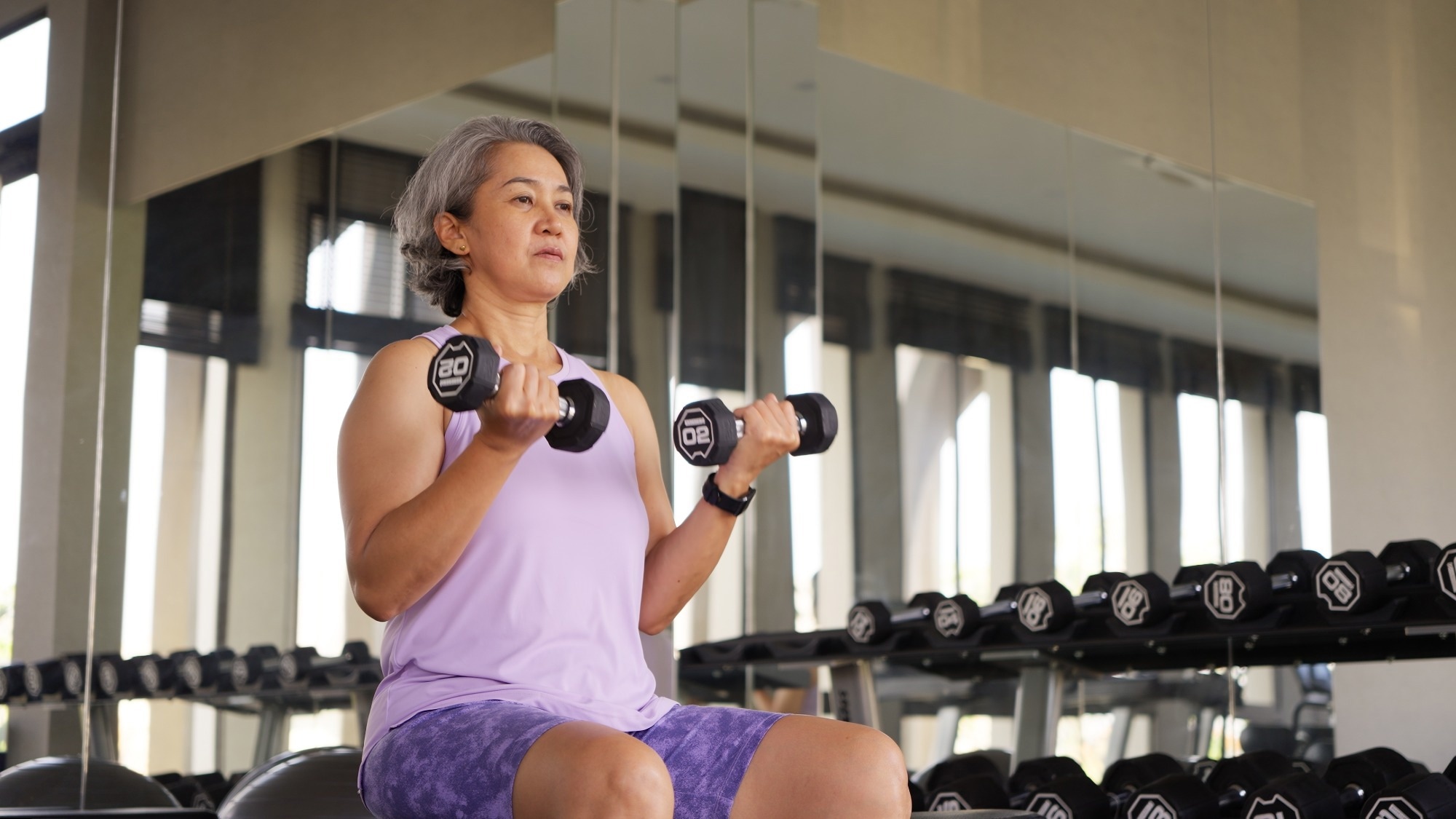
A large, diverse cohort study shows that muscle strength, especially grip strength, may signal survival odds in older women, regardless of how much they move, how long they sit, or their measured fitness level.
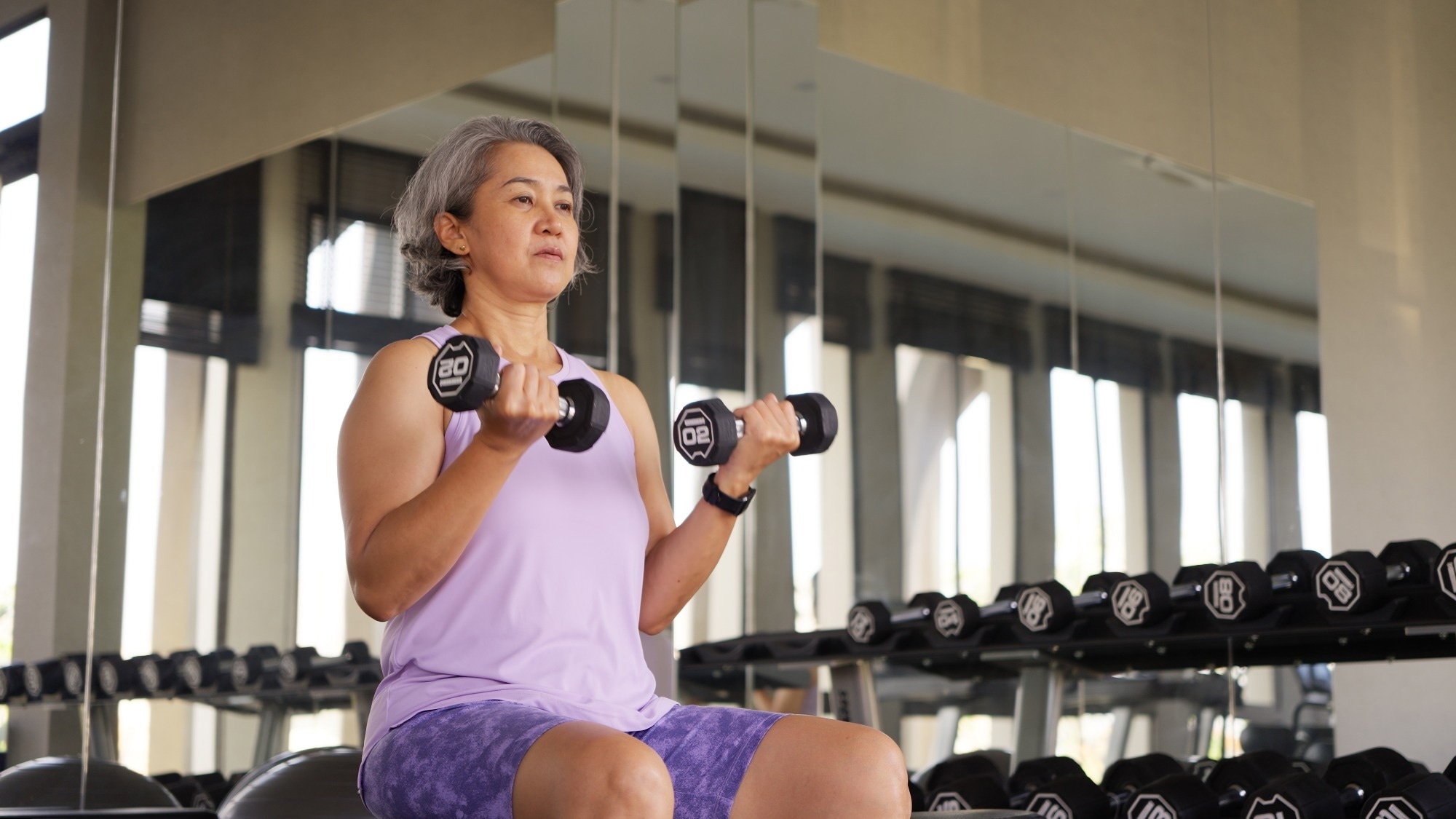 Study: Muscular Strength and Mortality in Women Aged 63 to 99 Years. Image credit: Chay_Tee/Shutterstock.com
A recent study in JAMA Network Open examined whether muscular strength is associated with mortality in older women, controlling for aerobic activity, sedentary time, and fitness level.
Importance of Muscular Strength in Aging
Contemporary public health guidelines recommend skeletal muscle-strengthening exercises at least 2 times per week to optimize systemic physiological function and preserve musculoskeletal integrity. Epidemiological evidence in middle-aged and older populations consistently demonstrates that increased muscular strength is inversely correlated with all-cause mortality risk.
Engagement in resistance training methods is associated with a reduction in all-cause mortality risk, with incremental improvements in grip strength showing additional protective effects. Nevertheless, this association is susceptible to changes by factors such as objectively measured aerobic physical activity and sedentary behavior.
Self-reported assessments of physical activity are limited in their accuracy, particularly in quantifying total daily movement and sedentary duration, especially among older female cohorts. Cardiorespiratory fitness represents a robust independent predictor of mortality, yet it is infrequently incorporated as a confounding variable in analyses of muscular strength outcomes. In this study, fitness was assessed using usual-paced 2.5-m walk time as a proxy measure rather than direct cardiorespiratory fitness testing such as VO₂max assessment.
Advancing age is characterized by heightened systemic inflammation, which contributes to impaired skeletal muscle contractility and mitochondrial dysfunction, thereby accelerating strength decline. Preservation of muscular strength is therefore critical for sustaining functional autonomy, reducing hospitalization rates, and enhancing overall quality of life in geriatric populations.
Assessing the Link Between Muscular Strength and Mortality in Older Women
This analysis included women aged 63–99 years from the Objective Physical Activity and Cardiovascular Health in Older Women (OPACH) study, an ancillary study of the Women’s Health Initiative (WHI). The final analytic cohort comprised 5,472 ambulatory women who completed physical performance testing and 7 days of hip accelerometer wear. From 2012 to 2014, in-home examinations were conducted in 7875 WHI participants, including blood draws, anthropometrics, blood pressure, grip strength, and physical performance assessments.
Of 7875 participants, 7048 wore a hip accelerometer for 7 days to objectively measure physical activity, although only those meeting accelerometer and performance testing criteria were included in the analytic sample. Grip strength was measured by dynamometry in the dominant hand and categorized into quartiles (<14 kg, 14–19 kg, 20–24 kg, >24 kg). Chair stand performance was timed and classified by established cut points. Usual-paced 2.5-m walk time, used as a proxy for cardiorespiratory fitness, was also measured.
Mortality was tracked annually via questionnaires, national databases, and other records, with >99 % ascertainment. Covariates included demographics, comorbidities, health behaviors, body measurements, and estimated lean body mass (LBM). Serum high-sensitivity C-reactive protein (CRP) was measured in a subset to assess systemic inflammation.
Higher Grip Strength Lowers Mortality Risks in Older Women
The current study included older women with a mean age of 78.7 years. Participants belonged to a racially diverse group, most with some college education and at least one comorbidity. Baseline characteristics, including physical function, body composition, and activity levels, were strongly associated with grip strength quartiles. Significant differences in these characteristics were found between survivors and decedents.
Grip strength and chair stand time were inversely related, indicating that participants with higher grip strength completed chair stands more quickly, reflecting better lower-body functional performance, although the two measures were only modestly correlated, suggesting they capture partially distinct aspects of physical function. Both grip strength and chair stand time were positively correlated with body weight.
Grip strength decreased progressively with increasing age, reflecting age-related declines in overall muscle strength. Conversely, higher body mass index (BMI) and greater LBM were associated with increased grip strength. Variations in both grip strength and chair stand time were also observed across different races, ethnicities, and BMI categories, indicating that demographic and anthropometric factors influence physical function in older adults.
During a mean follow-up of 8.3 years, 1,964 women died from all causes. Higher grip strength and faster chair stand performance were each associated with a lower risk of mortality, even after adjusting for demographics, health status, and objectively measured activity. Specifically, a one standard deviation increase in grip strength corresponded to a 12 % reduction in mortality risk, while better chair stand performance showed a similar but weaker association in quartile-based analyses. However, when modeled continuously per standard deviation, the chair-stand association decreased and was no longer statistically significant after full adjustment.
Grip strength showed a consistent inverse association with mortality across subgroups and regardless of meeting aerobic activity guidelines, while chair stand time was less consistently associated. The association between grip strength and mortality was slightly attenuated but remained significant after adjustment for body weight or lean body mass.
After adjusting for inflammation based on CRP levels, the inverse association between grip strength and mortality remained significant and only slightly weakened, whereas the chair stand association showed further attenuation in continuous models.
Sensitivity analyses confirmed the robustness of the findings. Grip strength remained inversely associated with mortality across most scenarios, even among women with low physical activity or those using walking aids. Chair stand time was less consistently associated with mortality, particularly in continuous per-standard deviation models. The authors note that this may reflect the fact that chair stand performance captures broader physiologic aging, fatigability, and overall health status in addition to pure muscle strength.
Conclusions
Ambulatory women aged 63 to 99 years with greater skeletal muscle strength were observed to have lower all-cause mortality, independent of other major risk factors and irrespective of aerobic activity levels. These results reinforce national guidelines advocating regular muscle-strengthening activities for healthy aging while underscoring that the findings reflect observational associations rather than proof that strength training directly extends longevity.
In the future, more research is needed to clarify the optimal types, intensities, and frequencies of muscle-strengthening activities that yield the greatest health benefits in older adults. Additionally, longitudinal studies exploring the mechanisms by which muscle strength influences survival, as well as the potential for individualized interventions based on physical function assessments, will help refine public health strategies for promoting healthy aging across diverse populations.