On the Olympic stage, curling unfolds with deliberate precision: stones glide, sweepers rush forward and strategy dictates every move.
Yet to many casual viewers, the sport appears calm and measured, especially alongside the speed and spectacle of other Winter Games events.
But curling demands more physical activity than many people realize, and it may offer adults a sustainable way to stay active and socially connected for decades.
“The sport of curling represents a great opportunity for adults to engage in sports to facilitate their need for physical activity and social connection,” said Michael Kanters, a professor of parks, recreation and tourism management at North Carolina State University.
Kanters and several colleagues examined the physical demands of curling across different player positions. They tracked 110 adult curlers, ages 18 to over 58, during recreational matches, using accelerometers to measure movement, steps and activity intensity.
3,000 Steps on the Ice
In the study, Kanters and his colleagues found that a typical curling match provides a meaningful dose of physical activity, contributing substantially to the weekly exercise adults are recommended to get.
On average, participants spent most of the match engaged in light to moderate movement, with brief periods of more intense effort while sweeping. Players took an average of nearly 3,000 steps per game, about 30% of the commonly cited daily goal of 10,000-13,000 steps.
These results highlight that a sport often perceived as leisurely can still support cardiovascular health, muscle engagement and overall fitness. Its mix of physical activity, social interaction and strategy makes it a sustainable way for adults to stay active into midlife and beyond.
Research consistently shows that physical activity tends to decline with age due to factors such as retirement-related routine changes, chronic health conditions, fear of injury and reduced access to structured exercise opportunities.
In the United States alone, a large proportion of adults aged 50 and older do not meet recommended physical activity guidelines, with many reporting low levels of activity despite the known health benefits of staying active as they age.
“Curling may be an ideal sport to promote for many adults since it can be easily learned and adjusted for novices and can cater to most physical challenges without compromising the integrity of the game,” Kanters said.
A Sport That Ages With You
The physical demands of curling vary by position, according to Kanters. This variability allows adults to adjust their roles on the ice as their mobility and experience change, helping them remain part of a team and a community.
“From an age perspective, curling offers a unique opportunity for participants to maintain their involvement in the sport as they age,” Kanters said. “Older and more experienced players often move into the skip positions, where there are fewer physical demands and the opportunity to determine game play and strategy.”
In the study, Kanters and his colleagues found that curlers in the lead and second positions, who do the most sweeping and walking, spend more time in moderate-to-vigorous activity, while those in the third and skip positions move less but focus on strategy and shot-calling.
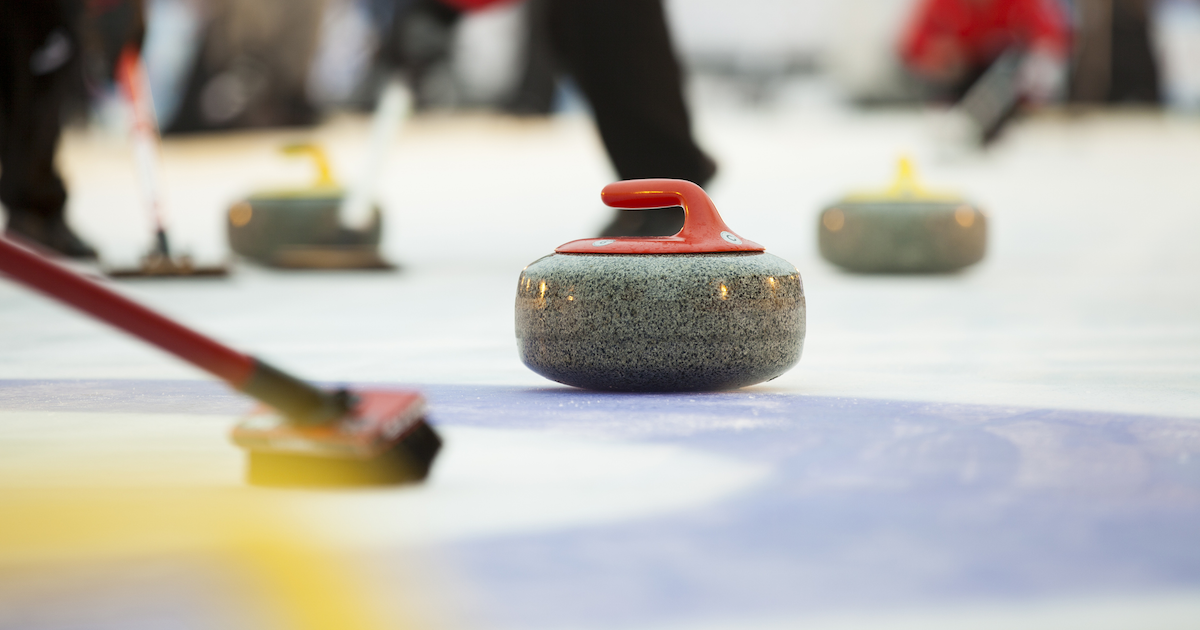
 Curling teams have four players — lead, second, third and skip — each sliding two stones in order toward the center of a target, sweeping to control speed and curl to score points. Photo by 36clicks via iStock
Beyond age, the sport also accommodates players with a wide range of physical abilities and varying fitness levels, making it accessible to beginners, recreational participants and seasoned athletes alike.
Curling has several modifiable features that allow participation regardless of mobility, helping people with joint issues, balance limitations or other health challenges stay active on the ice.
For example, players with limited mobility can deliver the stone from a standing position rather than the traditional low lunge, allowing them to participate safely.
Where Competition Meets Connection
In addition to its physical benefits, curling also offers social and strategic opportunities that help players stay engaged with the sport over the long term.
Kanters and his colleagues found that the sport fosters social connectedness both within and between teams, requiring constant communication among players — a key factor during gameplay.
“Given the inherent social interactions of the sport, it can be a key component of social connectedness that is critical for older adults,” Kanters said.
Many clubs, particularly during Winter Olympics years, provide beginner programs that give new players a chance to try the sport. But these initial lessons are only the first step, according to Kanters.
“While learn-to-curl opportunities are a critical first step to attracting new people to the sport, there also needs to be opportunities for new curlers to continue participation through recreational and competitive league play,” Kanters said.

Climate Change is Transforming Winter Sports
Read more