HORRY COUNTY, S.C. (WPDE) — Friday marks day four of a hearing that’s set to decide if Weldon Boyd, a North Myrtle Beach businessman, and Kenneth Williams, his passenger, will be granted immunity in the civil wrongful death case of Scott Spivey.
On the third day of the hearing on Thursday, we heard from Boyd, who described the evening of the shooting on Sept. 9, 2023.
READ NEXT: ‘Definitely a twist’: CCU expert reacts to Day 3 of “Stand Your Ground” hearing
4:06 p.m.
The judge denied Boyd’s request for immunity.
The status of Williams’s ruling is unknown.
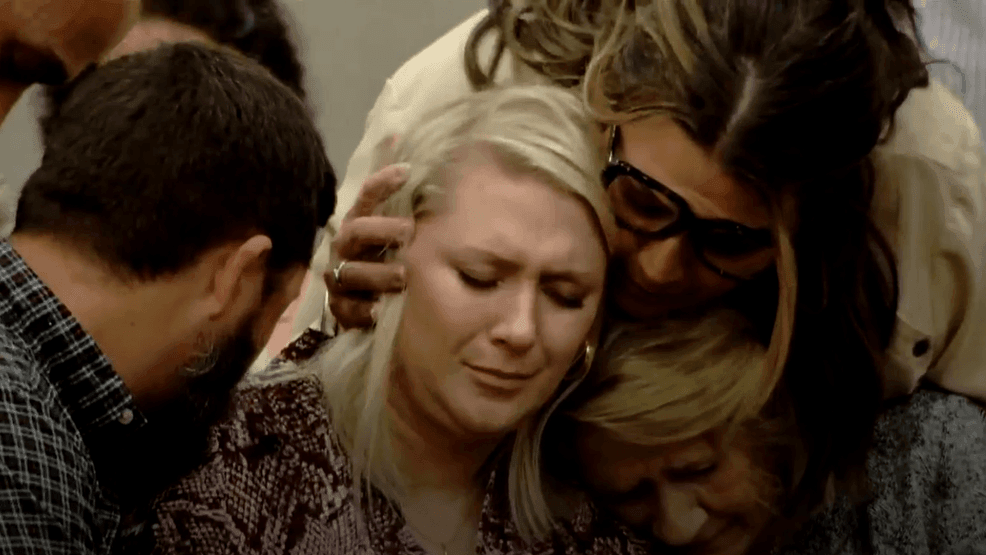
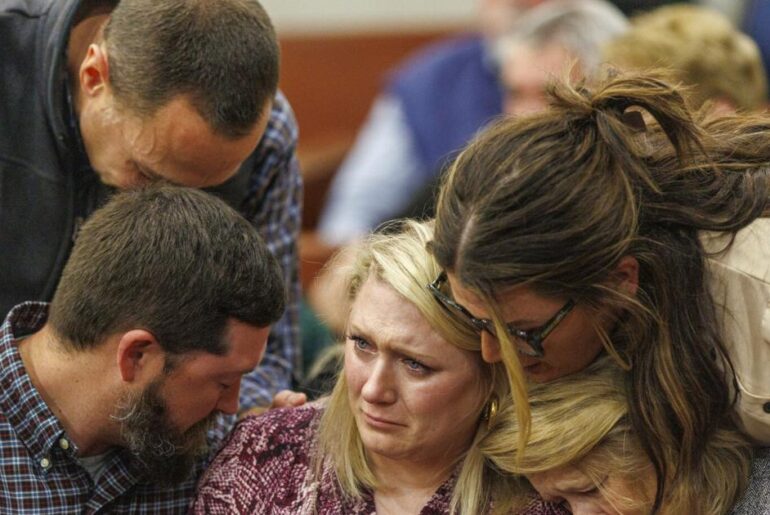
The Spivey family’s reaction to Boyd denied immunity. (WPDE)
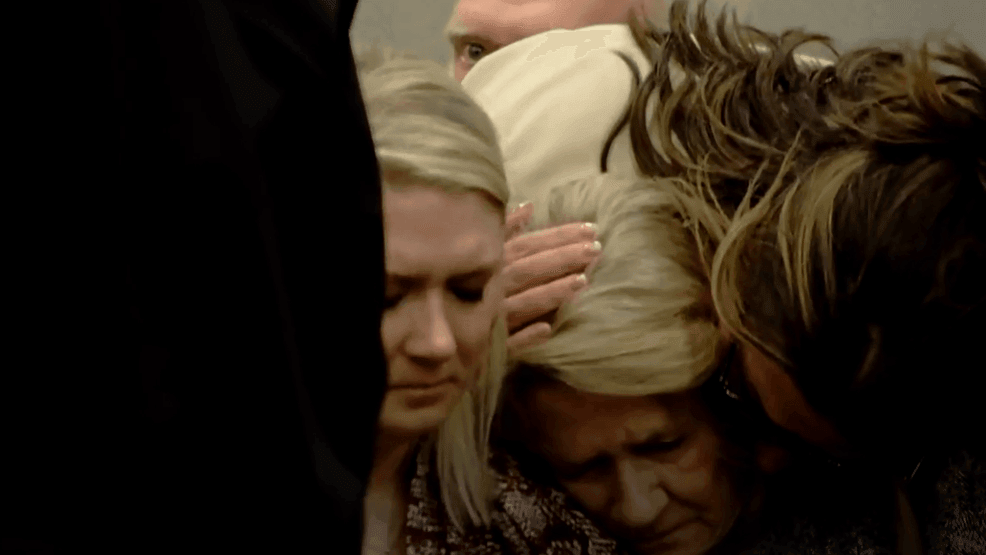
The Spivey family’s reaction to Boyd denied immunity. (WPDE)
4:03 p.m.
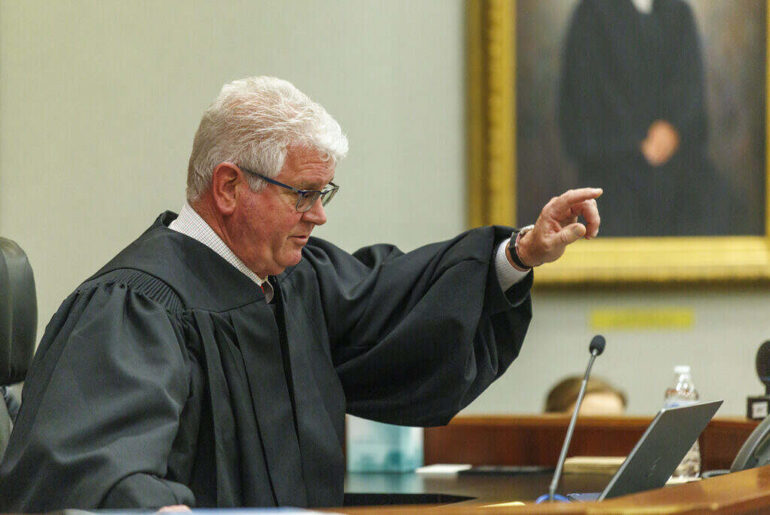
After hearing a closing summary from Martin, the judge began giving his thoughts on the case.
The judge said he questions the credibility of Weldon Boyd.
He said he felt more inclined to believe Williams’s statements.
3:32 p.m.
The video of a deposition of expert witness Robert Maher finished playing.
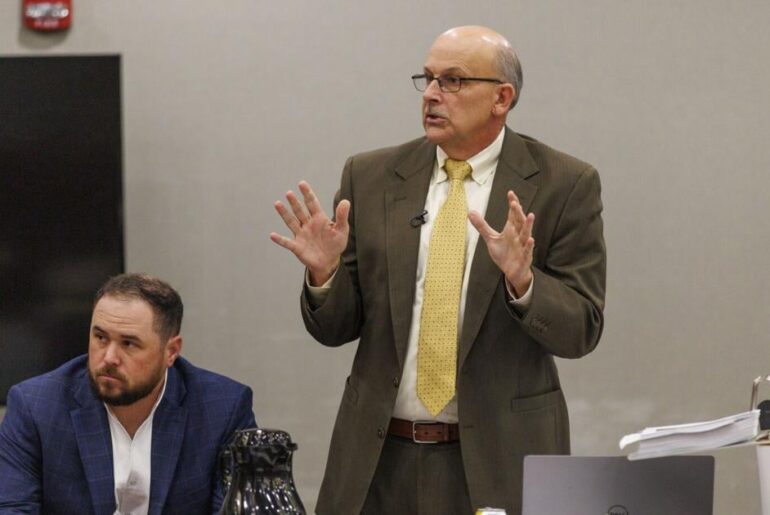
The prosecution and the defense were both granted ten minutes to give their summaries.
The judge said that he would really rather not hear closing summaries from any of the parties again, given that it is a civil case.
“This has been a lengthy hearing for the stand your ground. The end result is we’re going to get two different orders, one for each party seeking immunity,” the judge said. “I’d rather not have closing summaries because of all that follow-up. This is not like a criminal court where there’s no motion to reconsider. Civil court has a motion to reconsider.”
However, after some pleas from the attorneys, he granted them time to speak.
The judge said that he would really rather not hear closing summaries from any of the parties again, given that it is a civil case. (WPDE)
3:21 p.m.
In a video of a deposition given by expert witness Robert Maher, defense attorneys asked him about the soundproofing elements of the vehicle where the gunshots were recorded.
Maher was asked if it was possible that there could have been gunshots that were not detected in the audio recordings that he analyzed.
Maher said it was technically possible.
Maher was asked if it was possible that there could have been gunshots that were not detected in the audio recordings that he analyzed. (WPDE)
2:50 p.m.
In a video of a deposition given by expert witness Robert Maher, attorneys for the defense asked him if Spivey had fired a gun, would it line up with the audio evidence he analyzed?
Maher confirmed that it could be the case that some of those data points are described by those events. However, given the information he received, he clarified that he could not definitively say what each of the data points was in reference to Spivey, Boyd, and Williams.
He also confirmed that if Spivey had fired a weapon outside of his vehicle, it would have been louder than from inside his truck.
In a video of a deposition given by expert witness Robert Maher, attorneys for the defense asked him if Spivey had fired a gun, would it line up with the audio evidence he analyzed? (WPDE)
2:28 p.m.
In a video of a deposition given by expert witness Robert Maher, he confirmed that he found no evidence that any of the 29 gunshots he discerned in the 911 call made by Boyd at Camp Swamp Road came from outside the vehicle.
He added that the first 17 shots in the recording likely came from the same firearm.
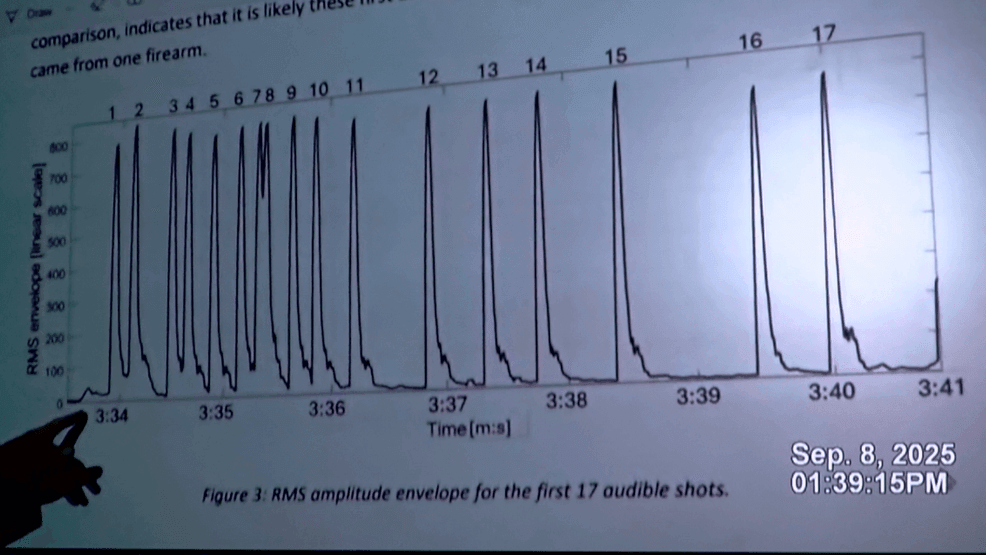
In a video of a deposition given by expert witness Robert Maher, he confirmed that he found no evidence that any of the 29 gunshots he discerned in the 911 call made by Boyd at Camp Swamp Road came from outside the vehicle. He added that the first 17 shots in the recording likely came from the same firearm. (WPDE)
Maher said the only notable shots were 7 and 8. He said that because they were fired so closely together, he said he does not have an explanation for that one.
2:21 p.m.
In a video of a deposition given by expert witness Robert Maher, he confirmed that he did not identify any audio evidence of gunshots before the first obvious gunshot at 3:33.
In a video of a deposition given by expert witness Robert Maher, he confirmed that he did not identify any audio evidence of gunshots before the first obvious gunshot at 3:33. (WPDE)
2:14 p.m.
In a video of a deposition given by expert witness Robert Maher, he explained spectrographic analysis of Boyd’s 911 call during the exchange of gunfire at Camp Swamp Road.
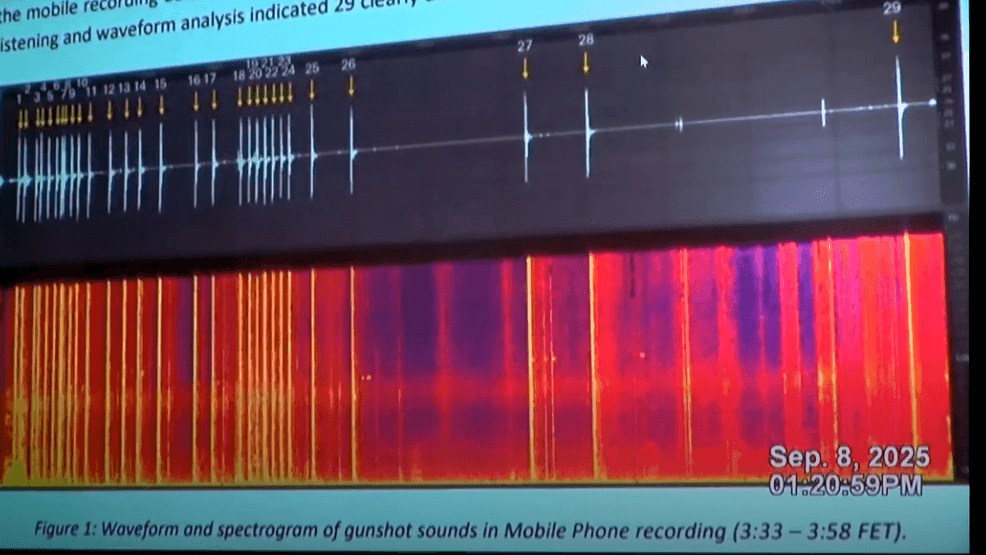
In a video of a deposition given by expert witness Robert Maher, he explained spectrographic analysis of Boyd’s 911 call during the exchange of gunfire at Camp Swamp Road. (WPDE)
2:06 p.m.
Maher explained that after his initial listening to the recordings, he was asked to answer two forensic questions.
One of the questions was, “Can you discern if there were gunshots before the first obviously ‘audible’ gunshot at 3:33?”
2:02 p.m.
Maher explained some of the limitations, technologically, of the phone recordings he was given.
The recordings included the 911 call made by Weldon Boyd before and during the shooting. In the recording, listeners can hear both Boyd and Williams speaking as well as the exchange of gunfire.
1:57 p.m.
In a video of a deposition given by expert witness Robert Maher, a professor of electrical and computer engineering at Montana University who specializes in audio engineering, he explained what was in the recordings he was given to listen to.
1:51 p.m.
A video of a deposition given by expert witness Robert Maher, a professor of electrical and computer engineering at Montana University who specializes in audio engineering, was played in the courtroom.
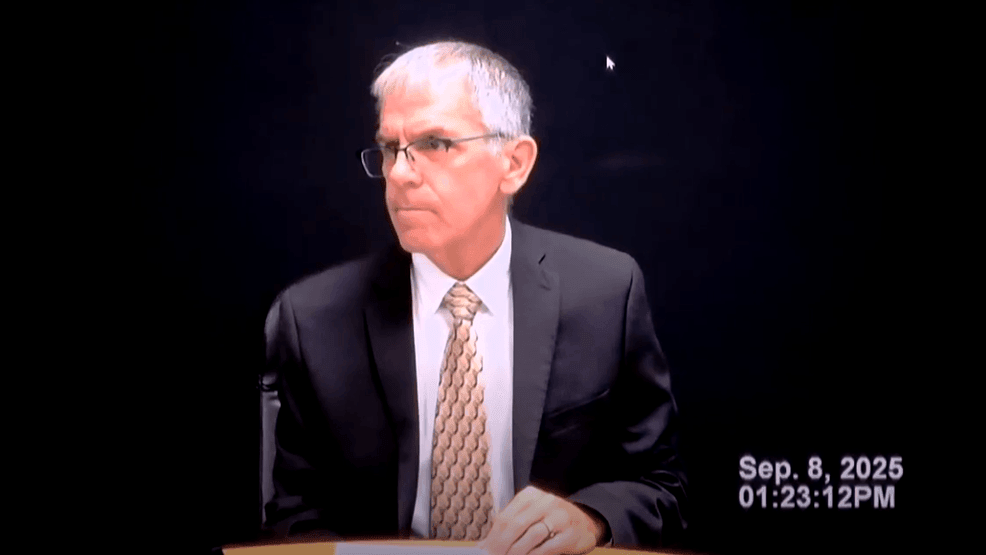
A video of a deposition given by expert witness Robert Maher, a professor of electrical and computer engineering at Montana University who specializes in audio engineering, was played in the courtroom. (WPDE)
1:38 p.m.
The court resumed.
Boyd’s attorney, Kenneth Moss, motioned to exclude all portions of the prosecution’s final witness testimony, who is supposed to take the stand now.
The expert witness, Robert Maher, is a gunshot acoustics expert, and listened to the recording of the event only.
Moss said they do not question Maher’s credentials, but do not feel he was given adequate evidence in the case to hold a relevant opinion.
12:15 p.m.
The court took a break for lunch until 1:30 p.m.
12:15 p.m.
An attorney for Boyd cross-examined Shirley, a lieutenant with Horry County Fire Rescue (HCFR).
Shirley confirmed that he never had a visual sight of the men driving on Camp Swamp Road.
He also confirmed he was a friend of Spivey and his sister is close with Spivey’s sister, Jennifer Spivey Foley.
The judge said the attorneys were “splitting hairs now” by calling Shirley to the stand.
12:11 p.m.
Shirley, a lieutenant with Horry County Fire Rescue (HCFR), said he was at the fire station Spivey, Boyd and Williams passed as they were driving on Highway 9.
He confirmed that he heard what he thought was a “high-speed chase” as they passed the station.
12:08 p.m.
The prosecution called Brian Shirley, a lieutenant with Horry County Fire Rescue (HCFR), to the stand to testify.
12:01 p.m.
The court resumed.
Both the prosecution and defense debated how they should proceed in the hearing.
11:50 a.m.
The court went on a brief break.
11:45 a.m.
An attorney for the Spivey family, Mark Tinsley, asked Williams why he never asked Boyd to let him out of the truck.
Williams said, “I’m not getting out of that truck when a man’s outside the truck with a gun.”
11:38 a.m.
An attorney for the Spivey family, Mark Tinsley, asked Williams to look at a sketch made by HCPD Detective Shellneil Tamasir. Tamasir photographed and investigated the shooting scene.
Tamasir testified in court Thursday.
11:35 a.m.
A phone call between Boyd and Williams was made at 7:51 p.m. Sept. 12, 2023, a few days after the shooting.
In the call, Boyd told Williams that the case would have been handled differently if it had happened in Spivey’s home county in North Carolina.
11:32 a.m.
A phone call recording between Boyd and Williams after the shooting was played in the courtroom.
In the recording, Boyd told Williams there was a witness who told police they saw Spivey get out of his truck and start yelling on Camp Swamp Road and then “opened fire” on him.
Williams’ response in the recording was, “Oh, god.”
In the courtroom Friday, Williams said it was a “sarcastic” remark.
11:18 a.m.
An attorney for the Spivey family, Mark Tinsley, asked Williams if he was in full agreement with Boyd’s actions on the day of the shooting.
Williams confirmed he believed Boyd did the right thing by calling 911 and following Spivey.
Tinsley also asked Williams why he and Boyd didn’t stop after they had Spivey’s license plate number and had relayed it to the 911 dispatcher.
“Why should we have to stop?” Williams asked.
“Well, that’s right, because you all are heroes and chasing this bad guy down,” Tinsley said.
Tinsley also asked Williams why he and Boyd didn’t stop after they had Spivey’s license plate number and had relayed it to the 911 dispatcher. (WPDE)
11:12 a.m.
Williams began being cross-examined by an attorney for the Spivey family, Mark Tinsley.
Tinsley questioned whether Williams thought Spivey was an “imminent threat” when he saw him holding a gun driving on Highway 9.
11:11 a.m.
Williams confirmed that he thought Boyd did the right thing in following Spivey. He confirmed that he felt he had a “social duty” to get Spivey off the road.
11:08 a.m.
Williams told his attorney, Morgan Martin, that he did nothing to put himself in a position to be in a shooting on Camp Swamp Road that day.
Williams also described the weapon used in the incident. He explained that his gun had a red light (used for aiming), a flashlight (a mounted light on the gun), and a comp (used to reduce recoil).
11:02 a.m.
Williams described the exchange of gunfire between the men at Camp Swamp Road. His attorney, Morgan Martin, questioned Williams about being a concealed weapon permit (CWP) holder.
Morgan confirmed that Williams had to take a CWP class with the state of South Carolina in order to be granted the permit.
Morgan said the classes teach about self-defense. He asked Williams whether the class instructs CWP holders to stop shooting before they believe the threat is mitigated.
Williams said “no,” they were taught to continue shooting.
This line of questioning was in reference to Williams “emptying the magazine” on Spivey.
10:53 a.m.
Williams confirmed he told Boyd to “back up” after they had pulled onto Camp Swamp Road. He clarified the reason he told Boyd to do so.
“I didn’t want to be in a gun fight,” Williams said.
Williams confirmed he told Boyd to “back up” after they had pulled onto Camp Swamp Road. He clarified the reason he told Boyd to do so. (WPDE)
10:49 a.m.
Williams described seeing Spivey interacting with another white truck, which was not the one Boyd and Williams were in.
Williams said Spivey, in a black truck, followed the other white truck onto Camp Swamp Road. He said Spivey “abruptly changed lanes” and turned onto Camp Swamp Road.
He added that by the time Boyd and Williams arrived at Camp Swamp Road, he claimed Spivey was already stopped and exiting his truck.
10:40 a.m.
Williams’s attorney, Morgan Martin, asked him about the first moment he saw Spivey. Williams said he remembered seeing Spivey in a truck to the right of Boyd’s truck. Williams said he saw Spivey pointing a gun at him.
Williams’s attorney, Morgan Martin, asked him about the first moment he saw Spivey. Williams said he remembered seeing Spivey in a truck to the right of Boyd’s truck. Williams said he saw Spivey pointing a gun at him. (WPDE)
10:39 a.m.
Williams’s attorney, Morgan Martin, asked Williams about where he was before getting in the truck with Weldon Boyd. Williams confirmed he met Boyd at his farm, and the two went to Tractor Supply. After leaving the store, the two men encountered Spivey.
10:37 a.m.
Williams’s attorney, Morgan Martin, asked about his background. He also asked whether or not he knew Spivey prior to the incident. Williams confirmed he did not.
10:35 a.m.
The court resumed with defendant Kenneth “Bradley” Williams taking the stand to testify.
10:19 a.m.
Timothy Davis, a licensed surveyor, left the stand after testifying.
He was preceded by Christopher Watkins, a digital forensic analyst, who also took the stand to testify.
THE CASE:
The incident report lists Spivey as both the suspect and the deceased, and Boyd was named as a person involved in the shooting.
In a 911 call made by Boyd on the day of the incident, Sept. 9, 2023, he claimed Spivey pointed a gun at him while they were both driving on Highway 9. Boyd told the dispatcher that if the gun was pointed at him again, he would “put him down.”
Boyd and his passenger followed Spivey’s car as it turned onto Camp Swamp Road, where Boyd informed the dispatcher that Spivey was stopping and they were “about to have a shootout.” Moments later, Boyd reported to dispatch that Spivey fired a shot at him, prompting him to fire back.
A bystander called 911 to report the shooting, saying, “Somebody just unloaded, shot through his windshield and shot this guy.” The Horry County Coroner’s Office confirmed that Spivey was shot to death inside his vehicle.
Scott Spivey’s sister, Jennifer Spivey Foley, called out the Horry County police investigation into the shooting that was ruled as self-defense.
Our family has only ever asked for the truth and for ALL of the evidence to be evaluated in my brother’s case for a fair and unbiased investigation,” Spivey’s sister, Jennifer Spivey Foley, said in April. “There are clearly major pieces of evidence that were overlooked, whether on purpose or by error, that we feel would have had a major impact on getting justice for my brother’s death.
Foley also said that evidence shows officers coaching Boyd and Williams at the scene.
“Body cam footage displaying blatant and inappropriate interactions between the officers on scene, clear violations of standard protocols by everyone, like coaching the shooters to act like a victim,” Foley said.