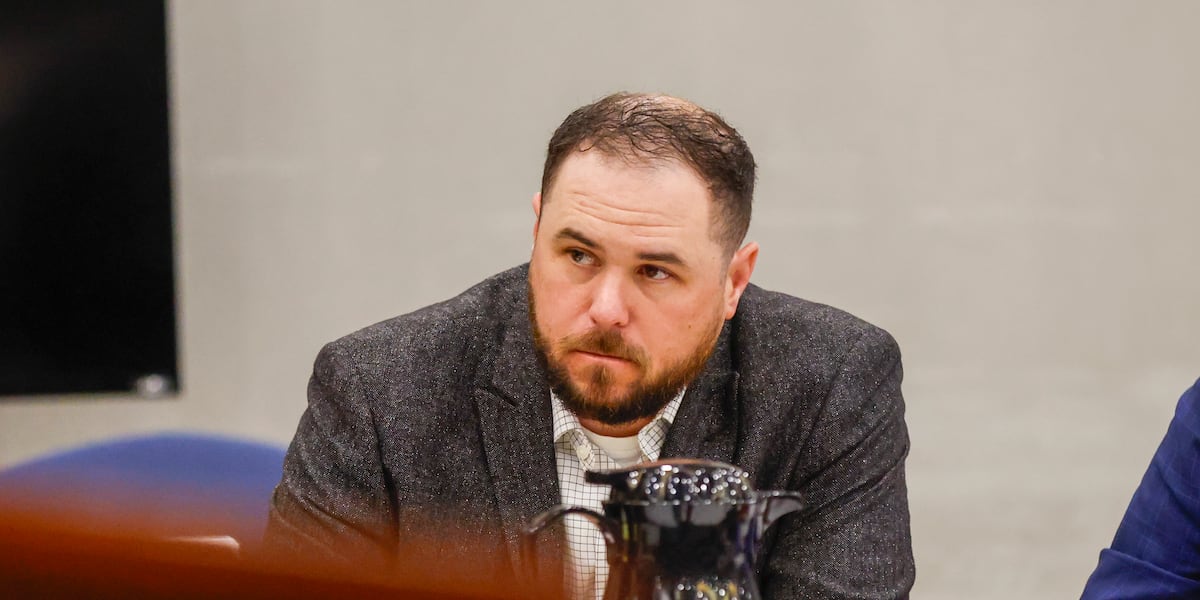
HORRY COUNTY, SC (WMBF) – A judge denied Weldon Boyd’s request for immunity in an important stand-your-ground hearing on Friday.
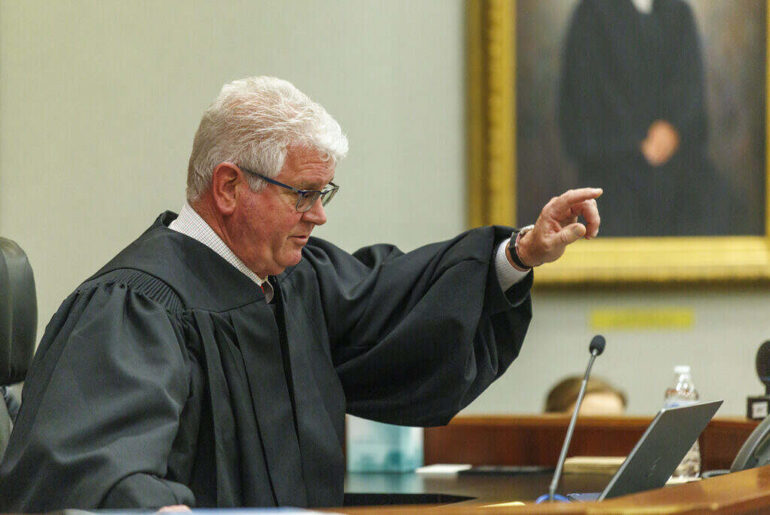
The long-awaited stand-your-ground hearing over a lawsuit in the deadly shooting of Scott Spivey in Horry County wrapped up Friday afternoon, with the judge ruling against giving Boyd immunity in the case.
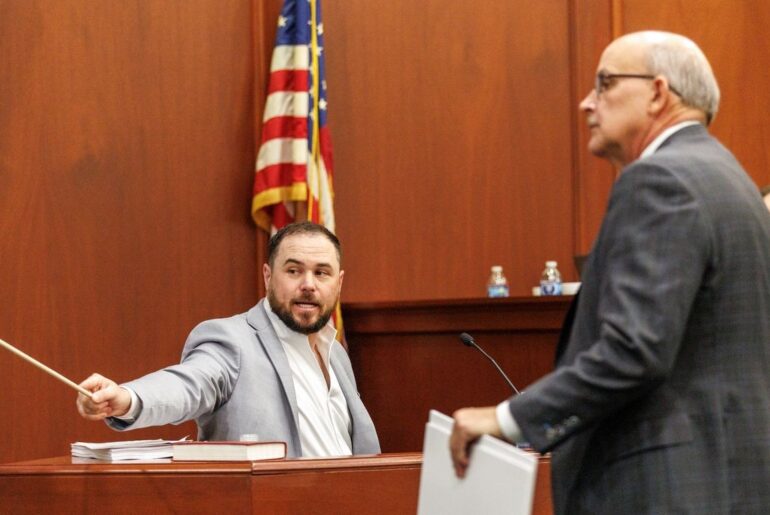
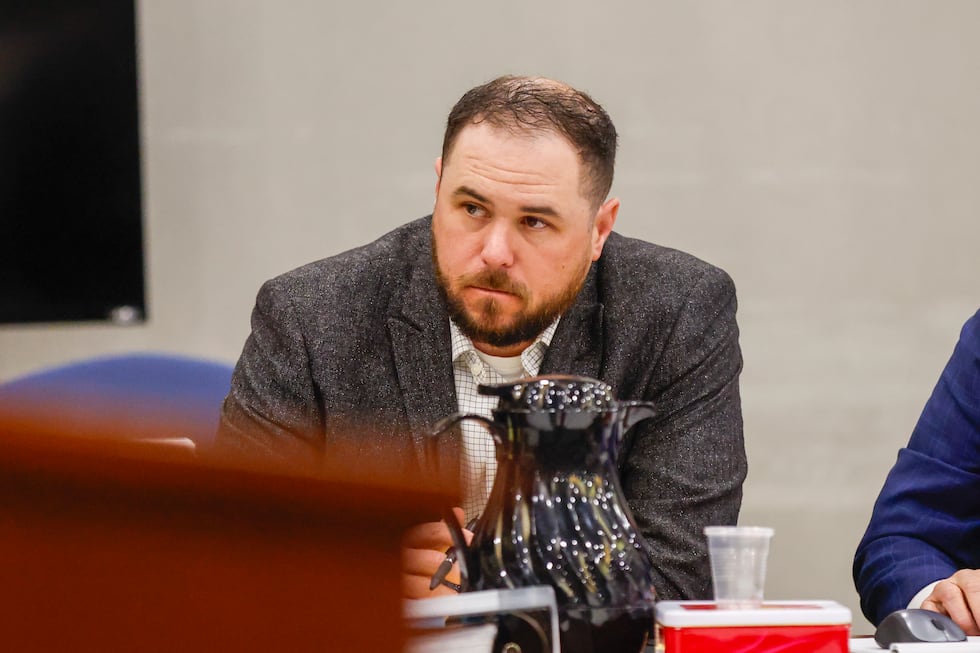 Weldon Boyd, owner of Buoys on the Boulevard, and Kenneth “Bradley” Williams appeared in an Horry County courtroom on Wednesday for a hearing related to a wrongful death lawsuit filed by the family of Scott Spivey. The hearing to be held over multiple days this week, will determine whether they will once again be granted immunity under South Carolina’s Stand Your Ground law for shooting and killing a North Carolina man nearly three years ago. Feb. 18, 2026.(Jason Lee | jlee@thesunnews.com)
South Carolina’s stand-your-ground law applies when the use of deadly force is deemed lawful.
The judge ruled that he is still considering whether or not to give Kenneth “Bradley” Williams, Boyd’s passenger during the September 2023 shooting, immunity.
The judge said Williams did not want to be there, citing that Williams told Boyd to slow down while driving and, moments before the shooting, told Boyd to back the truck up.
What does this mean
This means the lawsuit Spivey’s family filed over the shooting will be allowed to progress in court.
But this hearing had even more implications.
Had the judge ruled in favor of immunity for Boyd, that would have essentially ended any potential criminal charges against Boyd in the shooting.
Boyd and Williams have maintained they fired shots at Spivey in self-defense, and have never been criminally charged in the case.
But earlier in February, the Seventh Circuit Solicitor’s Office confirmed a grand jury will review the case.
A state grand jury is typically convened so prosecutors can present the facts and findings of a case to determine whether a person should be indicted.
The grand jury would have been dismissed had the judge granted Boyd immunity.
Authorities said Boyd, the owner of Buoys on the Boulevard in North Myrtle Beach, shot and killed Spivey along Camp Swamp Road in the Longs area following a road-rage incident.
Judge’s comments
Before his ruling, the judge said Boyd’s Thursday testimony was lacking credibility, pointing out that Boyd said he wasn’t looking for help after the shooting, but called former Horry County Police Department Deputy Chief Brandon Strickland to come to the scene.
Strickland didn’t come because he didn’t want it to look like favoritism toward Boyd.
But in a call between the two the morning after the shooting, details emerged.
Strickland said he sent out to the scene Det. Alan Jones, the lead investigator on the case, and called Jones a “good ole boy.” He later said in the conversation that Boyd was “taken care of.”
Spivey’s family has claimed the investigation was mishandled from the start, possibly due to Boyd’s friendship with Strickland.
Strickland resigned following allegations of misconduct in the case.
The judge also said there were many discrepancies in the accounts of a witness, Frank McMurrough, and Boyd and Williams regarding the description of Spivey outside the truck.
“Whether you call it pursuit, following, chasing, they know, both guys in that truck know, that the guy they are following, trying to keep up, has got a gun,” the judge said. “Stay back. He’s acting like a fool. He was. Spivey was acting like a fool that day.”
The judge said that Boyd’s driving more than 100 mph to keep up with Spivey was foolish, implying he didn’t buy Boyd’s claim that he didn’t have to keep Spivey’s speed to stay close to Spivey’s truck.
The judge said some of the phone calls Boyd made after the shooting sounded like Boyd trying to get his story straight, asking for help and trying to make sure he would be free from any responsibility.
The judge did believe that Williams’ testimony was more credible than Boyd’s.
He reminded the attorneys that this was a case of immunity, not innocence or guilt.
He said he relied heavily on credibility in the decision.
Recap of day 4 Closing arguments
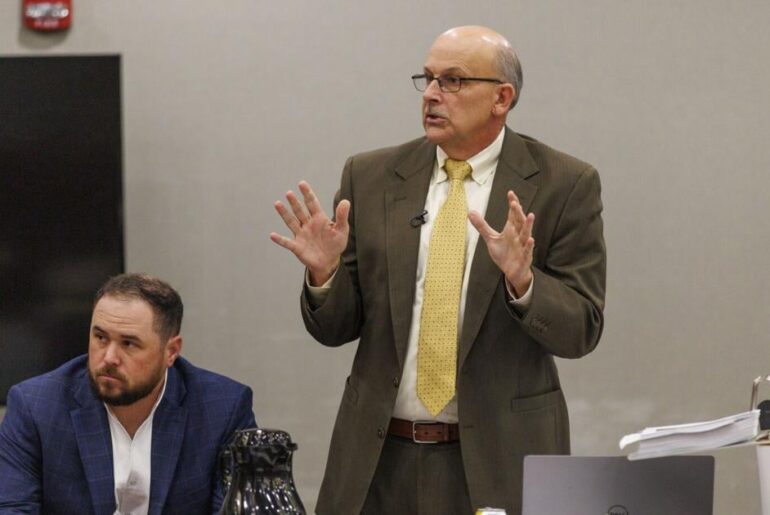
Boyd’s attorney, Ken Moss, said the phone calls presented to the court were irrelevant, and even called them the elephant in the room.
Moss also said that an audio expert the court heard from on Friday did not do enough as a witness.
Williams’ attorney, Morgan Martin, said even if he concedes it was a chase, it was more like three miles rather than nine.
He said that it is clear that Spivey was driving terribly and never tried to withdraw from the situation.
If he was scared, he wouldn’t have stopped on Camp Swamp Road and hopped out of his truck with a gun, Martin said.
“He gets out with a gun,” Martin said. “Not a white flag, not a surrender, not a withdrawal, but a continuation of a pattern of criminal conduct…”
Martin also mentioned that South Carolina common law imposes a duty on everyone who sees someone commit a felony to apprehend the offender or make an outcry.
According to Martin, Boyd did nothing illegal by turning down Camp Swamp Road.
Martin said that it doesn’t even matter who shot first in this situation.
“Classic self-defense event,” Martin said. “Whether you like it or not.”
Martin also criticized testimony from the witness, Frank McMurrough. In that deposition, McMurrough said Spivey was not holding the gun aggressively; it was at his side, but there was a slight movement when Spivey got out of the truck.
But Martin saw the shooting through his rear-view mirror, saying McMurrough doesn’t know what he saw.
Martin believes that Spivey pointed the gun at Boyd’s truck and was shot in the armpit from return fire.
According to Martin, Spivey got back into the truck and emptied a magazine.
Martin said that Boyd would have closed the distance between his truck and Spivey’s if he and Williams wanted trouble.
“You can hear it in their voice, judge; they’re scared when they turn down that road,” Martin said.
Kenneth “Bradley” Williams takes the stand Friday Background
Williams was 36, grew up in Cheraw, South Carolina, and lived in Darlington.
He met Boyd at a technical college and said he did not know Spivey or Spivey’s family.
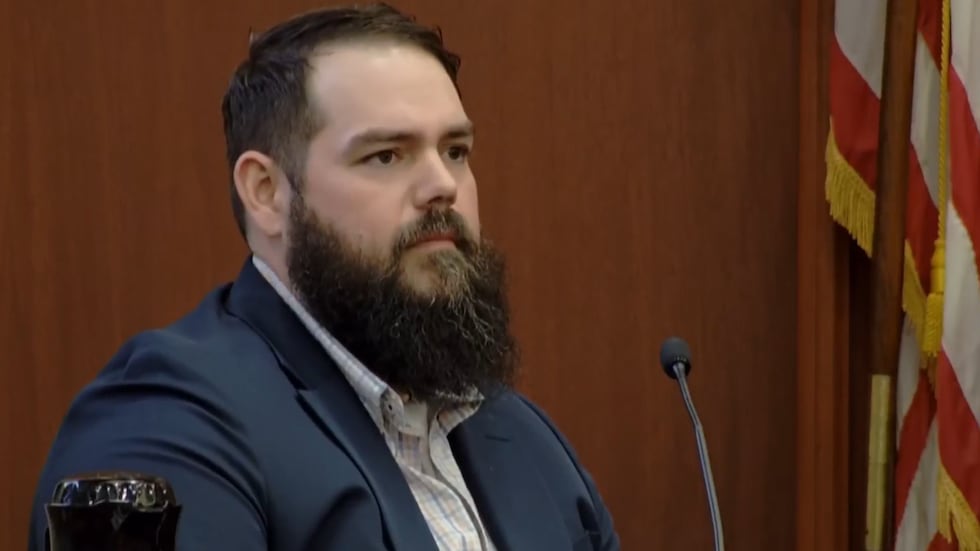 Kenneth ‘Bradley’ Williams testifies in stand-your-ground hearing(WMBF)The shooting
On the day of the shooting, he met Weldon at a farm, where the two were preparing for an upcoming friends-and-family event.
Williams said he had a gun in his bag in the truck.
Boyd and Williams left a Tractor Supply store, and Williams testified that they first encountered Spivey after crossing the Waccamaw River, a claim that Martin said contradicted earlier testimony.
Williams described that first contact, saying Spivey got close to Boyd’s truck between the river and Highway 905, and when he looked over, Spivey pointed a gun at him.
Williams said Spivey’s driving was erratic and that Spivey jumped in front of them and brake-checked them before reaccelerating.
At that time, Williams said he started taking photos to prove what Spivey was doing.
Williams said another white truck began to engage with Spivey, and it looked like that white truck was chasing Spivey.
As Williams and Boyd approached Camp Swamp Road, he said that Spivey abruptly turned down the road to follow the other white truck.
Williams reported never seeing the other white truck after that turn.
As they got onto Camp Swamp Road, Williams said Spivey got out of the truck with a gun in his hand and started to walk back toward the truck.
Williams said he told Boyd to back up, which was heard on Boyd’s 9-1-1 call.
Martin asked Williams why he said this.
“I didn’t want to be in a gunfight,” Williams said.
From there, Spivey walked toward the rear of the truck, and Williams said he saw Spivey pull the slide on his gun back.
Williams said the only reason he shot was that he felt there was no other option, citing Spivey’s anger.
Williams said he rapidly fired his gun and emptied the magazine because, as a certified concealed carrier, he had been taught to keep shooting until the threat was over.
Williams said he and Boyd did nothing to bring on the exchange of gunfire.
Williams added that he thought Spivey reached speeds of more than 100 mph when the other white truck was involved on Highway 9.
Martin asked Williams about a comment he made to Boyd after the shooting, where Williams said to Boyd, “Why the [expletive] couldn’t you leave him alone?”
Williams said he did not think Boyd did anything wrong, calling Spivey a danger.
Williams said he was unaware of any 9-1-1 calls Spivey made, adding that if Spivey had been scared at any point there were plenty of places he could have turned into to get help.
Cross-examination
The Spivey family’s attorney, Mark Tinsley, said Boyd and Williams interacted with Spivey for a long time before Boyd called 9-1-1, but Williams said he did not believe it had been that long.
Tinsley then questioned when in Boyd’s 9-1-1 call he told dispatch that he and Williams had their guns out.
During his testimony, Boyd said he misspoke in the moment and that the guns were not actually out and visible.
Williams also testified that the guns were not out.
Tinsley also questioned why the two did not stop following Spivey, saying they had his license plate number.
“Why should we have to stop?” Williams said.
“That’s right, because y’all are heroes, chasing this bad guy down,” Tinsley replied.
Williams pushed back on this claim.
Williams asked why Spivey did not stop, to which Tinsley replied that he assumed it was because of the other white truck that Williams and Boyd had brought up.
But Tinsley said the reality was that Williams and Boyd were two men with guns out chasing Spivey.
Tinsley asked Williams whether, if two people had chased him with guns out for an extended period, he would have felt he had a right to defend himself.
Williams replied, “That’s not what happened.”
Phone calls
Multiple phone calls were played for the court.
In one, Boyd called Williams a “warrior” during the shootout. Williams said that he and Boyd used dark humor after the shooting.
In another, Boyd told Williams, “Delete the Facebook messages,” and mentioned an unbuilt project gun in the back of Boyd’s truck during the shooting.
This gun was brought up during Boyd’s testimony.
Boyd said the plaintiffs would try to make a big deal out of a project gun that was found in the back of his truck in multiple pieces.
Boyd said he was still building the gun and doing everything by the book. He said the gun was useless at the time of the shooting, essentially a paperweight.
The ‘leave him alone’ comment
Tinsley brought up again the comment Williams made to Boyd in the aftermath of the shooting: “Why the [expletive] couldn’t you leave him alone?”
Tinsley claimed that Williams knew Boyd would put him “in this position.”
Williams replied that he had simply not wanted what had just happened to occur.
The leave him alone comment
Tinsley brought “Why the [expletive] couldn’t you leave him alone?” comment that Williams made to Boyd in the aftermath of the shooting up again.
Tinsley claimed that Williams knew Boyd would put him “in this position.”
Williams replied that he just did not want what had just happened to happen.
Audio expert
The courtroom heard a Sept. 8, 2025, deposition from Robert C. Maher after Williams’ testimony.
Maher is a professor of electrical engineering at Montana State. He does consulting in his spare time.
In this case, he analyzed three audio recordings. One of the calls was Boyd’s 9-1-1 call.
Maher said that because modern cellphones use speech recognition, non-speech sounds such as gunshots are not heard as well.
Tinsley asked Maher to analyze whether there were any gunshots audible prior to the first clearly audible gunshot.
Maher said he did not find evidence of a gunshot prior to the first audible one. All the gunshots heard on Boyd’s 9-1-1 call, which he said numbered 29, were from inside Boyd’s truck, Maher said. He said he believed 17 of the shots came from one firearm and 12 came from another.
Maher found no evidence from the audio that a shot was fired outside the truck. But he added that there were sounds from outside the truck that he couldn’t identify or rule out as gunshots.
When asked whether he knew Boyd’s truck had noise reduction properties, he said he did not. According to Maher, that could affect the ability to hear a gunshot outside the truck. He said the yelling inside Boyd’s truck could also affect the ability to hear a gunshot outside the truck.
Maher said he was typically called in on cases in which who shot first was at issue.
Spivey’s phone data
A licensed private investigator with the South Carolina Law Enforcement Division examined Spivey’s phone in the case.
Using this data, he analyzed Spivey’s driving, specifically looking for brake-checking events, and identified three points of interest.
The first event the investigator observed was a speed drop from about 70 mph to 47.3 mph over six seconds.
This happened before the Belle Dealership and the Tractor Supply, the data showed. An attorney noted that the first event happened before witnesses said that Boyd and Spivey encountered each other.
The other two brake-checking events were similar.
The second event saw Spivey go from 80 mph to about 48 mph, right around the time one of the witnesses who testified earlier in the trial called 9-1-1.
Only seconds later, the third brake-check took place, and it was the one that forced Boyd off the road.
Tinsley pointed out that the data cannot clearly determine a brake check because investigators do not know the driver’s intent; everything is based on the data
None of the data showed Boyd’s speed.
An examination of the data
Timothy Davis, a licensed surveyor, examined SLED’s data. He found the interchange at Camp Swamp Road to be an abnormality.
Davis analyzed the final two miles to Camp Swamp Road. Spivey’s high was 93 mph, and his low was about 20 mph.
Davis also said it was possible for Boyd to be near Spivey without maintaining the same speed.
Davis said Boyd was driving 10 mph slower than Spivey, and it was determined from 9-1-1 calls that Boyd turned onto Camp Swamp Road five, six or seven seconds after Spivey.
But he also noted that one lane change observed in the data could indicate that Spivey was driving out of fear.
Another witness
Lt. Brian Sterling with Horry County Fire Station 12 said he heard what he believed was a high-speed chase nearby.
Tinsley played a video from Boyd’s Facebook of his truck, and Sterling said he heard multiple vehicles, one of which sounded similar to Boyd’s truck.
In cross-examination, the defense pointed out that Sterling was inside and did not see anything.
Sterling did not know exactly how fast the vehicles were going.
Day 3
A look at the third day of the hearing, which was dominated by Boyd’s testimony, is below.
Coverage: Weldon Boyd admits he followed man killed in Horry County shooting, but not aggressively
Weldon Boyd took the stand Thursday morning.
He started by saying he had never known Spivey and did not intend to hurt him.
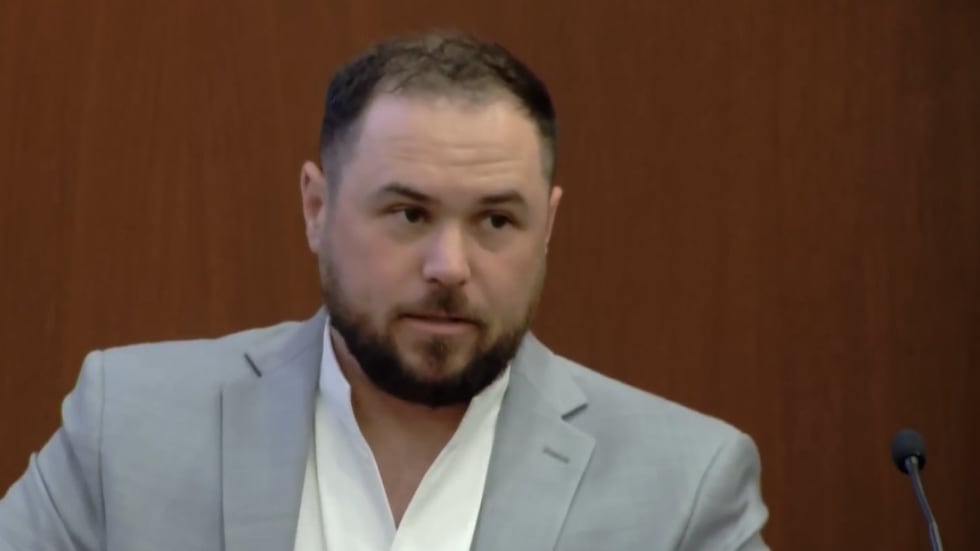 Weldon Boyd testifies in stand-your-ground hearing(WMBF)Boyd’s upbringing
Boyd spoke about his upbringing, saying he was adopted.
His adoptive father was a direct man, and Boyd tried to embody his values.
Boyd met Williams in school in his later years, after being home-schooled for a long time.
After school, Boyd joined the National Guard and was activated at one point to provide armed escorts. He clarified that he was not a combat veteran but was deployed to a high-risk area.
Boyd said he did not see combat during his service, never shot at anyone and did not receive sharpshooting training.
Boyd reminisced about his start in the restaurant business, saying he and his adoptive father invested in a new East Bay Deli location in North Myrtle Beach; the chain is based in Charleston.
Because he was still under contract with the Guard, an agreement was worked out for an honorable discharge.
He said that to leave the Guard, he had to undergo testing to see if he was ready to return to society, and no red flags came up.
Moments before the shooting
On the day of the shooting, Boyd and Williams were going to the farm, getting ready for a cookout to celebrate the construction of a barn at the farm.
Boyd said that before seeing Spivey, he heard Williams say “what the [expletive].”
At first, Williams thought that Spivey’s erratic driving might be a prank, Boyd said.
But the swerves followed an intense brake check that almost caused the two trucks to collide.
When Boyd swerved into the next lane, Spivey drove into that lane and forced him off the road, according to Boyd.
Boyd said he ended up in a ditch, and as he was getting back on the road, he saw Spivey ahead of him pointing a gun back at the truck while he was driving.
Boyd and Spivey continued to drive around each other, slowing down and speeding up, switching lanes, all while Spivey was holding his gun up in the air, Boyd said. Boyd caught up to a yellow Jeep and said he saw Spivey get behind the Jeep and aim at it.
Boyd took a photo at this time, and he said the photo shows Spivey’s face, hand and the pistol aimed straight ahead.
Moss asked Boyd how fast he was going. Boyd said he did not know but admitted there were times he sped up to keep Spivey “in sight.”
He said there were times when he and Spivey were closer together and times when they were farther apart.
Boyd also said that he was never right on top of Spivey and could always see Spivey’s license plate.
At some point, Spivey and another white truck ended up speeding down the highway, but traffic slowed them, and Boyd rejoined those trucks.
More photos taken by either Boyd or Williams show Spivey with the pistol pointed toward the sky outside the truck.
Boyd claims that Spivey kept trying to get Boyd to drive off the road or stop.
The court then heard experts from Boyd’s 911 call.
“If he keeps this up, I’m going to have to shoot him,” Boyd said in the call.
He said he did not want to harm Spivey and just wanted 9-1-1 to get there.
In the call, Boyd said that he and Williams had their guns out, but he said that in the moment, he had misspoken, and the guns were not actually out and visible.
He said that the dispatcher seemed uninterested and was not fully grasping the situation.
“I did not mess with him; I followed,” Boyd said in court. “…I know the guy has aimed guns at me, he’s driven aggressively towards me, he’s a danger to multiple people, I’ve witnessed him aim a gun at other people. He is a danger. This guy is a threat.”
During the 9-1-1 call, Boyd said they were over the speed limit, but not 100 miles per hour. He also said that at this point, Spivey started breaking down and closing the gap between them.
Boyd added that if he had been driving 100 miles per hour, some items in his trailer, which was hitched to his truck, would have fallen out.
However, the plaintiffs later argued that Boyd had to be driving near or around Spivey’s speed to keep up with him. Boyd replied that there are many variables, and he could still be near Spivey without driving that fast.
Boyd said he only intended to shoot Spivey if Spivey shot at him. If Spivey did not shoot at him, Boyd said he would not have shot, and he was not trying to stop Spivey.
Once Boyd turned onto Camp Swamp Road, both trucks stopped, and Spivey exited his truck, according to Boyd.
Boyd claims he was not holding a gun at this time, contrary to McMurrough’s deposition. He said that McMurrough could have mistaken Boyd’s attempt to shift his truck’s gear for a gun.
Boyd said he wanted to move the truck back, but he got confused in the moment and then saw Spivey yelling.
At this point, Boyd claims he did a “Matrix move,” pulling the gun from his side and racking it before pointing it at them and firing.
This also goes against McMurrough’s deposition, as McMurrough claims that Spivey never pointed the gun at Boyd’s truck.
“There is no doubt in my mind that he shot at us first,” Boyd said.
Boyd said he believes that Williams fired before he did because Boyd got caught in a seatbelt before pulling his gun out and shooting.
According to Boyd, he did not know if his gun’s magazine was fully loaded prior to shooting or not.
His gun could hold 16; two were left.
When asked about his choice to shoot, he said if he hadn’t, “one of us would not be here today.”
Boyd said his only plan was to follow Spivey until an officer arrived, claiming that Spivey ambushed him.
He said the reason for following was to relay Spivey’s location.
Scene
Boyd said he did not refuse any question from law enforcement about the shooting and followed directions at the scene.
He also said he told witnesses to stay put.
Afterward, Boyd said he called his attorney, Moss, his mom and Strickland.
Boyd recalled former HCPD Sgt. Paul Vescovi, who was fired in 2025, flashed a clipboard at him and Williams. A video shows the written note on the clipboard that reads, “Act like a victim. Camera.”
He said he did not know Vescovi or any officer at the scene. Boyd said he wished Vescovi had never flashed the note because it made him look guilty.
Boyd does not know why Vescovi did this; the only reason he could think of was to calm Boyd down, since his adrenaline was still going.
At one point, Boyd recalled overhearing an officer at the scene say it was cut-and-dry self-defense.
Investigation
Boyd was taken to the precinct for questioning.
He said he spoke to Jones, the lead investigator on the case, and answered every question asked and showed all the pictures he had taken that day. Boyd said Jones had unrestricted access to his phone.
The topic of an iPad came up, as Boyd’s ex-fiancée told Tinsley that Boyd used it as a dash cam.
However, Boyd pushed back, saying the iPad was for entertainment purposes only, and that the ex knew that.
He said one video was deleted from the iPad in March 2023, but it was not connected to the shooting.
Boyd claimed the city of North Myrtle Beach tried to get involved in the investigation of the Camp Swamp Road shooting. The HCPD police chief told the city no, but Boyd was not aware of this at the time, he said.
Boyd was worried about the city’s possible involvement due to past issues with the city.
As a result, Boyd requested that the South Carolina Law Enforcement Division search his phone and tablet.
Boyd said that the only things he requested to be deleted from the phone were a sexually explicit photo and nothing in relation to the shooting.
The search that Boyd consented to was for anything on the phone or tablet created on or after Sept. 9, 2023.
Boyd said that, while he did not agree to it, SLED sent the findings to Horry County police, and the findings were eventually published.
While Boyd maintains he did not know Scott Spivey, he said he realized he did know Benji Spivey and reported it to HCPD.
Aftermath
A transcript of a call after the shooting between Boyd and his grandmother was read.
Boyd admitted to what he said in the call, but claimed he did not remember the conversation.
One of the things mentioned was that Boyd told his grandmother he enjoyed it and got an adrenaline rush from it.
He also said it was sad that some parents were grieving because their son did something stupid.
Boyd also had a conversation with his mother about a video. Boyd said he asked his mother whether there was a video and whether it showed Spivey aiming at them and firing.
He testified that he was unaware that a video existed, despite accusations that he took a video of the shooting and deleted it.
Shortly after the shooting, Boyd said he had a panic attack and “broke.” Boyd said he was still “broke.”
He said he did not return to work for eight to 10 months and spent a lot of time in bed.
In another conversation with his mom, Boyd said he was thinking a lot about Spivey’s mom and wanted to tell her he was sorry, but he couldn’t because it would look like guilt.
Cross-examination
Tinsley cross-examined Boyd onThursday afternoon.
It is worth noting that Boyd has filed a separate lawsuit against Tinsley, accusing Tinsley of using the case to promote himself.
Tinsley asks for clarification on when Boyd starts following Spivey. Boyd said he started following him when the gun was pointed at his friend’s head.
After this, an exchange between Boyd and Tinsley occurred, during which Boyd accused Tinsley of having access to their defense plans for this civil trial.
Boyd said that Tinsley got these plans through text messages released after SLED searched Boyd’s phone.
But Tinsley said the accusation does not make sense, because the Spiveys’ family lawsuit wasn’t filed until after that.
Boyd again claimed that Tinsley had access to communication between him and his attorney.
The earlier incident at East Bay Deli came up again as a call between Boyd and his mother plays.
In the call, Boyd pointed out that in this case, dispatch told him to stop following, but he said the dispatcher in the Camp Swamp Road shooting did not.
PTSD questions
Tinsley questions why Boyd never mentioned PTSD in his mental and physical disabilities when requested.
Boyd claims it’s due to PTSD not being a diagnosis he received in any medical records from the military that he had received.
Phone call with former HCPD deputy chief
A portion of the conversation between Boyd and Strickland the morning after the shooting was played.
Boyd asked Strickland to come to the scene of the shooting, but Strickland explained he didn’t come for Boyd’s sake because he didn’t want it to look bad to the Spivey family.
Boyd said that all the officers seemed to think it was 100 percent self-defense.
Strickland said he sent out Jones, a “good ole boy,” and that he called the captain over for the investigation and explained who Boyd was.
Strickland said he called Solicitor Jimmy Richardson and then told Boyd, “He was taken care of.”
Spivey’s family has claimed the investigation was mishandled from the start, possibly due to Boyd’s friendship with Strickland.
Strickland resigned following allegations of misconduct in the case.
An objection was raised that none of the conversation around the HCPD investigation was related to the stand-your-ground hearing.
The judge said he could distinguish between the HCPD investigation and the stand-your-ground claims.
More phone calls
Tinsley continued playing more phone calls, in which Boyd said it was messed up, but he had fun during the incident.
Boyd said he fully admits to saying this, but said he used dark humor to try to cope with everything in the aftermath of the shooting.
The judge will be able to consider all the calls and depositions submitted into the record.
Williams’s attorney examines Boyd
After Tinsley, Morgan Martin, the attorney for Williams, then examined Boyd.
Boyd said that Williams never told him how to drive; besides, at one point, Williams told Boyd to slow down.
Boyd told Martin that if they really were intent on killing Spivey, they would have closed the gaps between the trucks before the shooting.
Questions over the transportation of Spivey’s body
An officer with the HCPD crime scene investigations unit, Det. Shellneil Tamasi, took the stand earlier in the day before Boyd. During that testimony, questions were raised about how and why Spivey’s body was transported to an impound lot while still inside the truck.
Day 2 coverage:
Spivey did not point gun before deadly Horry County road rage shooting, witness says
On day one, many witnesses testified, and attorneys outlined the case.
Witnesses testified that Spivey was driving erratically and flashing a gun.
Day 1 coverage:
Witnesses say man killed in Horry Co. road-rage shooting was driving erratically, flashing gun
Background
Days after the shooting, 15th Circuit Solicitor Jimmy Richardson asked the South Carolina Attorney General’s Office to get involved with the case.
In April 2024, the South Carolina Attorney General’s Office declined to charge Boyd, citing insufficient evidence.
Then, in August 2025, the South Carolina Attorney General’s Office told the South Carolina Law Enforcement Division that it believed the stand-your-ground law was applicable in the shooting death of Spivey.
The lawsuits
The shooting has spanned multiple lawsuits, with Spivey’s family filing one against Boyd and Williams.
This lawsuit claims Spivey died in a “hail of gunfire” as Boyd chased Spivey.
Spivey’s estate claims that Boyd’s 911 call proves that Boyd was chasing him.
“At approximately 5:54 p.m., Boyd calls 911 and tells the dispatcher ‘if I see the gun again, I’m going to take him/the *expletive* down/out. He’s speeding up. Trying to get away from me.’ At that time and all others, Spivey was not threatening any specific person nor was there any such imminent threat.”
Meanwhile, in a lawsuit filed by Boyd against the attorney for the Spivey family, Tinsley, Boyd claims Spivey single-handedly initiated the road rage incident by stalking and assaulting Boyd and others on Horry County highways, and waving a gun.
Boyd’s complaint also cites 911 calls, specifically from witnesses.
Boyd said that prior to the shootout, multiple other 911 calls also reported that Spivey was acting aggressively and unlawfully and confirmed “Boyd’s evasive measures.”
The lawsuit also mentions the autopsy results, which Boyd said indicated Spivey was heavily intoxicated at the time of his death and that he was also suffering the effects of chronic abuse of anabolic steroids.
Shooting investigation
The Horry County Police Department’s investigation of the shooting has come under fire.
Recorded phone calls of Boyd and Strickland speaking after the shooting notably captured Strickland speaking candidly about the case with Boyd.
Strickland was not the only one to leave the force as HCPD conducted an internal investigation.
Body camera clips attorneys shared from the Sept. 9, 2023, shooting captured Vescovi flashing a written note that read, “Act like a victim. Camera,” to two men, Boyd and Williams.
HCPD fired Vescovi. Documents from the South Carolina Criminal Justice Academy indicate he is under investigation, but charges have not been filed against him.
The internal investigation also found that seven dashcam videos in HCPD’s investigation of the Camp Swamp Road shooting were improperly handled and mislabeled.
HCPD sent those videos to the South Carolina Law Enforcement Division, which is investigating whether HCPD officers engaged in any misconduct in the case.
AG asks for review of deadly Horry County road-rage shooting investigation
These allegations against HCPD’s investigation led Attorney General Alan Wilson to ask 7th Circuit Solicitor Barry Barnette in October to look over the investigation into the shooting death of Spivey.
Wilson stated in a letter to Barnette that, once details of the HCPD’s investigation reached civil attorney Mark Tinsley and Spivey’s family amid a lawsuit filed by his estate, questions about the case arose.
Wilson wants Barnette to review the case to see if the allegations of misconduct would change the initial finding by the attorney general’s office that the shooting falls under the stand-your-ground law.
On a podcast, Wilson said that if the review brings out new information that would change the stand-your-ground analysis, Barnette can make a different call and make “whatever prosecutive decisions” Barnette feels are appropriate.
Had Spivey survived, he would have been the one charged with a felony for driving under the influence and brandishing a firearm, Wilson said on the podcast.
Feel more informed, prepared, and connected with WMBF. For more free content like this, download our apps. Have feedback that can help us improve? Click here.
Copyright 2026 WMBF. All rights reserved.