As soon as I stepped inside the supplement factory, the sweet smell of red berries filled the air. It reminded me of being a kid and gorging on chewable multivitamins — a not-quite-natural “mixed berry” scent that was both nostalgic and vaguely medicinal. As factory tour smells go, it could have been much worse.
Inside Thorne’s headquarters, raw materials from around the world were arriving by the pallet. Under the neon lights of a giant, temperature-controlled warehouse outside Charleston, South Carolina, forklifts hummed and beeped as they stacked ingredients on towering shelves.
In here, it’s always 70 degrees and dialed in to a moderate 60% humidity level. The relief stepping in from the muggy southern heat outside was immediate.
We’re in factory world now.
Claire Critchell, Thorne’s senior vice president of operations, shows us the encapsulation and bottling area where workers in full-body suits prepare products.
Henry Taylor for BI
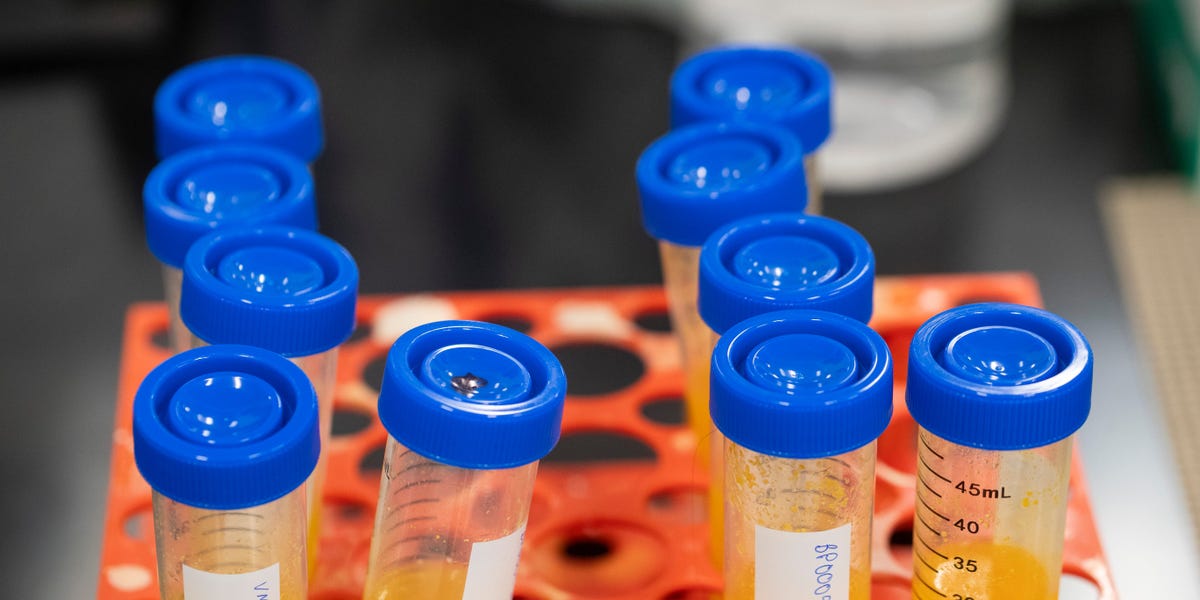
Studies suggest that most supplements don’t contain what’s advertised on the label. At Thorne, we saw some samples being tested for potency.
Henry Taylor for BI
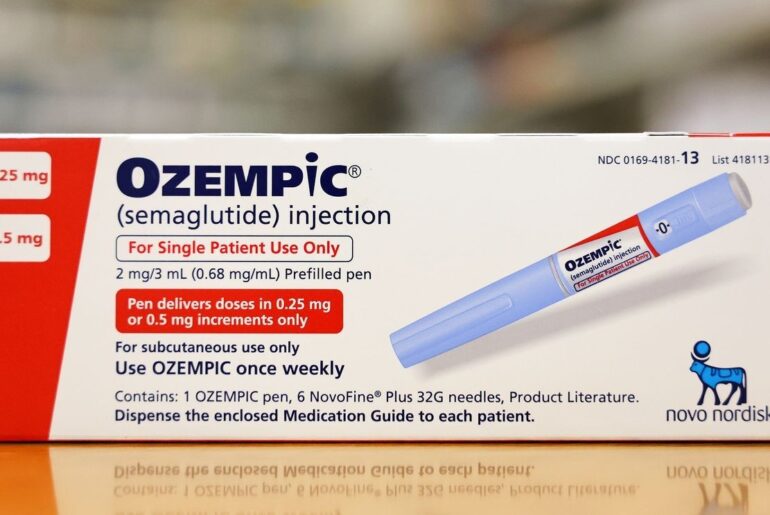
I saw pallets of creatine monohydrate, long popular with bodybuilders for improving strength, speed, and recovery. Indian barberry — the source of berberine, which influencers sometimes call “nature’s Ozempic” — was also being stocked. (It’s not actually comparable to GLP-1 drugs.) Flavoring agents destined to become mango limeade or blood orange electrolytes sat quarantined until they could be cleared for use. Workers in full-body suits moved between sealed mixing rooms where air pressure kept outside dust out. No perfume. No open-toed shoes. No mistakes.
Facilities like this one are increasingly common. The supplement industry has been quietly expanding its manufacturing footprint across the US, racing to meet demand that surged during the pandemic and has never slowed. Thorne’s newest warehouse, which opened in 2023 and doubled its manufacturing capacity to 549,000 square feet — about six football fields — is a monument to the supplement boom. The company poured $35 million into expansion after moving from a small-town Idaho factory to this suburban South Carolina location.
Consumers are clamoring for supplements and daily powders, fueled by influencers, personalized medicine, and a fast-growing online market for both peptides and supplements that’s racing ahead of regulation and bypassing doctors’ recommendations. The doctors and experts I’ve spoken with don’t dismiss supplements outright, but they warn the market is a minefield — one that patients are navigating largely on their own.

Every time Hilary publishes a story, you’ll get an alert straight to your inbox!
Stay connected to Hilary and get more of their work as it publishes.
During our visit, workers encapsulated berberine and vitamin D supplements.
Henry Taylor for BI
After the bottles are filled, they’ll pass through a miniature metal detector to screen for contaminants.
Henry Taylor for BI
Stacks have gone mainstream
The global supplement market is now estimated at $100 to $200 billion and is growing rapidly, with the US accounting for about one-fifth of worldwide demand. Once considered to exist only on the fringes of medical care, “stacks” of supplements have now become daily rituals for millions of Americans.
Before the pandemic, around 58% of US adults reported taking some kind of supplement. Today, that number is closer to 75%, according to industry estimates. Online sales are taking over. The Nutrition Business Journal’s 2025 report cited annual growth of over 10% in online supplement sales, even as other pandemic-era e-commerce trends have cooled.
“It’s just been an explosion of people being like, ‘I should probably pay attention to my health a little bit more and think about it proactively and take it a little more into my own hands,’” Nathan Price, Thorne’s chief science officer, told Business Insider from his office near Silicon Valley.
The pandemic didn’t just trigger interest in immunity-boosting and hygiene; it fundamentally changed how people think about their health and what they can do to improve it. Wellness culture — especially nutrition, fitness, and longevity — moved from the margins to the mainstream.
Supplements aren’t regulated the same way as drugs. They don’t need to be tested for safety or efficacy before they’re sold.
Henry Taylor for BI
Berberine, a supplement that is very similar to the diabetes drug metformin, is a bestseller at Thorne.
Henry Taylor for BI
There are many reasons for this shift. A bloated American “sick care” system that no one feels is working well. Growing distrust of one-size-fits-all medical advice. Doctors pressed for time with patients. The rise of direct-to-consumer lab tests that sample blood, spit, urine, and other substances from the body, promising to tell you exactly which pills, potions, and microbiome supplies you need to feel your best.
I’m not immune to the trend. About a year and a half ago, I did some testing at a high-end longevity clinic as part of a reporting trip and discovered I was magnesium-deficient. Now, I take a pill or two every day — not because a doctor prescribed it, but because a gargantuan 12-vial blood test led me to understand that it would be a good idea.
Other than a little increase in morning (ahem) regularity, I don’t notice much difference, but my levels are back in range — which suggests it’s doing something, even if I can’t feel it. My doctor said she thought my dosage seemed a little high, but shrugged it off and said, “If you want to, it’s fine,” given my normal-looking bloodwork.
How supplements became self-directed healthcare
A decade ago, there was no way to get Thorne’s supplements outside a doctor or healthcare practitioner. Today, consumers are no longer content with a one-size-fits-all multivitamin. Many track their sleep, heart rate, and workouts on smart devices, then feed that data into apps or AI tools to create personalized supplement “stacks.” Podcasts and influencers amplify new studies — sometimes responsibly, sometimes not.
Now that you can get the product with just a tap of your smartphone, Thorne’s marketing has followed suit. Whether it’s sports, beauty, or wellness, there’s a good chance someone you follow has touted a Thorne supplement. Model Karlie Kloss, tennis player Ben Shelton, Chris Hemsworth‘s trainer, Da Rulk, Dwayne Wade, and Ciara have all been featured in ads or promoted the brand on social media.
Thorne founder Al Czap built the brand’s entire reputation around quality manufacturing.
Henry Taylor for BI
Czap said many supplements aren’t formulated properly, and as a result, many don’t get absorbed by the body.
Henry Taylor for BI
This is not the same company that founder Al Czap started in 1984. A former supplement salesman, he started the company after seeing the poor state of industry manufacturing standards. He thought there were too many additives, too many hidden ingredients, too much messy manufacturing, creating ineffective, or worse, dangerous products.
So, he started to make his own. He built a successful business selling directly to doctors, bypassing stores and advertising entirely, establishing a brand based on quality and clean manufacturing.
“I was dealing with physicians who knew nutritional medicine, and they would bring the patient in, and they would look at their blood pattern. They would look at doing urinalysis. They would get the symptoms, and they would say, ‘Alright, I’ve had success with this product, and I would like you to take this product,’” Czap told me about the early days of Thorne.
It’s just been an explosion of people being like, ‘I should probably pay attention to my health a little bit more.’”
Czap stepped down as CEO in 2010, and after that, the company went through a period of rapid commercialization and expansion, first with Czap remaining as a shareholder and consultant, and later with private equity firm L Catterton taking full control. Over the years, Thorne developed flashier packaging, built an online presence, and launched consumer-facing blogs before starting to sell directly to consumers in 2018. They didn’t know it then, but soon they’d be in prime position to ship out supplements directly to consumers during the pandemic. A highly absorbable form of zinc, called zinc picolinate, was Thorne’s big seller during lockdown, as shoppers scrambled to pick up anything that might boost their immunity.
Some of the biggest names in the wellness space, including controversial wellness giants Andrew Huberman and Peter Attia, have mentioned Thorne by name, noting the brand’s reputation for quality, even though Thorne is far from the largest player in the game. It’s dwarfed by supplement giants including Nature Made, Nature’s Bounty, Nestlé’s Garden of Life, and Bayer’s One A Day.
Quality varies in a lightly regulated market
Influencer endorsements are big, especially in supplements, where it’s nearly impossible to know exactly what you’re getting. Unlike pharmaceuticals, supplements are not approved by the FDA before they hit shelves.
Under a 1994 law, manufacturers are largely responsible for ensuring their own products are safe and accurately labeled. The FDA does show up to inspect supplement makers — Thorne is quick to point this out — but those inspections aren’t mandatory or regularly scheduled, they’re mere retroactive checks on manufacturing and labeling. That regulatory gap has allowed innovation to flourish. It has also led to mislabeling, contamination, and exaggerated claims across the industry. Sometimes, the FDA only shows up after people complain about a brand or get sick.
This is where Thorne says it’s eager to differentiate itself. Every product at the factory undergoes four rounds of testing, they say again and again. During my tour, I see miniature metal detectors screening raw materials and finished capsules coming off the line, checking repeatedly for heavy metals inside the pills. Refrigerators and heaters churn with finished pill bottles inside, testing to ensure the finished products remain stable across various climates. I’m introduced to lab workers in white coats and goggles who are uncapping products and spooning out scoops of powder to test for microbial contamination and potency.
At times, it feels excessive, but in an industry where trust is fragile, that redundancy is part of the brand ethos, Price said.
Samples are shaken before testing.
Henry Taylor for BI
Lab workers check to ensure that harmful bacteria, such as mold, can’t grow on the supplements.
Henry Taylor for BI
“We position as a premium brand, but to maintain that reputation, we’re very strict,” he added. “The fact that we do [test] repeatedly just draws the probability of us having a negative to be very, very small. It’s a trade-off.”
When I asked about his thoughts on the company’s current standards, Czap is pleased that quality control remains paramount. “Kudos to them because they didn’t screw it up,” he told me, adding he still gets his own supplements from Thorne.
It seems customers are taking notice, too. One of Thorne’s most popular products, creatine, had more than 12,700 5-star reviews on Amazon at the time of publication, with hundreds of customers commenting on its high quality and dissolvability.
There are plenty of pitfalls, even with ‘safe’ products
Even if a product is safe, some consumers will overdo it. A woman in New Jersey, seeking inflammation and joint pain relief, recently suffered liver damage after she followed the advice of a person who said they were a doctor on social media and recommended a monster 10x dose of turmeric every day. (It’s not clear what brand of turmeric supplement she was using.)
On top of consumer misuse, numerous studies show that most supplements don’t accurately contain what they say on the label. Certain additives deemed “incidental” may not be listed at all. The FDA has even found prescription drugs like blood thinners, typically used to help prevent strokes and heart attacks, and anticonvulsants, prescribed for seizures and neuropathic pain, masquerading as “supplements.” It’s a mess.
The doctors and longevity experts I’ve spoken with aren’t categorically opposed to supplements. Still, many resent what a minefield it can be picking out the right products for the right person. Most agree that consumers shouldn’t do this on their own, with no guardrails.
“I struggle with the supplement industry, not because I don’t believe that some supplements have value, some certainly do, but I just feel like the incentive structures are all geared toward forcing companies, individuals, people in that industry who are marketing supplements to be dishonest,” said Matt Kaeberlein, a scientist who studies the biological mechanisms of aging, and who recently cofounded Optispan, a longevity healthcare company.
Dr. Haleem Mohammed, the Chief Medical Officer at Gameday Men’s Health, where he focuses on hormonal health, said he often sees patients get “burned” by inflated influencer claims on social media.
“The supplement brands and supplement shillers and influencers can make any sort of claims they want, whether it’s performance, fat loss, libido,” he said. “They’re not formulating, testing, verifying anything. They’re out there cherry-picking studies. They’re using animal data that’s stretched into human claims.”
Creatine, testosterone, anti-inflammatories, and gut health
There’s one supplement, in particular, that’s now a bestseller across demographics. Inside Thorne’s facility, creatine is everywhere. Arriving by the pallet and showing up in cart after cart, being prepared to ship to a customer’s doorstep.
“Creatine is the overnight sensation, even though it’s been around forever,” said Ken Rowe, Thorne’s chief R&D officer, and a former VP at Nestlé.
Once a staple in gym lockers, it’s now gaining steam as a longevity aid, cognitive enhancer, and everyday health hack. It’s one of the most well-studied supplements, with decades of research — something supplement proponents, like Price, are keen to mention.
“There’s some evidence now that 5 grams kind of saturates up your muscles, but if you go to 10 grams, there’s this notion that some of that overflow actually goes into the brain,” Price said.
People are especially thrilled by a 20-person study with no placebo arm. It was designed to test safety, not efficacy, though it showed marginal benefits that still need confirmation in larger, placebo-controlled trials. Already, word has traveled that it works.
“I’m looking at an article online right now: ‘Creatine shows potential to boost cognition.’ That’s not what they were saying,” Dr. Nathaniel Chin, medical director for the Wisconsin Alzheimer’s Disease Research Center, said. “They were just saying, ‘This is feasible. People could take this. We should study this. We should see if this helps people in the long run,’ which I’m excited about.”
Raw materials, including creatine monohydrate and Indian barberry, are sourced from around the world and delivered to Thorne.
Henry Taylor for BI
Finished products are tested for both purity and potency.
Henry Taylor for BI
Nearby, in Thorne’s testing labs, new flavors and formulations are already in development. Before we can lift the camera to take photos, workers quickly flip the labels on jars so we can’t see the names of these not-yet-for-sale products, including two flavored versions of Thorne’s creatine that it has since released: strawberry and pineapple-orange.
Creatine is the industry standout star for now — with a forecasted compound annual growth rate of around 20-30% in the US — but it’s not the only one. Women’s health, gut health, and sports performance are Thorne’s biggest categories, Rowe said.
Magnesium, fish oil, curcumin (the anti-inflammatory compound in turmeric), prenatal vitamins, CoQ10, they are all here, buoyed by TikTok trends, podcast endorsements, and a broad obsession with longevity and performance.
There’s a new “advanced testosterone support” product made with ashwaganda, jumping into the hype around hormone health. “Even if people come in for creatine, then they find something else,” Rowe said.
Doctors are struggling to keep up with this innovation
Doctors fear many patients are overdoing it in this DIY-your-stack world. There’s little concern for how these ingredients might interact with or counteract one another, or a prescription medication.
Longevity experts and medical professionals recommend a more targeted approach to supplementation. Skip the blends and green powders, they say. Test for what you’re deficient in, then add in supplements slowly, discuss your progress with your doctor, retest, and see how you feel along the way.
“If you’re not testing before you’re taking these supplements, you may just be taking expensive pee, especially when it’s water-soluble vitamins,” Mohammed, the men’s health practitioner, said.
Based on his own lab work and expertise, his current “stack” includes creatine, fish oil, Omega-3s, CoQ10, calcium, magnesium, zinc, and vitamin D.
Amy Caplette, Thorne’s senior vice president of quality and regulatory affairs, moved from Idaho to South Carolina with the company in 2018.
Henry Taylor for BI
Liquids are added to multivitamin samples to test the potency of individual vitamins inside.
Henry Taylor for BI
“A lot of times, patients are deficient in those,” he said. “But I believe in testing for those before you just start willy-nilly telling people, ‘Hey, take a multivitamin.’”
If you’re going to do one thing for your longevity, doctors consistently say to prioritize exercise. Then start incorporating fresh, nutrient-dense foods like vegetables and fish into your diet before taking pills.
“If you would spend this money on a gym that you thought would get you moving, I would rather that,” Chin said.
The ultimate question: what goes in your stack?
As a perk, Thorne workers get to take home the supplements they make — with a monthly allotment of products, free of charge. The idea is that this is great quality control. Amy Caplette, Thorne’s SVP of Quality & Regulatory Affairs, told me that if it’s not good enough to serve your family, it shouldn’t be coming off the line.
“Rather than suggesting a standard ‘stack,’ we encourage employees to make informed choices based on their own goals, lifestyles, and health considerations, with expert support available when helpful,” the company said in a statement to Business Insider, after our tour.
Doctors say that while that’s probably not an unsafe strategy, it’s not exactly optimal in a sector where influencers are often the loudest voices.
“It always comes back to the influencers and these certain celebrity doctors saying that traditional medicine has abandoned you. We have the solution,” Mohammed said.
Chin said he understands the impulse to boost. He throws a little turmeric in his morning coffee, thinking of it as a mild anti-inflammatory. He pops a multivitamin, hoping to refill any dietary deficiencies.
I left the factory with some creatine samples, plus a berry-flavored amino acid powder, and electrolyte packets. The electrolytes were delicious, and I quickly reached for them on hot, busy days when I felt my hydration lagging.
But the other supplements have been sitting in the kitchen pantry ever since. Do I really need them? Would daily creatine help, or would it just make my muscles a little rounder? It all feels so marginal. For now, I’ll stick to working out.