 Despite sunny climates, vitamin D deficiency is surprisingly common, even in India. Modern lifestyles, indoor work, and darker skin tones hinder adequate sunlight exposure. This silent gap leads to fatigue and aches, often overlooked. Experts emphasize that diet alone is insufficient, and testing is crucial for proper treatment, warning against excessive supplementation. Vitamin D has a strange reputation. It is called the “sunshine vitamin,” so most people assume they get enough of it simply by living in a sunny country. But that belief does not always match reality.Across India and many other sun-rich regions, deficiency remains common. The Indian Council of Medical Research (ICMR) has acknowledged widespread vitamin D deficiency in the country, even among healthy adults. The Frontiers in Nutrition also notes that deficiency is prevalent worldwide, especially in people with limited sun exposure and darker skin tones.So the real question is simple: Is enough sunlight truly reaching the body, or is it only reaching the calendar?
The silent gap between assumption and reality
Dr Balakrishna G K, HOD & Senior Consultant in Internal Medicine at Gleneagles BGS Hospital, Kengeri, Bengaluru, told TOI Health, “In clinics today, vitamin D deficiency turns up in people who least expect it.”He explains that college students, young professionals, and even fitness enthusiasts are often surprised when blood tests show low levels.The assumption sounds logical. Living in a tropical country should be enough. But daily life has changed. Offices, cars, classrooms, and screens have quietly replaced hours under open skies. Even gym routines often happen indoors.Deficiency does not always look dramatic. It creeps in slowly. That is why many people never question it.
What vitamin D actually does inside the body
Most people link vitamin D only to bones. That is only part of the story.Dr Balakrishna points out, “Vitamin D works quietly in the background of the body.”It supports:Calcium absorption for strong bonesMuscle strength and recoveryImmune system regulationNerve functionLow levels have been associated with fatigue, muscle aches, slower recovery after exercise, and even low mood. The NIH confirms that severe deficiency can lead to bone softening conditions such as osteomalacia in adults.The problem is subtlety. Energy dips gradually. Body aches linger. Motivation feels harder to sustain. These signs are easy to blame on stress. 
Why sunlight is not always enough
Sunlight remains the main natural source of vitamin D. But useful exposure depends on ultraviolet B (UVB) rays, not just brightness.Dr Balakrishna explains that modern routines limit real exposure. Long indoor hours, sunscreen use, air pollution, and clothing that covers most of the skin reduce vitamin D production.Early morning walks feel healthy, and they are. But UVB intensity is often lower during very early hours. Meaningful synthesis usually requires short, direct exposure during mid-morning to afternoon, depending on location and season.Urban living adds another layer. High-rise buildings and shaded streets block sunlight more than people realise.
Skin tone and the hidden variable
One factor rarely discussed openly is skin pigmentation.Darker skin contains more melanin. Melanin protects against sun damage, but it also reduces the skin’s ability to produce vitamin D. This means individuals with darker skin need longer exposure to generate the same amount as those with lighter skin.The Centers for Disease Control and Prevention (CDC) notes that people with darker skin are at higher risk of deficiency in many regions.In densely populated cities, longer sun exposure is not always practical. That creates a quiet mismatch between biology and lifestyle.
Diet: Helpful but rarely sufficient
Food sources of vitamin D are limited.Naturally rich sources include:Fatty fishEgg yolksSome mushrooms exposed to sunlightFortified milk and cereals may add small amounts. But typical Indian diets, especially vegetarian ones, often fall short unless fortified foods are included deliberately.Dr Balakrishna notes that vegetarian diets can be balanced and nutritious, yet they usually provide very little vitamin D unless supplementation or fortification is planned.Diet helps, but it rarely solves deficiency alone. 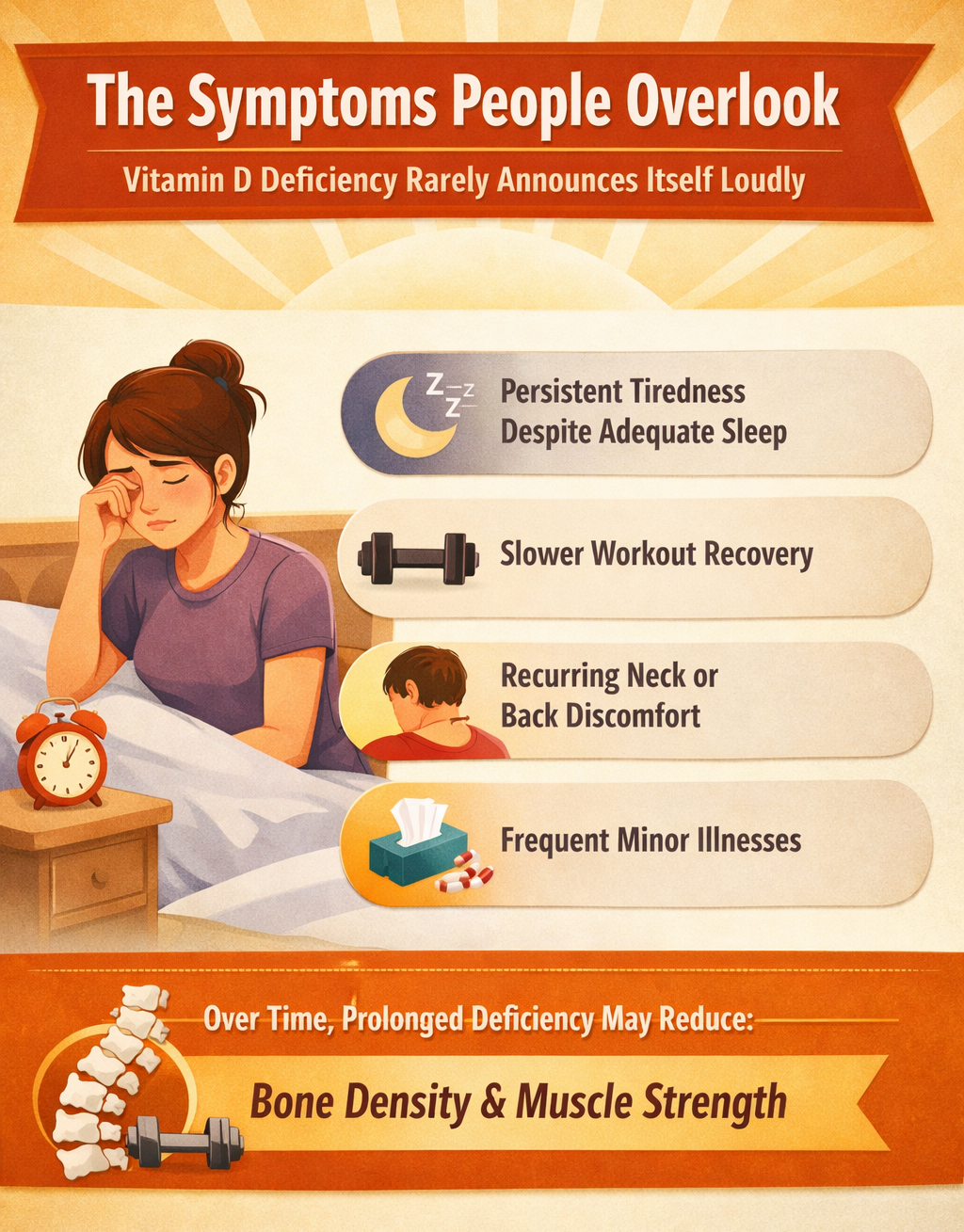
Deficiency does not always look dramatic. It creeps in slowly. That is why many people never question it.
The symptoms people overlook
Vitamin D deficiency rarely announces itself loudly.Dr Balakrishna says, “Young adults frequently overlook the possibility of deficiency because symptoms do not feel medical.”Common but ignored signs include:Persistent tiredness despite adequate sleepSlower workout recoveryRecurring neck or back discomfortFrequent minor illnessesOver time, prolonged deficiency may reduce bone density and muscle strength. The NIH confirms that chronic low levels can increase fracture risk, especially in older adults.These changes unfold quietly. That is why testing becomes important when symptoms persist without a clear cause.
Testing, treatment, and the myth of ‘more is better’
A simple blood test called serum 25-hydroxyvitamin D measures levels accurately.Testing is especially useful for:People with limited sun exposureIndividuals with obesityThose with thyroid or digestive disordersWomen planning pregnancyOlder adultsCorrection involves practical adjustments. Short periods of controlled sun exposure during mid-morning or afternoon can help. Fortified foods may support maintenance.Supplements are sometimes necessary when levels are significantly low. But dosing must be individualised.Dr Balakrishna cautions, “Contrary to popular belief, more is not always better; excessive supplementation can create its own health problems.”High doses taken without supervision can lead to calcium imbalance and kidney complications. Balance, not excess, restores health.Vitamin D deficiency does not look like a crisis. It looks like everyday fatigue. It blends into busy schedules and urban routines.Yet government bodies and global health agencies continue to report high deficiency rates, even in sunny regions.Sometimes better health begins with a simple pause. Is enough sunlight truly reaching the skin, or only touching the day?Medical experts consulted This article includes expert inputs shared with TOI Health by: Dr Balakrishna G K, HOD & Senior Consultant in Internal Medicine at Gleneagles BGS Hospital, Kengeri, BengaluruInputs were used to explain why many people may assume they are getting enough vitamin D when they are not, and why one should consult a doctor and consider proper testing before starting supplements.