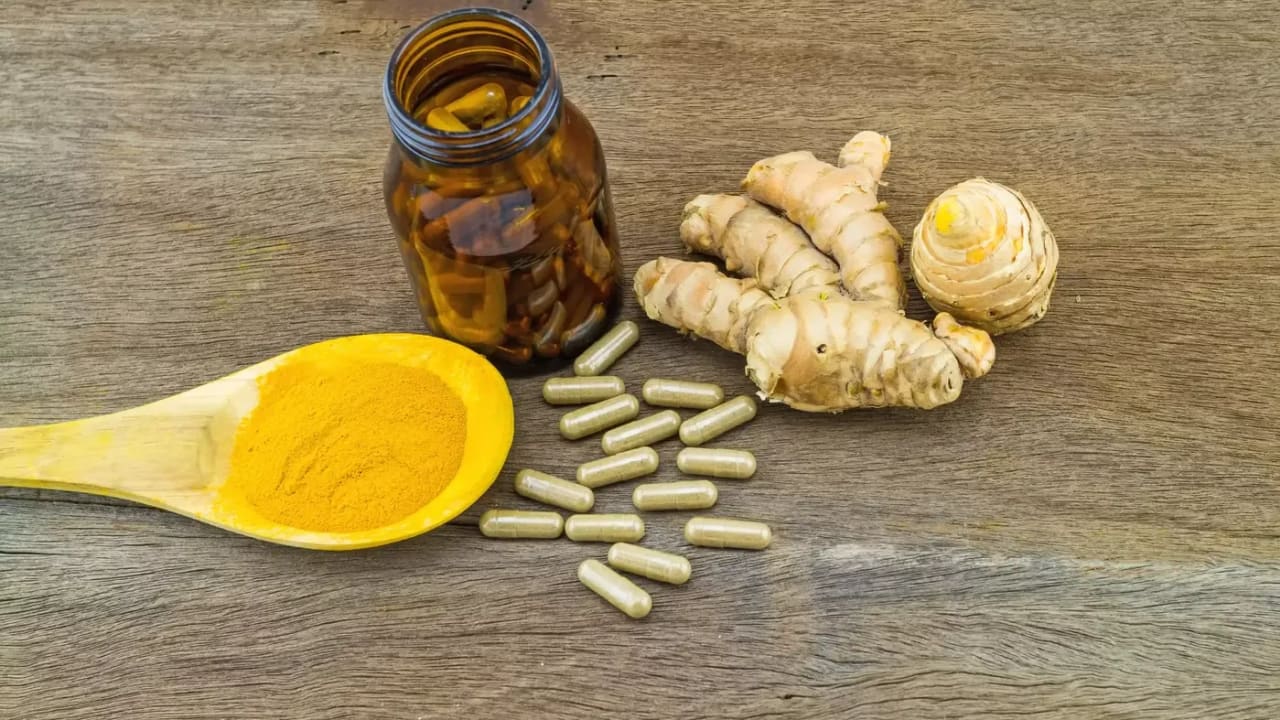
In recent years, turmeric has become the undisputed star of the dietary supplement shelves. It promises to cure inflammation, fight cancer and even prevent Alzheimer’s. But, when you seriously dive deep into the scientific data, you discover a much more complex picture: A huge gap between what happens in a test tube in the lab, and what is actually absorbed in our body, and especially – a close link between who funds the research and the spectacular results published in the media.
The Trap: Most of turmeric’s reputation comes from laboratory studies conducted in test tubes. There, it turns out, turmeric looks like a “super drug” that easily eliminates bacteria and cancer cells.
The problem is that curcumin (the active ingredient in turmeric) is what researchers call a “pretender compound.” It tends to stick to proteins, change the color of test fluids and produce false positive results that simply do not occur inside a living body. It looks very promising in preliminary experiments, but almost never manages to reach its target inside the human body.
For Dr. Maya Rosman’s online diet course click here

Who funds it? The most shocking data for anyone considering purchasing a turmeric supplement is the impact of funding on research results.
An analysis of thousands of studies shows that studies funded by the supplement industry are 30 times more likely to report significant success compared to independent or government-funded studies.
In simple words, pay attention: When a company that sells turmeric funds the test, the results are almost always “amazing.” When independent scientists test the exact same substance, the results are usually very weak or do not exist at all.
Absorption problems: The biggest problem with turmeric is that it simply is not absorbed.
Our body identifies it as a foreign substance, and rapidly clears it through urine and stool. Less than 1% of the substance you swallow actually reaches the bloodstream in the end. To solve this, supplement companies have developed “boosting” methods (such as adding black pepper or wrapping the substance in fat). True, these methods improve absorption in certain formulas, but independent studies have shown that in many cases this improvement is still not enough – to produce a real medical effect, and even worse – it may burden the liver.
What Does Work? (Some Order in the Mess)
Out of hundreds of studies in humans, only a small portion show consistent positive results. The areas in which there is some evidence (although even it is sometimes controversial) are:
1. Joint pain (cartilage erosion)
There is evidence that high doses of well-absorbed turmeric can relieve pain similarly to standard painkillers, but with less damage to the stomach.
2. Metabolic markers
Turmeric may slightly help reduce blood sugar and cholesterol levels in people with diabetes, but the effect does not replace drug treatment.
In contrast, when it comes to serious diseases such as cancer or Alzheimer’s, the updated scientific conclusion is unequivocal: There is currently no proof that turmeric manages to cure or prevent these diseases in humans.
The tendency to think that turmeric is just a spice and therefore risk-free is a mistake. Over the past year, reports have accumulated about liver damage resulting from the use of highly concentrated turmeric supplements, especially those with enhanced absorption.
A global report found that close to 30% of supplements on the market recommend doses that exceed the level considered safe by the World Health Organization.
Turmeric in Food – A Health Benefit, but Not a Medicine
Turmeric in food is very healthy, but it is not a medicine. When you add turmeric in cooking, you receive a very small amount of curcumin. The spice itself contains only a few percent of the active ingredient, and therefore eating it in food does not resemble or provide the high doses examined in supplement studies.
On the other hand, and this is important – turmeric in cooking has a major advantage:
It is part of a complete meal.
When eaten with a little fat (such as olive oil in cooking), its absorption improves.
Therefore, even if it does not act as a “medicine,” it is an important part of an anti-inflammatory diet as part of a lifestyle, and not as a magic solution to a specific problem.
Amount of Turmeric – Fresh or Spice?
Curcumin is the active ingredient in turmeric, but it is important to understand how much of it we are actually exposed to through food.
Fresh turmeric root, the one that looks like orange ginger, usually contains only about 0.3% to 0.6% curcumin by weight, because most of it is water.
Dry turmeric powder is more concentrated, and its curcumin content usually ranges between 2% and 5%.
In practice, one level teaspoon of ground turmeric, weighing about 2-3 grams, provides on the order of 40 to 150 mg of curcumin,
One full tablespoon of turmeric will reach about 120 to 350 mg.
For comparison, one curcumin supplement capsule usually contains 400 to 1000 mg of isolated and concentrated curcumin.
What is the reason? In supplements, it is not “turmeric” but isolated and concentrated curcumin. That is, even if you use turmeric generously in cooking, the doses obtained from food are significantly lower than those in capsules.
The Bottom Line
In my opinion and according to the science, the way to defeat inflammation in the body does not begin with an expensive pill. If you use turmeric as a spice in the kitchen – continue to enjoy it.
A balanced diet that includes plenty of vegetables, good fats, legumes and natural spices like turmeric in food – is the safest and most effective foundation we have.
If you are considering spending hundreds of NIS on dietary supplements because of promises of a “miracle cure,” remember: Most of the stories about turmeric’s successes come from studies funded by parties with vested interests.
Independent and objective science shows that turmeric is a supplement with very limited effect, which has great difficulty making the journey from the capsule to our cells.
So before you spend hundreds of shekels, remember that most of the time – real food does the best job.