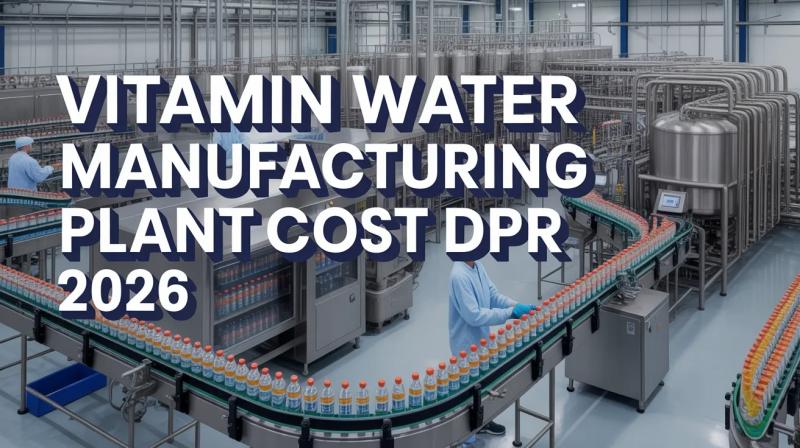
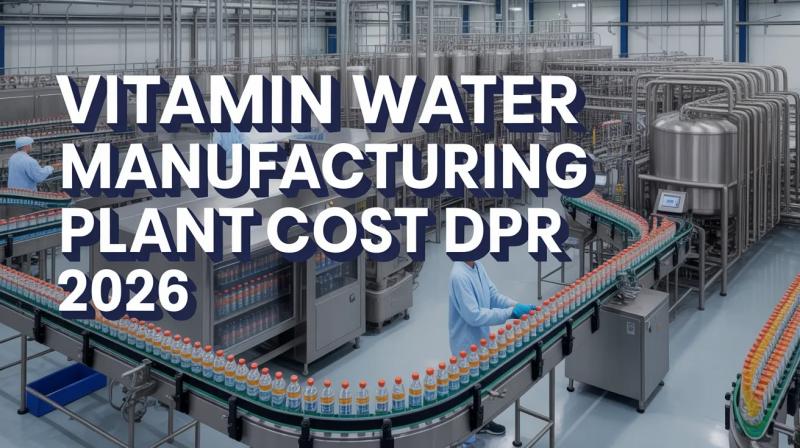
 Setting up a vitamin water manufacturing plant positions investors within a strategically important segment of the global beverage and functional drinks industry, driven by increasing demand for health-focused hydration solutions, fortified beverages, and wellness-oriented lifestyle products. As modern consumer preferences evolve, health consciousness expands, and the need for convenient nutrient delivery grows, vitamin water continues to gain traction across retail chains, fitness centers, health food stores, and e-commerce platforms worldwide. Rising health awareness, supportive wellness trends, and expanding distribution networks further strengthen market prospects. With scalable production capabilities and steady demand from health-conscious consumers and fitness enthusiasts, a vitamin water manufacturing plant offers compelling long-term profitability potential in a high-growth beverage segment.
The global vitamin water manufacturing industry is witnessing robust growth driven by the rapidly expanding health and wellness sector and increasing demand for functional beverages. At the heart of this expansion lies a critical health drink vitamin water. As consumers transition toward sugar-reduced hydration options and nutrient-enhanced beverages, establishing a vitamin water manufacturing plant presents a strategically compelling business opportunity for entrepreneurs and beverage industry investors seeking to capitalize on this growing and essential market.
Market Overview and Growth Potential
The global vitamin water market demonstrates strong growth trajectory, valued at USD 6.67 Billion in 2025. According to IMARC Group’s comprehensive market analysis, the market is expected to reach USD 12.46 Billion by 2034, exhibiting a robust CAGR of 7.2% from 2026-2034. This sustained expansion is driven by rapidly expanding health consciousness, increasing demand for functional beverages, rising adoption of active lifestyles, and expanding retail distribution across developing and developed economies.
Vitamin water is a nutrient-enhanced beverage produced by fortifying purified water with vitamins, minerals, electrolytes, and natural flavors. It appears as a clear or lightly colored drink with enhanced nutritional properties and refreshing taste profiles. Vitamin water contains essential micronutrients including vitamins B, C, and E, along with minerals like zinc and magnesium, making it an efficient hydration solution used primarily by fitness enthusiasts, health-conscious consumers, and active individuals. Due to its low-calorie formulation and functional benefits, it helps support immune health, energy levels, and overall wellness. Its convenient packaging, appealing flavors, and compatibility with active lifestyles make it a preferred option in functional beverage consumption and on-the-go nutrition.
The vitamin water market is witnessing robust demand due to the rising need for healthier beverage alternatives that support active lifestyles and wellness goals. Consumer segments increasingly transitioning toward functional hydration – particularly among millennials, fitness enthusiasts, and health-conscious urban populations are driving large-scale adoption. Government-led health awareness campaigns, initiatives promoting reduced sugar consumption, and wellness education programs further strengthen market prospects.
Request for a Sample Report: https://www.imarcgroup.com/vitamin-water-manufacturing-plant-project-report/requestsample
Plant Capacity and Production Scale
The proposed vitamin water manufacturing facility is designed with an annual production capacity ranging between 50-100 million liters per year, enabling economies of scale while maintaining operational flexibility. This capacity range allows manufacturers to cater to diverse market segments from retail supermarkets and convenience stores to fitness centers, corporate offices, and e-commerce platforms – ensuring steady demand and consistent revenue streams across multiple distribution channels.
Financial Viability and Profitability Analysis
The vitamin water manufacturing business demonstrates healthy profitability potential under normal operating conditions. The financial projections reveal:
Gross Profit Margins: 40-50%
Net Profit Margins: 15-20%
These margins are supported by stable demand across health and wellness sectors, value-added functional beverage positioning, and the premium nature of vitamin water in health-conscious consumer segments. The project demonstrates strong return on investment (ROI) potential, making it an attractive proposition for both new entrants and established beverage manufacturers looking to diversify their product portfolio in the functional drinks sector.
Cost of Setting Up a Vitamin Water Manufacturing Plant
Operating Cost Structure
Understanding the operating expenditure (OpEx) is crucial for effective financial planning and cost management. The cost structure for a vitamin water manufacturing plant is primarily driven by:
Raw Materials: 60-70% of total OpEx
Utilities: 10-15% of OpEx
Other Expenses: Including labor, packaging, transportation, maintenance, depreciation, and taxes
Raw materials constitute the largest portion of operating costs, with vitamins, minerals, natural flavors, and purified water being the primary input materials. Establishing long-term contracts with reliable vitamin and mineral suppliers helps mitigate price volatility and ensures consistent raw material supply, which is critical given that vitamin and ingredient price fluctuations represent the most significant cost factor in vitamin water manufacturing.
Capital Investment Requirements
Setting up a vitamin water manufacturing plant requires substantial capital investment across several critical categories:
Land and Site Development: Selection of an optimal location with strategic proximity to water sources and target consumer markets will help minimize distribution costs. The site must have robust infrastructure, including reliable transportation networks, utilities, and waste management systems. Compliance with local zoning laws, food safety regulations, and environmental standards must also be ensured.
Machinery and Equipment: The largest portion of capital expenditure (CapEx) covers specialized manufacturing equipment essential for production. Key machinery includes:
• Water purification and filtration systems including reverse osmosis and UV treatment
• Mixing and blending tanks for combining vitamins, minerals, and flavoring agents
• Automated liquid filling and capping machines for bottling operations
• Pasteurization or sterilization equipment for product safety and shelf-life extension
• Labeling and packaging machinery for finished product preparation
• Storage tanks for purified water, vitamin premixes, and flavor concentrates
• Quality control laboratory equipment for microbiological and nutritional testing
• Conveyor systems and automated production lines for efficient workflow
• Cold storage facilities for temperature-sensitive ingredients
• Wastewater treatment systems for managing effluents and ensuring environmental compliance
Civil Works: Building construction, factory layout optimization, and infrastructure development designed to enhance workflow efficiency, ensure food safety standards, and minimize material handling complexities throughout the production process. The layout should be optimized with separate areas for raw material storage, water treatment zone, mixing and blending section, filling and packaging area, quality control laboratory, finished goods warehouse, cold storage unit, utility block, and administrative offices.
Other Capital Costs: Pre-operative expenses, machinery installation costs, regulatory compliance certifications (FDA, FSSAI, ISO 22000), initial working capital requirements, and contingency provisions for unforeseen circumstances during plant establishment.
Major Applications and Market Segments
Vitamin water products find extensive applications across diverse market segments, demonstrating their versatility and critical importance:
Fitness and Sports Nutrition: Primary use as a post-workout hydration solution providing electrolyte replenishment and vitamin supplementation for athletes, gym-goers, and active individuals seeking functional recovery drinks.
Health and Wellness: Specialized applications in daily nutritional supplementation for health-conscious consumers looking for convenient vitamin delivery without traditional supplement pills.
Retail and Convenience: Wide distribution through supermarkets, hypermarkets, convenience stores, and vending machines where on-the-go hydration with added health benefits meets consumer demand.
Corporate and Institutional: Applications in office pantries, educational institutions, and healthcare facilities where healthy beverage options support wellness initiatives.
E-commerce and Subscription Services: Growing segment of direct-to-consumer sales through online platforms offering convenience and variety for regular vitamin water consumers.
End-use industries including fitness centers, retail chains, corporate offices, educational institutions, and healthcare facilities all contribute to sustained market demand.
Buy Now: https://www.imarcgroup.com/checkout?id=22766&method=2175
Why Invest in Vitamin Water Manufacturing?
Several compelling factors make vitamin water manufacturing an attractive investment opportunity:
Essential Health Beverage Segment: Vitamin water serves as a critical functional drink supporting health-conscious lifestyles, active nutrition, and convenient vitamin supplementation, making it indispensable for modern consumers focused on wellness and preventive health.
Rising Health Consciousness: Consumer segments increasingly transitioning toward functional beverages particularly among millennials, Gen Z, and fitness enthusiasts are driving large-scale adoption of vitamin-enriched hydration solutions.
Premium Positioning Advantage: The product’s ability to deliver essential vitamins and minerals in a convenient, appealing format, combined with low-calorie and sugar-free formulations, offers significant consumer advantages and positions it favorably against traditional sugary beverages.
Lifestyle Alignment: The product’s effectiveness in supporting active lifestyles, immune health, and daily wellness positions it as a preferred beverage in health-focused consumer segments, especially across urban markets and fitness communities.
Government Support: Government-led health awareness campaigns, initiatives promoting reduced sugar consumption, and wellness education programs further strengthen market prospects and support industry growth.
Distribution Expansion Opportunities: Emerging markets and developed economies alike are expanding retail networks, fitness centers, and e-commerce platforms, creating strong opportunities for vitamin water brands to capture market share.
Wellness Trend Alignment: The global health and wellness agenda and increasing consumer spending on functional foods and beverages are expected to enhance long-term growth opportunities for nutrient-enhanced drinks.
Manufacturing Process Excellence
The vitamin water manufacturing process involves several precision-controlled stages:
• Water Purification: Source water undergoes multi-stage filtration including sediment removal, activated carbon treatment, reverse osmosis, and UV sterilization
• Vitamin Premix Preparation: Vitamins, minerals, and electrolytes are precisely measured and dissolved in purified water
• Mixing and Blending: Vitamin premix is combined with purified water and natural flavoring agents in controlled blending tanks
• Pasteurization: The blended product undergoes thermal treatment to ensure microbiological safety and extend shelf life
• Filling and Capping: Finished vitamin water is filled into bottles using automated filling lines and sealed with tamper-evident caps
• Labeling and Packaging: Bottles are labeled with nutritional information and packaged into retail-ready cases
• Quality Control Testing: Samples undergo microbiological testing, vitamin content verification, and sensory evaluation
• Storage and Distribution: Finished products are stored in temperature-controlled warehouses before distribution to retail and wholesale channels
Industry Leadership
The global vitamin water industry is led by established beverage manufacturers with extensive production capabilities and diverse product portfolios. Key industry players include:
• Coca-Cola
• PepsiCo
• Nestlé
• Hint Water
• Vita Coco
These companies serve diverse consumer segments including fitness enthusiasts, health-conscious individuals, and mainstream beverage consumers, demonstrating the broad market applicability of vitamin water products.
Ask Analyst for Customization: https://www.imarcgroup.com/request?type=report&id=22766&flag=C
Recent Industry Developments
The vitamin water industry continues to evolve with innovations in natural flavoring, organic ingredients, clean-label formulations, and sustainable packaging solutions to meet increasingly demanding consumer preferences. Leading manufacturers are investing in sugar-free formulations, plant-based vitamin sources, and eco-friendly bottle designs to enhance market appeal and reduce environmental impact. The growing focus on personalized nutrition and functional beverages targeting specific health benefits (immunity, energy, focus, beauty) is pushing demand for specialized vitamin water variants with targeted nutritional profiles.
Conclusion
The vitamin water manufacturing sector presents a strategically positioned investment opportunity at the intersection of health and wellness, functional beverages, and active lifestyle trends. With favorable profit margins ranging from 40-50% gross profit and 15-20% net profit, strong market drivers including rising health consciousness, growing demand for functional hydration, expanding fitness culture, and supportive wellness trends promoting preventive health and convenient nutrition, establishing a vitamin water manufacturing plant offers significant potential for long-term business success and sustainable returns. The combination of premium product positioning, critical role in supporting health-conscious lifestyles, expanding retail and e-commerce distribution, and alignment with global wellness trends creates an attractive value proposition for serious beverage industry investors committed to quality manufacturing and consumer-focused innovation.
About IMARC Group
IMARC Group is a global management consulting firm that helps the world’s most ambitious changemakers to create a lasting impact. The company excels in understanding its clients’ business priorities and delivering tailored solutions that drive meaningful outcomes. We provide a comprehensive suite of market entry and expansion services. Our offerings include thorough market assessment, feasibility studies, company incorporation assistance, factory setup support, regulatory approvals and licensing navigation, branding, marketing and sales strategies, competitive landscape and benchmarking analyses, pricing and cost research, and procurement research.
Contact Us
IMARC Group
134 N 4th St. Brooklyn, NY 11249, USA
Email: sales@imarcgroup.com
Tel No: (D) +91 120 433 0800
United States: +1-201-971-6302
This release was published on openPR.