If January is the month we throw ourselves into exercising with gusto, then the combination of overenthusiasm and poorly planned regimes means that February is the month we often start paying for it.
“Physiotherapists commonly see an increase in injuries around this time,” says Ash James, a physiotherapist and director of practice at the Chartered Society of Physiotherapy (CSP). “There is often the temptation to go too far, too fast and this can lead to injuries such as strains and sprains.”
Not all injuries are down to overuse of body parts that have sometimes lain idle for months — even years — beforehand. A new paper in the Journal of Strength and Conditioning Research reviewed data on more than 15,000 resistance training-related injuries treated in US hospital emergency departments over a ten-year period (2013-2022). It found that dropped equipment, falls, failed lifts, being struck by weights, and uncontrolled pressing movements all contributed heavily to the toll.
Adam Taylor, professor in anatomy at Lancaster University, says that “no new fitness routine needs to be a one-way ticket to physiotherapy treatment”. Whether you have got this far and escaped niggles or want to prevent them going forward, here are the rules that will help you avoid disaster.
Be careful when lifting
Shoulders are prime injury sites and overhead pressing and lifting with weights that are too heavy or technique that is poor are common causes. A 2023 study of 493 fitness participants who had sustained a fitness injury in the past year found that shoulder joint issues were most prevalent, accounting for 19 per cent of all injuries.
“Our shoulder joints are built for high mobility, not high loads, and they are designed to help the body hang, not to lift heavy weights,” Taylor says. “Because of its range of mobility the shoulder is not a stable joint and relies on a number of small tendons to hold it in place.” It takes considerable time to build up strength in the shoulders to be able to execute some moves — such as lifting our own bodyweight upwards or lifting heavy weights above the head — safely.
“Push too hard too soon and the joint is at high risk of injury,” Taylor says. “Perfect the technique with body weight and add small amounts of weight as you get stronger.”
• Lifting weights — how three seconds a day will make you stronger
Assess your progression carefully
A rule of thumb for many personal trainers is to progress your workouts at no more than a rate of 10 per cent per week. Taylor thinks even that might be too much. “Increasing exercise by 10 per cent week in, week out is really going for it,” he says. “The initial fitness gain is quicker but you will begin to plateau after a few weeks and you would be better off looking at progression in single figures, such as 3-5 per cent per week.”
A study in the British Journal of Sports Medicine last year confirmed that for runners the 10 per cent progression rule might be too severe. Rasmus Oestergaard Nielsen, a researcher in the study, said: “We suggest that no more than a 5 per cent increase in distance for a run seems the appropriate balance between improving fitness and risking injury for a healthy person of a normal weight.”
Be aware of what and how you are progressing other workloads. “You should only increase one element at a time,” Taylor says. “In the gym a big mistake is to hike up the number of reps and the weight or to push further as well as faster on any cardio equipment each week.” That, he says, is a recipe for disaster.

Wearing the wrong sort of shoes while exercising can increase the risk of stress fractures
GETTY IMAGES
Cross-train your way to reduced injury risk
Harvard University scientists recently showed that a mixture of exercises increases longevity, possibly as a result of different activities providing different physiological benefits, with the effects amplified when they are combined. But Taylor says that cross-training will also reduce your risk of injury by varying the stress on muscles and joints. Doing the same sort of exercise — be it running, cycling or weight training — every time leads to repetitive loading and stress on the same body parts, a risk for aches and strains.
“Switching up exercises and routines is important as it means the body is loaded and challenged in different ways,” he says. “With different joints and muscle groups being worked the risk of overuse or repetitive injuries is reduced.”
Factoring in rest days is also important. “Active recovery days, when you do gentle exercise such as walking, are when the body carries out the repair and rebuilding of tissues — an integral part in making you stronger and healthier,” Taylor says. “They are particularly important when people are starting out and should be factored in every 3-4 days.”
• The five easy tests to assess your true fitness
Wear the right shoes for the right activity
Stress fractures, or small breaks to the bones of the feet, tend to hit an annual high at this time of year, says Stephen Kearns, a consultant orthopaedic surgeon specialising in foot and ankle surgery and honorary professor at the National University of Ireland in Galway. An increase in repetitive impact that comes with a hike in exercise levels coupled with wearing inappropriate footwear are some of the factors that are to blame.
“A rapid increase in activity when wearing the wrong sort of shoes puts people at risk of stress fractures,” Kearns says. Running shoes are designed with a flexible sole and, as the foot moves in a forward direction, minimal support is needed for sideways, or lateral, movement. “They are designed for running and should be worn for that activity only,” he says. “If you are doing a lot of hiking or cross-training you need a thicker, stiffer-soled shoe with more lateral support to protect against a greater range of movement.”
The NHS says stress fractures to the feet can take 6-12 weeks to heal, during which time you might need to reduce loading of the foot by wearing an orthopaedic boot. A comprehensive rehab programme of rest and specific strengthening exercises is often prescribed.
Get enough vitamin D and magnesium in your diet
Ramping up your exercise levels without addressing shortfalls in your diet is a recipe for problems. Studies on athletes have shown that low levels of vitamin D are a risk factor for stress fractures and musculoskeletal injuries as well as more acute muscle soreness and inflammation after high-intensity workouts. Kearns says that the risks are raised for recreational runners and gym members and that, with the best vitamin D source being sunlight, taking a supplement at this time of year is key. “Vitamin D protects bones and muscle health, and to prevent levels dropping due to a lack of sunlight [in winter], we need a supplement,” he says.
Magnesium is also important for muscle function and a recent study found that getting enough of both is important for injury prevention. The NHS says that men need 300mg and women 270mg of magnesium, which is found in nuts, wholegrains, fruits and pulses, daily, while during the autumn and winter adults should take a 10mcg vitamin D supplement daily (and not more than 100mcg).
• Which supplements should you really take? The experts’ guide
Proceed cautiously with social media challenges
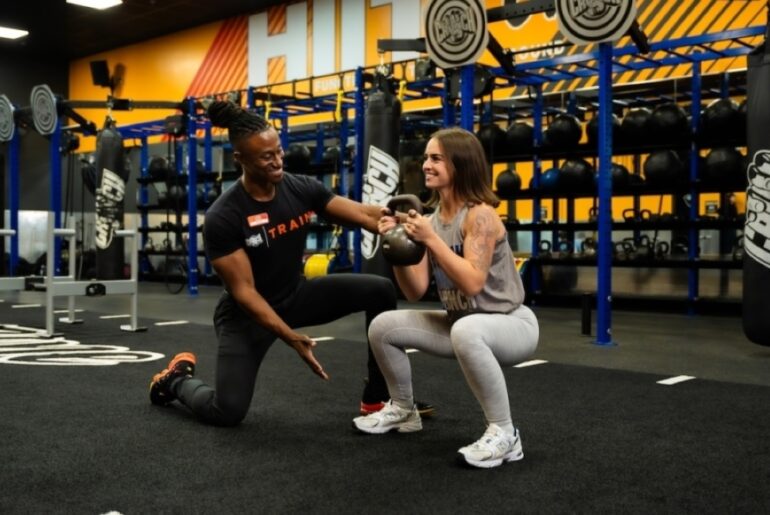
Social media loves nothing more than a fitness challenge. The latest ones to go viral have included doing 100 kettlebell swings a day for 30 days and 50 jumps each morning as soon as you wake up, which purportedly brings better energy levels and mood, with less bloating and inflammation. But if you go from zero to doing that many kettlebell swings every day you could be asking for trouble.
“It pays to nail the mechanics of any movement with a personal trainer at a gym induction before doing it repetitively with poor technique,” Taylor says.
A kettlebell swing should be powered from the legs but many beginners focus on arm movement, which puts the shoulder under strain and increases the risk of rotator cuff injury, soreness and inflammation of tendons.
As for 50 jumps first thing, it will certainly jolt you awake, and the impact will help to build bone and muscle strength. A 2023 review in the Journal of Sports Sciences showed that 50 jumps four times a week improved density in the femoral neck of the hip across all ages — but you need to build up slowly. Taylor says that for anyone with underlying knee, hip and ankle issues, weak pelvic floor muscles, achilles tendon problems or a history of lower limb injuries, too many morning jumps could make things worse.