The Middle Eastern beauty market is emerging as an endurance test for brands, as global cosmetics players navigate the 2026 socio-economic climate. Innovation, trust, and reliable product performance are vital to ensuring brand resilience in the Middle East.
Personal Care Insights talks to Schwan Cosmetics about how the region’s volatile economy, varying regulatory frameworks, and climate-related constraints are a litmus test for brands entering the market. We also discuss how the area’s distinct challenges and characteristics can provide a learning experience for international brand resilience across the industry.
“In today’s climate of global uncertainty, the Middle East stands at the intersection of economic opportunity and geopolitical tension,” Luis Sandner, sales director MEA and Southwest Europe at Schwan Cosmetics, tells us.
“From regional conflicts and supply chain disruptions to changing trade dynamics and consumer sentiment, instability has become part of the business landscape. Yet amid these challenges, one sector continues to prove remarkably resilient: beauty.”
Booming beauty
According to Sandner, the beauty and personal care industry was expected to reach US$60 billion in 2025, up from US$46 billion in 2024, across the Middle East and North Africa regions. He says the steady industry growth despite economic uncertainties points to market resilience.
Tobias Friedrich, VP of sales, EMEA at Schwan, tells us how the Middle Eastern market offers key insights for the global industry. “Here, innovation is accelerated, and only brands with true agility and consumer-centricity thrive,” he says.
“The region exposes which brand strategies are truly resilient: if your strategy can withstand the volatility and complexity of this region, it’s genuinely built for endurance — not just stability.”
The cosmetics company underlines the value of trust over trends, highlighting how tried-and-tested categories such as eyeliners, lip products, and brow products continue to thrive despite economic volatility.
While Sandner underscores the necessity of remaining agile and maintaining quick response times to fast-paced, trend-driven markets, he stresses that “long-term trust requires more than speed.”
Dr. Alexander Doll, senior VP of R&D, tells us that innovation must be emotional and consistent.
“Consumers choose products that feel right, not just those with technical claims. Brands should design innovation pipelines that prioritize evolution and adaptation, while reinventing the consumer benefit according to emerging trends,” he says.
When it comes to innovating on hero categories such as eye, lip, and brow products, “innovation must add value,” he adds. “New sensorial experiences, care hybrids, and customization — without undermining reliability. It’s about enhancing, not replacing, what consumers trust.”
Handling the heat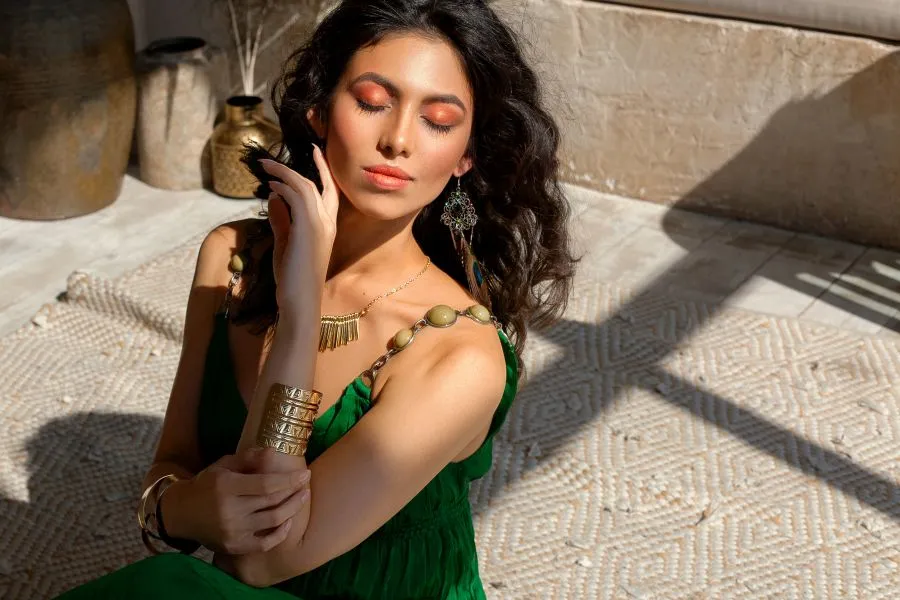
Performance and durability are essential for beauty products in the Gulf heat.
Beyond socio-economic instability, the Middle East poses multiple hurdles for cosmetic companies, including the literal climate.
“If a product can withstand Gulf heat, it can withstand anything,” says Sandner.
“Waterproof, transfer-proof, smudge-proof, and long-lasting claims are not nice-to-haves — they are essentials, so region-specific stability and durability testing pays off by building long-term trust.”
The heat of the Gulf creates a demand for product performance on a different level than that of European standards.
“Products developed for the Middle East must withstand extreme climate and demanding consumer expectations. Our R&D protocols, therefore, include rigorous stress-testing under local conditions, such as high heat, humidity, and real-world usage, to guarantee performance and durability,” says Doll.
“By setting these benchmarks in the region, we establish a global standard: when scaled internationally, products proven in the Middle East deliver reliable performance everywhere.”
Season’s supplies
Seasonal moments, such as the holy month of Ramadan, also play a significant role in the Middle Eastern market.
“Ramadan is a supply chain reality check. In the Middle East, we plan backwards from fixed import and customs windows — there’s no room for delay,” Friedrich tells us.
“That requires early volume alignment, clear stock keeping unit prioritization, and disciplined execution. The key from a manufacturing perspective is to acknowledge the importance of this season for regional selling and to consult and steer customer demand accordingly.”
He explains that regional strategies can translate to global markets.“ The brands that succeed focus on their hero products, reduce operational complexity, and make sure availability is flawless when demand peaks.”
Power to the indie woman
Women-led beauty brands are reshaping the Gulf’s market landscape.
Women-led indie brands from the region are increasingly shaping global beauty narratives, explains Sandner. He points to cosmetics giants like Huda Beauty, which has local, small-business roots. Founder Huda Kattan, is also a long-term women’s and human rights advocate, often centering political issues in the Middle East with her public platform and branding.
Sandner says that the Middle East-native beauty brand’s success “transformed perceptions by proving that a woman-led, locally grown brand could dominate the regional market and successfully expand into the US and Europe.”
“Today, the continued rise of women-led indie beauty brands in the Gulf signals a growing entrepreneurial confidence that transcends borders and geopolitical uncertainty,” he explains .
Entering the market
Beyond authenticity, these women-led indie brands have strategic advantages that multinational players may overlook.
Friedrich tells us that these brands can operate closer to local consumer communities, make decisions faster, and translate cultural moments into products with enhanced precision, compared to multinationals.
“What makes [women-led indie brands] powerful is not just authenticity, but their ability to focus, build strong brand relevance locally, and scale selectively. For multinational players, this is less about competition and more about learning how agility, customer centricity, and local insight can complement global strength,” he says.
Furthermore, for multinational players considering market entry, “readiness for the Middle East means more than ambition — it’s about operational agility, cultural understanding, and emotional resonance,” he states.
According to Friedrich, brands often discover gaps only after launching products, including gaps in adapting to local sensorial preferences, color nuances, and supply chain flexibility. In his view, endurance is therefore measured by a brand’s ability to adapt and connect.
Sandner adds: “Brands and consumers alike live in a world defined by volatility, from shifting trends to supply chain disruptions, the Middle Eastern beauty market offers a lesson in resilience.”
“Success here depends equally on novelty as it does on consistent reliability: performance, quality, and cultural alignment are key. For brands and manufacturers alike, trust is not built overnight but earned daily — one perfectly drawn line, one smudge-proof finish at a time.”