Seasonal illnesses like flu or the common cold not only force us to miss workdays, but they can also derail workouts and other fitness activities. While kimchi has long been lauded for it’s digestive and gut health benefits, it’s effects on immunity was far less understood, until now. A breakthrough study published by npj Science of Food, has determined that kimchi doesn’t just help in the fight against illness, it also prevents overreactions. “Our research has proven for the first time in the world that kimchi has two different simultaneous effects: activating defense cells and suppressing excessive response.” explained the studies lead, Dr Woo Jae Lee of the World Institute of kimchi.
What Is Kimchi?
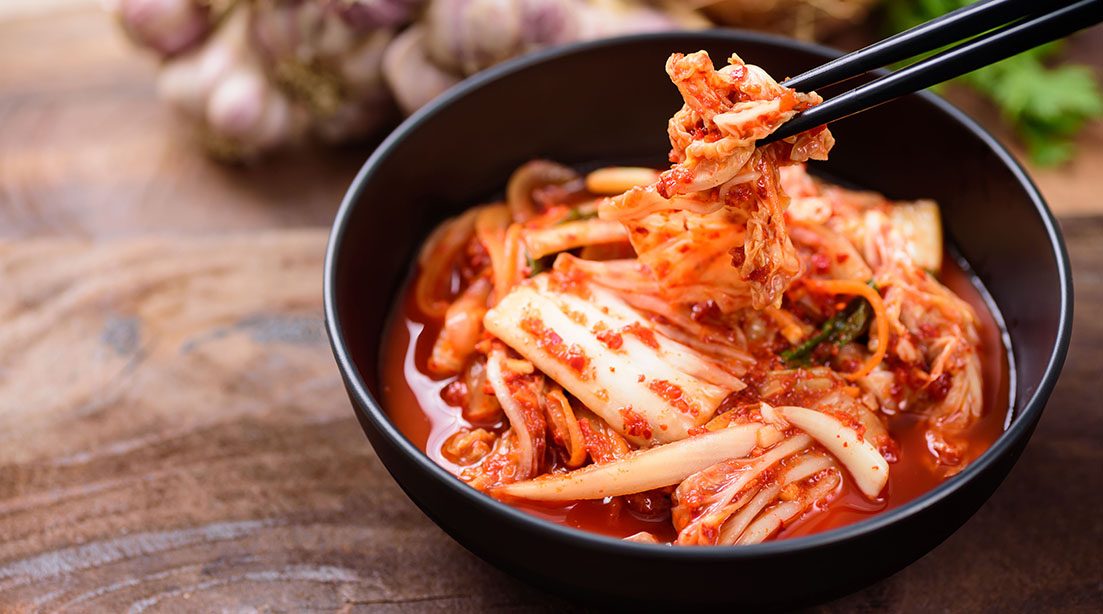
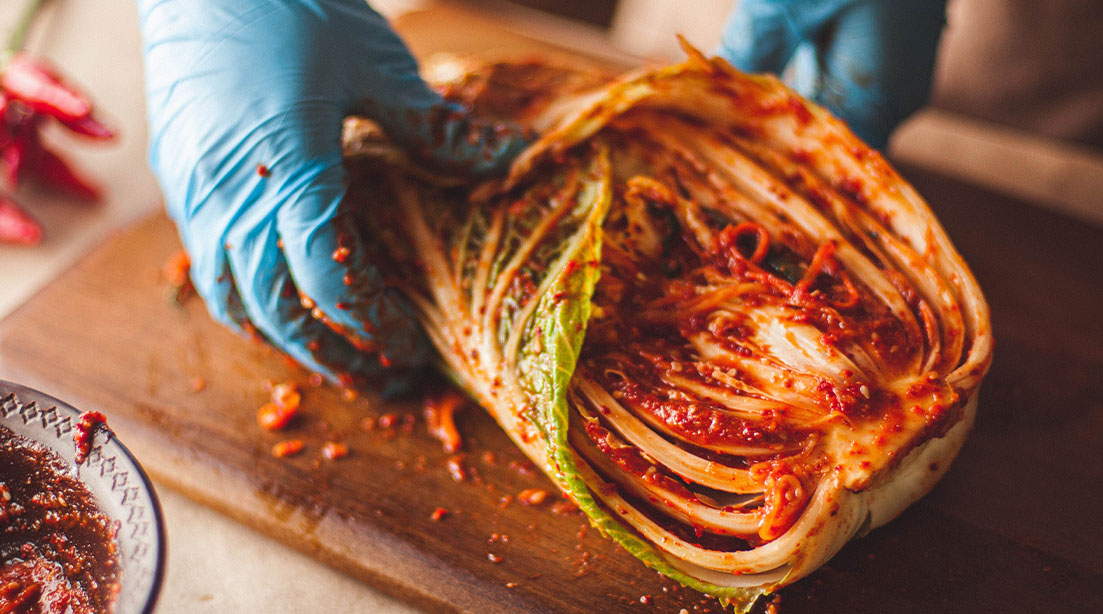
A traditional Korean dish, kimchi is made from fermented vegetables, often using cabbage and radishes, and is seasoned with chilli powder, garlic, ginger, and salt. For the experiment, it was dehydrated and served as a fine powder.
 Vladimir/Adobe Stock
How Was the Study Carried Out?
Overweight adults were put into three groups:
Placebo Group
Kimchi Powder (Naturally Fermented) Group
Kimchi Powder (Produced using starter culture fermentation method) Group
Participants adhered to their groups for 12-weeks before researchers collected blood cells using a special method that also allowed them to monitor changes in gene activity.
What Did the New Kimchi Study Find?
Kimchi consumption, irrespective of the fermentation method was shown to enhance immunity in cells by increasing the connectivity and strength of the signaling networks between monocytes (white blood cells) Dendritic Cells (immune cells) and innate like B cells (the body’s rapid response to infections).
The findings also showed that those who consumed kimchi received a boost in their APC cells, which play a key role in detecting bacteria and viruses. Other cells were also better able to regulate the protective response thanks to kimchi consumption. So, the data confirms that kimchi is a functional food with scientifically demonstrated immune benefits. And, experts now believe that these benefits can go beyond our dinner table, even going so far as to suggest the Korean wonder stuff could play a part in the improvement of future vaccines.