Add DMNews to your Google News feed. 
Tension: Millions of adults over 50 are stacking brain-health supplements in combinations that neurologists now warn may be accelerating the very cognitive decline they’re trying to prevent.
Noise: The supplement industry sells agency over decline, and the sunk-cost psychology of years-long regimens makes it nearly impossible to evaluate new evidence honestly — more intervention feels like more protection, even when the biochemistry says otherwise.
Direct Message: The most neuroprotective behaviors aren’t purchasable — and the hardest part of brain health isn’t finding the right stack, it’s sitting with the discomfort of doing less when every instinct screams to do more.
To learn more about our editorial approach, explore The Direct Message methodology.
Diane, a 58-year-old retired teacher in Scottsdale, showed me the inside of her kitchen cabinet last March — not because I asked, but because she needed someone to witness what she’d built. Seventeen bottles. Fish oil stacked beside turmeric beside magnesium beside a B-complex beside something called “NeuroShield” she’d found through a podcast ad. She’d been taking all of them — religiously, daily, for almost three years — because she’d watched her mother lose her words at 67 and swore she wouldn’t follow the same path. When her neurologist ran a full panel and cognitive assessment last winter, the results weren’t what either of them expected. Her inflammation markers were elevated. Her homocysteine levels — a key indicator of brain health — were worse than they’d been four years prior. “I was doing everything right,” she told me. “Or I thought I was.”
She’s not alone. The global brain health supplement market is projected to exceed $15 billion by 2030, and the fastest-growing demographic isn’t twentysomethings optimizing for productivity — it’s adults over 50 terrified of cognitive decline. The logic feels bulletproof: if certain nutrients support brain function, then stacking multiple supplements should multiply the protection. But a growing body of neurological research suggests something uncomfortable — that specific supplement combinations aren’t just ineffective, they may be actively accelerating the very brain aging they’re designed to prevent.
Dr. Aparna Mehta, a neurologist at Mount Sinai who specializes in age-related cognitive decline, has started calling this phenomenon “neuroprotective paradox” — the idea that well-intentioned supplementation can trigger biochemical cascades that work against neural integrity. “People come to me taking eight, ten, twelve supplements,” she told me. “They’ve never consulted anyone about interactions. They’ve Googled each one individually and assumed stacking them was additive. Biology doesn’t work that way.”
The combinations she flags most frequently aren’t obscure. They’re the ones you’d find in any wellness influencer’s morning routine.
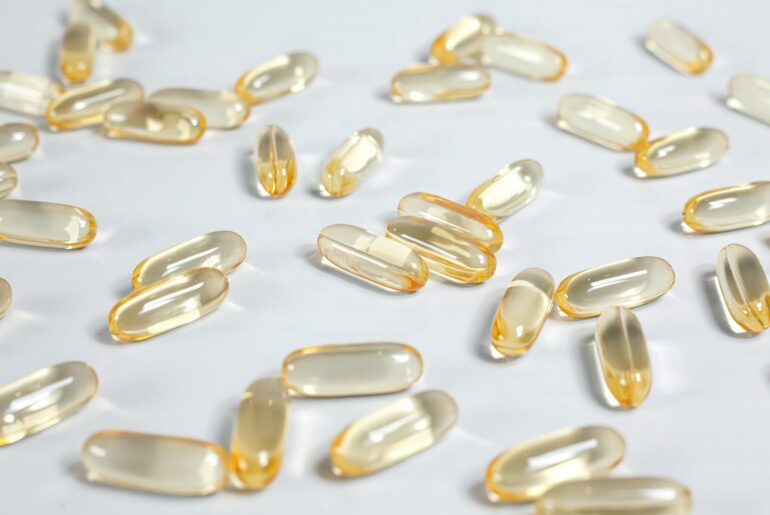
 Photo by doTERRA International, LLC on Pexels
Take the ubiquitous pairing of high-dose fish oil with vitamin E — both marketed as neuroprotective, both widely recommended in isolation. A 2023 study published in Neurobiology of Aging found that when taken together at supplemental doses — not dietary levels — they can create a pro-oxidant environment in lipid-rich brain tissue, essentially flipping the antioxidant script. The very compounds meant to protect cell membranes begin to destabilize them. Marcus, a 63-year-old architect in Portland, had been on this exact stack for five years before his neuropsychological testing showed measurable declines in processing speed. His neurologist’s first recommendation wasn’t a new drug — it was to stop combining those two supplements at the doses he was taking.
Then there’s the popular trio of turmeric (curcumin), ginkgo biloba, and aspirin — sometimes not even recognized as a “stack” because people forget aspirin counts. Curcumin and ginkgo both have anticoagulant properties. Combined with daily aspirin, they don’t just thin the blood — they can compromise the blood-brain barrier’s ability to regulate what enters neural tissue. Dr. Mehta describes it as “opening a door you want to remain selectively closed.” The blood-brain barrier isn’t a wall to be breached; it’s a sophisticated filter. When its integrity drops, neuroinflammatory proteins flood regions that are supposed to be protected. This isn’t speculative — a 2022 review in Frontiers in Aging Neuroscience documented the mechanism in detail.
What makes this so psychologically sticky — the reason people resist the information — is something I’d call investment identity. When you’ve spent years and thousands of dollars building a supplement regimen, it doesn’t just feel like a health choice. It feels like who you are. It’s the same dynamic we explored in how successful companies approach behavior change versus software adoption — the tools become identity anchors, and questioning them feels like questioning yourself.
Nkechi, a 51-year-old marketing director in Atlanta, recognized this in herself after reading about supplement interactions. “I realized I wasn’t taking them because of the science anymore,” she said. “I was taking them because stopping felt like giving up on my brain. Like admitting I was just going to decline.” This is what psychologists call the sunk cost escalation — the more you’ve invested in a behavior, the harder it becomes to evaluate it honestly, even when new evidence arrives.
The supplement industry understands this impulse better than any neurologist does. Marketing in this space doesn’t sell compounds — it sells agency over decline. And that emotional product is nearly impossible to fact-check, because the feeling of doing something protective is real even when the biochemistry isn’t cooperating. As we explored in a piece about what marketers revealed when they fought do-not-track, the gap between what companies promise and what they deliver often hides in the space between consumer emotion and technical reality.
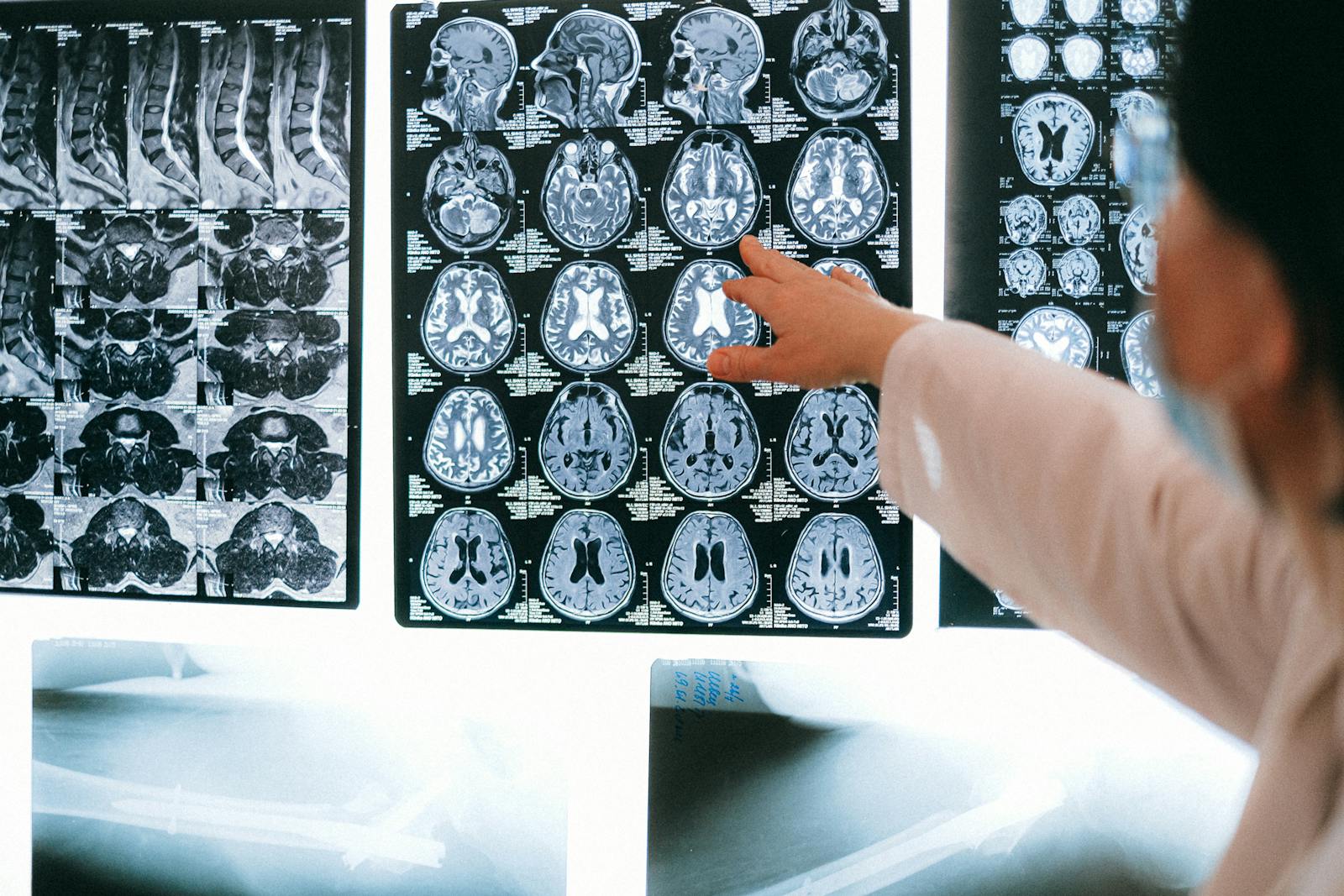 Photo by Anna Shvets on Pexels
Other flagged combinations include high-dose B6 with B12 — both essential for nerve function in moderate amounts, but at supplemental levels, B6 can actually cause peripheral neuropathy and, paradoxically, accelerate neuronal stress when combined with already-adequate B12. There’s the melatonin-plus-GABA stack that millions use for sleep, which Dr. Mehta says can downregulate the brain’s own inhibitory neurotransmitter production over time — essentially teaching your brain to make less of what it needs naturally. And there’s the increasingly popular nootropic combination of lion’s mane mushroom with racetam compounds, which has almost no long-term safety data despite being treated as gospel in biohacking communities.
The pattern across all of these isn’t that supplements are bad. It’s that the combination logic is broken. Each individual compound may have legitimate research behind it in isolation, at specific doses, for specific populations. But the leap from “this nutrient supports brain health” to “taking five brain-health nutrients together creates a super-shield” isn’t science. It’s sympathetic magic dressed in capsules.
Something Diane said to me keeps circling back. “I thought the opposite of doing nothing was doing everything.” That equation — the belief that more intervention equals more protection — is perhaps the deepest cognitive bias at play here. And it’s not limited to supplements. We see the same pattern in why CRM failure rates haven’t improved in a decade — the assumption that adding more tools and data layers automatically produces better outcomes, when often the accumulation itself becomes the problem.
What the neurologists I spoke with kept emphasizing — almost apologetically, as if they knew it wasn’t what anyone wanted to hear — is that the most neuroprotective behaviors aren’t purchasable. They’re annoyingly mundane. Consistent sleep. Social engagement. Novel sensory experiences. Physical movement that involves coordination, not just cardio. One reader’s account of taking up birdwatching and finding sharper memory six months later is, according to the research, more neurologically significant than most supplement stacks. Not because birdwatching is magical — but because it combines visual attention, outdoor movement, pattern recognition, and low-grade novelty in exactly the ways aging brains need to be challenged.
Marcus stopped his fish oil-vitamin E combination eight months ago. His processing speed hasn’t dramatically improved, but his inflammation markers have dropped. He takes a single, moderate-dose fish oil now — nothing else. “It feels like less,” he told me. “And that’s the part I had to get over. The feeling that less means I’ve surrendered something.”
Maybe that’s the real edge of this whole conversation — not which bottles to keep or throw away, but the willingness to sit with the discomfort of doing less when every instinct and every ad and every frightened part of you is screaming to do more. The brain doesn’t need a fortress built from seventeen bottles. It needs something far harder to sell and far simpler to provide — a life that keeps asking it to stay curious.
Diane took eleven bottles out of her cabinet that week. She kept the magnesium — her neurologist approved it — and started a ceramics class on Tuesdays. She says her hands remember the clay from a college course forty years ago. She says it feels like waking something up. I believe her. Not because the science on ceramics is robust, but because the look on her face when she described it was the opposite of fear. And fear, more than any bad supplement stack, is what ages us fastest.
Feature image by Supplements On Demand on Pexels