Melanie Loschiavo is a registered dietitian nutritionist, who earned degrees in nutrition and dietetics at the University of Vermont and Keene State College. Over the course of her career, she has worked in hospital settings, served as director of the school nutrition program at Bradford Elementary School, and most recently owned and operated Upper Valley Nutrition Services, where she provided nutrition counseling to families and individuals of all ages. She is now retired from clinical practice and focuses her time on managing her horse farm, coordinating a youth equestrian program, and serving on the Board of Governors of the United States Eventing Association. She lives with her husband, John, and dog Lucy, has three grown children, and actively competes her horse, Spartacus, in the sport of Eventing.
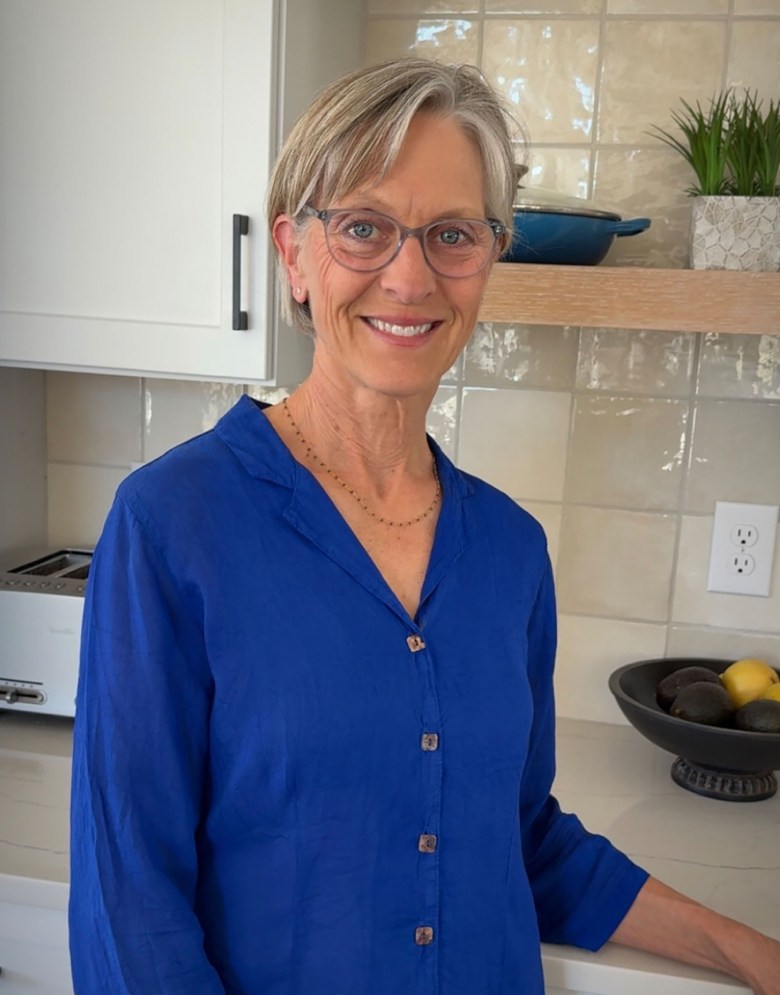 Melanie Loschiavo (Courtesy photograph)
Question: What are the keys to raising children who understand the importance of choosing a healthy diet, particularly when they get older?
Answer: One of the most basic and helpful keys to helping families raise children who are healthy eaters is to prioritize creating a structure of regular meal times. Within the normal crazy chaos of raising children, it is easy for meals to take a back seat and for eating to be an afterthought within a busy day. But regular meals and sit-down snacks help children anticipate food and trust the rhythm of eating, which supports self-regulation and a positive relationship with food. Having predictable times for meals makes it easier for children to pay attention to and respond appropriately to their internal hunger and fullness signals.
Shared meals where everyone eats the same foods and enjoys each other’s company are also important. These shared experiences help kids see healthy eating as part of life, not a set of rules. As a caregiver, your role in meal sharing is important — don’t forget to sit down with your child and enjoy meals yourself!
Keep mealtimes pleasant and stress-free: Consider the advice of dietitian and family therapist Ellyn Satter and her Division of Responsibility. It goes like this: You are in charge of what food is served, and when and where the food is served. Your child is in charge of how much of those foods he/she eats and even whether to eat them. I realized that when I created a mealtime, put food on the table and sat down to eat with my children, I did not have to do more.
It was up to my children to choose which foods and how much to eat. Pressuring, forcing, rewarding, or restricting specific foods almost always gets the opposite result of what you intend. Following the Division of Responsibility helps kids associate eating with enjoyment and self-trust, not anxiety or control.
Q: What advice can you give families with two parents working outside the home how to put a healthy meal on the table every night and avoid fast food or processed foods?
A: Perfection is not the goal. Every meal doesn’t have to be as if designed by a dietitian. Most important is that a meal is put on the table and sat and enjoyed in a positive way. If that meal is takeout fast food because you didn’t have time to cook, still make time to sit down and eat. No apologies. You got food on the table.
This supports self regulation and a positive relationship with food. If you want to work toward making more home cooked meals, take your time and take it easy on yourself while you are learning. You have access to endless meal ideas in seconds. Search for meal ideas using ChatGPT or just a Google search. Sheet pan dinners can be a game-changer. Try chicken (or other protein) with veggies and potatoes where everything can be tossed with olive oil and dried herbs and put in the oven on one pan and then cook in less than half an hour. A little organization ahead of time goes a long way. Put together a list of quick and easy meals, shop for the ingredients to have them on hand, then have a great week … and a sense of humor when it doesn’t go perfectly
Q: Snacking, it has been said, can be good or bad. What are some healthy snack ideas for children who refuse to eat raw cauliflower and broccoli?
A: The options are endless and there is no one food that must be eaten to promote good health and proper growth in children. Prioritize a relaxed and positive eating environment by throwing out your expectations of what foods your kids “should” like and eat.
If you want to share your love for raw cauliflower and broccoli, but are worried your child will refuse to eat it, pair it with something you know they like so they don’t go hungry at snack time. Don’t pressure them to eat it. It is enough that they see it and watch you eat it. They will get more familiar with it over time as they get exposure.
Remember, learning to eat is a process for young children. They are constantly learning about new foods. Some are easy to like, some just take longer. I like to serve kids snacks that have a little protein and a fruit or veggie or grain. Remember it is up to them how much, if any, they choose to eat. Cubes of cheese with apple slices sprinkled with cinnamon, yogurt or cottage cheese with canned peaches, peanut butter and whole grain crackers, nuts and dried fruit.
And don’t forget that kids need exposure to those higher sugar and fat foods like cookies and cake, etc., so they learn how to handle them. Serve cookies or cake with milk occasionally. Don’t treat it as a big deal. Stay neutral. Don’t call it junk. It’s just not something you serve every day, but it shows up occasionally. If you forbid it and call it junk your kids will be more likely to crave it, sneak it and obsess over it.
Q: It can be beneficial to have children help in meal planning and preparation but what guidelines should be followed?
A: You have control of the food budget and you have the nutrition and meal planning knowledge. So most of the planning can be up to you, but involving kids can have some real benefits. It gives them agency and helps them feel important in the family.
With younger kids, give them two choices — would you like broccoli or carrots? Older kids can take a bigger role in planning a whole meal which helps them develop the skills they will need when they leave home. Have one night be their plan, give them basic guidelines of needing a protein food, a starchy food and a vegetable and/or fruit. And guide them to stay within your budget and preparation time constraints. They can help shop as well.
There are no hard and fast rules here. Some families have chore charts where simple meal prep is one of chores each night. Some families just ask kids to help when necessary. As always, keep it positive.
Q: Is an occasional “fast food” night acceptable?
A: Yes. Fast food is a part of our world, so it is helpful for kids to think of it as just another option for eating. Ho hum. No big deal. When you are mostly doing home cooked meals or slow food meals then fast food becomes an every-now-and-then convenience and is not harmful to overall nutritional status.
Treat it with a neutral attitude, don’t call it junk, and sit down and enjoy it guilt-free. Fast food is mostly a problem when it is eaten regularly within a chaotic eating schedule, when it is eaten on the run, and when it is eaten with guilt. All of those things interfere with normal responses to hunger and fullness cues and can cause overeating.
Q: Homemade baked goods are a favorite for many children yet they can be high in calories, sugar and fat. What substitutes do you recommend to families?
A: There is no reason to think of “substitutes” for homemade baked goods. When I think of “substitutes” I think of something that is just not quite as good as the original. If you like calorie dense homemade baked goods for dessert, go ahead and serve them occasionally and enjoy the original. This is part of the neutral exposure to all types of foods children need so they don’t obsess over foods that seem forbidden.
Q: Should parents talk about weight and calories when discussing healthy eating with their children? Why or why not?
A: No. It is important to avoid discussing weight – your child’s or anyone else’s. When adults focus on weight, kids learn to judge their bodies rather than listen to them. Weight-focused talk increases body dissatisfaction, dieting behaviors and disordered eating patterns later on. As for calories, its the same. Numbers push kids toward external control (“how much should I eat?) instead of internal regulation (“how hungry am I?”). Even “neutral” calorie education can undermine hunger and fullness cues, create fear of eating “too much” and turn food into math instead of nourishment or pleasure.
Q: Soda along with juices including cranberry, grape and orange, are big contributors to poor nutritional habits in children because of their high sugar content. How much should you limit intake of these drinks and are there quality substitutes besides water?
A: Soda is not a necessary food, nor does it support growth. It should not be routinely available. When it is available at a special event, then treat it neutrally and allow it so kids maintain a neutral attitude toward it. Limiting soda is about maintaining eating structure, not teaching restraint through rules or warnings. No “junk food” lectures, no calorie talk.
Juice does have some nutritional value, but I still recommend limiting it. Offer small portions as part of a snack if you want. Do not allow unlimited access or all-day sipping. Constant access interferes with hunger cues. Water and milk (cow or soy) are the best options for beverages. Unsweetened seltzer water can also be an alternative — but adds a significant expense to your food bill compared to water.