What should we eat?
That’s the question many are asking themselves following the joint release of the new “Dietary Guidelines for Americans” by the U.S. Departments of Agriculture and Health and Human Services in January.
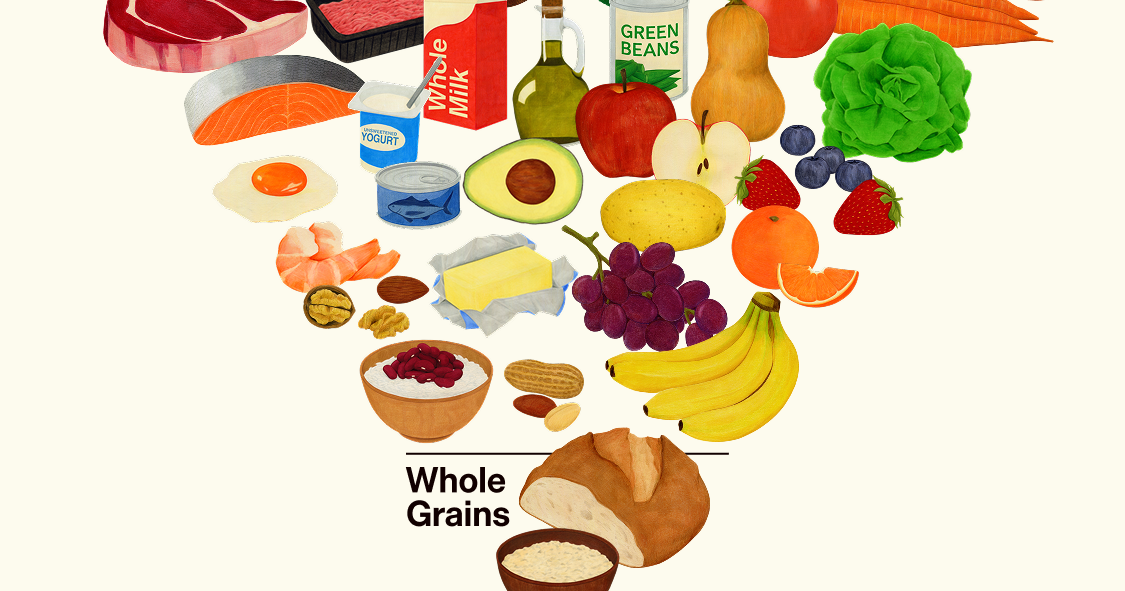
The 2025-2030 dietary guidelines and new Food Pyramid graphic, which are required by law to be updated every five years, prioritize protein, call for avoiding highly processed foods and added sugars, include full-fat dairy and animal fats and prioritize whole grains over refined carbohydrates.
The guidelines have Berkshire health professionals parsing what makes sense to them — and what does not.
WHOLE FOODS PRIORITY
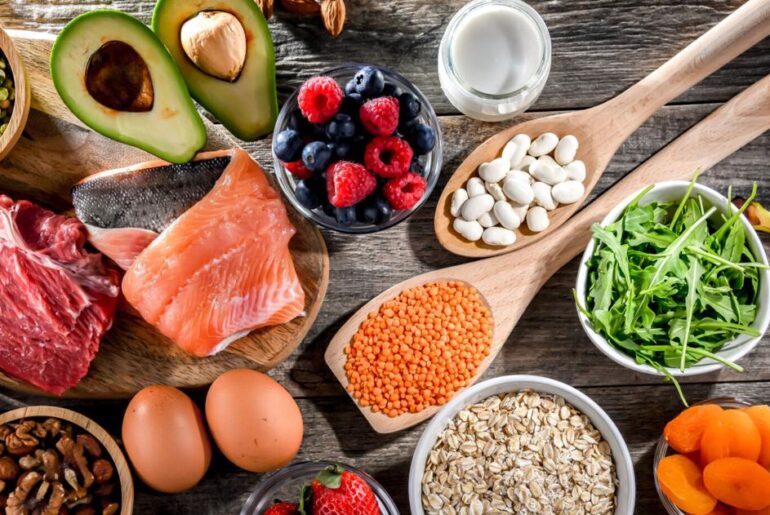
Across the board, practitioners agree on one point: eating whole, minimally processed foods. Deb Phillips, a licensed nutritionist in Great Barrington, said one “positive” of the guidelines is the core message to “Eat Real Food.”
Eric Williamson, Ph.D., director of nutrition at Canyon Ranch in Lenox, welcomes “the primary message of eating whole, unprocessed food,” including foods without added sugar.
The guidelines are “a big picture framework” rather than “a meal plan,” said Ashli Minor, a registered dietitian at Community Health Programs Berkshires. Even so, they still offer direction on healthy eating.
Anna Maria Siega-Riz, Ph.D., dean of the School of Public Health and Health Sciences at the UMass-Amherst, said, “Something we can all have consensus on is that we believe in eating whole foods — fresh, frozen or canned.”
Her practical definition: “If your mother or grandmother can’t tell you what the food is, you probably shouldn’t eat it.”
Still, she notes that some processing is necessary. Whole-grain breads and oats, for example, are processed but remain staples of a healthy diet.
DEFINING ‘PROCESSED’
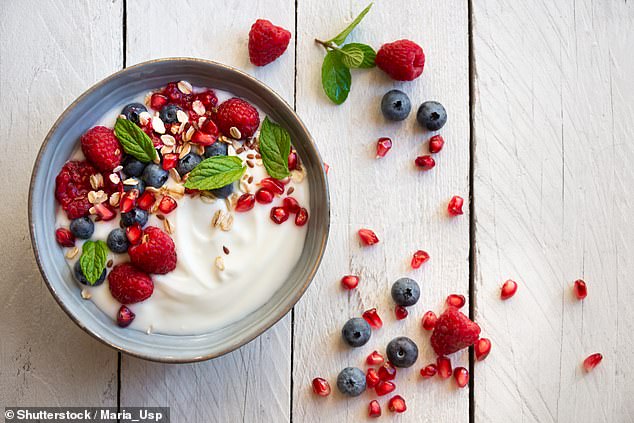
“Yogurt is processed, but has huge benefits and is not high in sugar, fat or sodium,” Siega-Riz said, referring to plain, unsweetened varieties.
Williamson defines ultra-processed foods as “anything with an ingredient you do not find in a household kitchen.” (The federal guidelines technically refer to limiting highly-processed foods.)
At Canyon Ranch, he advises making “unprocessed foods the base of your diet about 95 percent of the time.”
The distinction between ultra-processed foods and whole foods can sometimes be confusing, he said. For example, almond milk with added calcium, which he encourages consumers to choose, could still be considered ultra-processed.
Better public education is needed on which processed foods are acceptable, said Shaun Fox, lead registered dietitian at Berkshire Health Systems. Nutrition labels may contain long words or unfamiliar terms, so “being able to differentiate between an added vitamin compared to an added synthetic additive is an important skill for the public to have.”
INDUSTRY ACCOUNTABILITY
Siega-Riz faults the guidelines for stopping short of placing responsibility on the food industry. While consumers must make healthy choices, it’s “frustrating for those of us who believe if you want your population to be healthy, the default should be a healthy food supply.” If cheap foods are largely ultra-processed, she asks, how are you driving behavior to consume the foods that make them healthy?
FIBER & FERMENTATION
Fox and other dietitians praise the guidelines’ emphasis on increasing dietary fiber, which supports gut health and the microbiome — the microorganisms in the digestive system.
Ditto, Fox said, for the suggestion to boost consumption of fermented foods, such as yogurt and sauerkraut.
SCHOOL MEAL IMPACT
For Audrey Sanchez, executive director of Balanced, a nutrition security and public health advocacy organization, and Beth Farrow, a community organizer for Balanced’s partner organization, the Massachusetts Healthy School Lunch Coalition, increasing dietary fiber in public school menus is “the North Star.” More emphasis on fiber, and not just on fruits and vegetables and an occasional whole-grain product, but on plant proteins like beans, “would make a radical difference in the health of a child’s gut microbiome,” Sanchez said.
As Farrow told the Massachusetts School Meal Nutrition Standards Commission, “…increasing whole, fiber-rich foods like beans and lentils helps ensure students are nourished and ready to learn.”
PYRAMID CONFUSION
Health professionals often united in pointing to confusion surrounding two aspects of the guidelines: a newly introduced inverted pyramid-style graphic that appears to highlight foods high in saturated fat and the increased emphasis on protein.
Nutrition professionals stressed that the science behind decreasing saturated fat consumption has not changed.
Karyn Mancari, a registered dietitian and nutrition educator at Williams College, says decades of research link saturated fat to raising LDL (often called “bad” cholesterol). “The Blue Zones in the world rely heavily on unsaturated fats, lean protein and plant-based diets. I think that’s very telling,” she says, referring to regions where populations live significantly longer.
As Mancari speaks, she pulls up on her computer the inverted pyramid with “beef, cheese and a big stick of butter” in a prominent upper section near a carton of whole milk.
Yet the guidelines themselves — not the picture rendition — haven’t changed: saturated fats are still supposed to be no more than 10 percent of calories. Mancari is concerned that “the visual doesn’t match” the actual recommendation.
“If you have a meal with fatty meat and cheese, and you cook in butter or beef tallow, it is highly likely that you will reach 10 percent of your intake from saturated fat, possibly in one meal,” Williamson said.
Mancari is one dietitian, and she’s not alone, who misses the sidelined older pictorial “MyPlate,” which illustrates healthy eating by dividing a plate into four sections, half fruits and vegetables on one side with the other half split between grains and protein. A separate small circle represents a serving of dairy — milk, yogurt, and/or cheese.
PROTEIN EMPHASIS
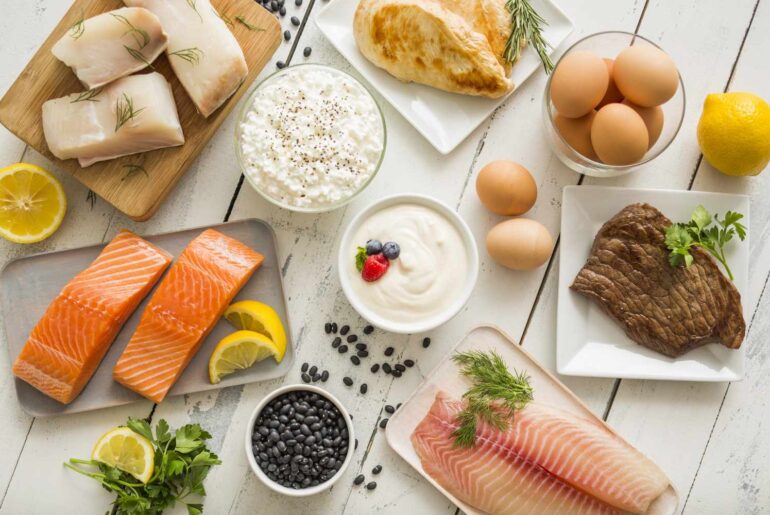
On protein, several health professionals are concerned that the new guidelines heavily emphasize that nutrient.
Siega-Riz noted that national data shows many Americans already consume more protein than recommended. “We’re not deficient in protein as a society. Why this emphasis on protein?” she asked.
But Phillips says protein needs vary widely by individual.
“The message that everyone needs 1.2 to 1.6 grams of protein per kilogram of body weight is excessive,” she said, but it depends on the patient. For example, “my experience is that women often don’t eat enough protein. When I tell them to eat more, most come back and say, ‘I feel so much better now.’” Others, particularly those focused on muscle building, “sometimes go over the top,” often using protein powders.
Phillips offers one more example of how nutrition guidance must be individualized. While the federal guidelines now include full-fat dairy as an option, “I had a toddler I was working with who was constipated and I told the mom, which I rarely tell somebody with a toddler, to get low- and fat-free dairy products, which resolved the issue.”
Full-fat milk contains about 4 percent fat, compared with 2 percent in skim milk, which has almost none.
“So we’re not talking about vast numerical differences,” Phillips said.
NUTRITION IS PERSONAL
What’s clear is that despite national recommendations, nutrition is personal.
CHP’s Minor echoes Phillips, citing various groups that need tailored guidance, including people with chronic conditions such as Type 2 diabetes or hypertension; participants in SNAP and WIC; food-insecure households; college students; and younger adults building independence in food for the first time.
There are also cultural traditions that must be honored: if reducing consumption of white-refined foods is encouraged, how should the advice be adapted for cultures where white rice is a staple?
“This is why counseling is important,” Minor said.
“If people could take away one thing, it is this: they should feel comfortable reaching out to a local dietitian to help guide them through creating a custom meal plan that’s best to fit their goals and healthcare needs,” Fox said.