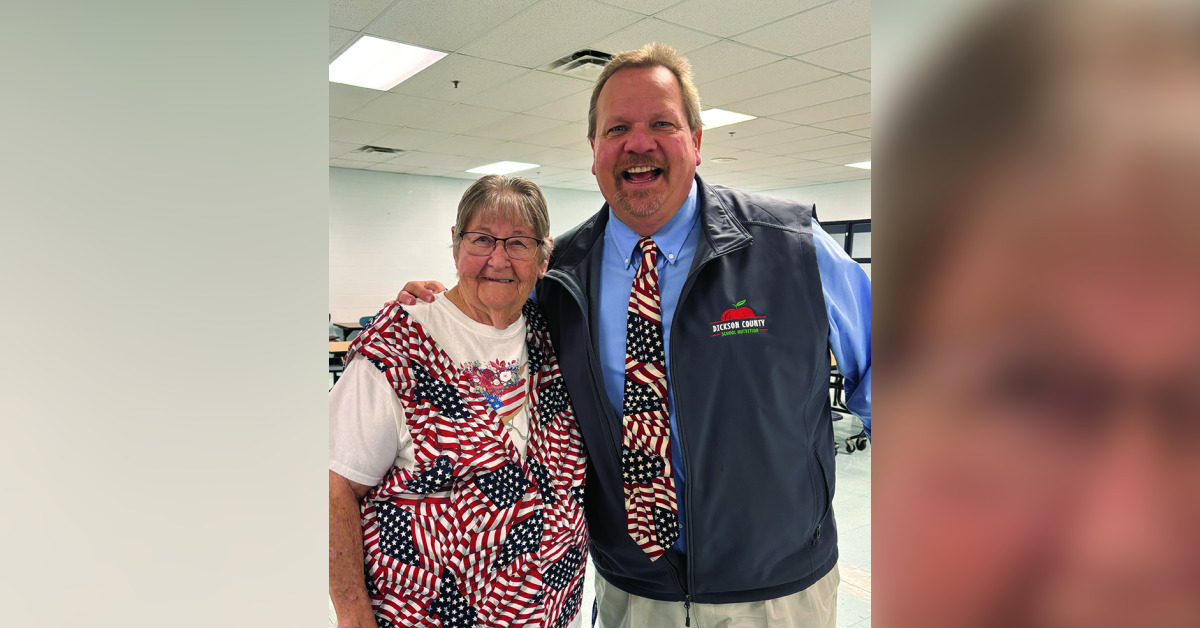
 Troy Williams and Frances Self, manager at Vanleer Elementary who has worked in the nutrition program for over 50 years. SUBMITTED
The Dickson County Schools’ (DCS) Nutrition Program supports students’ well-being and academic success by serving nutritious breakfasts and lunches to Dickson County students. “We don’t just serve food; we serve kids,” is the motto Troy Williams, director of Nutrition, follows as he leads the schools’ nutrition program. He shared that every decision made places students first.
The three pillars of this program’s mission include providing a positive, fun, and welcoming environment; serving a nutritious quality meal that follows USDA Dietary Guidelines; and serving all stakeholders involved.
Troy Williams is in his fourth year in this position and brings significant administrative experience to this role with 18 years as an Assistant Principal at Dickson County High School. Williams shared a major part of his job is like running or managing restaurants and refers to each of the 15 school cafeterias as a restaurant. Each restaurant is supervised by a manager, and the number of employees working at each restaurant depends on the student participation of that restaurant.
The restaurant manager is in charge for getting as much student participation as possible since the Nutrition program is self-supporting and not part of the district’s education budget. Each restaurant manager runs on a profit/loss margin. Program funding is received in two ways: students coming in and paying for their meal, and the federal government reimbursing meals for students who have qualified for a free or reduced lunch. The 15 restaurants serve over 4,500 lunches daily, with student participation rates varying among the schools. The overall average participation rate for all schools is approximately 66%.
Williams oversees a team of 70 hard-working food and nutritional professionals including two field managers whose responsibilities include setting up the recipes and menus in each school restaurant. Each field manager has earned a Level 4 certification, the highest level that can be attained through the School Nutrition Association. This certification training included nutritional, food, and recipe classes. All employees must complete professional development training annually in areas such as food safety, handling, and storage.
Williams stated another major part of his job is “making sure we are in compliance with federal government guidelines.” Each restaurant manager prepares balanced meals according to the caloric count for sodium and fat intake for the day and for the week.
There are five components in each lunch: meat, fruit, vegetable, grains, and milk or a dairy product. For the federal government to reimburse a meal, a student must have three of the five components on their plate with a fruit or vegetable being a required component. Students can select from two or three fruit or vegetable options.
 White Bluff Elementary Restaurant Team received the Golden Plate Award for the highest percentage of student participation. SUBMITTED
As students reach the end of the lunch line or point of sale, the cashier managing the payment ensures the student has a minimum of three components with one component, a fruit or vegetable. If a student has food allergies or other specific food requirements, point-of-sale software will identify these requirements, and this food will be removed from the plate.
The State of Tennessee schedules an annual site visit to audit one school restaurant to ensure students are getting the required food components for each meal. In addition to the yearly audit, the State conducts a more detailed week-long audit every four years at three schools. This audit includes making sure the exact amounts of ingredients are used to prepare the recipes, and students receive the correct portion of each food component as they go through the line. Any findings from an audit will be sent to Dr. Christie Southerland, director of Schools, and an action plan will immediately be put in place to make any necessary adjustments.
Williams emphasized, “Our goal is to promote lifelong healthy habits. By addressing students’ nutritional needs, we aim to remove barriers to learning and contribute to their future success.”