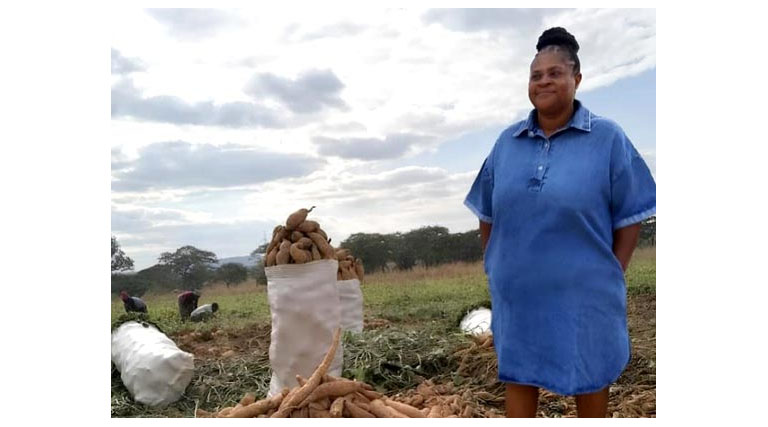
26 February 2026, USA: Mrs. Sinana Nyakotyo, a dedicated mother of three boys from Ward 21 in Bindura District, Zimbabwe, has boosted her household income and improved her family’s quality of life through the adopting biofortified crops —particularly vitamin A orange sweet potatoes.
Before embracing biofortified crops, she grew white maize, soya beans, and wheat. But persistently low market prices made it difficult for her to earn a meaningful profit. “Growing only white maize and soya beans was no longer helping my family,” she recalls. “Prices were too low for me to make a real profit.” Despite her hard work, her family continued to face financial strain.
In 2024, she participated in a HarvestPlus workshop under the Expanding Nutrients in Food Systems project in Zimbabwe. There, she received training on rapid multiplication of sweet potato vines and how to manage vitamin A orange sweet potato vines and root production business. With 1,000 start-up vines provided by HarvestPlus and an additional 500 vines purchased with her own savings, she established an orange sweet potato nursery. Once the vines were matured, she planted one hectare and shared surplus planting material with members of her local community, expanding access to this nutritious crop.
With support from HarvestPlus—including technical guidance on vine and root production and linkages to reliable markets, Mrs. Nyakotyo harvested 14 tons of vitamin A orange sweet potatoes In June 2025. She sold her produce to traders at Mbare Musika, earning more than US$2,200. “The market loved the vitamin A orange sweet potatoes. They were in high demand,” she says. The income enabled her to meet her family’s daily needs, invest in farming inputs for the next season, and expand her pig production enterprise by purchasing a boar and additional feed.
Encouraged by her success, Mrs. Nyakotyo now plans to expand her production to two hectares of vitamin A orange sweet potatoes, three hectares of vitamin A maize, and 30 hectares of iron beans (NUA45 variety). “I want to grow more biofortified crops to improve my family’s income and ensure everyone in my community eats healthy foods,” she says. Through determination, training, and access to improved crops and markets, she is not only strengthening her own livelihood but also contributing to better nutrition in her community.
Also Read: FMC’s Rimisoxafen Becomes First-Ever Dual Mode of Action Herbicide Classified by HRAC
Global Agriculture is an independent international media platform covering agri-business, policy, technology, and sustainability. For editorial collaborations, thought leadership, and strategic communications, write to pr@global-agriculture.com