Report Overview
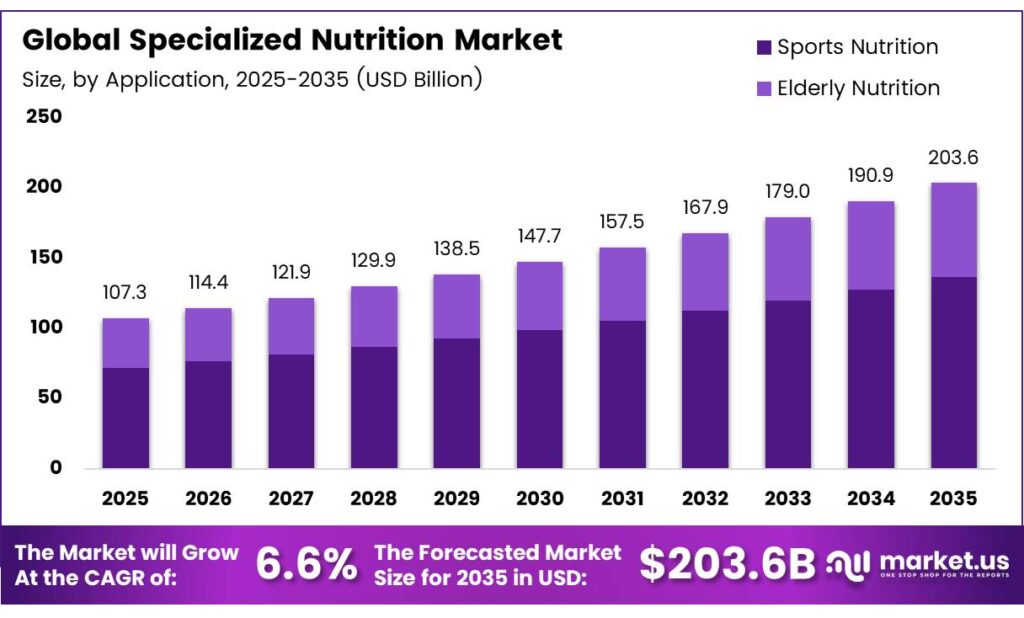
The Global Specialized Nutrition Market size is expected to be worth around USD 203.6 billion by 2035 from USD 107.3 billion in 2025, growing at a CAGR of 6.6% during the forecast period 2026 to 2035.
The specialized nutrition market covers formulated food and supplement products designed to meet specific health needs. These products serve athletes, elderly individuals, infants, and patients with medical conditions. Manufacturers develop precise nutrient combinations to support muscle recovery, immune function, and age-related health management.
Specialized nutrition spans multiple categories, including sports nutrition, elderly nutrition, infant formula, and clinical medical nutrition. Each category addresses distinct metabolic and physiological requirements. Consequently, product innovation remains rapid as consumer health awareness continues to grow globally.
China holds a 31% share of the global infant formula market, with the Chinese infant formula segment valued at USD 16.85 billion in 2024. This dominance reflects the critical role of the Asia-Pacific in driving global specialized nutrition demand and production scale.
E-commerce expansion and digital health platforms now accelerate consumer access to premium nutrition products. Brands leverage direct-to-consumer channels to reach specific health segments. Additionally, subscription-based models driven by AI personalization are reshaping how consumers discover and purchase specialized formulations.
Strong clinical research investment supports the market’s credibility and product development pipeline. Scientists continue to advance protein blend technologies, prebiotic formulations, and biomarker-specific nutrition plans. Therefore, the market attracts significant capital from global pharmaceutical and food science companies.
Key Takeaways
The Global Specialized Nutrition Market was valued at USD 107.3 billion in 2025 and is projected to reach USD 203.6 billion by 2035, at a CAGR of 6.6% during the forecast period 2026 to 2035.
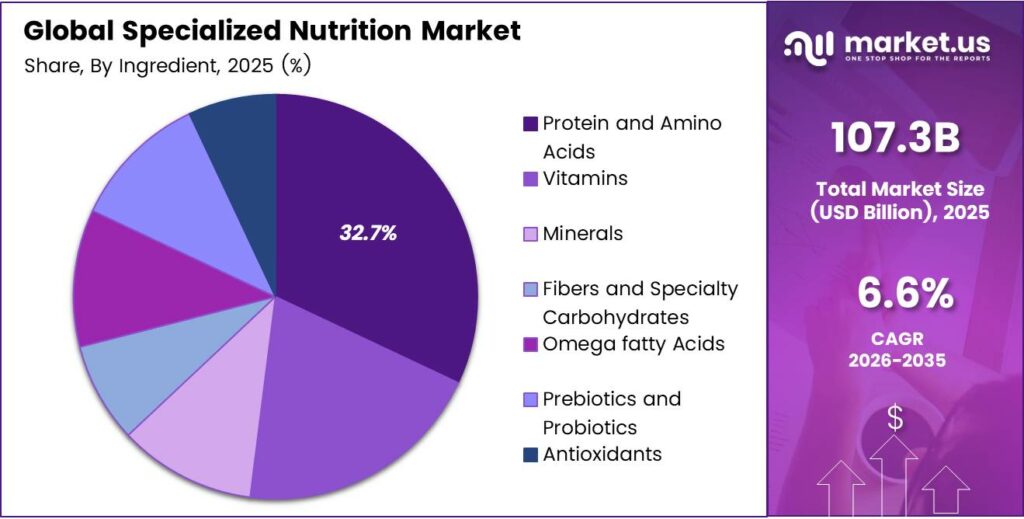
Protein and Amino Acids dominate with a 32.7% market share in 2025.
Sports Nutrition holds the largest share at 67.2% in 2025.
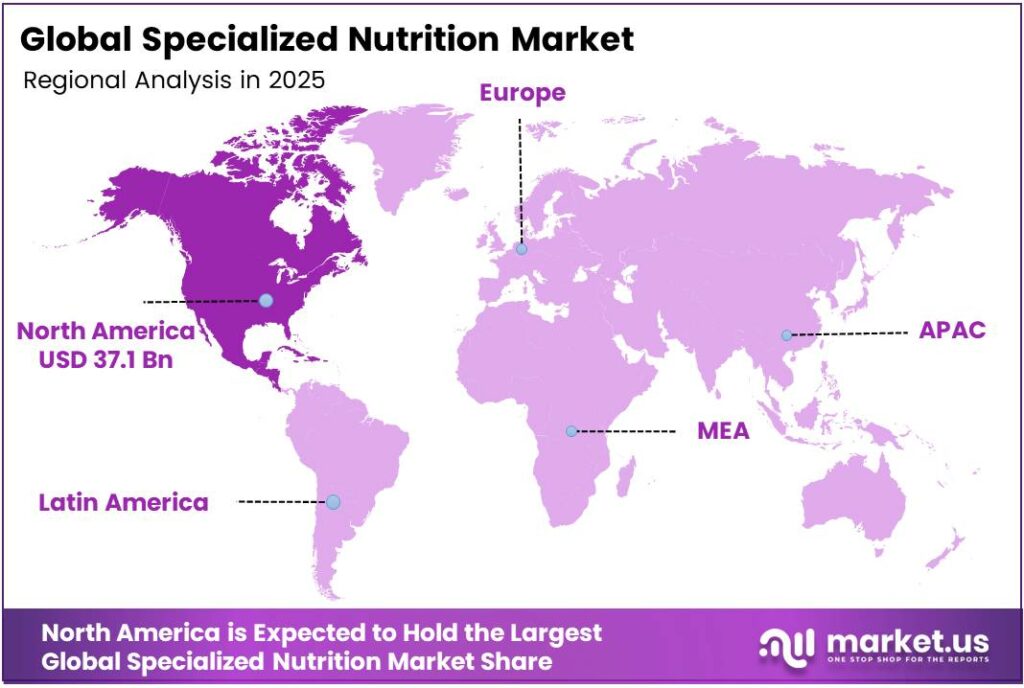
North America leads all regions with a 34.6% market share, valued at USD 37.1 billion in 2025.
By Ingredient Analysis
Protein and Amino Acids dominate with 32.7% due to strong demand in sports and clinical nutrition applications.
In 2025, Protein and Amino Acids held a dominant market position in the By Ingredient segment of the Specialized Nutrition Market, with a 32.7% share. Athletes and fitness-conscious consumers drive this demand through protein supplements, recovery shakes, and amino acid blends. Moreover, clinical nutrition programs also rely heavily on protein formulations to support patient recovery and muscle preservation.
Vitamins represent a consistently strong ingredient category across all specialized nutrition applications. Consumers use vitamin-fortified products to address deficiencies in elderly care, pediatric nutrition, and sports performance. Additionally, expanding health awareness among urban populations continues to fuel steady vitamin supplement adoption globally.
Minerals serve as foundational micronutrients in elderly and pediatric nutrition products. Calcium, magnesium, and zinc formulations support bone health and immune function across age groups. Consequently, mineral-fortified specialized products maintain steady market demand, particularly in clinical and preventive nutrition programs.
Fibers and Specialty Carbohydrates address digestive health needs in functional food and medical nutrition segments. These ingredients support gut microbiome balance and blood sugar management. Furthermore, growing interest in metabolic health has accelerated fiber inclusion in sports and elderly-targeted formulations.
Omega Fatty Acids are widely used in infant formula, elderly care, and brain health nutrition. These essential fats support cardiovascular and cognitive function across all age demographics. Therefore, omega-3 and omega-6 ingredient demand remains robust across both medical and consumer nutrition categories.
Prebiotics and Probiotics form a rapidly growing ingredient class targeting gut health, immunity, and metabolic wellness. Manufacturers increasingly blend prebiotic fibers with probiotic strains for synergistic health benefits. Additionally, gut-brain axis research is expanding prebiotic and probiotic applications into mental wellness and sports nutrition sectors.
Antioxidants are widely incorporated into performance and anti-aging nutrition products. These compounds combat oxidative stress caused by intense physical activity and natural aging. Moreover, clean-label antioxidant sourcing from natural plant extracts has gained significant traction in premium nutrition lines.
By Application Analysis
Sports Nutrition dominates with 67.2% due to rapid fitness culture expansion and high consumer spending on performance nutrition.
In 2025, Sports Nutrition held a dominant market position in the By Application segment of the Specialized Nutrition Market, with a 67.2% share. Growing fitness culture, rising gym memberships, and increasing awareness of performance supplementation drive this dominance. Additionally, expanding e-commerce access makes premium sports nutrition products readily available to mainstream consumers globally.
Elderly Nutrition represents a fast-growing application segment driven by global population aging. Older adults require nutrient-dense, easy-to-digest formulations that address muscle loss, bone health, and metabolic decline. Moreover, governments and healthcare systems increasingly support elderly-specific nutrition programs to reduce age-related healthcare costs.
Key Market Segments
By Ingredient
Protein and Amino Acids
Vitamins
Minerals
Fibers and Specialty Carbohydrates
Omega Fatty Acids
Prebiotics and Probiotics
Antioxidants
Others
By Application
Sports Nutrition
Elderly Nutrition
Emerging Trends
AI-Driven Personalization and Gut Health Innovation Reshape the Specialized Nutrition Landscape
AI-driven wearable data analytics now enable real-time adjustments to individual nutrient intake recommendations. Fitness trackers and health monitors collect continuous biometric data that nutrition platforms process instantly. Consequently, consumers receive personalized dietary guidance that adapts dynamically to their daily activity and metabolic response patterns.
Prebiotic and probiotic blend innovation is accelerating across gut health and immune support nutrition lines. Manufacturers invest heavily in synbiotic formulations that combine prebiotics and probiotics for enhanced therapeutic outcomes. China’s infant formula imports fell 35% year-on-year in the first half of 2024 as domestic specialized production expanded, reflecting a broader global shift toward locally developed gut-health and specialized nutrition products.
Clean-label natural ingredient sourcing is gaining strong momentum in the elderly and performance nutrition categories. Consumers increasingly prefer transparent ingredient lists free from synthetic additives and artificial compounds. Additionally, pediatric malnutrition solutions and maternal nutrition programs are receiving growing strategic attention aligned with global health initiatives.
Drivers
Rising Athletic Performance Demand and Aging Population Needs Drive Specialized Nutrition Market Growth
Escalating consumer demand for tailored nutrition to optimize athletic performance fuels market expansion significantly. Fitness enthusiasts and professional athletes seek precision-formulated protein blends, amino acid products, and recovery supplements. Danone Specialized Nutrition’s net sales reached €6,599 million in the first nine months of 2024, reflecting strong industry-wide demand for specialized nutrition solutions.
Rapid global population aging creates urgent demand for easy-to-digest, nutrient-dense elderly-specific formulations. Older adults face unique metabolic challenges, including muscle loss, reduced bone density, and micronutrient deficiencies. Therefore, healthcare providers and food manufacturers are developing increasingly sophisticated geriatric nutrition products to meet this growing clinical and consumer need.
Explosive e-commerce platform expansion dramatically improves direct access to premium sports and clinical nutrition products. Online channels reduce geographic and distribution barriers for both global brands and regional specialty producers. Additionally, digital platforms enable personalized product discovery, subscription services, and consumer education that accelerate specialized nutrition adoption across all demographics.
Restraints
High Product Costs and Regulatory Complexity Limit Broad Market Adoption in Price-Sensitive Regions
Premium pricing driven by advanced research and development and specialized ingredient sourcing limits affordability for middle- and low-income households. High-quality protein isolates, bioactive compounds, and clinical-grade formulations carry significant production costs. Consequently, a large portion of the global consumer base remains unable to access premium, specialized nutrition products despite clear health benefits.
Stringent regulatory approval processes impose significant time and cost burdens on specialized nutrition manufacturers. Health authorities across different markets require extensive clinical evidence before granting product approvals. Moreover, limited insurance reimbursement for specialized nutritional products in emerging markets further slows consumer adoption and healthcare system integration in price-sensitive regions.
Market fragmentation across regulatory jurisdictions creates additional compliance complexity for global brands. Companies must navigate differing ingredient approval lists, labeling requirements, and health claim regulations across major markets. Therefore, smaller manufacturers in particular face disproportionate regulatory costs that constrain innovation speed and market entry into new geographies.
Growth Factors
Nutrigenomics Innovation and Asia-Pacific Urbanization Unlock Major Specialized Nutrition Expansion Opportunities
Nutrigenomics advancements now enable precision-matched nutrition plans aligned with individual genetic profiles and biomarker data. Scientists link specific gene variants to nutritional needs, enabling highly customized supplement formulations. Additionally, digital health platforms integrate this genetic data with AI-driven subscription models that deliver personalized daily nutrition solutions at scale.
Surging disposable incomes and rapid urbanization across the Asia-Pacific unlock mass-market demand for medical and sports nutrition. Growing middle-class populations in India, China, and Southeast Asia increasingly allocate spending toward premium health and wellness products. China’s milk output reached nearly 42 million tonnes, illustrating the region’s expanding domestic specialized nutrition production capacity to serve this rising consumer demand.
Rising vegan and sustainability preferences drive rapid development of plant-based protein and omega fatty acid alternatives. Consumers increasingly seek environmentally responsible nutrition products that align with their ethical values. Therefore, manufacturers are accelerating plant-based formulation pipelines, creating new growth pathways in sports nutrition, elderly care, and medical nutrition segments globally.
Regional Analysis
North America Dominates the Specialized Nutrition Market with a Market Share of 34.6%, Valued at USD 37.1 Billion
North America leads the global specialized nutrition market with a commanding 34.6% share, valued at USD 37.1 billion in 2025. The United States drives this dominance through high consumer spending on sports nutrition, medical nutrition, and dietary supplements. Moreover, a well-established retail and e-commerce infrastructure enables premium product access across diverse consumer segments.
Europe represents a mature and innovation-driven specialized nutrition market. Stringent EFSA regulatory standards ensure high product quality, which supports strong consumer trust. Reflecting the region’s significant clinical nutrition and infant formula demand. Additionally, aging demographics in Germany, Italy, and France fuel steady growth in elderly nutrition categories.
Asia Pacific represents the fastest-growing region in the specialized nutrition market. Rising urbanization, growing middle-class populations, and expanding health awareness drive robust consumer demand. Moreover, China and North Asia together contributed €1,857 million to Danone’s Specialized Nutrition revenue in 9M 2024, underscoring the region’s strategic importance.
The Middle East and Africa market for specialized nutrition is at an early but accelerating stage of development. GCC countries lead regional demand, supported by high disposable incomes and growing fitness culture. Additionally, government health initiatives targeting malnutrition and maternal nutrition across sub-Saharan Africa are beginning to expand the addressable market for specialized formulations.
Key Regions and Countries
North America
Europe
Germany
France
The UK
Spain
Italy
Rest of Europe
Asia Pacific
China
Japan
South Korea
India
Australia
Rest of APAC
Latin America
Brazil
Mexico
Rest of Latin America
Middle East & Africa
GCC
South Africa
Rest of MEA
Key Players Analysis
AAK AB is a leading global supplier of specialty vegetable fats and plant-based oils used across specialized nutrition applications. The company focuses on delivering customized lipid solutions for infant formula, medical nutrition, and performance food products. AAK AB’s strong manufacturing footprint and deep customer partnerships across Europe and Asia position it as a strategic ingredient partner for global nutrition brands.
Abbott is one of the most recognized names in global nutrition science, operating across infant formula, adult nutrition, and medical nutrition segments. The company markets established brands that serve hospital patients, athletes, and elderly consumers worldwide. Abbott’s significant investment in clinical research and its broad global distribution network reinforce its position as a market leader in science-backed specialized nutrition solutions.
Danone operates a dedicated Specialized Nutrition division that spans infant milk formula, toddler nutrition, and medical nutrition products. Danone’s recorded full-year 2024 group, with Specialized Nutrition highlighted as a core growth pillar. Danone’s global geographic presence across Europe, Asia, and emerging markets strengthens its competitive advantage in specialized nutrition.
Ajinomoto Co., Inc. brings deep expertise in amino acid science to the specialized nutrition market. The company develops advanced amino acid-based products for sports performance, clinical nutrition, and aging population support. Ajinomoto’s proprietary fermentation technology and strong research capabilities enable it to create differentiated amino acid formulations that meet the precise needs of both medical and consumer nutrition applications.
Top Key Players in the Market
AAK AB
Abbott
Danone
Ajinomoto Co., Inc.
GlaxoSmithKline plc (GSK)
Nestle
Otsuka Holdings Co., Ltd
The Vitamin Company India
PepsiCo.
Herbalife Nutrition
Recent Developments
In 2025, AAK specializes in plant-based oils and fats, with a dedicated Special Nutrition portfolio including customized lipid solutions for infant nutrition (e.g., INFAT and Akonino ranges designed to mimic breast milk fatty acid profiles), medical nutrition, functional nutrition, and senior nutrition (e.g., heart-smart low-saturated fat blends with omega-3s, brain-supporting lipids, and sustained-energy options).
In 2025, Abbott maintains a strong position in infant formula (a core part of specialized nutrition), medical nutrition, and condition-specific products (e.g., for allergies, metabolic disorders, and prematurity). Key recent updates center on production safety and the regulatory context for infant formula.
Report Scope