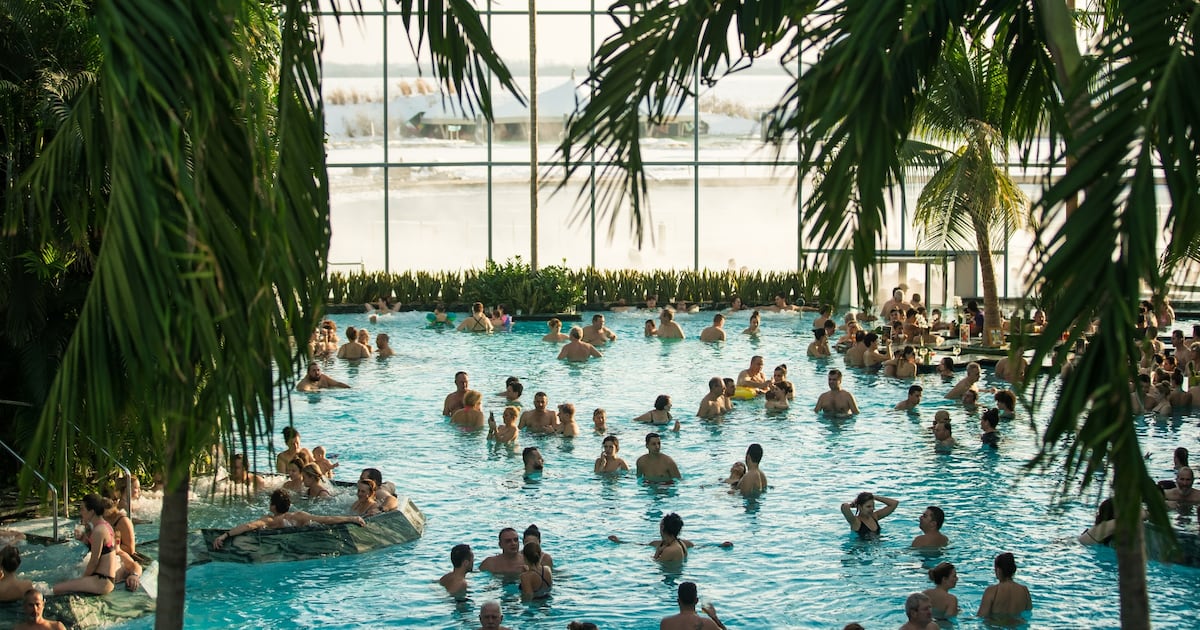
In 2024, a Romanian spa became TikTok-famous. “Go to this insane bucket-list thermal spa — including flights to Romania and back — for LESS than a typical UK spa break,” read the caption of one of several thousand videos. “Yes, really!”
The site of the incredulity was Therme Bucharest, one of five major spa locations operated by wellness company Therme Group across Europe. Together, Therme’s portfolio of large-scale bath house spas welcome over five million visitors a year, with Thermes across Asia, the US and UK on their way.
Though unrivalled in scale, Therme is just one byproduct of an uptick of interest in the practices of public bathing and sauna. A global surge in wellness members clubs, from Othership’s sauna locations to the sprawling spas of Italian group GC Terme, is also riding — and building — the wave. According to Mordor research, the global sauna market is predicted to top $195 billion by 2030; growth is driven by expanding millennia-old bath and sauna culture deeper into the global West.
Those markets are receptive. “One of the biggest things it stands to address globally is the loneliness epidemic, as well as the fact that people are drinking a lot less,” said Mia Kyricos, founder and chief wellness officer of wellness advisory firm Kyricos & Associates. Affordability is also a crucial factor. With day passes to bath house complexes averaging between $50–$100, and sauna sessions starting from as little as $12, the model comes as a welcome alternative to pricey treatments or exclusive members clubs.
But accessible wellness is not an easy business. While traditional spa models are designed around fewer, pricier treatment rooms, large scale sauna and bath houses flip that script entirely. Revenue is eventually raised from the sheer volume of visitors — but the initial investment is steep, and low admission rates also mean that breaking even can be a years-long endeavour.
To Therme at least, it’s a risk with built-in reward. “Today, everybody’s chasing the same high-end dollars,” said Robert Hammond, president of Therme US. “No one is really chasing the big middle.”
High Scale, High Margins
Globally, sauna and bathing culture dates back millennia, with Japanese onsens, Turkish hammams and Finnish saunas forming integral parts of those respective cultures.
Fast forward a few centuries, and it’s infiltrating new markets, like Canada and the US — where Therme understands consumers don’t need a cultural framework to appreciate the experience of a plunge. It’s also betting that its accessible model, where access to a day’s worth of mineral soaks and infrared sweats costs on average $45, has a similar universal appeal.
Low prices make it affordable for many visitors, and many visitors allow Therme to keep the price low, said Hammond. It also makes the business profitable. “We’re profitable on the margins, due to the fact that it’s a volume business,” added Stelian Iacob, senior vice president of Therme group.
 “The scale is what enables us to provide an upscale experience. It doesn’t smell like chlorine. It has 1000s of live plants,” said Hammond. (Therme Group)
But building facilities capable of welcoming such large communities requires considerable upfront investment. Therme is tackling this by scaling from the jump: While its pending fleet of global locations requires hundreds of millions in funding, it can point back to the millions of entry fees it’s already charging back at home.
But a 2025 investigation by The New York Times suggested that the company had largely exaggerated its experience, portfolio and finances to win the government contract for construction of Therme Toronto — and that the company was actually losing money. A Therme spokesperson reaffirmed to The Business of Beauty that the company had met the formal financial test required for the lease, and had since raised over $1.5 billion in institutional capital. Still, the investigation ultimately highlighted the sheer amount of hoop-jumping, capital-raising and scrutiny required to get just one of these mammoth locations off the ground.
It’s an issue that Charlie Duckworth, managing director at London’s not-for-profit Community Sauna Baths, is familiar with on a smaller scale. “The first site took us quite a long time, failed fundraising attempts and lots and lots of discussions with the landlords,” he said. Since opening its first location in 2021 in east London, Community Sauna has gone on to open four additional locations. While wildly popular with locals, the expense of new site launches, and a series of building delays, prevented the company from reaching profitability in 2025, Duckworth said.
But once those costs have been eaten, the profit potential is undeniable. A 3,000-square-foot facility in Europe would have steep maintenance overhead “even if the six treatment rooms were booked every single day,” said Kyricos. “Then sites I visited in Europe were making between $10 and $15 million a year, because they turned that on its head.”
Can Community Conquer All?
While big-budget bathhouses are less common in North America than East Asia, a number of similar enterprises have opened in the past two decades — like New York’s King Spa, Sojo, or family saunas that resemble Therme at similar prices.
Still, the majority of bathhouses in North America are often local, independent businesses like Los Angeles’ 24-hour Wi Spa. Unlike exclusive, up-market members clubs, the large and varied mix of visitors is largely the point of these spas, whose popularity benefits from a post-pandemic thirst for connection.
To mirror the local success and cultural relevance of bathhouses abroad, these new spaces have to behave like community centres in addition to wellness destinations.
Community outreach is essential. In Manchester, Therme began laying its community groundwork before building was underway, financially supporting the Manchester marathon and touring Berlin-based artist Jeppe Hein around schools in the area to host breathing workshops.
This month, Therme US also sponsored New York’s first-ever large-scale public bathing festival, “Culture of Bathe-ing.” For a Therme-signature affordable admission fee, visitors could visit saunas and partake in almost 1000 workshops from global sauna experts as well as local businesses, such as Othership and Bathhouse. Art, singers, comedians and artists were also showcased. “It’s about being part of cities, being part of the urban fabric,” said Hammond.
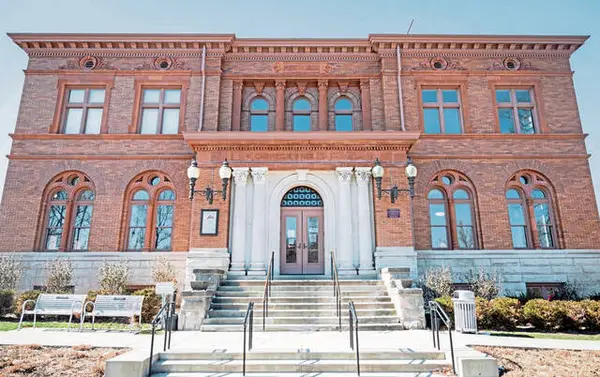
Maintenance of ancient bathhouses sites becomes costly due to stringent building codes, and are likely inaccessible for mom-and-pop owned establishments. But for Italian concept QC Terme, renovating these historic sites such as Palazzo delle Terme Berzieri in Treviso becomes a way to preserve them, as well as embedding themselves within the local community.
At Community Baths, four percent of turnover goes directly into “community impact” and outreach, for which the company salaries a dedicated team. Beyond that, extra funding is allocated to host bathers who have been prescribed sauna sessions by the National Health Service. “We fund 10 sessions for them, and then we have someone onboarding them, making sure that they’re able to attend the sessions, and have the right things to wear,” said Duckworth. Although the company wasn’t profitable in 2025, investment in these programmes remained consistent.
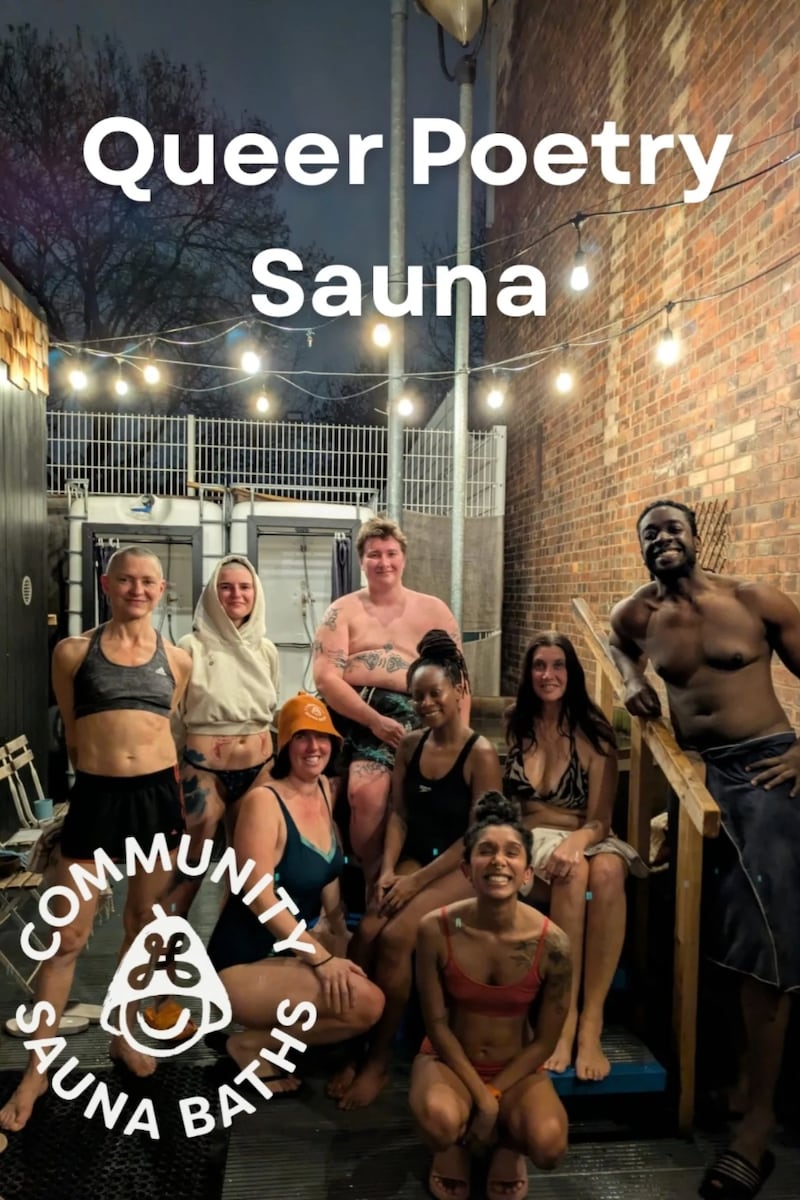 As well as funding outreach initiatives, Community Sauna Baths host open-to-all events across their London locations, from queer poetry evenings to live DJ sauna sessions. (Community Sauna Baths b)
To truly welcome all members of a community, affordability remains the core and binding factor.
“We as an industry have done a great job catering to high net worth individuals around the world,” said Kyricos. “We’ve not done as good a job — and I actually think it’s our responsibility — to democratise and make health and wellbeing accessible for the average consumer.”
Sign up to The Business of Beauty newsletter, your complimentary, must-read source for the day’s most important beauty and wellness news and analysis.