Heart health is near and dear to Lori Kunkle’s heart.
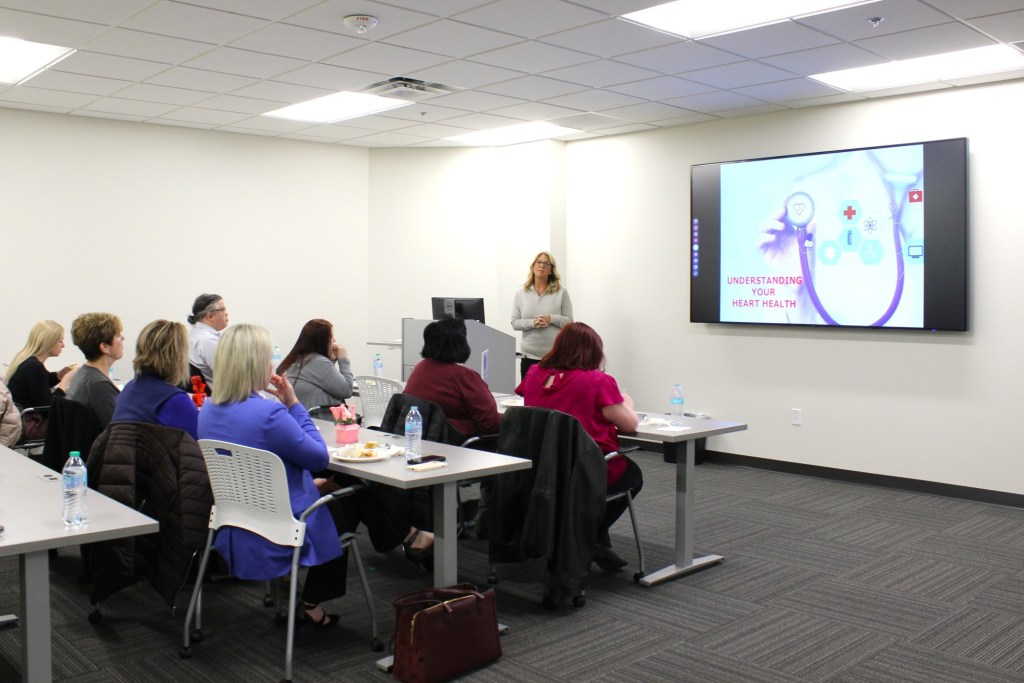
Kunkle, Senior Vice President of Clinical Wellness at PK Wellness Matters in Wyomissing, was the featured speaker at a Schuylkill Women in Business (SWIB) luncheon on Thursday. As American Heart Month comes to a close on Saturday, Kunkle’s presentation implored listeners to be self-aware of their heart health and act proactively to avoid complications later in life.
After attending Reading Hospital School of Nursing, Kunkle worked in Reading Hospital’s Emergency Department for over 10 years and later graduated from Alvernia University with a bachelor’s degree in Nursing. Her work now involves performing site nurse visits and equipping people with the knowledge and habits necessary to help reduce their risk of heart issues.
From her experiences in medicine, Kunkle has observed a concerning trend: the number of younger people experiencing heart complications is on the rise.
“I always thought before nursing that heart health was a man’s problem,” Kunkle said, “until I realized, are you aware that (heart disease) is the number one killer among women?”
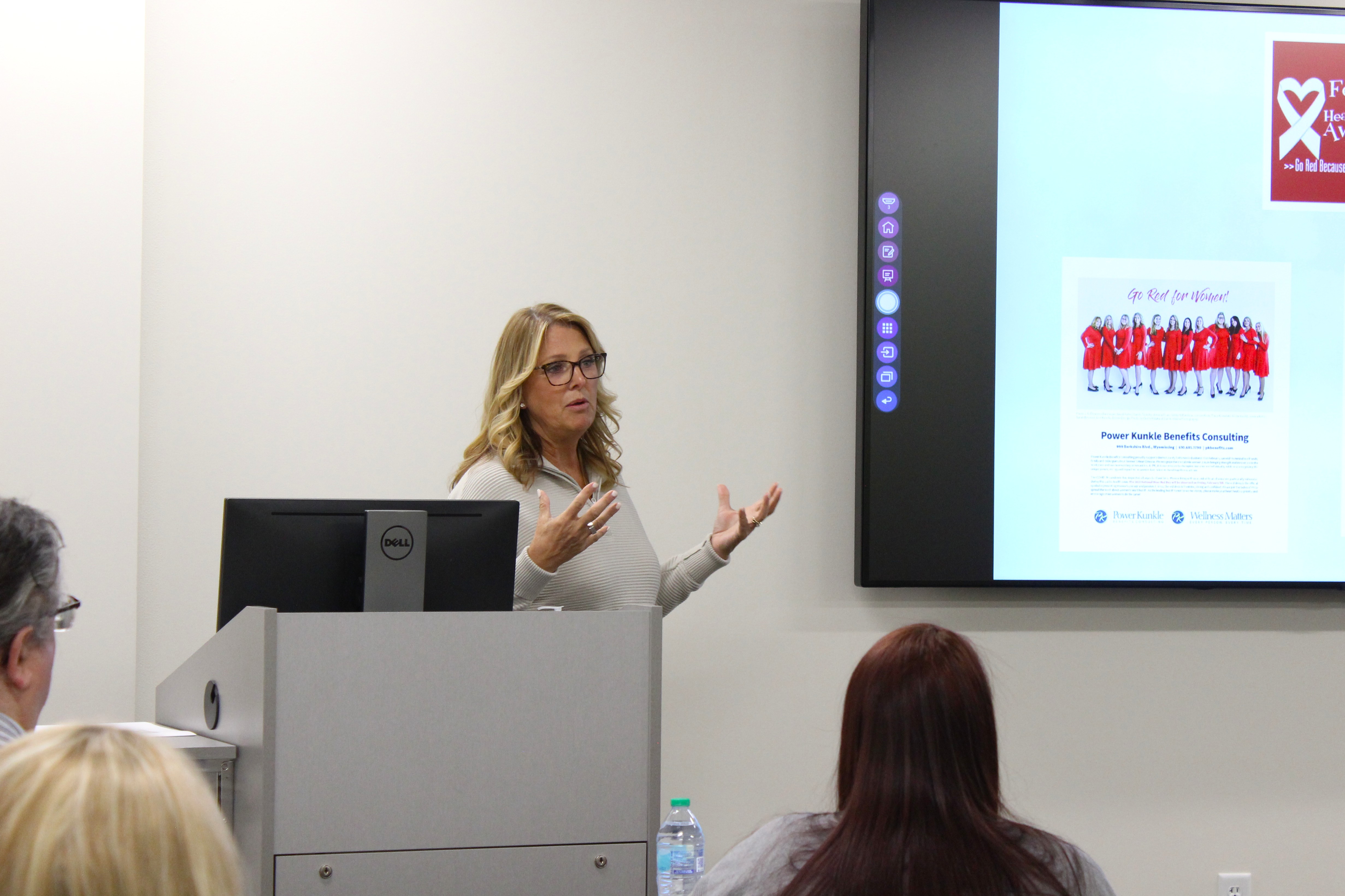
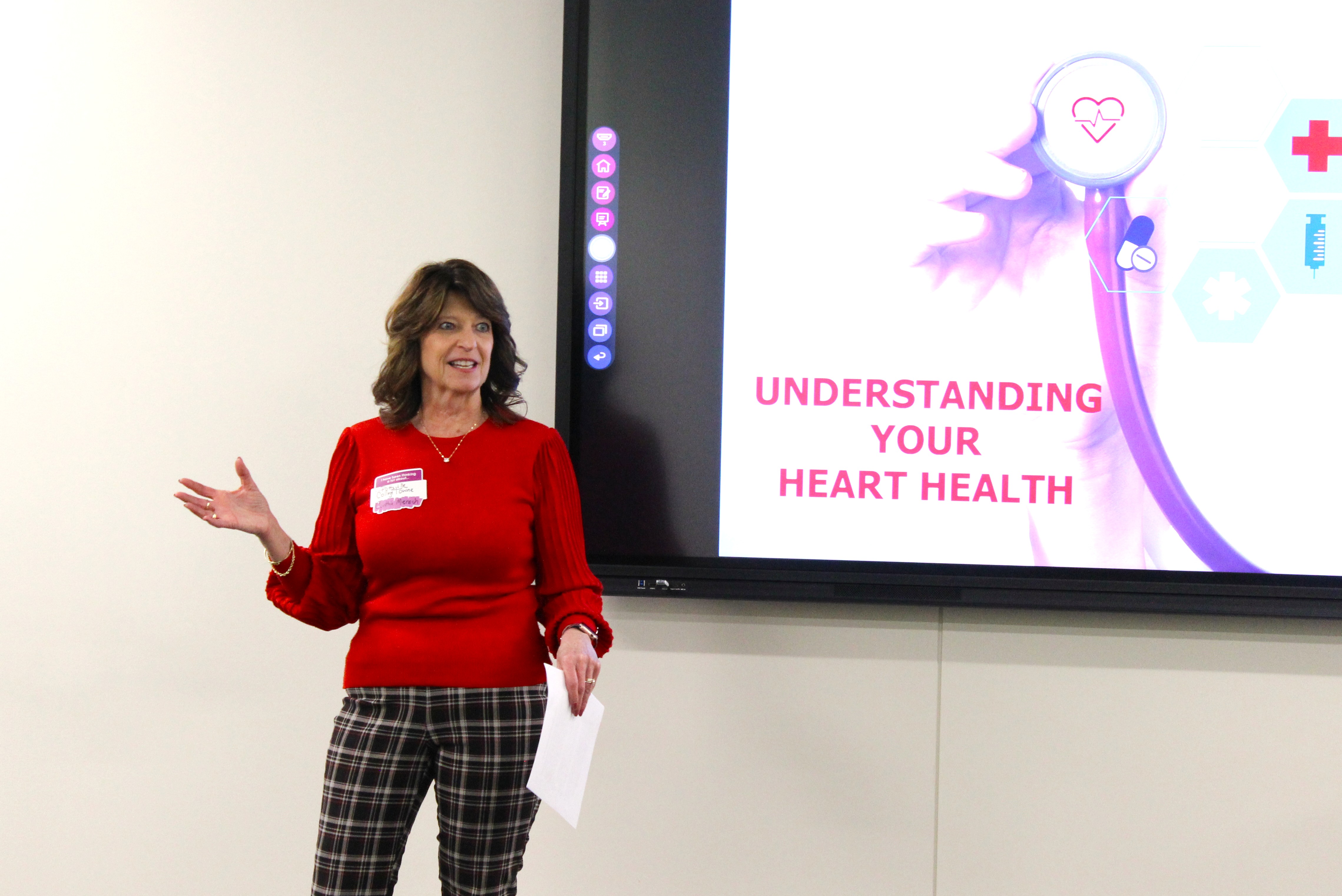
Lori Kunkle, Senior Vice President of Wellness at PK Wellness Matters, chats with members of Schuylkill Women in Business about heart health. (OLIVIA SCHLINKMAN/STAFF PHOTO)
Cynthia Mensch, Chair of Schuylkill Women in Business, thanks members and nonmembers alike for attending SWIB’s monthly luncheon. (OLIVIA SCHLINKMAN/STAFF PHOTO)

Angela Meck, owner of The Farm Store in Pottsville, comments on implementing heart healthy foods into daily diets. (OLIVIA SCHLINKMAN/STAFF PHOTO)
Show Caption
1 of 3
Lori Kunkle, Senior Vice President of Wellness at PK Wellness Matters, chats with members of Schuylkill Women in Business about heart health. (OLIVIA SCHLINKMAN/STAFF PHOTO)
Heart implications are particularly prevalent among Schuylkill County residents. State data shows that in 2023, the county discharged heart disease patients at a rate of 1,151, which was 303 more than the state average.
Heart disease death rates are high in Schuylkill County, too. According to the Centers for Disease Control and Prevention, approximately 336 out of every 100,000 Pennsylvanians will die of heart disease. In Schuylkill County, that rate is heightened, at 463 out of every 100,000 people.
Monthly SWIB luncheons have occurred for quite a few years now, and offer members and nonmembers alike the opportunity to engage in professional development while also forging connections with fellow local businesspeople.
“It’s a great group of women that come here,” said Cierra Abrachinsky, SWIB’s Schuylkill Chamber of Commerce Liaison. “I love being a part of something that matters, and I love being able to provide that value to our members.”
Next month, on March 19, SWIB will hold its annual Women’s Conference at the Walk In Art Center in Schuylkill Haven.
Know your numbers
Getting ahead of the game when it comes to heart health, Kunkle says, requires staying on top of your lipid numbers — when your total cholesterol is over 200, for example, that means you are at greater risk for heart disease.
Between your HDL and LDL cholesterol, Kunkle shares a quip to remind folks that your LDL numbers, or low-density lipoproteins, are what you want to keep low: “L is for lousy, H is for happy.”
It’s also important to watch your glucose, or sugar, levels. Though glucose provides the body with energy, elevated levels over 150 can point to a pre-diabetic or diabetic condition, which can put a person at greater risk of heart disease, a heart attack or a stroke.
Finally, blood pressure: according to the American Heart Association, an ideal blood pressure number is 120 over 80. Kunkle advises periodic monitoring to get an understanding of your baseline blood pressure, perhaps with an at-home device such as an Omron monitor which can be bought at CVS or Target.
Alternatively, keep tabs on all these numbers can be done through a patient’s online portal, where they should be able to view both current and previous lab results. Furthermore, at visits with your provider, Kunkle advises folks to always ask their doctors for the numbers.
“You deserve to know the number,” Kunkle said. “High blood pressure, high blood sugar, cholesterol, stress, inactivity, any of those things put you at greater risk for heart disease, diabetes and stroke and that’s obviously what we’re trying to avoid.”
Control your numbers
Beyond self-awareness, Kunkle recommended implementing certain habits into your daily routine to reduce your risk of complications.
For starters, being physically active is essential.
“The American Heart Association recommends that two to three times a week you are doing something for 30 minutes,” Kunkle said. “You don’t have to go into a gym, take a brisk walk… Find something you like to do and just stick with it.”
When it comes to your diet, Kunkle admits that not only do convenience meals, like fast food, save time, but they are also usually cheaper. Nonetheless, returning to natural foods, like fresh produce, lean protein and legumes, are crucial to promoting a healthy heart.
“When you flip back the (product) and see all of those ingredients that you can’t pronounce… there’s always an alternative that literally just has two or three ingredients that are going to be so much better for your heart health,” Kunkle says.
If fresh foods like these are a financial barrier to some, Kunkle encourages consumers to try frozen fruits and vegetables before turning to canned ones, and to try buying meat in bulk, which can be more cost-effective. Additionally, do some research into affordable ingredients that are rich in antioxidants, fiber and omega-3s oils, to further boost your nutrition.