Add DMNews to your Google News feed. 
Tension: Millions of people stack supplements based on individual internet recommendations without ever considering how those supplements interact as a system — and the rituals they build around those stacks become part of their identity.
Noise: The wellness internet optimizes for single-ingredient content that performs well individually but never addresses interactions, timing, or dosing conflicts, while consumers psychologically categorize supplements as inherently safe because they’re “not drugs.”
Direct Message: The morning supplement ritual many people rely on was never designed as a system — each piece was chosen in isolation, but the body doesn’t process anything in isolation, and performing the motions of health can quietly substitute for practicing it.
To learn more about our editorial approach, explore The Direct Message methodology.
Every morning at 6:45, before the coffee finished brewing, Diane Whitaker would line up three amber bottles on her kitchen counter in Scottsdale, Arizona. Vitamin D3. Magnesium citrate. Calcium carbonate. She’d been doing this since 2016, when a wellness blog she trusted laid out the “holy trinity” for women over 50 who wanted to protect their bones and their brains. Diane, now 58 and a former high school principal, was meticulous about it. She never missed a day. She tracked her doses in a spreadsheet. She felt virtuous every single morning.
Then, during a routine visit after a bout of unexplained fatigue, her neurologist pulled up her bloodwork, paused, and asked her to walk him through her supplement routine. When she finished, he set down his pen. “Diane,” he said, “your calcium has been blocking your magnesium absorption for nearly a decade.”
She told me she didn’t feel angry at first. She felt something closer to embarrassment, the kind that sits in your chest. Eight years of ritual, of believing she was investing in herself, and two of her three supplements had been engaged in a quiet biochemical tug-of-war the entire time.
Diane’s story isn’t unusual. It’s practically a template. A 2018 analysis in the Journal of the American Medical Association found that over 52% of American adults take dietary supplements, with multivitamins, vitamin D, and calcium leading the pack. But the study also noted that most people select supplements based on internet searches, social media recommendations, or advice from friends rather than clinical guidance. The result is a population running DIY biochemistry experiments on themselves with no pharmacist checking for interactions.
The calcium-magnesium conflict Diane stumbled into is well-documented. Both minerals compete for the same absorption pathways in the gut. Take them together, especially in the high doses popular in over-the-counter formulations, and calcium tends to win. Magnesium, the mineral most responsible for muscle relaxation, nerve function, and (critically for Diane) sleep quality, gets shouldered out. A 2020 review published in Nutrients detailed how concurrent high-dose calcium intake significantly diminishes magnesium bioavailability, essentially turning one of your supplements into an expensive placebo.
Diane’s neurologist didn’t shame her for taking them. He said the real problem was timing and dosing, two variables almost never discussed in the cheerful infographics that dominate wellness culture.
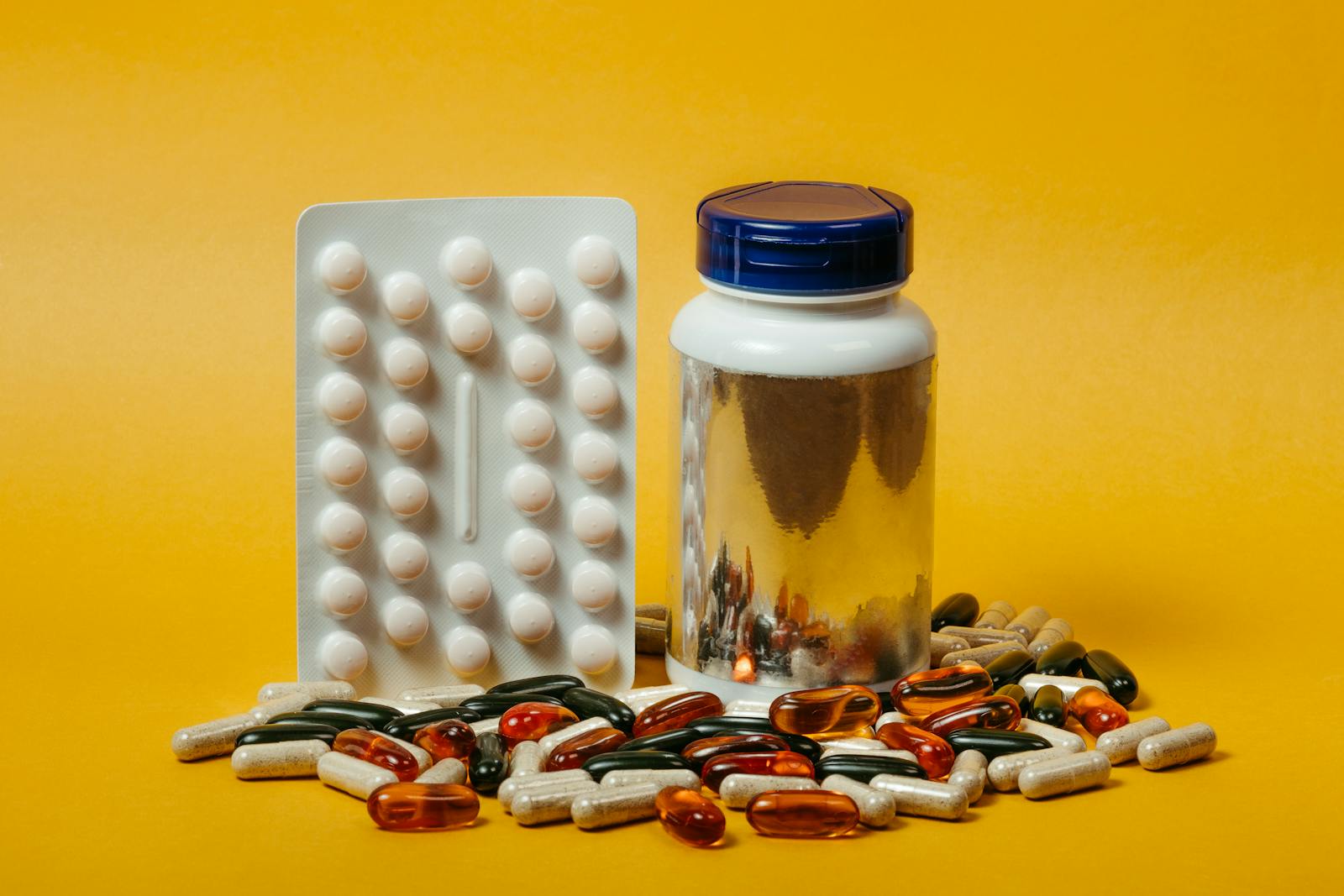 Photo by Jonathan Borba on Pexels
I keep thinking about a man named Gerald Torres, 63, a retired software engineer in Portland. Gerald’s version of Diane’s story involved fish oil and vitamin E. For six years, he took both daily because a podcast host he admired swore by the combination for cardiovascular health. What Gerald didn’t know was that both supplements have mild blood-thinning properties. Individually, no issue. Together, especially alongside the low-dose aspirin his cardiologist had prescribed, he was creating a compounding anticoagulant effect that likely contributed to the persistent nosebleeds and easy bruising he’d been attributing to “getting older.”
Gerald found out during a pre-surgical consultation, when the anesthesiologist flagged his bleeding time as abnormally long. “Nobody had ever asked me what supplements I took,” Gerald told me. “And I never thought to mention them. They’re just supplements. They’re not drugs.”
That distinction, the psychological bright line people draw between “supplement” and “medication,” is what psychologists call category-based risk discounting. We assign safety profiles based on how we classify something, not based on what it actually does in the body. Supplements sit in the mental category of “natural, gentle, preventive.” Medications sit in the category of “serious, clinical, side effects.” The molecules don’t care about our categories.
As a previous DMNews piece explored, the supplement industry has grown into a $60 billion ecosystem that thrives on a peculiar consumer behavior: people researching individual ingredients in isolation, stacking them based on separate articles, and never once considering how the full stack interacts as a system. Each ingredient has its own enthusiastic subreddit, its own clinical study cherry-picked for a blog post, its own influencer testimonial. The stack, as a whole, belongs to no one.
Consider Amara Osei, 44, a graphic designer in Atlanta who spent three years taking turmeric (curcumin), green tea extract, and iron supplements simultaneously. She’d read about turmeric’s anti-inflammatory properties for joint pain. Green tea extract for metabolism. Iron because her doctor had flagged low ferritin during a physical. What none of her internet sources mentioned: curcumin and the tannins in green tea extract both inhibit iron absorption. Amara’s ferritin never budged. Her doctor doubled her iron dose. Her GI symptoms got worse. It took a new integrative medicine physician to notice the interaction and stagger her timing, and within two months, her iron levels normalized.
“I felt like I’d been running on a treadmill with the emergency stop cord pulled,” Amara said.
There’s a deeper pattern here that goes beyond biochemistry. It touches something we explored in a piece about how daily structure shapes brain health as we age: the rituals we build around health become part of our identity. Diane didn’t just take supplements. She was a person who took her supplements. That morning routine gave her a sense of agency over a body that, past 50, increasingly felt like it was making decisions without consulting her. Gerald’s fish oil and vitamin E ritual was a declaration that he was being proactive, that he wouldn’t go gently into cardiovascular decline.
When those rituals get challenged, what people feel isn’t just medical concern. It’s an identity disruption. Psychologists call it effort justification, a variant of cognitive dissonance where the sheer amount of time and consistency you’ve invested in a behavior makes it psychologically painful to consider that the behavior was misguided. Eight years of lining up bottles. Six years of swallowing capsules with breakfast. Three years of monitoring a number that refused to move. Admitting the ritual was flawed feels like admitting you were flawed.
Research on how certain brains resist aging keeps pointing toward the same unglamorous factors: sleep quality, social connection, cardiovascular fitness, and (notably) the absence of chronic low-grade inflammation caused by, among other things, poorly managed supplementation. The irony bites. People take supplements to protect their brains, and some of those supplements, through interactions and malabsorption, create the exact inflammatory and deficiency conditions they were trying to prevent.
Diane’s neurologist eventually helped her redesign her routine. She still takes all three supplements but staggers calcium and magnesium by six hours. The vitamin D stays with the calcium because it aids absorption. She says the change took two weeks to feel. Her sleep improved first. Then her energy. Then the low-level muscle cramps she’d assumed were just part of aging.
“The hardest part wasn’t changing the routine,” Diane told me. “The hardest part was sitting with the realization that I’d been performing health instead of practicing it. I was doing the motions of someone who takes care of herself. And the motions felt so good that I never stopped to ask whether the chemistry underneath was actually working.”
As we’ve discussed in the context of supplement interactions accelerating the very conditions people try to prevent, the wellness internet has a structural incentive problem. Individual-ingredient content performs well. “Top 5 Benefits of Magnesium” gets clicks. “How Magnesium Absorption Is Compromised When Co-Administered With Calcium Carbonate at Equivalent Doses” does not. The information that matters most is the information that’s least shareable.
There’s a quiet reckoning happening in kitchens like Diane’s, in pre-op consultations like Gerald’s, in frustrated follow-up appointments like Amara’s. People are discovering that the supplement stack they curated from a dozen different sources was never designed to function as a whole. Each piece was chosen in isolation. The body doesn’t process anything in isolation.
What Diane said at the end of our conversation keeps sitting with me. She wasn’t angry at the internet, or at the wellness bloggers, or even at herself. She was something else entirely. Relieved, maybe. Because the thing she’d been afraid of (that her body was declining and nothing she did could stop it) turned out to be partly an artifact of her own well-intentioned interference. Her body hadn’t been failing her. Her ritual had been failing her body. And that, unlike aging itself, was something she could actually fix.
Feature image by doTERRA International, LLC on Pexels