Superbrewed Food has partnered with Döhler to launch production of its SB1 ingredient, spearheading the first commercial-scale manufacturing of a postbiotic cultured protein produced through fermentation. Initial commercial volumes are now shipping into premium sports and lifestyle nutrition applications in the US.
SB1 is a US FDA-reviewed generally recognized as safe (GRAS) whole-food protein ingredient that delivers high-quality protein alongside meaningful levels of naturally occurring B vitamins and essential minerals, enabling structure/function claims in finished products.
The protein is also allergen-free, non-GMO, and vegan, supporting “clean label,” nutrient-dense formulations across nutrition and food applications.
Nutrition Insight speaks to Bryan Tracy, CEO of Superbrewed Food, about the road to commercially scaled fermented protein and how this ingredient compares to more traditional plant and animal proteins.

“While we’re not able to disclose specific production capacity figures at Döhler, we can share that current production volumes significantly lag market demand,” he comments.
“To address existing customer needs and anticipated pipeline growth, we are actively securing financing for a dedicated US production facility. This facility is expected to begin delivering commercial volumes in the second half of 2027 and will meaningfully expand supply capacity.”
SB1 is manufactured at a Döhler European production facility leveraging the company’s global scale, systems, and ingredient expertise. Döhler Ventures has also made a strategic investment in Superbrewed Food, demonstrating its long-term stake in SB1’s global expansion.
The launch comes during a commercial shift in dietary demands, including the growing use of GLP-1 rapid weight-loss medications that necessitate high-protein solutions to counter muscle loss.
Brewing nutrient-dense protein
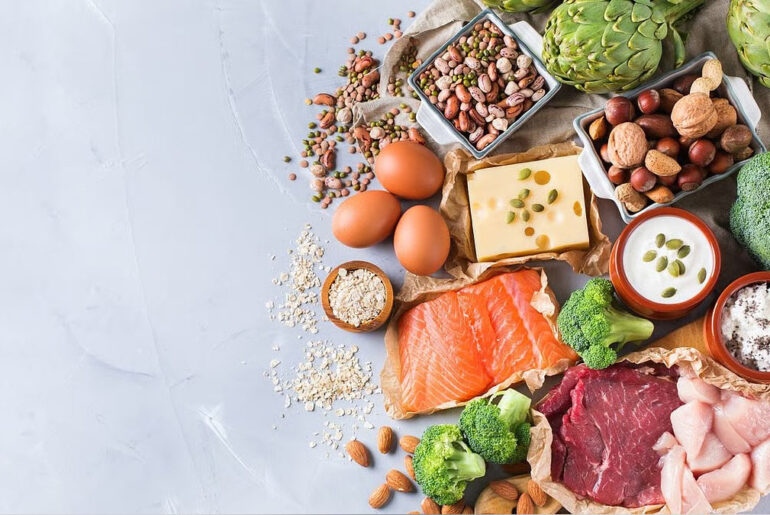
As the nutrition industry ushers in new sustainable meat and dairy alternatives based on fermentation, researchers have posed questions about how similar these food sources are in terms of protein content, nutrient profile, digestibility, and even variations in microbial diversity.
_(002).webp.webp.webp) SB1 delivers over 85% fully digestible protein and naturally occurring vitamin B12, riboflavin, biotin, and folic acid.By preserving the ingredient in its native, whole form, SB1 delivers over 85% fully digestible protein and naturally occurring vitamin B12, riboflavin, biotin, and folic acid, according to the company.
SB1 delivers over 85% fully digestible protein and naturally occurring vitamin B12, riboflavin, biotin, and folic acid.By preserving the ingredient in its native, whole form, SB1 delivers over 85% fully digestible protein and naturally occurring vitamin B12, riboflavin, biotin, and folic acid, according to the company.
“SB1 is a whole bacterial biomass ingredient that is not subjected to extraction, lysis, or isolation processes — procedures commonly required for yeast and fungal biomass products,” says Tracy.
“The ingredient also delivers meaningful levels of iron, zinc, manganese, and phosphorus. Over 90% of its total calories are derived from protein.”
SB1 has demonstrated more than 98% digestibility in in vitro protocols, including the TNO Gastro-Intestinal Model, a computer-controlled artificial gut system designed by Dutch scientists to mimic the complex physical and chemical processes of human digestion.
While a Digestible Indispensable Amino Acid Score has not yet been determined for the ingredient, two independent human clinical trials assessed SB1 for gastrointestinal tolerance, anabolic response for muscle protein synthesis, and glycemic and insulinemic responses.
“Tolerance was well supported, and the muscle protein synthesis response was statistically equivalent to whey protein isolate in a randomized crossover analysis,” says Tracy. “Additionally, SB1 enables structure/function claims associated with its naturally occurring B-vitamins and minerals.”
Comparisons to other alternatives
Compared to plant protein concentrates and isolates, SB1 offers more neutral flavor and appearance, according to Superbrewed Food. It also does not require isolation to remove antinutritional factors.
“Additionally, SB1 has minimal gelling or viscosity increases in liquid and semi-liquid systems, while offering a broader pH and temperature stability,” notes Tracy. “However, it has no meaningful fiber content.”
He adds that compared to precision-fermented proteins, such as beta-lactoglobulin, SB1 demonstrates superior emulsification performance, depending on the comparator.
“Against yeast and fungi-based proteins, SB1 offers a significantly higher protein content, whereas yeast and fungal biomass products are typically less than or equal to 65% protein,” Tracy details.
Feedstocks and cost-in-use
SB1 is currently produced using glucose as a feedstock. Superbrewed Food also has a development partnership with Fonterra to expand production using lactose.
“Due to its high protein concentration, functional performance, and intrinsic micronutrient content, SB1 is positioned to be cost-competitive on a cost-in-use basis with enhanced-functionality whey protein isolates at commercial scale,” says Tracy.
“We have submitted novel food applications in both the EU and the UK. We are also pursuing regulatory approval in Canada and, in collaboration with strategic partners, expect to expand submissions into additional global markets beyond Europe and North America over the next 24 to 36 months.”
In other headlines this week, Vivici launched a precision fermentation-based lactoferrin ingredient, Vivitein LF, in the US market with self-affirmed GRAS status. Dubbed a “breakthrough protein,” the Dutch company says it addresses the supply and cost issues associated with traditionally produced lactoferrin, also known as “pink gold.”