Want more tried and tested recommendations from the Editors of Women’s Health? Sign up to our monthly newsletter The Edit. Click here to subscribe.
Walking pads (also known as under-desk treadmills) are having a moment, and it’s easy to see why. Google searches for ‘walking pads’ have jumped by 250% in the past year, while TikTok videos with the hashtag #treadmilldesk have racked up over two billion views.
Why? Well, studies show 81% of UK workers spend between four and nine hours per day sitting at a desk, and we’re constantly reminded that leading a sedentary lifestyle is not the one. Excessive sitting — which has been branded ‘the new smoking’ — is said to increase our risk of illnesses including cancer, type 2 diabetes and heart disease, and research by Queen’s University Belfast found that the NHS spends at least £700m a year treating diseases exacerbated by sedentary behaviour.
Best walking pads at a glanceShow more
Designed to slip neatly under a desk, walking pads make it easier to add movement to your day without carving out extra time for a workout. Used regularly, they can help boost daily step counts, support cardiovascular health, improve energy levels and focus, and counteract long stretches of sitting.
To help you find the right one for your space and budget, we’ve tried and tested the best walking pads for real working days — from at-home admin sessions to busy office afternoons (and, admittedly, plenty of time in front of the TV) — and rounded up the standout options worth buying in 2026.
Meet the experts: Lesley Brown is a chartered physiotherapist and women’s health physiotherapist with a passion for sports rehabilitation through weightlifting, exercise and education with years of practical experience. David Wiener is a training specialist at fitness coaching app Freeletics, the #1 fitness app in Europe offering personalised AI fitness coaching.
What to consider when buying a walking padBelt size
Wide belts are more comfortable and stable, while narrow belts are more compact (ideal for apartment dwellers and small-space living). Belt length also comes into play — the longer the belt, the more surface area you have to run or walk. In theory, the longer, the better (particularly if you’re tall or have a longer stride), but it ultimately depends on how much space you have.
Weight
If you’re going to be moving your walking pad frequently, be sure to consider how much it weighs. While there are plenty of sub 25kg options, others (typically those that have more speed and incline options) are considerably heavier. If you opt for a heavier model, check to see if it has wheels for easier manoeuvrability.
Speed
Most walking pads have a speed range between 0.5 and 6 kilometres per hour, which is plenty if you’re just looking to add to your daily step count. Larger and more premium models might top out at more than six miles per hour, so you can even get in a decent jog.
Storage
If you don’t fancy leaving your walking paid laid out under your desk or across your living room floor, look for slimline options you can slide under furniture, or folding designs that take up less space when packed away. Most models also come with wheels, making them easy to move around your space. Just check the dimensions to ensure they’ll fit in your intended spot.
Incline
The maximum incline for most walking pads is around 5-6% (though one option on our list rises to an impressive 14%), while some models don’t incline at all. While walking on an incline can be a great way to amp up walking workouts, we didn’t rule out non-inclining models because the primary purpose of walking pads is to multitask while working, not climb a hill in your home office.
Price
Like all home gym equipment, walking pads vary widely in price. You can score one of the most affordable models for under £200, while midrange options run in the £400-£500 price range.
Desk type
If you’re using your walking pad while working, you’ll want to take the type of desk you have into account. Naturally, they’re best suited to standing desks or height adjustable desks, but if you don’t own one, walking on it during work breaks is your best bet (and a simple way to reach your step goal!).
How we test walking pads
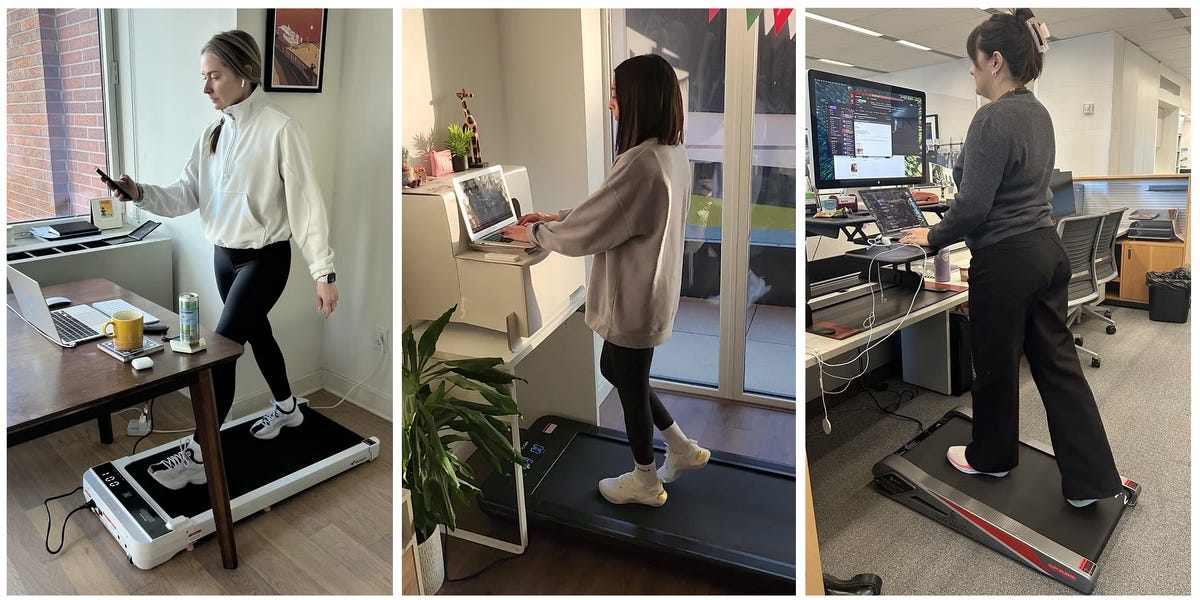
The Women’s Health team has tested dozens of walking pads both at home and in the office, using them as part of our real working days — from back-to-back meetings to long writing sessions. We track how they impact our daily step counts, energy levels and productivity, and whether they genuinely make it easier to move more without disrupting workflow.
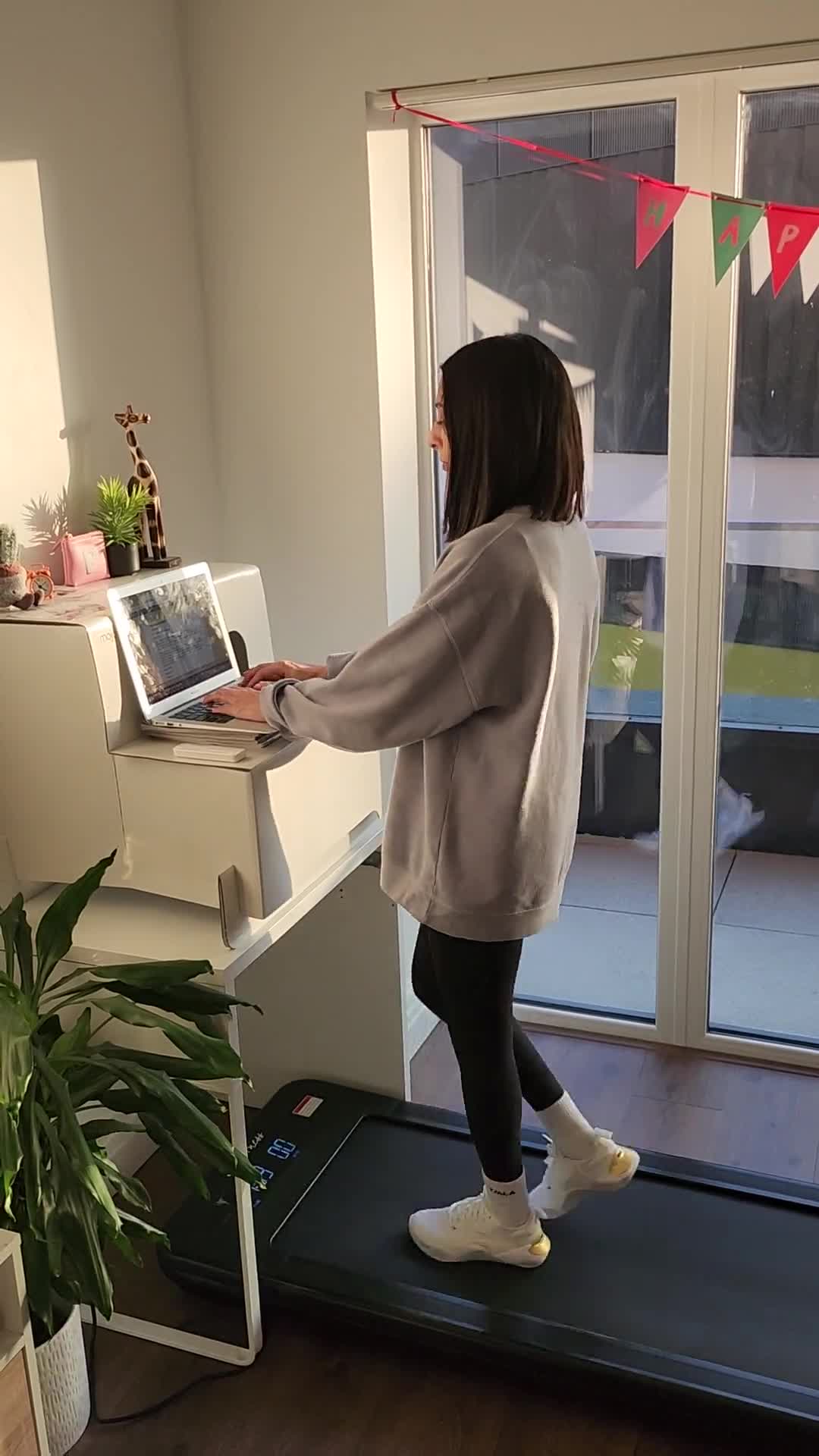
We assess key practicalities including footprint, belt size, weight, portability and how easy each model is to store in small spaces. Noise levels are carefully considered (particularly during calls — or, more likely, MAFS bingeing), as well as overall build quality and stability underfoot. We also evaluate ease of use: how intuitive the controls are, whether there’s a remote or app compatibility, how clear the display is and how straightforward it is to adjust speed mid-task.
When it comes to performance, we test speed ranges, incline options (where available), smoothness of belt movement, safety features and maximum user weight. We note how comfortable each pad feels over longer sessions and whether it’s suitable for light jogging as well as steady walking.
Crucially, we test each walking pad over several weeks — and in some cases, months — to get a true sense of durability, reliability and how well it integrates into everyday life. Finally, we weigh all of these factors against price. A higher cost doesn’t automatically equal better value, so we consider whether the features, build quality and overall user experience justify the investment before recommending any model in this guide.
Why trust Women’s Health
At Women’s Health, fitness isn’t just something we write about — it’s something we live. Our editors and contributors regularly test home gym equipment, wearables and wellness tech as part of their daily routines, combining hands-on experience with expert insight from qualified trainers, physiotherapists and industry specialists.
Every product featured in our buying guides has been carefully selected following thorough testing and editorial scrutiny. We prioritise performance, practicality and value for money — so when we recommend a walking pad, it’s because it’s genuinely earned its place in your home and your routine.
The best walking pads to shop in 2026, tried and testedMerach Walking Pad
After testing and reviewing a handful of under-desk treadmills, the Merach Walking Pad gets top honors in our guide for a few reasons: It’s the most affordable, the lightest at 13kg for easy handling, has a long 99cm belt, and goes up to 6 km/h. It also has a handy remote control that allows you to adjust the speed, while the display tracks distance, time, and calories burned.
Multiple Women’s Health editors and contributors, including fitness commerce editor Nicolette Accardi, can attest that its lower price point doesn’t mean it skimps on quality. It feels sturdy and secure even while walking on it for close to an hour at a time. That said, if there is an issue, it’s good to know that it comes with a one-year warranty.
Our tester has been using this walking pad for a few months and finds it reliable, easy to move around, and not a total eyesore in a home living space. (Although she stores it under a sofa when not using it.) Since our tester doesn’t have a standing desk, she primarily uses it while taking calls, listening to podcasts, brainstorming, and sometimes just looking out the window. Accardi uses hers to rack up steps at the office and says it’s nearly silent at a low-speed setting.
The only slight downside is there is no incline option — so forget about amping up the challenge of walking workouts as you can’t run on it. That said, the purpose of a walking pad is, well, walking, so we’re not really deducting points for these cons.
You can also download the Merach app, although it’s worth noting that it’s not highly rated in the App Store (2.8 stars), and for that reason, our tester decided not to try it herself. But, Accardi uses it and says she likes that it doubles as a remote. Keep in mind that you can only choose from three built-in speed settings.
Read the full review: WalkingPad A1 Pro
If space is tight, the WalkingPad A1 Pro is a smart solution. Unlike most walking pads, this model folds neatly in half, making it far easier to store once you’re done. Simply unplug, fold and wheel it away — it slides under a sofa or bed without dominating your space. Folded, it measures 82 x 55 x 13cm, so while it’s not ultra-slim, it’s compact enough for most homes.
Performance-wise, it more than holds its own. Despite the foldable design, it feels sturdy and well built, with a smooth, relatively quiet motor that won’t overpower calls or meetings. The LED display rotates between time, distance and step count (which we cross-checked against fitness trackers and found impressively accurate).
The belt itself feels generously sized and secure underfoot — even our taller testers (up to 6’3″) felt comfortable striding without worrying about clipping the edges. Speed ranges from 0.5 to 6km/h in 0.5km increments, and there’s also a clever automatic mode that adjusts pace based on your position on the belt — ideal for when you want to focus and let your rhythm dictate the speed.
It arrives well packaged with a remote, battery and wrist strap included. The only drawbacks? It’s fairly heavy to manoeuvre, and you’ll need to quickly check belt alignment before each use, as it can occasionally shift slightly. That said, neither issue impacts performance — and for a foldable design, it’s an impressive all-rounder.
Superun Walking Pad
If you’re looking for an affordable way to upgrade your WFH set-up, the Superun Walking Pad is our top budget pick for 2026 — and now comes with a welcome addition: a 6% incline option. At this price point, that’s impressive. It adds just enough challenge to elevate your heart rate and engage your glutes without pushing into full treadmill territory.
With a top speed of 6km/h, it’s designed firmly for walking rather than running, making it ideal for desk work, calls or evening TV strolls. During testing, we found it pleasantly quiet compared to pricier models — unobtrusive enough for meetings — and easy to move thanks to its lightweight 19kg frame and built-in wheels.
Another standout is the shock-absorbing deck, which helps protect both your joints and your flooring (no separate mat required). For a compact machine, it feels stable and secure underfoot, even during longer sessions.
The Superun also connects to the PitPat app, where you can track steps, monitor progress and tap into extra motivation. It’s straightforward rather than flashy — but for the price, the performance more than delivers.
If you want a simple, space-friendly walking pad with incline capability that won’t stretch your budget, this one punches well above its weight.
Egofit Walker Pro M1 Treadmill
What makes the Egofit Walker Pro shine compared to our best overall pick is its five percent incline, which WH assistant social media editor Isabel McMahon says stood out to her. ‘Even when I’m walking at a slower speed like 1.5 mph, I can still feel like I’m getting a solid workout,’ she says.
After testing it for three months, she says she can’t imagine her workday without it and that it boosts her productivity. ‘I definitely felt more productive using the walking pad because it kept me feeling alert,’ McMahon says. ‘When the afternoon slump hit around 2pm, turning on the treadmill gave me an energy boost and the mental reset I needed to power through the rest of the day’s tasks.’
Another stand-out feature of this model, per McMahon, is that it’s quiet. ‘My coworker, who sits right across from me, didn’t even realize I was using it until I mentioned it,’ she says.
McMahon also notes that it’s compact and easy to use thanks to the remote control. ‘The wheels on the front make moving it around a breeze — even in my small workspace,’ she says. It connects to an app that McMahon says is straightforward and functional if you prefer managing speed settings through your phone.
Just be aware that it costs £100 more than our best overall, has a shorter belt at 87cm, and has the lowest speed settings compared to other options on this list.
JTX Movelight Walking Pad
This was the walking pad our sleep and wellness editor, Priyankaa Joshi, used when writing about her experience with adding a walking pad into her daily routine for a couple of weeks, and she had a great experience with the model.
While she didn’t love writing articles while on the pad, which is a common complaint with under-desk treadmills, she loved it for planning, during meetings, and other admin tasks. She found it was great and helping her stay focused, and gave her a nice little energy boost to get past that dreaded 3pm slump.
The machine can reach speeds up to 6kmph for walking or light jogging. It has a screen which displays time, distance, speed, calories burned and steps, and comes with a remote control to adjust your speed. It weighs less than 30kg and has a wheeled base for easy transport and storage.
Deerun Q1 Urban Plus
If you’re short on space, the DeerRun Q1 Urban Plus makes a compelling case for itself. With a super-slim profile (just 10.5cm high) and compact footprint, it’s designed to slide neatly under a sofa or bed when not in use. At just under 22kg and fitted with built-in wheels, it’s easy to manoeuvre around your home — ideal for smaller flats or shared spaces.
It’s also impressively quiet, making it well suited to calls, meetings or strolling in front of the TV. The cushioned deck adds comfort underfoot, helping to absorb impact during longer walking sessions. You can control the speed via the remote or companion app, which allows for smooth adjustments up to 8km/h — brisk enough for power walking, but still desk-friendly.
The walking surface (100 x 40cm) is on the smaller side, which contributes to its streamlined design. Most testers found it perfectly comfortable for walking, and appreciated how stable and secure it felt despite its slim build.
The trade-off? Taller users or those wanting to run may find the deck a little short. But if your priority is a quiet, easy-to-store walking pad that won’t dominate your living space, this one delivers.
UREVO CyberPad
If you’re after a serious challenge without upgrading to a full treadmill, the UREVO CyberPad delivers. Its standout feature is a market-leading 14% dual auto-incline, powered by an innovative front and rear lift system that mimics real-world terrain. The result? A surprisingly tough workout that feels far more like hiking than desk-side strolling.
App connectivity is a major plus. You can track calories, steps, speed and incline in real time, choose from structured workout modes (fat-burning, endurance, cardio and recovery) or explore virtual hiking routes that automatically adjust the gradient as you go. It adds variety — and makes rainy-day walks far more engaging.
Despite the tech-heavy spec, the design is thoughtful. The open-front running surface maximises track space (108cm long) and prevents that boxed-in feeling you get with some models. It’s also impressively quiet and can be stored upright to save space. The LED display and remote both show key stats, including incline level, so you’re not constantly glancing down mid-stride.
Our tester loved how easy it was to set up and found herself using it daily — whether for gentle desk-side walking, power walking in front of the TV or full-on app-led hikes. She called it one of the best pieces of home gym kit she’s tried.
The only real drawback? It’s an investment. But if incline training is top of your wishlist, this one earns its price tag.
What is a walking pad?
A walking pad, or under-desk treadmill, is a flat machine, usually without handles, which fits under your desk and allows you to walk on it while you work. Unlike standard treadmills, which can withstand miles of pounding, walking pads are designed to be used at low speeds; most have a range of 0.5 up to 6 km/h.
The best walking treadmills are lightweight, compact and easy to move (some have a wheeled base, others are foldable) so you can put them away when not in use. A quiet motor is also key so it doesn’t interrupt your workflow or disturb video calls.
Although some models come with a built-in desk, the majority don’t, so you’ll need to invest in a standing desk to complete your new WFH set-up. Our tester Priyankaa didn’t fancy bankrupting myself so opted for a cheap and cheerful standing desk converter instead.
What are the benefits of using a walking pad?
‘An under-desk treadmill is a great way for busy desk workers to get their steps in and meet the NHS guidelines of 150 minutes of physical activity per week,’ says Lesley Brown, senior physiotherapist at Ten Health & Fitness.
‘They’re particularly useful during winter as they allow you to exercise from the comfort of your home, regardless of the weather outside,’ she continues. ‘They’re also a good option for those concerned about the safety element of walking outside in the dark or on uneven surfaces.’
She points to the many health benefits of walking more:
Better sleepLess stressImproved moodStronger joinsBetter cardiovascular healthLower risk of diseases
David Wiener, a training specialist at fitness coaching app Freeletics, highlights the mental health benefits associated with using a walking pad while working. ‘Studies have found that they can help improve motivation, creativity and focus, and even reduce your anxiety levels.’
They’re also proven to improve productivity, adds Wiener. ‘If you’re not moving throughout the day, you’re likely to feel more lethargic. Using a walking treadmill can have a positive impact on your energy levels and help you feel more productive.’
 What are the drawbacks of using a walking pad?
For Sam Pryn, co-founder of women’s only gym StrongHer, the main concern is not getting out in nature. ‘Increasing your movement throughout the day on a treadmill is great, but it’s important to take time away from your screen, get some fresh air and prioritise your mental health,’ she says.
Brown agrees, adding that it’s crucial you get outside when it’s light, so you get natural vitamin D and daylight to regulate your circadian rhythm.
Hollie Grant, founder of Pilates PT, also has some words of warning. ‘There’s a benefit to being mindful when moving your body – being conscious of your technique and focusing on how your body feels – I feel this could get lost if you’re using a treadmill while working,’ she tells WH.
There’s also the obvious risk of tripping and injuring yourself, Grant points out. ‘Make sure you concentrate, go at a low speed and have a steady desk setup to make your experience safer and all the better.’
In a similar vein, it’s important to think about your footwear. ‘I’d recommend wearing supportive, cushioned trainers as opposed to flat footwear so as to protect your knees and lower back,’ says Pryn.
Plus, although walking is a low-impact form of exercise and safe for most people to do, using an under-desk treadmill won’t be suitable for everyone. ‘If you have any underlying health conditions, make sure you get sign off from your doctor first,’ advises Brown.
How often should you use a walking pad?
According to the experts, this is totally individual and will vary from person to person. ‘As with any exercise regime, it’s about finding what works for you,’ says Weiner. He suggests using the treadmill for around an hour per day to begin with. ‘That doesn’t mean you have to do it for an hour non-stop. You can split it into intervals in the morning, afternoon and evening,’ he advises.
Equally, if 10 minutes a day is enough for you, that’s totally fine, says Pyrn, who believes it’s about making small, sustainable changes you can stick to.
Brown also warns against going from 0-100. ‘You don’t want to jump in too quickly and walk a few marathons by accident in the first few days as this puts you at risk of overuse injuries,’ she says. ‘If your body is responding well, with no sign of injury, you can slowly increase this.’
How to store a walking pad
If you live in a smaller house or flat without a lot of room, figuring out where to store your walking pad between uses can be a bit of a headache. Many models have wheels and are foldable, so could be stored beneath your bed if you have room under there, or stowed away in a nearby cupboard.
We’d recommend taking measurements and ensuring you have suitable storage space before you invest in a walking pad because they take up more room than you may think.
5 thing I learnt from using a walking pad every day
When our sleep and wellness editor, Priyankaa Joshi, tested the JTX Walking Pad for two weeks, this is what she discovered:
1. Under-desk treadmills aren’t suited to every task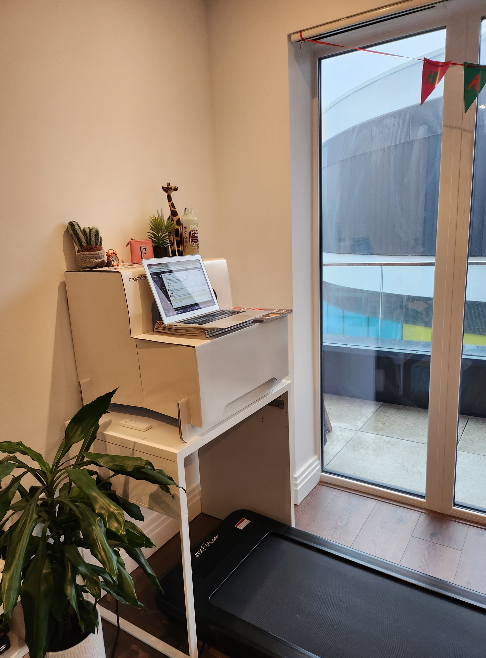
‘Come 9am on day one of the challenge, I enthusiastically hopped onto the treadmill, ready to tackle my to-do list while cruising through my daily cardio. I usually do my writing first thing when I’m feeling perkiest, so I set the speed to 3km/h and got cracking. Or I tried to, but I simply couldn’t focus on my article while strolling along, even when I put the speed right down. Turns out, the treadmill isn’t particularly suited to tasks like writing which require deep concentration.
‘Once I got over the motion sickness and got to grips with typing from the tread, I discovered it was perfect for answering emails, general admin tasks and taking calls. Initially, I was worried it would be too loud but I was pleasantly surprised to find it was pretty quiet and didn’t cause any disruptions during meetings.
‘As the challenge progressed, I got myself into a good routine. I started my day doing emails atop the machine – I found it helped me wake up and get in the zone to work – before sitting down to do some article writing. After lunch, I stepped back onto the walking pad to power through the rest of my workload.’
2. Using an under-desk treadmill did wonders for my creativity, energy and focus
‘Just as Wiener predicted, the under-desk treadmill had a massive impact on my productivity and energy levels, particularly in the afternoons. I usually experience a slump around 3pm – I get fidgety and can struggle to concentrate – but walking while working gave me a much-needed energy boost when I felt myself flagging. My afternoon sugar cravings also subsided, and I was getting through my to-do list at an unusually speedy rate.
‘Apparently, my experience isn’t uncommon. A study by Texas A&M Health Science Centre found that standing while working can increase productivity by as much as 46%. Wowza.
‘Research also suggests that walking can increase a person’s creative output by 60% – this was certainly true for me. By the end of week one, my creative juices were flowing and I was coming up with more ideas than ever before. Not to be dramatic, but it was kind of revolutionary.’
3. It’s important not to overdo it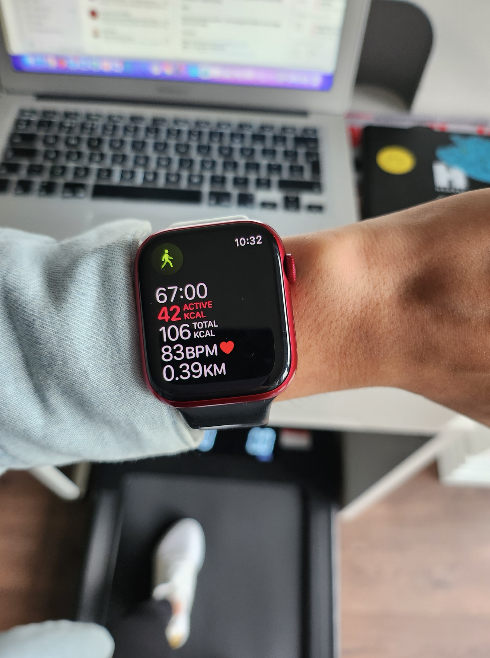
‘I know, I know, the experts warned against overdoing it but I was so excited about my nifty new WFH buddy, I got a little carried away. On days one and two, I went hell for leather, doing three-hour stints on the treadmill at a time. By day three, I found my lower back was starting to ache from standing for hours on end.
‘Grant says this isn’t surprising. “If you massively increase your standing time without the posture to cope with it, backache is inevitable,” she says. “It’s worth building up gradually and supplementing this type of activity with something like Pilates to support the extra time standing.” Noted.
‘By week two, I discovered that hour-long intervals at my standing desk worked best for me. I also made sure to fit in some strength training sessions along with a bit of Pilates to work on my upper body, core and back strength, as per Grant’s suggestion.’
4. It’s a super convenient way to stay active
‘Having an under-desk treadmill was an absolute lifesaver when life got in the way of my usual exercise regime. On days I didn’t have the time or inclination to go to a gym class or head out for a run, I slung on my trainers and jumped on the tread to get my body moving. I’d put the speed up to 6kmph for a light jog and blast some music or listen to a podcast, depending on my mood. Even if it was just for 10 minutes, I felt so much better afterwards.
‘Also, as a fair-weather exerciser, I felt incredibly grateful to have the machine in my flat as the weather took a turn for the worse during week two. I could stick to my daily step count without trudging through the mud and rain. Winning.’
5. Walking is a great form of exercise, even if low-intensity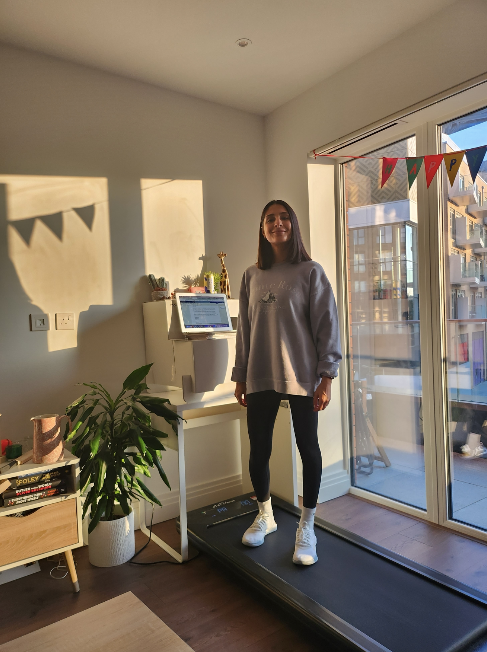
‘In what might be the biggest revelation of the challenge for me, I realised that exercise doesn’t need to be super high-intensity to reap the rewards. I often feel as though I haven’t trained hard enough if I’m not dripping in sweat after a workout, but that’s simply not true. After two weeks of less HIIT and more relaxed daily movement, I felt better than ever.
‘”Because walking is low impact, people tend to assume that it’s not powerful enough to get you fit, but it does wonders for your physical and mental health,” Wiener tells me. “It improves blood circulation, supports joint health, burns fat and enhances your metabolism.”
‘And, unlike vigorous exercise like HIIT, which floods your body with cortisol (the stress hormone), gentle activities like walking can actually reduce your cortisol levels, helping you to feel calmer, more balanced and less stressed.’
The verdict: are walking pads worth it?
Let’s put it this way; some of us got to keep the walking pads we tested for this article, and those who had to return their models are incredibly jealous. We collectively agreed that a walking pad is a simple but oh-so effective way to bring more movement (and therefore energy and endorphins) into our days. They don’t take up much space (with many folding or sliding under a sofa or bed), are simple to use and have really transformed those months where getting your steps outdoors is less than appealing.
As Priyankaa Joshi, our sleep and wellness editor, put it: ‘I was given the JTX MoveLight Walking Treadmill as a loan for this article, and boy am I going to miss it once it’s gone (even if it is taking up quite a bit of space in my tiny living room). From boosting my productivity to helping me overcome my usual afternoon slump, it has totally transformed the way I work. Plus, it felt good knowing I was, hopefully, reducing my risk of serious disease by spending less time on my rear.’
Walking treadmills can cost anything from £200 at the lower end to a seriously spenny £2,000. If your job involves prolonged bouts of sitting, you’d like to move more and you’ve got some cash to burn, we reckon it’s a worthy investment. If you’re not convinced, we’d recommend getting started with a standing desk converter. As mentioned, these are much more affordable and will at least get you on your feet.
More tried and tested reviews from Women’s Health
Best Pilates reformer machines | Best fitness trackers | Best smart rings | Oura Ring 4 review | Best Garmin watch | Best fitness mirrors | Magic Mirror review | Best under-desk bike | Best exercise bike under £500 | Best home gym equipment

Priyankaa is our sleep and wellness expert, specialising in expert-tested reviews and roundups on the latest health and fitness products. From walking boots to running machines, Priyankaa has written about hundreds of products and is passionate about providing in-depth, unbiased reviews. Plus, as an avid runner and gymgoer, she knows exactly what to look for when finding the right gymwear, fitness tracker or earphones.
Priyankaa has an MA in Magazine Journalism from Cardiff University and over five years’ experience in health and fitness journalism. Priyankaa has written for Stylist’s Strong Women Training Club, where she regularly wrote about diversity in the fitness industry, nutrition tips, training advice and her experience completing various fitness challenges. She has also written for a variety of publications including Business Insider, Glamour, Bustle, Metro, HuffPost UK, gal-dem and more. Outside of work, Priyankaa can usually be found trying out a new gym class, seeking out London’s best eats or watching a Spanish TV show in a bid to keep up her language skills.

Hattie Parish is the Senior Health and Wellness Ecommerce Editor for Women’s Health, Men’s Health and Runner’s World, covering the best gym wear, latest fitness tech and wellness launches worth investing in, plus the best deals during Black Friday and Amazon Prime Day.
As well as clocking up the miles in myriad running socks, pummelling her muscles with massage guns, testing out fitness mirrors and donning dry robes every other weekend, Hattie consults leading experts in the health and fitness industry to help readers make informed decisions when shopping online.
Brought up by two medics, Hattie worked in health clinics before completing a BA in English at King’s College London. She qualified as a journalist in 2015 and has since written for titles such as Healthy magazine, Cosmopolitan, Harper’s Bazaar and Red, as well as worked commercially with health and wellness clients such as Holland & Barrett, Lloyds Pharmacy and Superdrug.
Hattie is passionate about arming readers with honest, unbiased product reviews and has a particular interest in the role of technology in our wellbeing, as well as gender-based inequalities in healthcare. When she’s not putting gym wear through its paces on the Pilates reformer or kitting out her home gym (garage) with the latest equipment, she’s attempting to make progress on her teetering pile of bedside books, cycling round South East London or sampling wellness retreats for the Women’s Health travel pages.