
Lund University researchers published a study confirming a 21% higher risk of lymphoma among individuals with at least one tattoo compared to a non-tattooed control group. The population-based study analyzed 11,905 participants in Sweden between the ages of 20 and 60. Of these, 1,398 individuals had received a primary diagnosis of lymphoma between 2007 and 2017.
The data, released in eClinicalMedicine, shows that the risk remained consistent regardless of the size of the tattooed surface area. Participants with less than 0.3 square meters of tattooed skin showed similar risk profiles to those with larger designs. This finding suggests that the systemic immune response is triggered by the presence of ink rather than the volume of pigment used.
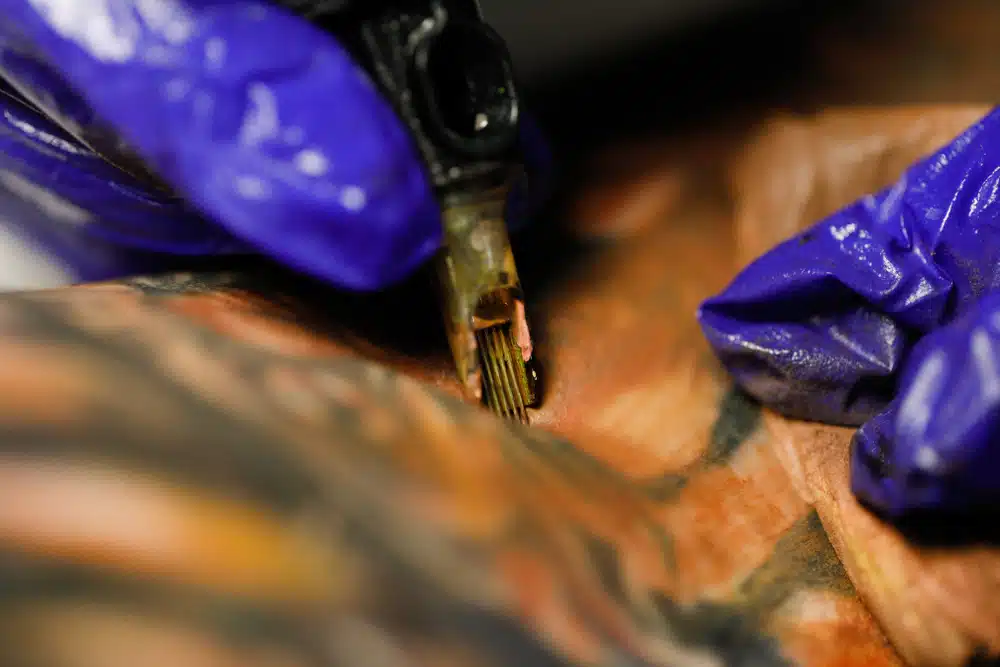
 A 21% higher risk of lymphoma in tattooed individuals after analyzing 11,905 participants in a 10-year study. Credit: Shutterstock
The study serves as the largest epidemiological investigation into the long-term health effects of tattoo ink. While previous research focused on localized skin reactions, the Lund University team tracked systemic malignancy. They identified that the highest risk occurs within the first two years after the initial tattooing procedure.
Data from the Swedish National Cancer Register provided the basis for the patient selection. Researchers used a 1:3 ratio to match lymphoma cases with age- and sex-matched controls from the general population. The final analysis accounted for lifestyle factors, including smoking status and education level, to isolate the impact of the ink itself.
Chemical Composition and Lymphatic Migration
The primary concern for researchers involves the migration of pigment particles from the dermis to the lymphatic system. When ink is injected into the skin, the body treats the pigment as a foreign substance. Macrophages and other immune cells transport these particles to the regional lymph nodes.
According to the Lund University study published in eClinicalMedicine, the immune system’s permanent storage of these pigments results in chronic low-grade inflammation. This process involves the transport of polycyclic aromatic hydrocarbons (PAHs) and metal impurities. PAHs are classified by the International Agency for Research on Cancer (IARC) as known carcinogens.
Analytical reports on tattoo ink composition frequently identify hazardous additives. A 2023 study published in Cosmetics found that many inks contain primary aromatic amines and heavy metals like nickel and chromium. These substances often bypass standard labeling requirements because they are present as contaminants rather than intentional ingredients.
 Tattoo ink particles like carbon black and carcinogens migrate from the skin to lymph nodes, causing permanent inflammation and tissue changes. Credit: Shutterstock
The European Union’s REACH regulation restricted over 4,000 hazardous chemicals in tattoo inks starting in January 2022. However, the Swedish study tracked participants who received tattoos before these regulations were in place. Consequently, the long-term data reflects exposure to older, unregulated ink formulations.
Further technical analysis has shown that pigment particles do not remain static in the skin. Researchers have documented the presence of titanium dioxide and carbon black in the lymph nodes of deceased individuals during autopsies. The physical presence of these particles causes structural changes in the node tissue.
Immunological Responses and Latency Periods
The immune system’s interaction with tattoo ink is not limited to the initial healing phase. A study in the Journal of Clinical Medicine describes how the body maintains a state of constant immune surveillance around ink deposits. This requires the continuous presence of specialized cells to keep the pigment contained.
The Lund University data indicated that the risk of lymphoma decreased between three and ten years post-tattooing. However, the risk increased again for individuals who had their tattoos for 11 years or longer. This “U-shaped risk curve” suggests that the biological mechanism may change as the ink ages or as the immune system undergoes senescence.
The specific types of lymphoma associated with the findings included diffuse large B-cell lymphoma and follicular lymphoma. These are both non-Hodgkin lymphomas that affect the B-lymphocytes. The study did not find a significant correlation between tattooing and Hodgkin lymphoma, though the sample size for that specific subtype was smaller.
Chronic immune activation is a documented precursor to several lymphatic malignancies. When the immune system is under constant stimulation, the likelihood of genetic mutations during cell division increases. The persistent presence of foreign pigments in the lymph nodes provides a source for this ongoing stimulation.
Methodological limits of the study include the reliance on self-reported data for tattoo age and size. While the cancer diagnoses were verified through national registers, the specifics of the ink brands and chemical concentrations used could not be determined. This prevents researchers from identifying which specific colors or brands pose the greatest risk.
Industry Regulation and Material Safety
The tattoo industry has historically operated with limited oversight regarding the chemical safety of pigments. Most inks are manufactured for industrial purposes, such as automotive paint or printer toner, before being repackaged for human use. These substances were not originally designed for intradermal injection.
The Concawe report on Polycyclic Aromatic Hydrocarbons details the prevalence of these compounds in industrial carbon black. Since carbon black is the primary ingredient in most black tattoo inks, the risk of PAH exposure is nearly universal among tattooed individuals.
Current regulatory efforts focus on tightening the concentration limits for these impurities. In the United States, the Modernization of Cosmetics Regulation Act (MoCRA) of 2022 granted the FDA increased authority over tattoo ink manufacturers. This includes mandatory facility registration and adverse event reporting.
Manufacturers must now provide evidence of safety for the ingredients used in their products. However, the lack of long-term human clinical trials for tattoo pigments remains a constraint. Safety assessments often rely on animal models or cell cultures, which may not accurately predict 30-year outcomes in humans.
Recent dermatological research in the Journal of the French Academy of Dermatology has also highlighted the rise in delayed hypersensitivity reactions. These reactions can occur decades after the tattoo was administered. They often manifest as granulomatous or lichenoid eruptions, indicating a late-stage immune rejection of the pigment.
The presence of metals such as cobalt and cadmium complicates medical imaging. These metals can cause interference in Magnetic Resonance Imaging (MRI) scans and may lead to thermal burns during the procedure. Radiologists must now document tattoo locations as part of the standard pre-scan protocol.