
image:
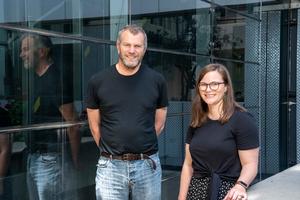
WEHI co-leads: Professor Ivo Mueller and Dr Rhea Longley.
Credit: WEHI
New research co-led by WEHI and Burnet Institute (Melbourne, Australia) has uncovered how the human immune system fights Plasmodium vivax, paving the way for the first effective vaccine against the most widespread form of malaria.
The study provides critical evidence of how protective immunity to P.vivax works, identifying specific targets on the parasite and explaining how antibodies function to prevent and clear infection.
Addressing an urgent, unmet need
Dr Longley, a WEHI Laboratory Head, said global malaria research and vaccine investment has overwhelmingly focused on Plasmodium falciparum, leaving major knowledge gaps for P. vivax.
“Unlike P. falciparum, P. vivax has unique biological features including a dormant liver stage that causes relapses, making it more difficult to eliminate,” she said.
“Strategies that work for one species do not translate to the other.”
Burnet Senior Research Fellow Dr Herber Opi said as a result, global efforts to control malaria has stalled despite decades of progress.
“While two malaria vaccines have been rolled out in parts of Africa, both target Plasmodium falciparum and offer no protection against P. vivax, which dominates in Asia and the Pacific,” Dr Opi said.
A major obstacle to developing a P. vivax vaccine has been limited understanding of what protective immunity actually looks like.
Shaping vaccine design
Professor James Beeson, Head of Malaria Immunity and Vaccines at Burnet, said the findings provide critical evidence to guide vaccine design.
“These exciting findings open new avenues for developing P. vivax vaccines to combat the malaria burden globally and support a path to elimination,” Professor Beeson said.
Using blood samples from children in Papua New Guinea – a region heavily affected by P. vivax –researchers examined how antibodies interact with the immune system to prevent disease.
The findings show that protection from P. vivax is not driven by the presence of antibodies, but by how those antibodies function and which parasite proteins they target.
Researchers identified antibody responses that recruit immune cells and activate immune pathways to attack the parasite. The immune system response was significantly stronger when it targeted multiple proteins at once.
Targeting the right combination of proteins was crucial and could reduce malaria risk by more than 75% – a finding that provides a clear strategy for future vaccine development.
The research involved a collaborative partnership between WEHI, Burnet, PNG Institute of Medical Research, and Ehime University Japan.
The study, “A longitudinal study of children identifies antibody Fc-mediated functions and antigen targets of immunity to Plasmodium vivax malaria”, is published in Immunity (DOI:10.1016/j.immuni.2026.02.003).
Method of Research
Observational study
Subject of Research
People
Article Title
A longitudinal study of children identifies antibody Fc-mediated functions and antigen targets of immunity to Plasmodium vivax malaria
Article Publication Date
27-Feb-2026
Disclaimer: AAAS and EurekAlert! are not responsible for the accuracy of news releases posted to EurekAlert! by contributing institutions or for the use of any information through the EurekAlert system.