

Vorda/Getty Images
As the rush for loading up on fiber and protein continues, it’s important not to neglect other nutrients as well. Magnesium is having its own little moment — and for a good reason. The mineral helps with brain health, boosts nerve and muscle function, and is a godsend for stress relief. Given all the benefits, it may seem like consuming the mineral in abundance wouldn’t a bad thing. However, even magnesium has its downsides.
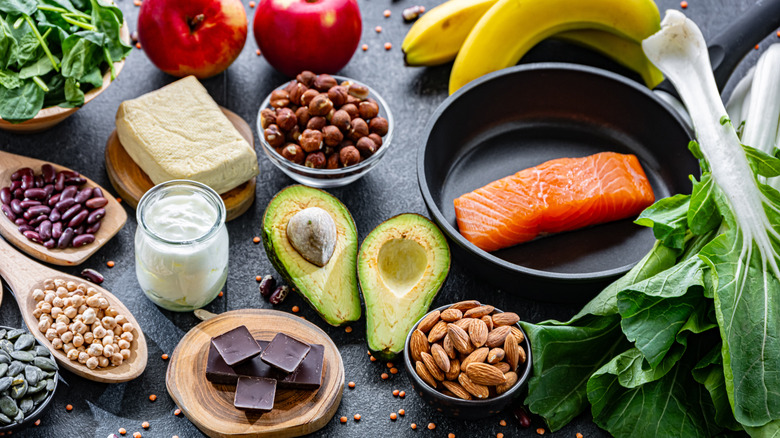
Plenty of adults don’t get enough magnesium, but it’s not necessarily a difficult fix. Magnesium is found in nuts and seeds, legumes, whole grains, low-fat dairy, leafy greens, and even water. According to Harvard Health Publishing, any well-balanced, nutritious diet should meet the 320-milligram requirement for women and the 420-milligram quota for men. Where people find themselves at risk of consuming too much magnesium is with supplements. If a strawberry and apricot parfait isn’t helping you get a good night’s rest, it’s easy to rely on a magnesium capsule for a little boost. Yet, if you already get the mineral through your diet, taking an additional supplement can cause magnesium toxicity, or hypermagnesemia.
The National Institute of Health says adults should consume no more than 350 milligrams of supplemental magnesium per day. Though rare, excess amounts from supplements can lead to symptoms like nausea, diarrhea, and abdominal cramping, as well as difficulty breathing, cardiac arrest, and an irregular heartbeat. People with kidney, heart, or gastrointestinal diseases, as well as the elderly, face a higher risk of hypermagnesemia due to certain medications containing the mineral.
Here’s how to naturally increase your magnesium intake
monticello/Shutterstock
Typically, medical professionals recommend getting in all your vitamins and nutrients via food rather than supplements. Unless your dietary restrictions say otherwise, upping your magnesium intake is possible with balanced meals. Additionally, a magnesium-rich diet isn’t likely to cause hypermagnesemia, but supplements certainly might. To know what kind of foods you should be eating, assess why you’re taking magnesium.
The mineral, particularly magnesium glycinate, helps with stress relief and relaxation. To create the supplement, magnesium is combined with the amino acid glycine, which boosts sleep quality. Opt for meals that feature both nutrients prominently, like Thai larb-style turkey lettuce wraps. Leafy greens are a good source of magnesium, while turkey and other collagen-rich foods are packed with glycine.
A simple green smoothie can also be a great beverage for a magnesium boost. If you turn to magnesium citrate for digestive function or muscle and nerve health, make a green smoothie rife with citrus. The supplement combines magnesium with citric acid, which can be found in oranges, lemons, and tangerines, as well as berries, pineapples, and stone fruits. Kale or spinach provides the magnesium, as do soy milk and coconut water.