
Cardiology is a field requiring discipline, dedication, sacrifice and patience. The journey to being a cardiologist spans over a decade of rigorous education and training.
The path is longer when pursuing advanced subspeciality fellowships, creating what feels like a marathon with no clear finish line. Amidst this demanding professional landscape, we must also navigate personal lives – hobbies, families and the human connections that enrich us. These are essential elements of our identity as physicians and humaneness that underpin compassionate care.
Yet, in a field so demanding and high stakes, the risk of burnout is ever-present. With a national survey finding that workload size was consistently associated with burnout, it’s not surprising that an alarming 23-45% of respondents expressed an intent to leave their current roles.1 Those who felt valued were significantly less likely to consider leaving.
These findings prompt a critical question: In a specialty so prone to burnout, how can trainees cultivate resilience and a sense of value? The answer is complex and the path to resilience is not easy. I believe that understanding how mindset shapes our capabilities brings us closer to that answer.
What is Burnout?
Burnout is defined as a state of emotional exhaustion, depersonalization and a significantly reduced sense of accomplishment within a given field. Strategies to prevent burnout are essential to guard against erosion of our well-being by the intensity of schedules, emotional toll of patient care and pressure to excel academically and clinically. Otherwise, over time, clinical performance and empathy decline, increasing the risk of medical errors, lower patient satisfaction and lower overall outcomes. Achieving a sustainable balance between professional obligations and personal fulfillment is key to maintaining the energy and empathy required to care for others.
The Power of an Adaptive Mindset
Measurable health and performance benefits of an adaptive mindset have been shown in randomized trials. In one study, participants viewing videos framing the COVID-19 pandemic as an opportunity for growth showed significantly lower C‑reactive protein levels and fewer depressive symptoms three months after the intervention vs. controls.2 Another showed that promoting a “stress‑is‑enhancing” mindset led to improved physical health symptoms and better work performance.3 These tangible benefits offer FITs evidence‑based strategies to navigate stress and set a foundation for long‑term success.
Physical Wellness and Perception
Physical wellness is deeply intertwined with mental resilience. Improved physical health fosters greater energy, motivation and capacity to care for patients. Interestingly, perception plays a critical role. Epidemiological data show that individuals who perceive themselves as less active than their peers have a 72% higher mortality risk vs. those who view themselves as more active.4 This exemplifies the impact of mindfulness and self-perception in shaping health outcomes.1
Simple interventions such as wearing fitness trackers can enhance engagement with personal health. Participants in related studies reported adopting healthier diets and experiencing improved mental health when they perceived their activity levels as adequate.5 Empowering fellows to monitor and positively interpret their wellness behaviors can produce lasting benefits. Physicians who maintain their own well‑being also model healthy behaviors for patients, reinforcing adaptive mindsets and promoting healthier communities.
Institutional Strategies For Wellness
Institutions play a pivotal role in fostering a culture of wellness. Educational programs that highlight the potential of mindset as a catalyst for growth can be powerful. Resiliency training, group physical activities, stress management workshops and peer support initiatives should be readily accessible to trainees and culturally supported.
Notably, optional programs are most effective. Prescribing a lower volume of wellness activities may promote greater engagement and self-motivation.5,6 Even brief interventions, such as a 15-minute wellness challenge, increase physical activity and improve fitness, energy, sleep quality and mood.7
Peer relationships and community have a substantial positive impact. Social isolation and loneliness are catalysts for anxiety and depression and are linked to significant morbidity and increased risk of heart attack and stroke. Social connection is a protective factor, with one meta-analysis showing it was associated with a 50% higher likelihood of survival.8
Wellness initiatives should be organized with this evidence in mind, supporting peer programs, wellness rounds and social events that allow fellows to engage in shared vulnerability and connections that serve as an emotional lifeline.
Mindset in Cardiology Fellowship
How do these concepts apply to the realities of our training? Consider a typical 24-hour call managing STEMI alerts, ventricular tachycardia storms and cardiogenic shock. These high-pressure scenarios are mentally and physically taxing. However, by priming ourselves to view these challenges as opportunities for growth, FITs can foster an adaptive mindset that enhances performance and resilience.
Incorporating a brief mindfulness exercise, such as expressing gratitude before starting the day, can shift our perspective from dread to purpose. Similarly, setting small, achievable goals (e.g., taking the stairs, walking 10,000 steps) can reinforce a sense of control and well-being and overall improve our physical health.
Leadership and Psychological Safety
Creating a psychologically safe environment in the workplace is essential for wellness. As future leaders, we have a responsibility to model behaviors that promote trust, communication and peer support. The P6 framework is a systematic approach to foster this environment in health care by focusing on policy, planning, promotion, prevention, process and persistence.9
With these principles, fellows can cultivate environments where team members feel valued and empowered to contribute. Importantly, when fellows lead others by example, it reinforces adaptive behaviors and perpetuates a sense of togetherness within a team. This culture of safety enhances learning and mitigates burnout and promotes retention.
Habit Formation and Long-Term Resilience
Habits sustain the journey toward wellness. In its essence, habit formation is the product of an adaptive mindset. The importance of systems goals is emphasized in the book Atomic Habits by James Clear.10 When behaviors are made obvious, attractive, easy and satisfying, they become sustainable. This approach aligns perfectly with the demands of fellowship, where consistency and adaptability are key.
Habit formation in structured learning can augment clinical mastery of key material. For example, a habitual brief daily review of high-yield EKGs, echocardiograms or catheterization images enhances automatic skill reinforcement, which compounds with as little as 15-20 minutes a day. This habit becomes attractive and satisfying because it helps augment our skill to save lives but is also easy when starting small and repeating often. These behaviors pair our learning with purpose and further strengthen the positive feedback loop for habit formation.
A key concept of the book is the importance of one’s identity and, by extension, mindset. Clear emphasizes that habits are not just about performance; they are about identity formation and strengthening the mindset of an able and confident cardiologist. For example, consistently making a habit of reviewing EKGs begins to shift your mindset from “trainee” to “a cardiologist who can confidently see patterns others may miss.” This creates a cycle of positive reinforcement as our adaptive behaviors produce good patient outcomes.
Similarly, this concept can be applied to other wellness activities such as exercise, journaling and meditation. When fellows make a habit of prioritizing wellness, they are modeling that behavior for others, especially their own patients. Every effort towards a productive habit is a vote for the kind of cardiologist you want to become.
Reconnecting With Our Purpose
As we reflect on our journey, we should revisit the purpose that initially drew us to this field. When we combine passion with purpose, our work becomes life-enhancing rather than depleting – reducing stress, building resilience and fostering gratitude.
Research supports this connection: a meta-analysis demonstrated that individuals with a greater sense of purpose experienced significantly lower levels of depression and anxiety, with the association being even stronger for those in health care.11 When cardiologists maintain their mental and physical well-being, they gain the clarity to reconnect with their core purpose. This re-connection, in turn, reduces burnout and expands the capacity to cultivate an adaptive mindset.
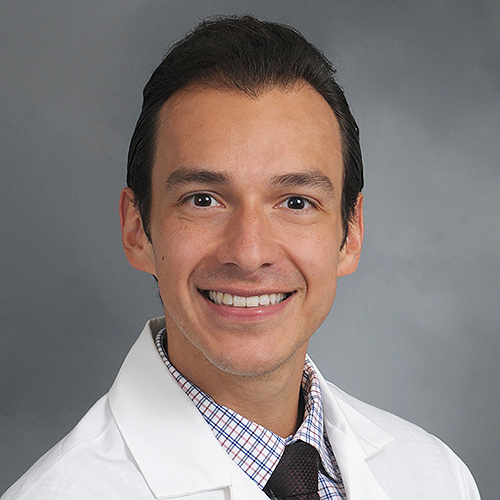
Alejandro Maldonado, MD, is a fellow at Stony Brook University Hospital in New York, and a member of the Fellows in Training Member Section. Learn more and join.
References
Mallick S, Douglas PS, Shroff GR, et al. (2024). Work environment, burnout, and intent to leave current job among cardiologists and cardiology health care workers: Results from the National Coping with COVID Survey. J Am Heart Assoc. 2024;13(18).
Barrera J, Straube L, Huml Z, et al. Can catastrophes be opportunities? A randomized clinical trial testing a brief mindset intervention for reducing inflammation and depression following COVID-19. Brain Behav Immun. 2025;129:1028-38.
Crum AJ, Santoro E, Handley-Miner I, et al. Evaluation of the “rethink stress” mindset intervention: a metacognitive approach to changing mindsets. J Exp Psychol Gen. 2023;152:2603-22.
Zahrt OH, Crum AJ. Perceived physical activity and mortality: Evidence from three nationally representative U.S. samples. Health Psychol. 2017;36:1017-1025. doi:10.1037/hea0000531
Zahrt OH, Crum AJ. Effects of physical activity recommendations on mindset, behavior and perceived health. Prev Med Rep. 2019;17:101027.
Zahrt OH, Evans K, Murnane E, et al. Effects of wearable fitness trackers and activity adequacy mindsets on affect, behavior, and health: longitudinal randomized controlled trial. J Med Internet Res. 2023;25:e40529.
Singh B, Ferguson T, Deev A, et al. Evaluation of the “15 Minute Challenge”: a workplace health and wellbeing program. Healthcare. 2024;12:1255.
Holt-Lunstad J. Loneliness and social isolation as risk factors: the power of social connection in prevention. Am J Lifestyle Med. 2021;15:567-73.
Mehta LS, Churchwell K, Coleman D, et al. Fostering psychological safety and supporting mental health among cardiovascular health care workers: a science advisory from the American Heart Association. Circulation. 2024;150:e51-e61.
Clear J. Atomic Habits. 2018. Avery Publishing.
Boreham ID, Schutte NS. The relationship between purpose in life and depression and anxiety: a meta-analysis. J Clin Psychol. 2023;79:2736-67.
Clinical Topics:
Prevention, Stress
Keywords:
Cardiology Magazine, ACC Publications, CM-Mar-2026, Fellows in Training, Mental Health, Burnout, Psychological, Burnout, Professional