Reviewed by Dietitian Jessica Ball, M.S., RD
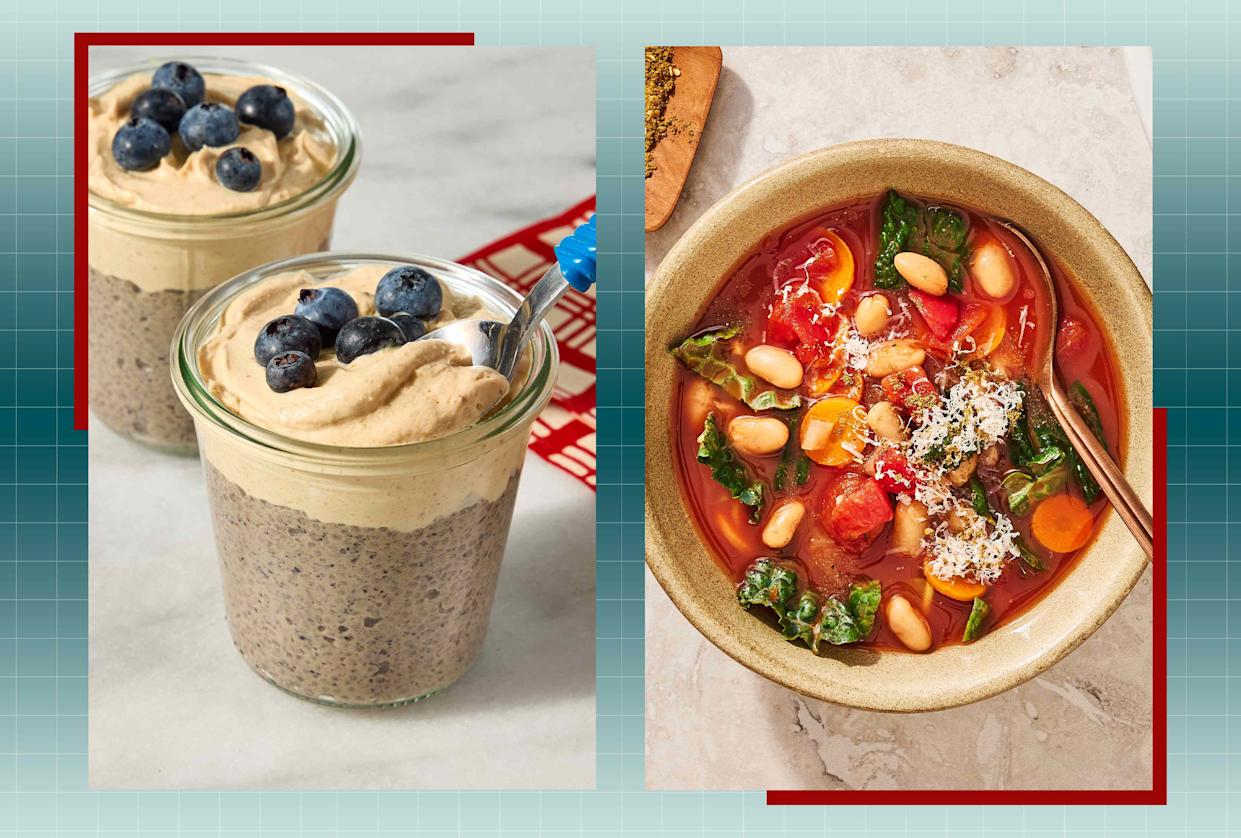
Credit: Recipe photo: Jen Causey and Ali Redmond. EatingWell design.
About This Plan
This 7-day plan is set at 1,800 calories, with modifications for 1,500 and 2,000 calories.
Each day provides at least 79 grams of protein and 49 grams of fiber to support balanced blood sugar.
This plan prioritizes protein and fiber, to balance blood sugar levels, and anti-inflammatory nutrients.
Inflammation gets talked about a lot these days, but chronic inflammation is far more than just a buzzword. Over time, it’s been linked to conditions like heart disease and type 2 diabetes. Blood sugar and inflammation are closely connected, too. When blood sugar is high, it can increase inflammation, which may make it harder for your body to use insulin effectively. The good news? What you eat can help. This seven-day anti-inflammatory meal plan for better blood sugar focuses on balanced meals with fiber-rich carbs, lean protein and healthy fats to support steady blood sugar and overall health. With dishes like roasted salmon and broccoli bowls, tuna salad packed with omega-3s, plenty of berries and vitamin C–rich produce, this plan makes it easy (and delicious) to eat in a way that supports your body.
Meal Plan At-a-Glance
DAYS
1
2
3
4
5
6
7
MEALS
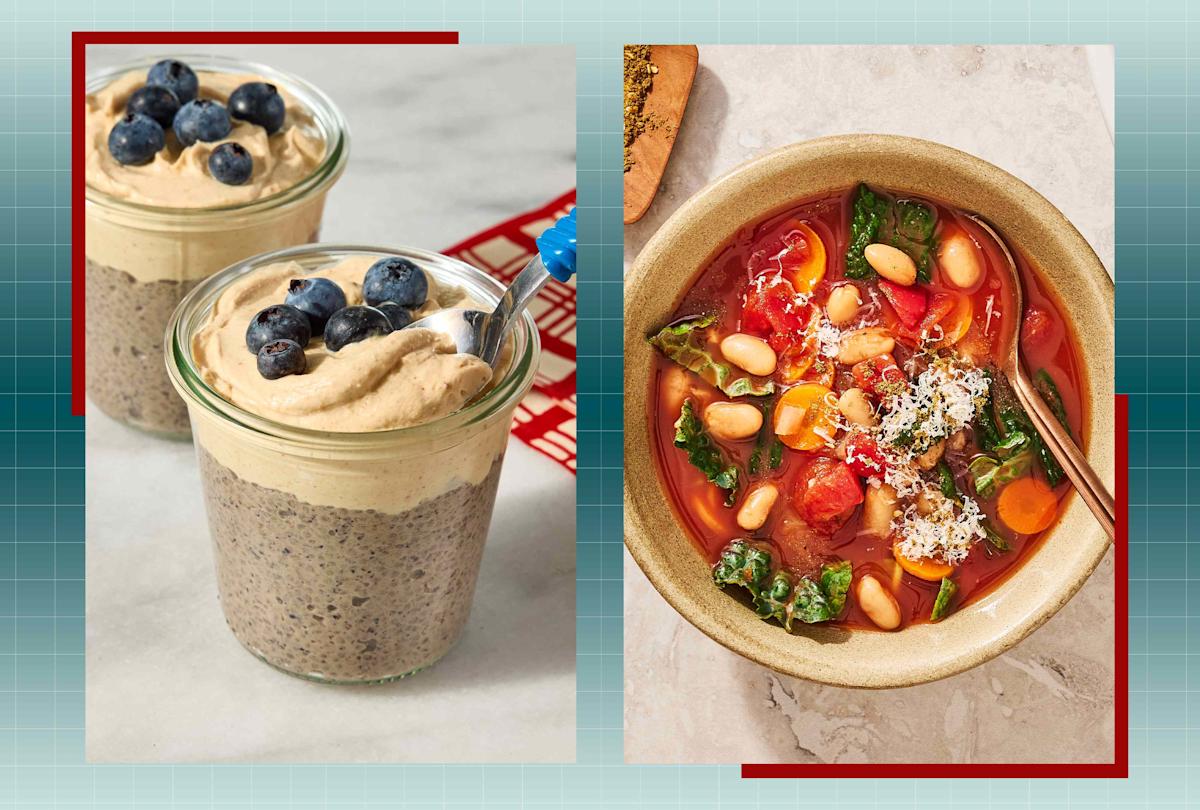
Breakfast: Cottage Cheese–Berry Bowl –––– Lunch: Kale & White Bean Stew
Caesar Salad + Cheese Toast –––– Dinner: Sheet-Pan Chicken Thighs with Red Cabbage & Sweet Potatoes
Breakfast: Breakfast Salad with Egg &Salsa Verde –––– Lunch: Kale & White Bean Stew
Caesar Salad + Cheese Toast –––– Dinner: Roasted Salmon & Broccoli Rice Bowls
Breakfast: Cottage Cheese–Berry Bowl –––– Lunch: Kale & White Bean Stew
Caesar Salad + Cheese Toast –––– Dinner: Sweet Potato–Black Bean Burgers
Caesar Salad with Parmesan
Breakfast: Spinach-Mushroom Frittata + Avocado Salad –––– Lunch: Sriracha Tofu Chopped Salad –––– Dinner: Buffalo Chicken Chili +½ avocado
Breakfast: PB & Chia Berry Jam English Muffin –––– Lunch: Arugula & CucumberTuna Salad –––– Dinner: Buffalo Chicken Chili +½ avocado & tortilla chips
Breakfast: Spinach-Mushroom Frittata+ Raspberries –––– Lunch: Sriracha Tofu Chopped Salad –––– Dinner: Easy Shrimp Tacos +½ avocado
Breakfast: PB & Chia Berry Jam English Muffin ––––Lunch: Arugula & Cucumber Tuna Salad + Pita & Hummus –––– Dinner: Kale & Avocado Salad with Blueberries, Edamame & Shrimp
DAILY TOTALS
Calories: 1,790 Fat: 80g Protein: 100g Carbs: 181g Fiber: 44g Sodium: 2,090mg
Calories: 1,803 Fat: 78g Protein: 109g Carbs: 170g Fiber: 46g Sodium: 2,278mg
Calories: 1,788 Fat: 82g Protein: 79g Carbs: 196g Fiber: 47g Sodium: 1,808mg
Calories: 1,817 Fat: 85g Protein: 107g Carbs: 167g Fiber: 46g Sodium: 1,429mg
Calories: 1,810 Fat: 86g Protein: 97g Carbs: 178g Fiber: 49g Sodium: 1,991mg
Calories: 1,823 Fat: 86g Protein: 91g Carbs: 151g Fiber: 41g Sodium: 1,825mg
Calories: 1,807 Fat: 86g Protein: 114g Carbs: 150g Fiber: 40g Sodium: 2,226mg
Day 1
Daily totals: 1,790 calories, 80 g fat, 100 g protein, 181 g carbohydrates, 44 g fiber, 2,090 mg sodium
Breakfast (170 Calories)
Lunch (515 calories)
Dinner (502 Calories)
Snacks
½ medium apple + 1 hard-boiled egg (125 calories)
To make it 1,500 calories: Omit the Caesar salad and cheese toast from lunch. Have a whole (instead of half) apple for snack and omit the hard-boiled egg.
To make it 2,000 calories: Swap the cheese toast for a grilled cheese sandwich at lunch and omit the hard-boiled egg from the snack.
Day 2
Daily totals: 1,803 calories, 78 g fat, 109 g protein, 170 g carbohydrates, 46 g fiber, 2,278 mg sodium
Breakfast (527 Calories)
Lunch (515 calories)
Dinner (443 Calories)
Snacks
¾ cup yogurt + 1 cup raspberries (184 calories)
¾ cup prepared frozen edamame in pods (135 calories)
To make it 1,500 calories: Omit the cheese toast from lunch and omit the edamame snack.
To make it 2,000 calories: Swap the cheese toast at lunch for a grilled cheese, and reduce the edamame snack to ½ cup instead of ¾ cup.
Meal-Prep TipsDay 3
Daily totals: 1,788 calories, 82 g fat, 79 g protein, 196 g carbohydrates, 47 g fiber, 1,808 mg sodium
Breakfast (170 Calories)
Lunch (322 calories)
Dinner (571 Calories)
Snacks
1 cup air-popped popcorn (31 calories)
To make it 1,500 calories: Omit the cheese toast from lunch and omit the Strawberry-Almond Butter Energy Cups snack.
To make it 2,000 calories: Swap the cheese toast at lunch for a grilled cheese. Omit the strawberry almond butter energy cups. Increase popcorn serving to 3.5 cups.
Day 4
Daily totals: 1,817 calories, 85 g fat, 107 g protein, 167 g carbohydrates, 46 g fiber, 1,429 mg sodium
Breakfast (479 Calories)
Lunch (332 calories)
Dinner (479 Calories)
Snacks
1 cup raspberries + 1 cup plain Greek yogurt + 1 Tbsp. granola (253 calories)
4 cups air-popped popcorn (124 calories)
To make it 1,500 calories: Have ¼ avocado (instead of ½) at dinner. For the yogurt snack, have ½ cup yogurt (instead of 1 cup) and omit the granola.
To make it 2,000 calories: Add Everything Bagel Cottage Cheese Snack Jar with Bell Peppers & Chickpeas as a snack.
Day 5
Daily totals: 1,810 calories, 86 g fat, 97 g protein, 178 g carbohydrates, 49 g fiber, 1,991 mg sodium
Breakfast (262 Calories)
Lunch (232 calories)
Dinner (544 Calories)
Snacks
2 (4-inch) pitas + 4 Tbsp. hummus (295 calories)
To make it 1,500 calories: At dinner, have ¼ avocado (instead of ½) and omit the tortilla chips. For the pita + hummus snack, reduce to 1 pita + 2 Tbsp. hummus.
To make it 2,000 calories: Add 0.75 oz. dark chocolate (≥70% cacao) + 1 Tbsp. almonds as a snack.
Day 6
Daily totals: 1,823 calories, 86 g fat, 91 g protein, 151 g carbohydrates, 41 g fiber, 1,825 mg sodium
Breakfast ( 479 Calories)
Lunch (332 calories)
Dinner (559 Calories)
Snacks
½ medium apple + 2 Tbsp. natural peanut butter ( 238 calories)
To make it 1,500 calories: Omit raspberries from breakfast. Omit the apple + peanut butter snack.
To make it 2,000 calories: Add Best Caesar Salad with Crispy Parmesan to dinner and add 2 cups air-popped popcorn as a snack.
Day 7
Daily totals: 1,807 calories, 86 g fat, 114g protein, 150 g carbohydrates, 40 g fiber, 2,226 mg sodium
Breakfast (340 Calories)
Lunch (527 calories)
2 (4-inch) pitas + 4 Tbsp. hummus
Dinner (475 Calories)
3 oz. shrimp (leftover from shrimp tacos)
Snacks
1 cup prepared frozen edamame in pods (179 calories)
3 cups air-popped popcorn (93 calories)
To make it 1,500 calories: Omit hard-boiled egg from breakfast. Reduce the pita + hummus snack to 1 pita + 2 Tbsp. hummus. Omit the popcorn snack.
To make it 2,000 calories: Increase the shrimp serving at dinner to 5 oz. Increase the edamame snack to 1.5 cups. Increase the popcorn snack to 4 cups.
Frequently asked Questions
Is it OK to mix and match meals if there’s one I don’t like?
Yes! This meal plan is meant to serve as inspiration. It doesn’t need to be followed exactly to reap the benefits. When choosing recipes, we made sure to check the calories, fiber, protein and sodium to align with the parameters of this plan and be within our sodium limits. If you’re making a recipe swap, it may be helpful to choose a recipe with similar calories, fiber, protein and sodium levels. For more inspiration, check out these delicious anti-inflammatory dinner recipes to help manage blood sugar.
Can I eat the same breakfast or lunch every day?
Definitely, it’s fine to eat the same breakfast or lunch every day. The breakfasts range from 170 to 527 calories, while the lunches span 232 to 527 calories. These ranges are fairly close, though if you’re closely monitoring your calories or other nutrients, like protein, you may want to adjust a snack or two.
Why is there not a 1,200-calorie modification?
We no longer provide modifications for 1,200-calorie days in our meal plans. The 2020-2025 Dietary Guidelines for Americans suggests that limiting calories to 1,200 per day is too low for most people to meet their nutritional needs, plus it’s unsustainable for long-term health and well-being.
Health Benefits of an Anti-Inflammatory Diet
An anti-inflammatory diet is more than just a trendy fad. It’s backed by research. Chronic inflammation plays a role in conditions like heart disease and type 2 diabetes, and studies show that eating more antioxidant-rich, whole foods may help reduce inflammatory markers in the body. Diets centered around fruits, vegetables, whole grains, legumes, nuts, seeds and fish, and lower in added sugars, salt and saturated fats, have been linked to better heart health, improved insulin sensitivity and more stable blood sugar levels.
A big reason why: The nutrients are doing the heavy lifting. Omega-3 fats, found in fatty fish like salmon and tuna, have been shown to actively reduce inflammation. Vitamin C, abundant in citrus, strawberries and bell peppers, may help lower oxidative stress, particularly in people with type 2 diabetes. And polyphenols, plant compounds found in foods like berries, dark chocolate, red onions and purple cabbage, help neutralize free radicals and regulate pro-inflammatory pathways. Together, these nutrients help create an internal environment that supports heart health, joint comfort, healthy aging and a resilient gut and immune system.
How We Create Meal Plans
Registered dietitians thoughtfully create EatingWell’s meal plans to be easy-to-follow and delicious. Each meal plan meets specific parameters depending on the health condition and/or lifestyle goal it is targeting and is analyzed for accuracy using the nutrition database, ESHA Food Processor. As nutritional needs differ from person to person, we encourage you to use these plans as inspiration and adjust as you see fit.
Read the original article on EatingWell