Key Takeaways
Raw and cooked spinach offer many of the same nutrients, but cooking reduces oxalates, making minerals like iron and calcium easier for your body to absorb.Raw spinach retains more heat-sensitive nutrients like vitamin C and folate, while cooking can enhance the availability of fat-soluble vitamins when paired with a little oil.Neither version is “healthier” overall, so mixing both into your routine—based on taste, digestion, and meal needs—helps you get the widest range of benefits.
As far as dark leafy greens go, spinach is a popular choice. First, it’s milder than greens like kale and Swiss chard, which can be bitter and tough to chew. Spinach is also generally more flavorful than cabbage and lettuce, making it a deliciously versatile vegetable.
Plus, the leafy green is healthy both raw and cooked—though the nutritional benefits are slightly different for each. That’s because heat changes the way certain nutrients are accessed by the body, resulting in different effects. But as with many aspects of nutrition, the details are much more nuanced. Curious? We asked dietitians to compare raw vs. cooked spinach, and to call out the healthier choice. Here’s what they had to say.
Cindy Chou, RDN, chef, registered dietitian nutritionist, and founder of The Sound of Cooking and Cancer Nutrition in a Bowl
Lauren Manaker, MS, RDN, LD, CLEC, CPT, registered dietitian and founder of Nutrition Now
Raw Spinach Nutrition
Raw spinach contains a variety of nutrients, including vitamin C (for immunity and skin health) and folate (for DNA production and cell growth), notes registered dietitian Lauren Manaker, MS, RDN, LD, CLEC, CPT. Additionally, it contains potassium, vitamin K, and antioxidants, such as lutein and zeaxanthin, according to Manaker. “Spinach also provides plant-based (non-heme) iron, which is especially helpful for those following vegetarian or vegan eating patterns,” says registered dietitian nutritionist Cindy Chou, RDN.
“[Compared to cooked spinach,] raw spinach retains more vitamin C and folate, which are sensitive to heat and can break down during cooking,” Manaker says. “However, some nutrients, like iron and calcium, are harder for your body to absorb in raw spinach because of natural compounds called oxalates,” she adds.
Below, find the nutritional information for 1 cup (25 grams) raw spinach, according to data from the USDA:
Macronutrients
Calories: 6.75 calories
Protein: 0.713 grams (g)
Total Carbohydrates: 0.603 g
Fat: 0.155 g
Fiber: 0.4 g
Micronutrients
Calcium: 17 milligrams (mg)
Iron: 0.315 mg
Magnesium: 23.2 mg
Phosphorus: 9.75 mg
Potassium: 145 mg
Sodium: 27.8 mg
Vitamin C: 6.62 mg
Folate: 29 micrograms
Small amounts of zinc, copper, riboflavin, and niacin
Cooked Spinach Nutrition
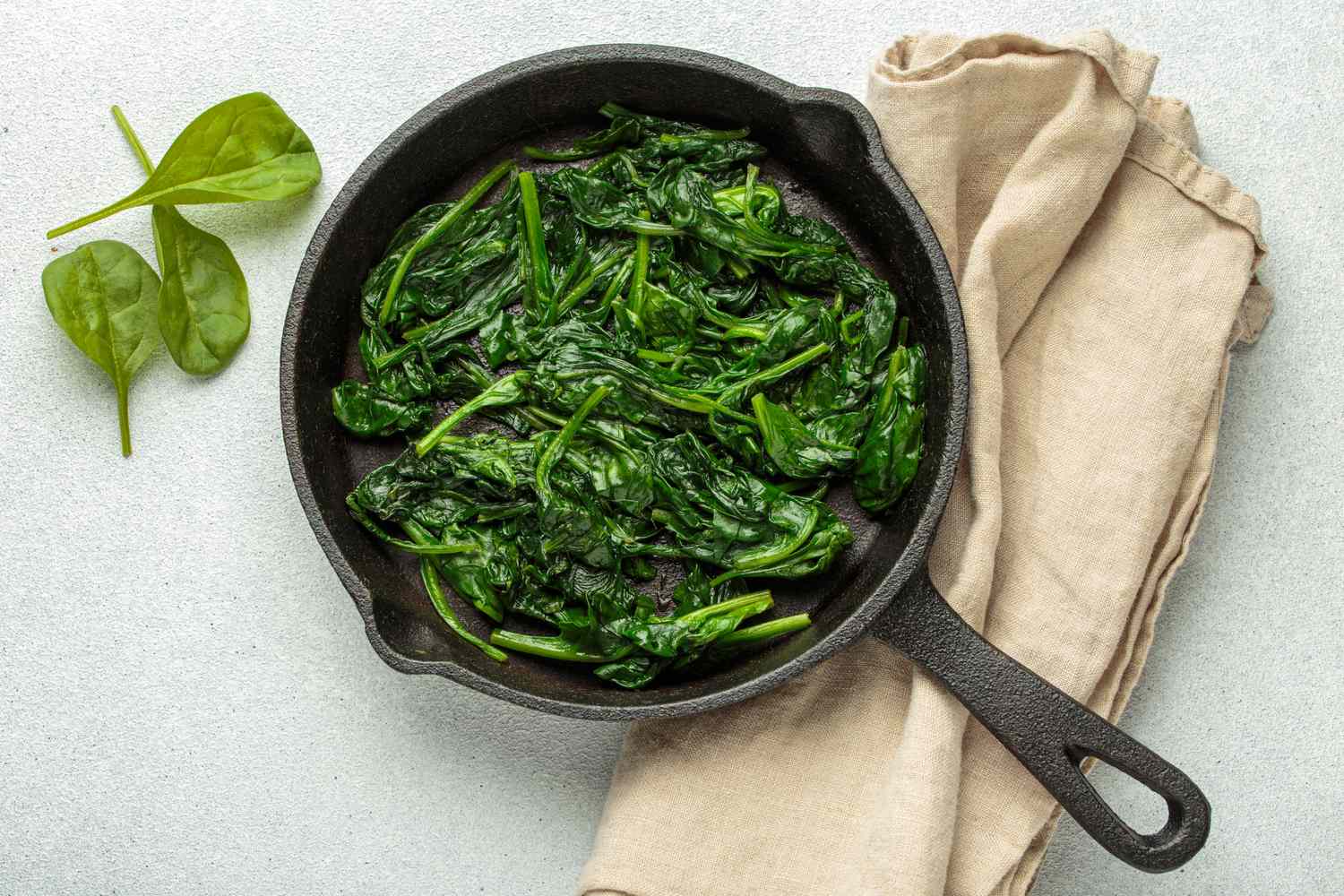
“Cooked spinach contains the same nutrients as raw spinach, but cooking changes how your body absorbs them,” Manaker explains. For example, cooking reduces the oxalates in spinach, making its iron and calcium easier to absorb, she notes. Using fat (like cooking oil) to cook spinach also increases the bioavailability of fat-soluble vitamins, such as vitamin A and K, Chou points out.
“However, cooking spinach reduces heat-sensitive nutrients like vitamin C and folate,” notes Manaker. This is especially likely when boiling spinach, as vitamin C and other antioxidants can leach into the cooking liquid, notes Chou.
To preserve more of these nutrients, add spinach to soups toward the end of cooking or consider steaming it instead.
Here’s the nutritional profile of 1 cup (180 grams) boiled spinach without salt, according to data provided by the USDA:
Macronutrients
Calories: 41.4 calories
Protein: 5.35 grams (g)
Total Carbohydrates: 6.75 g
Fat: 0.468 g
Fiber: 4.32 g
Micronutrients
Calcium: 245 milligrams (mg)
Iron: 6.43 mg
Magnesium: 23.2 mg
Phosphorus: 101 mg
Potassium: 839 mg
Sodium: 126 mg
Vitamin C: 17.6 mg
Folate: 263 micrograms
Small amounts of zinc, copper, riboflavin, selenium, and niacin
Which Is Better for You?
Drumroll, please: Neither raw or cooked spinach is “better” for you. As Manaker notes, “both raw and cooked spinach contain the same nutrients, but the way your body absorbs them differs.” So, the “better” choice is the one you enjoy cooking with and eating more of, according to Chou.
If you’d like to get the full range of benefits, eat both raw and cooked spinach, suggests Manaker. There are also ways to get the most out of each version. “If you enjoy cooked spinach, try stir-frying it with a neutral-flavored oil to help increase the absorption of lutein and fat-soluble vitamins,” Chou says. Some water-soluble vitamins, such as vitamin C, that leach into cooking liquids can still provide nutrients in soups, broths, sauces, or stocks, she adds.
Alternatively, if you enjoy raw spinach for its ease of use, pair it with a vitamin C-rich ingredient to improve iron absorption, suggest Chou. (Non-heme iron, which is found in spinach, isn’t absorbed as efficiently as iron from animal sources, according to Chou.) Ideas include pairing raw spinach with a squeeze of citrus juice in salads, or berries in smoothies.
How to Choose What Type of Spinach to Eat
Since both raw and cooked spinach are good for you, there are other factors you can consider when choosing between the two.
If you’re preparing a salad, smoothie, or sandwich, reach for raw spinach, notes Manaker. Alternatively, if you’re craving soup or a simple side dish, go for cooked spinach. “Spinach also shrinks when cooked, making it easier to eat larger portions and pack in more nutrients,” Manaker explains. Additionally, she points out that cooked spinach is often gentler on digestion, especially if you have a sensitive stomach.
Craving convenience? Defrosted frozen spinach, which has already been cooked, can be quickly added to meals like pasta, soups, and smoothies, per Chou. You can also opt for fresh baby spinach (whether you’re eating it raw or cooked) for less prep work.
“Both forms [of spinach] are versatile and nutritious, so it’s all about what works best for your taste, digestion, and meal prep style,” Manaker concludes.