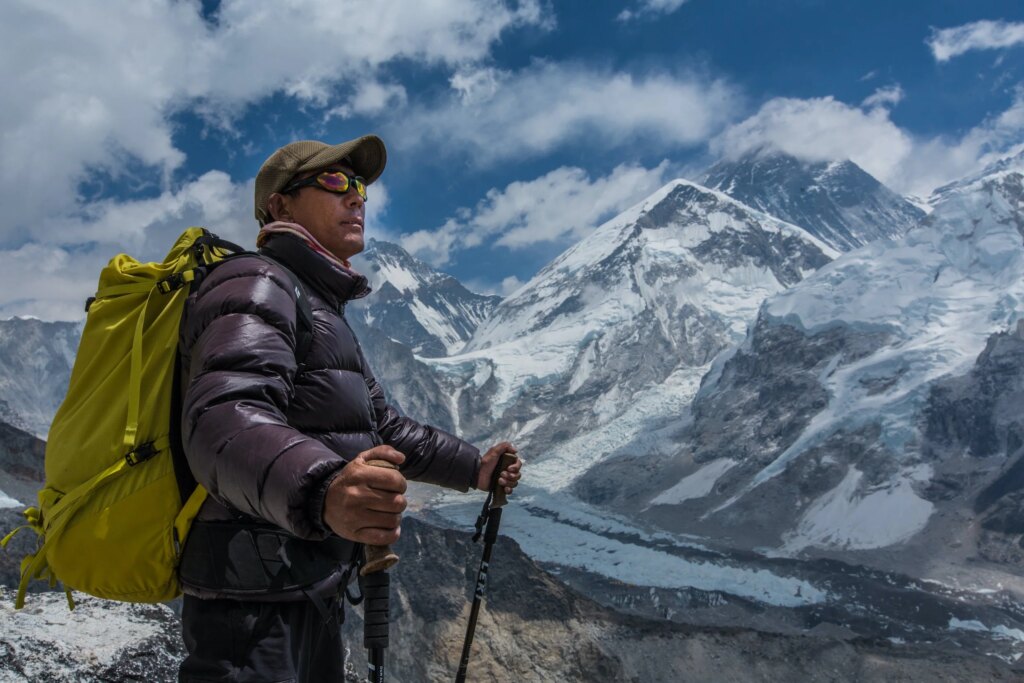
As Everest Dark begins, we learn that Nepal has begun the project of having the Sherpas attend to the dead rather than the living. Already well-paid (the movie doesn’t do more than briefly mention it, but by Nepalese standards they are rich for their professional peril), they are offered an extra payday, a bounty if you will, for each corpse they discover and retrieve.
It’s more cultural than the mere consideration of tourists being creeped out by encountering the dead. Chomo Luma, as the Nepalese know Everest, is considered a god, and the littering of it with corpses is believed to be angering it – hence a recent increase in fatal avalanches and deadly weather.
For his part, Mingma believes he has been told by the god of the mountain to give up climbing or else. (Much of his thoughts are interpreted to us by narrator Jaswant Dev Shrestha, a Nepalese filmmaker who apparently has a close connection to Mingma). His decision to return is not for money (though his concerned wife is the one who mentions the pay to the filmmaker), but to possibly appease Chomo Luma with his work.