As a dietitian and mum of two, I spend a lot of time helping families reduce their reliance on ultra-processed foods (UPFs). But I also think the conversation has become too black and white.
UPFs are industrially processed and contain ingredients such as chemicals, colourings and preservatives that wouldn’t be usually used in home cooking. They’ve been linked to higher risks of some health conditions, including cancer and heart disease.
But processing exists on a spectrum, and most UPFs can absolutely have a place in a healthy and balanced, realistic family diet – with some featuring more often than others, depending on their main ingredients.
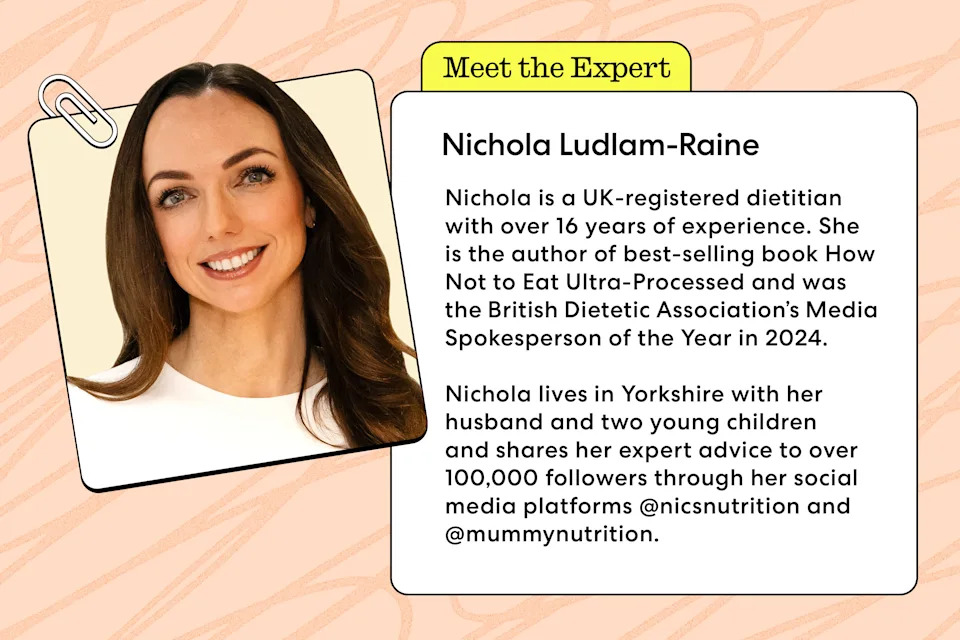
Graphic introducing dietician Nichola Ludlam-Raine.
I don’t aim for “perfection” at home – or in my dietetic clinic. I’m aiming for nourishment, convenience, affordability and, importantly, foods my children will actually eat.
If a food provides fibre, protein, essential nutrients or helps families eat more vegetables or fish, I’m comfortable including it.
Here are six UPFs I happily feed my kids – and two I avoid.
1. Omega-3 fish fingers
Fish fingers are often touted as a UPF – but I see them very differently. For busy families, they’re a realistic way to help meet the recommendation of two portions of fish per week (one of which should be oily). In my book, that’s a win.
I choose omega-3 versions made with Alaskan pollock, which has a higher level of omega-3 fatty acids than cod or haddock. Omega-3 fats support both heart and brain health.
Perfect when you need a quick meal, I serve them with plenty of veg – usually frozen peas and sweetcorn from my freezer stash – and potatoes or baked beans (we’ll come onto those later).
Yes, they’re coated and more processed than eating white fish alone, but they’re also:
A reliable source of protein
A practical way to get omega-3 into children – great for those who dislike oily fish
Three fish fingers contain around 168mg omega-3, depending on the brand you buy
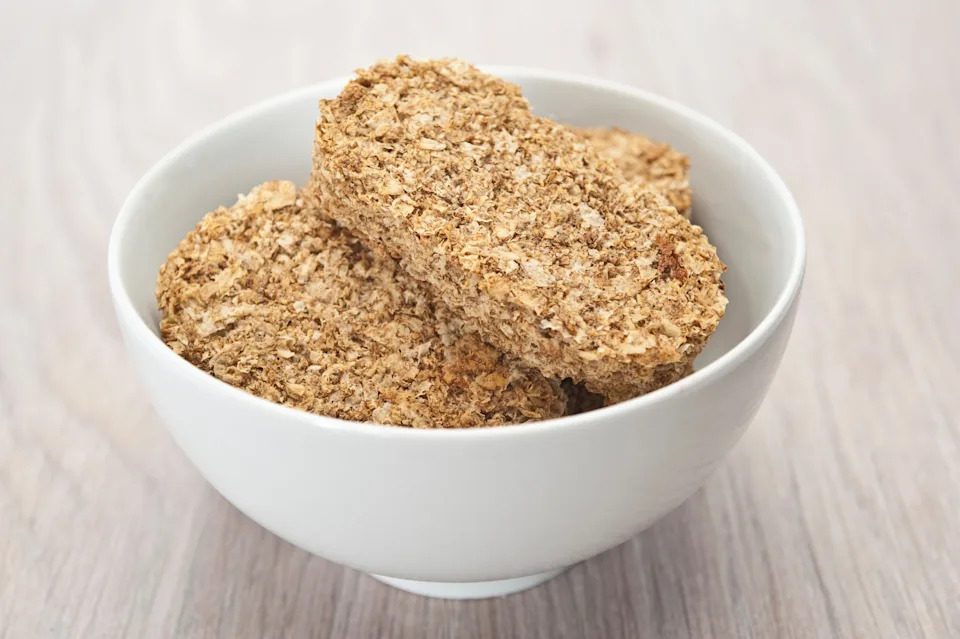
Weetabix are high in fibre and low in sugar and salt.
(MarkGillow via Getty Images)2. Wheat biscuits
Breakfast cereals are often criticised in the UPF debate, but not all cereals are equal. Wheat biscuits, like Weetabix, are a great example of a minimally formulated product.
They’re high in fibre, low in sugar and salt and fortified with iron and B vitamins – nutrients that can be tricky for some children to get enough of. Research shows that UPFs rich in wholegrains are not associated with increased disease risk, even if they fall under the “UPF” category, due to their nutritional value.
Served with milk or a fortified alternative, fruit and perhaps some milled seeds, they become a balanced breakfast containing fibre, protein and micronutrients. My kids have Weetabix almost daily.
 3. Fortified oat drink
My son is allergic to dairy and soya, so we use a fortified oat drink at home. Technically, it’s ultra-processed, but it’s also fortified with calcium, iodine and vitamin D – nutrients that growing children need for bone and thyroid health. Processing in this case improves the nutritional content, rather than detracting from it.
For families managing allergies, fortified plant milks aren’t a trendy extra – they’re a nutritional necessity. I simply make sure:
It’s part of a varied diet
It’s fortified (you’re looking for added calcium, iodine and vitamins on the ingredients list – organic versions are generally not fortified).
In terms of other plant-based drinks, nut and hemp milks tend to be too low in protein and energy for growing children.
Rice milk should be avoided for children under five due to its arsenic content.
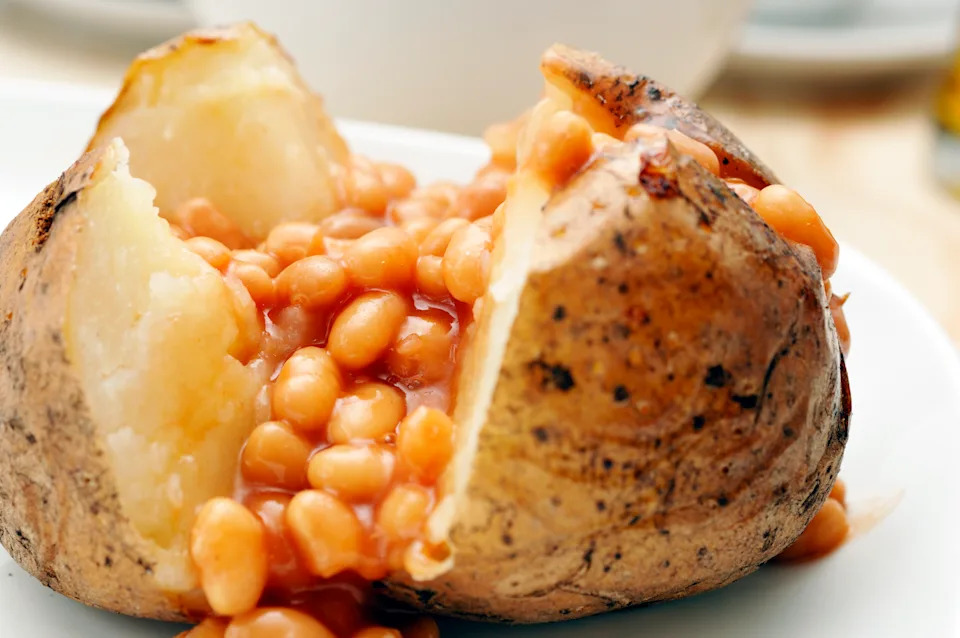
Baked beans can help create a balanced meal in minutes.
(creacart via Getty Images)4. Baked beans
Many baked beans are technically ultra-processed because of the sauce and small amount of additives – however, nutritionally, they’re brilliant.
They provide:
One of your five-a-day, thanks to the tomatoes and beans
They’re affordable, quick and incredibly versatile. On toast; alongside eggs or fish fingers; or served with a jacket potato, they help create balanced meals in minutes.
They’re a convenient win and a big thumbs-up in my opinion.
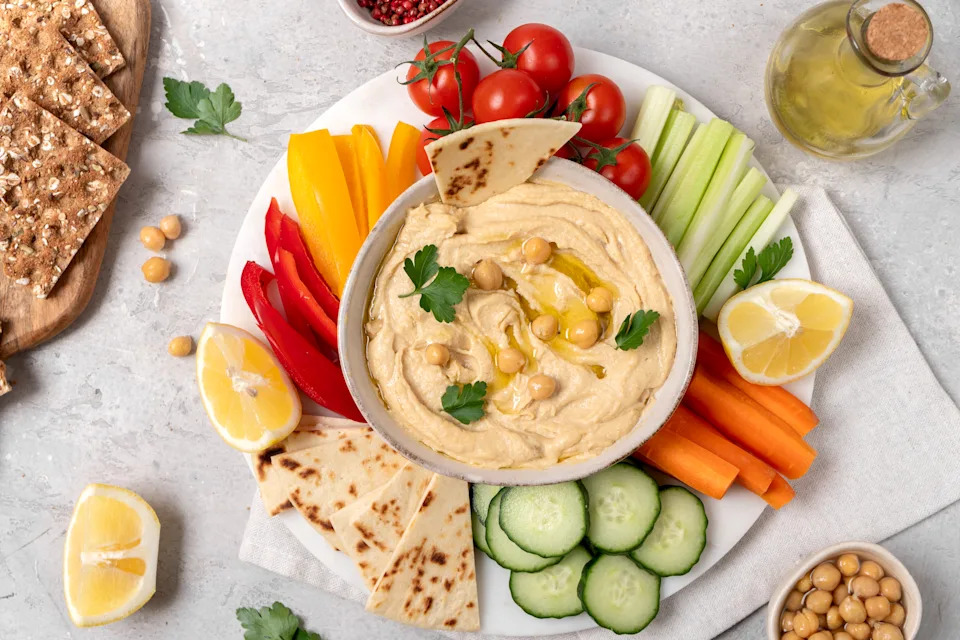
Serving shop-bought hummus with crudités is a good way to get kids to eat more veg.
(Elena Noviello via Getty Images)5. Hummus
Shop-bought hummus often contains at least one preservative, which technically places it in the UPF category. However, when the core ingredients are chickpeas, tahini and lemon juice, we’re still looking at a nutrient-dense food rich in fibre, plant protein and healthy fats.
It’s one of my favourite sandwich fillers and a way to encourage kids to eat more vegetables. Carrot sticks, cucumber, peppers – they all become more appealing with a dip.
You can buy some hummus without the preservatives but, if not, then I wouldn’t worry about it. Healthful UPFs, such as hummus, are not linked with ill health like HFSS (high in fat, salt and sugar), low-nutrient UPFs.

Nichola Ludlam-Raine says a good-quality jar of tomato sauce can help make meals easier.
(Charlotte Clemie)6. A decent tomato pasta sauce
In an ideal world, I’d make every pasta sauce from scratch. In reality? A good-quality jarred tomato sauce makes life easier.
I look for one with:
No added sugar (or very little)
A high percentage of tomatoes and other vegetables
Pasta sauce forms the base of so many family meals, from lentil bolognese to hidden-veg pasta, and allows me to get a home-cooked meal on the table quickly.
Convenience doesn’t automatically cancel out nutrition.
And the two UPFs I avoid…
There are some ultra-processed foods I rarely or never buy – particularly those that combine aggressive marketing with very little nutritional value.
Processed meat sticks
It’s heavily marketed to children and positioned as a “protein snack”. But it’s also high in salt and processed meat, which national health guidelines advise us to limit due to links with bowel cancer risk and heart disease.
For me, it’s not something that needs to be a regular lunchbox feature.
Processed fruit rolls
These are a classic example of a health halo. They’re marketed as fruit-based snacks – yet they contain added sugars and are close to 40% sugar, with a long list of ultra-processed ingredients.
Nutritionally, they’re much closer to sweets than whole fruit. If we want fruit in lunchboxes, I’d rather include actual fruit – fresh, tinned in juice or 100% dried (with no added sugars) in sensible portions.
For more information on the real balance to be struck with UPFs, check out my book How Not to Eat Ultra-Processed.