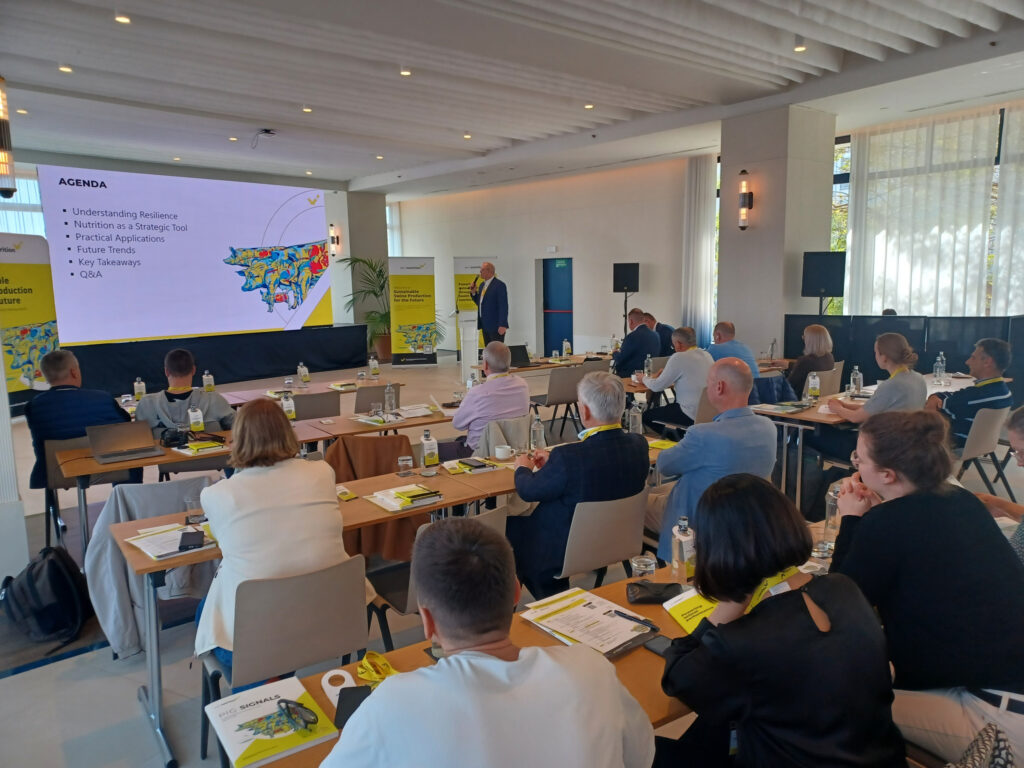
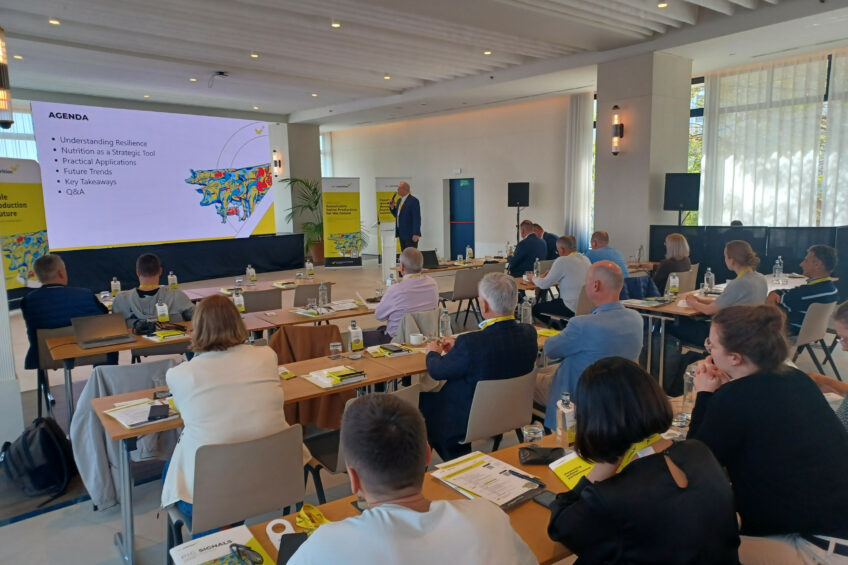
 The event in Spain drew about 100 pig nutrition experts from all over Europe. Photo: Vincent ter Beek
“Sustainable swine production for the future” – that was the key theme of a 2-day congress in the Spanish coastal city of Tarragona, 24-25 February, 2026. The event lived up to its promise with various interesting glimpses into what initiatives are ahead for swine producers to produce more sustainably in the future.
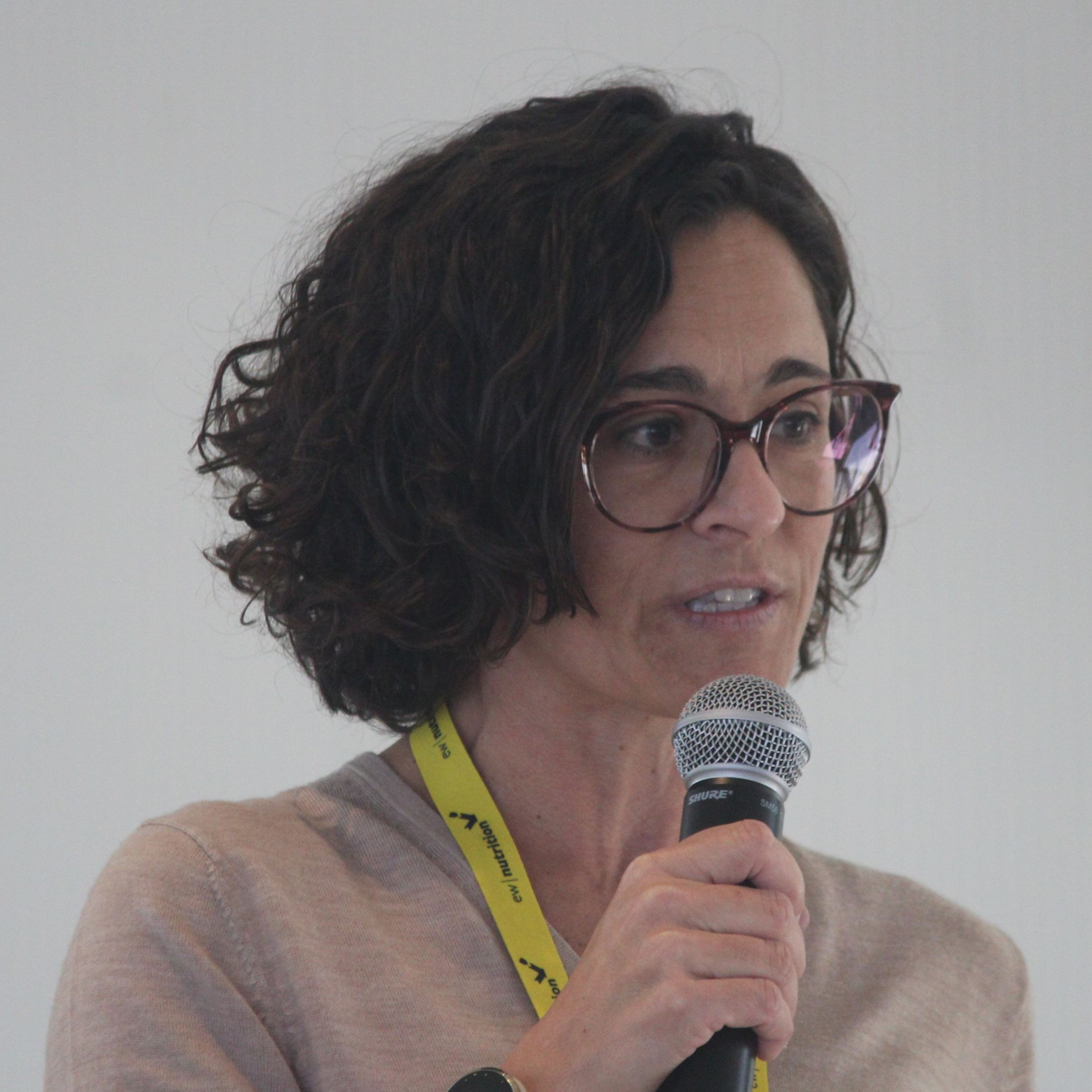 Dr Ambra Milani
The event was organised by animal nutrition company EW Nutrition, part of the EW Group, headquartered in Germany. All in all, the event drew about 100 pig nutrition experts from 21 countries, mostly from Europe. It combined 2 challenges that are both hard to capture yet essential for swine producing: how to be ready for the future – and how to do that sustainably? Most speakers touched on the theme, each from their own perspective.
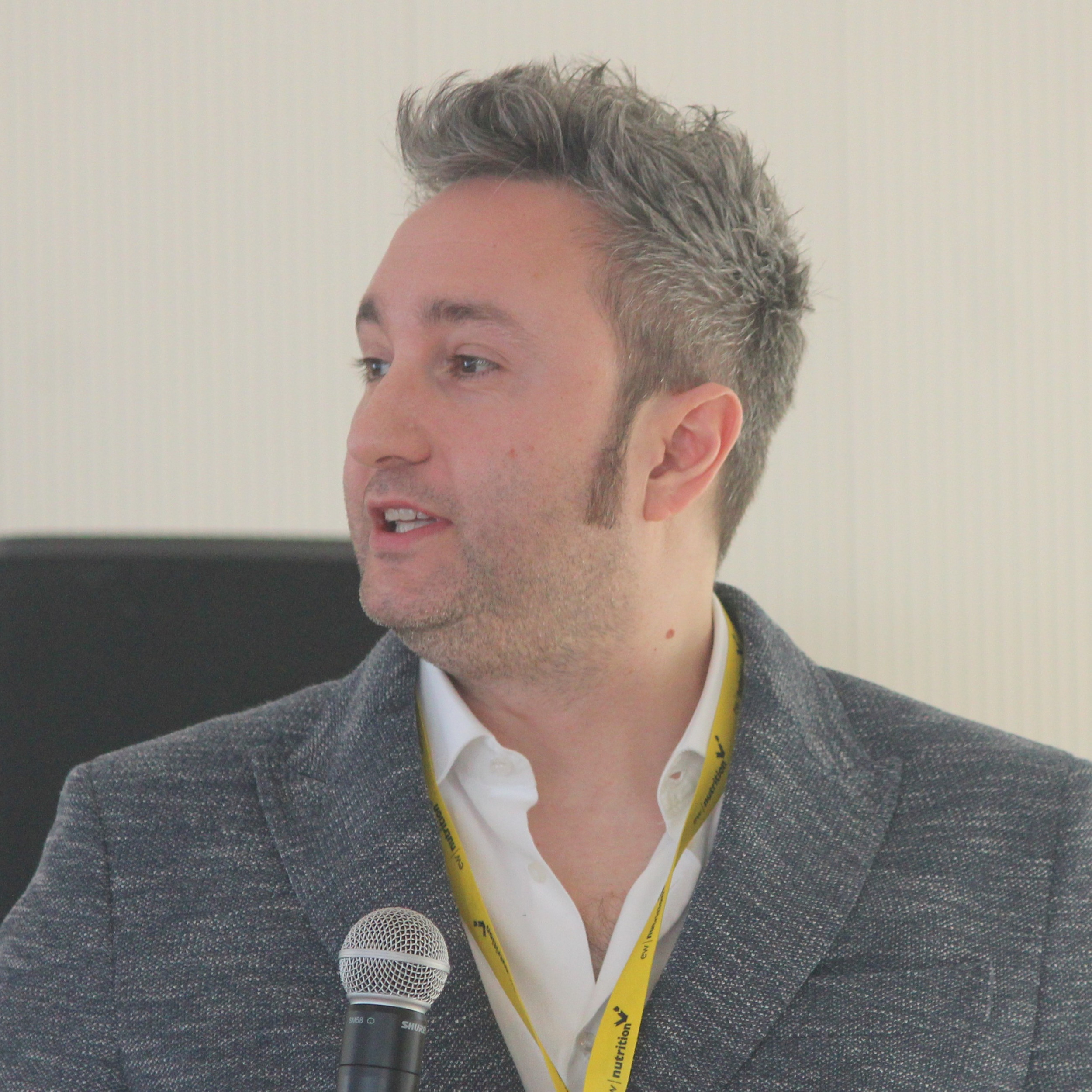 Francesco CorradiniInternet of Things in pig production
Whomever speaks of the future can’t avoid talking about the Internet of Things (IoT) and artificial intelligence (AI). Italian speakers Dr Ambra Milani and Francesco Corradini spoke about this subject on behalf of technology company Cynomys. They introduced the Cynomys Livestock System, which the 2 speakers called “a framework for sustainability accounting.” In short, it is an integrated sensor-based package for “making the invisible visible.” That includes temperature, humidity, ammonia, carbon dioxide level, dust, light and noise to name a few. In addition, it and also how to interpret those data, with trend analysis and early warnings.
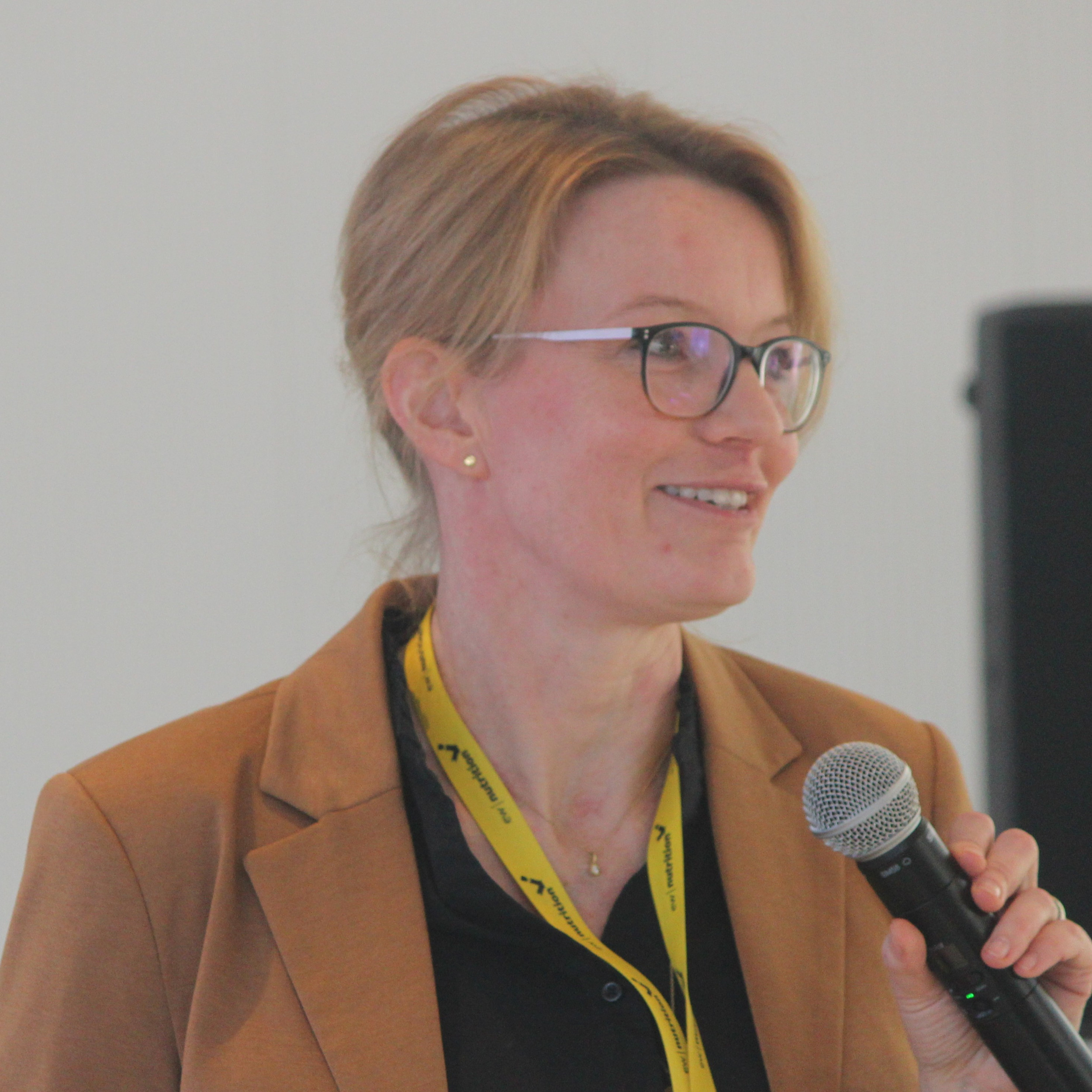 Dr Kerstin ReinersInnovative techniques in pig breeding
In a thought-provoking presentation, Dr Kerstin Reiners, on behalf of breeding company PIC, revealed the numerous innovative techniques her company is pursuing to achieve better breeding values. “Tools that built the last 30 years won’t be enough for the next 30,” she warned. So she showed various brand new technologies the breeding company is using to achieve a more accurate selection process. She mentioned FertiBoar, which is AI-assisted evaluation of ultrasound images of boar testicles to predict semen quality. In addition, advanced computerised technologies with an integrated AI model allow for animal identification with structure and claw scoring, weight estimation and anomaly detection. Other novelties include digital longevity (predicting sow survival) and teat counting (under development).
Obviously she also touched on the technology to breed animals that are resistant to Porcine Reproductive and Respiratory Syndrome virus (PRRSv). This technology has been approved for use in Brazil, the USA, Colombia and Canada at the moment – with more countries to follow in the future.
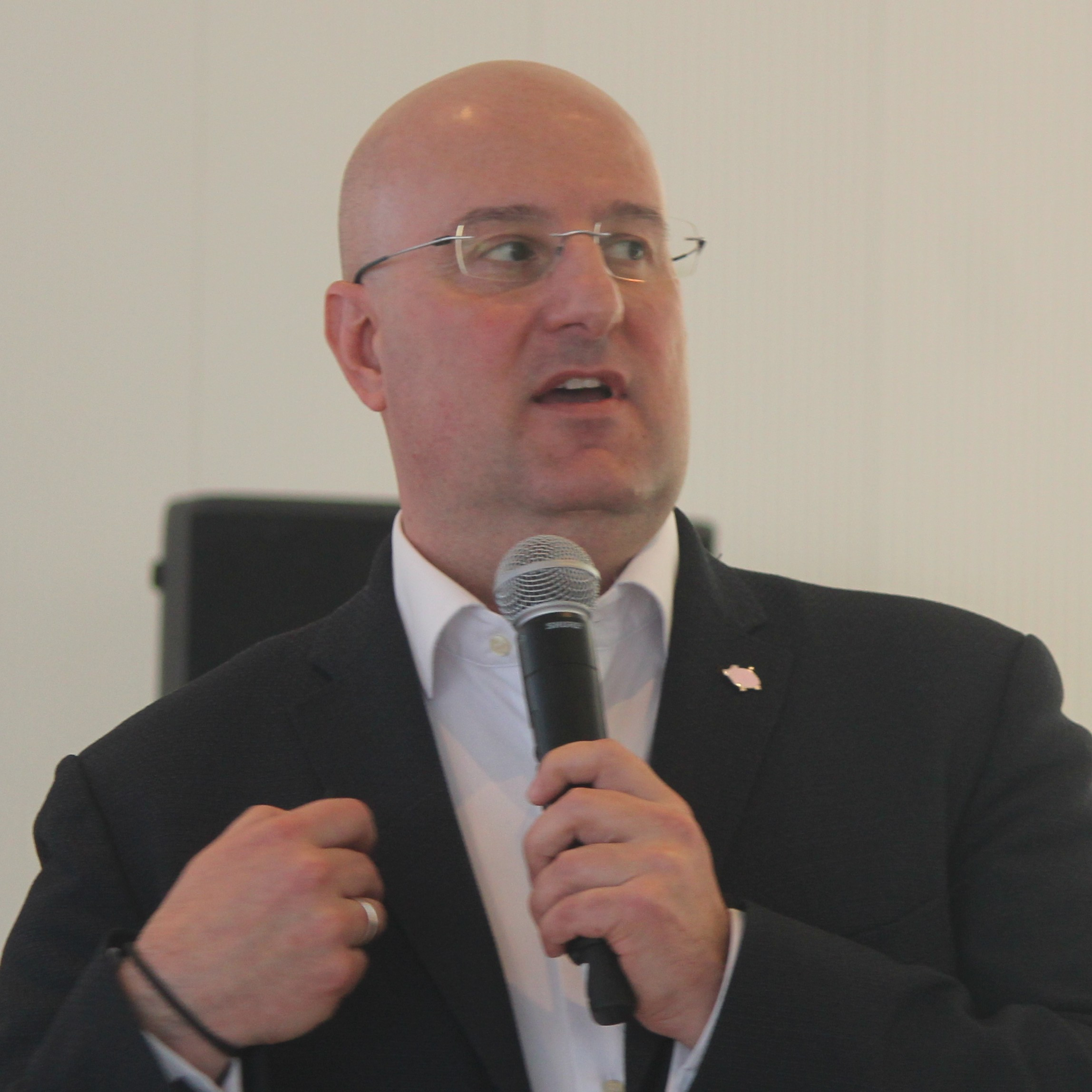 Miguel Ángel Higuera PascualSustainability legislation
Miguel Ángel Higuera Pascual is director for the Spanish pig producers’ association Anprogapor. His contribution with regard to the future emphasised the road the EU has taken to help producers to become more sustainable – and how his organisation is helping pig producers in Spain to achieve emission reduction on-farm in the coming years.
He had special attention for a 2024 update of the EU directive regarding industrial emissions. Thresholds for eligible farms have come down, which means that more farms will have to comply. He introduced the European working group called “Uniform Conditions and Operating Rules for Livestock” (UCOL), which is simplifying the jungle of regulations into clear rules. A final report is expected late summer 2026. At farm level, Spanish producers can use the programme Ecogan, to calculate actual emission levels.
 Dr Heinrich Kleine KlausingAnimal feed technology for the future
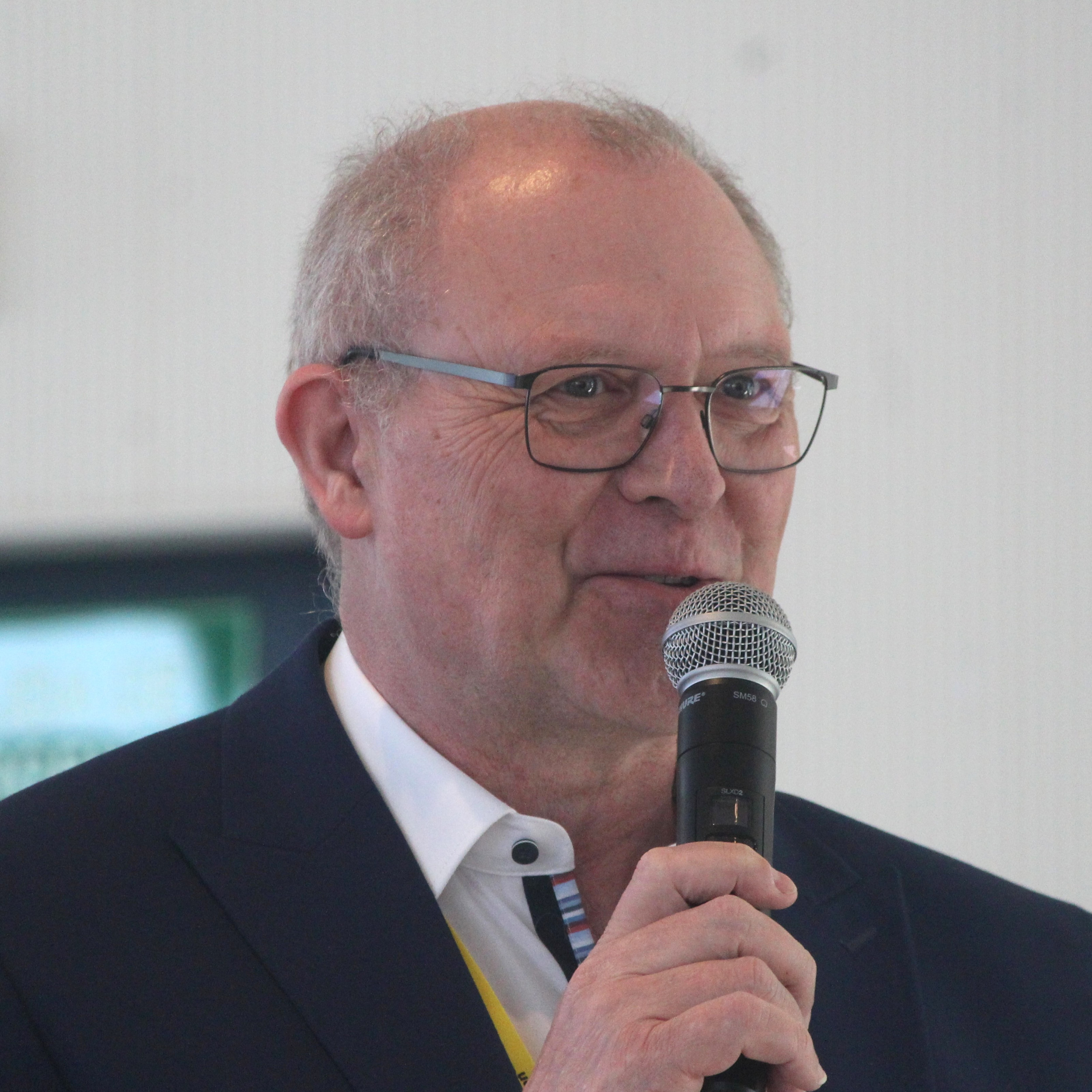
“Feed 3.0” is a term which German feed consultant Dr Heinrich Kleine Klausing dropped to describe strategies that make pig nutrition ready for the future. One of the technologies he is passionate about revolves around solid-state fermentation of protein raw materials. More about this SSF technology in a longer background article in Pig Progress and All About Feed.
He spoke about the approach it in a wider overview of nutritional strategies that can be applied on-farm to make sure pigs are resilient.
Sustainably dealing with bacterial toxins
Another role nutrition can play providing a sustainable future, was introduced by Prof Dr Eva-Maria Saliu, from the Eberswalde University for Sustainable Development in Germany. She summed up various bacterial toxins that could end up becoming a serious problem for neonatal piglets.
One bacteria-related toxicological problem is neonatal coccidiosis, caused by enterotoxigenic E. coli (ETEC), occurring typically in the first 6 days of life. The bacteria produces enterotoxins, eventually causing absorption problems in the colon, leading to diarrhoea. Another one is necrotic enteritis, she said, which can sometimes occur in pigs between 2 and 4 weeks of age. This disease is often caused by toxins of Clostridium perfringens, type C.
Thirdly, she briefly touched on post-weaning diarrhoea, which is also associated with ETEC proliferation in the pig’s intestine.
 Dr Shofiqur Rahman
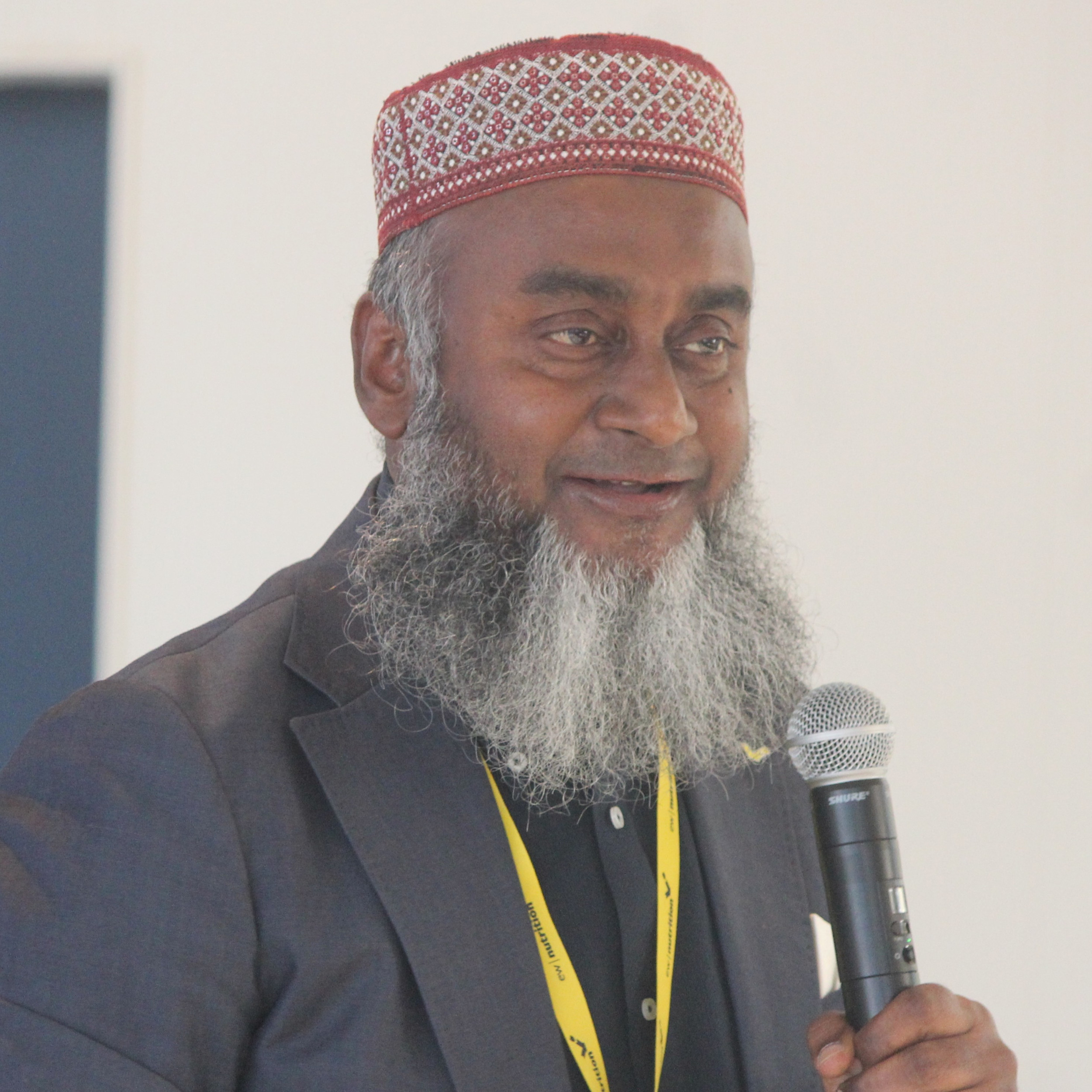
Even though it was one day later, Dr Shofiqur Rahman, global technical service R&D at EW Nutrition, followed up her presentation. He highlighted one of EW Nutrition’s flagship products Globigen Jump Start – a feed ingredient based on egg immunoglobulins (IgY). Dr Rahman emphasised the immune supporting functions of immunoglobulins which minimise the negative effects of specific enteric pathogens, including ETEC.
That way the use of antibiotics and/or zinc oxide can be prevented – which completes the sustainability objective of the event.
Think more Dutch for a sustainable future
Famous last words related to a sustainable future were given by the closing speaker Janneke Janssens, co-owner of publishing house Pig Signals in the Netherlands. She called outright for pig farm staff to take a more “Dutch” attitude in order to face that future. The essence of her publications revolve around “pig signals,” i.e. learning to read how pigs behave – and most importantly, how pig staff can personally take action without waiting for someone to give instructions. She proved her point by stating how many hours/week are needed in the Netherlands (about 160) to manage 1,0000 sows. She compared this to other countries, including China (466).
Other speakers at the event included Jedrzej Standar, director of EW Nutrition in Central East Europe; Ludger Johannes, director of EW Nutrition in Central West Europe; Predrag Peršak, regional technical manager North Europe, EW Nutrition; and Dr Luis Sanjoaquin, veterinarian of ThinkinPig in Spain.
Join 18,000+ subscribers Subscribe to our newsletter to stay updated about all the need-to-know content in the pigsector, three times a week.
“*” indicates required fields